Table of Contents >> Show >> Hide
- Why Winterizing Your Lawn Mower Matters
- What You’ll Need Before You Start
- Step 1: Start With the Owner’s Manual, Not Vibes
- Step 2: Clean the Mower Thoroughly Before It Goes Into Storage
- Step 3: Handle the Fuel Correctly
- Step 4: Change the Oil and Check the Filter, Spark Plug, and Air Filter
- Step 5: Inspect and Sharpen the Blade
- Step 6: Take Care of the Battery
- Step 7: Store the Mower in the Right Spot
- Common Winterizing Mistakes to Avoid
- What to Do When Spring Rolls Around
- The Bottom Line
- Homeowner Experience: What Winterizing a Mower Actually Feels Like in Real Life
You know that moment when the grass finally stops growing like it has a personal grudge against your weekend? That is usually when many homeowners shove the mower into a corner of the garage, shut the door, and call it a season. Tempting? Absolutely. Smart? Not always.
If you want your mower to start in spring without coughing, sputtering, or acting like it forgot who you are, a quick winterizing routine matters. The good news is that winterizing a lawn mower is not a full-blown mechanical saga. In most cases, it is just a handful of practical steps: clean it, deal with the fuel properly, handle the oil and filters, protect the battery, and store everything in the right place. Think of it as tucking your mower in for the off-season so it does not wake up cranky in April.
This guide walks you through how to winterize a lawn mower the right way, whether you have a gas push mower, a riding mower, or a battery-powered model. Along the way, you will also learn what not to do, because “I’ll deal with it later” has launched many a spring repair bill.
Why Winterizing Your Lawn Mower Matters
When a mower sits for months, little problems become bigger ones. Old gasoline can gum up parts of the fuel system. Grass clippings trapped under the deck can hold moisture and encourage rust. Dirty oil can sit in the engine longer than it should. A neglected battery may lose charge or wear down faster. Then spring arrives, the birds sing, the lawn explodes, and your mower responds with silence.
Proper winter mower storage helps prevent hard starting, rough performance, blade issues, corrosion, and premature battery trouble. It also gives you a chance to spot wear before it becomes expensive. In other words, a 30- to 60-minute tune-up in fall can save you a lot of muttering in spring.
What You’ll Need Before You Start
- Work gloves and safety glasses
- A putty knife or brush for dried grass and debris
- Shop towels or rags
- Fuel stabilizer, if your mower manual calls for it
- Fresh engine oil, if your mower uses oil changes
- Replacement air filter or spark plug, if needed
- Blade sharpening tool or access to a sharpening service
- Battery maintainer or charger, if you have a riding mower
- Your owner’s manual, the true star of the show
One note before the wrench-spinning begins: always let the mower cool down, disconnect the spark plug wire on gas models, and remove the battery on cordless units before maintenance.
Step 1: Start With the Owner’s Manual, Not Vibes
Every mower has its own preferences. Some manufacturers recommend storing gas mowers with treated fuel. Others prefer that the fuel system be drained or run dry for longer storage. Battery care can also vary by brand and battery chemistry. So before you do anything heroic, check the manual.
This is especially important if you have a newer mower with electric start, fuel injection, a special battery system, or a zero-turn setup. Your machine may need a slightly different approach from the neighbor’s 14-year-old mower that starts only after a pep talk and two kicks to the tire.
Gas mower vs. battery mower
If you have a gas mower, your biggest winter enemies are stale fuel, moisture, old oil, and grime. If you have a battery-powered mower, fuel is not the issue, but battery storage and moisture protection still matter. Either way, cleaning and storage are non-negotiable.
Step 2: Clean the Mower Thoroughly Before It Goes Into Storage
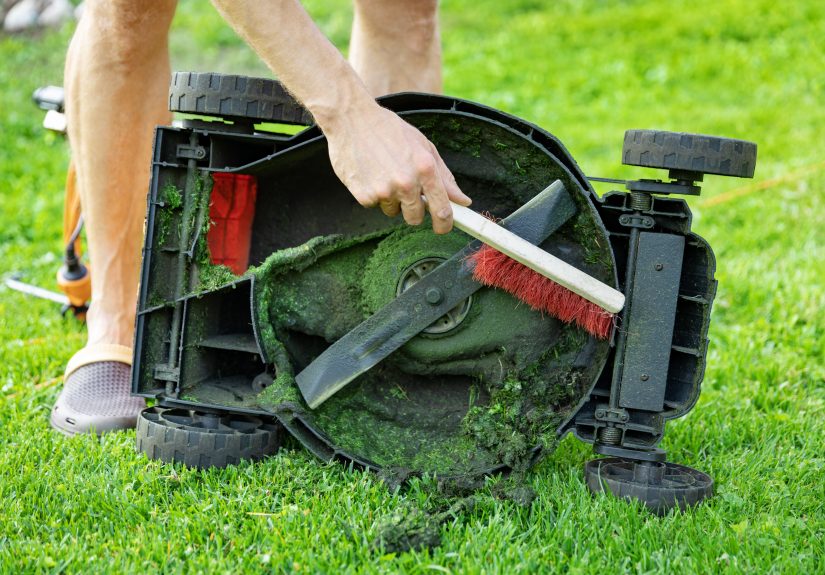
Do not store your mower wearing a crusty sweater of grass sludge. Built-up clippings, dirt, and mud trap moisture, and moisture invites rust. Clean the top of the deck, around the wheels, the air intake area, and especially the underside of the deck.
Use a brush, scraper, or putty knife to loosen packed grass. Wipe down surfaces with a rag. If you rinse parts, let them dry completely before storage. A mower that goes into the garage damp is basically being sent to winter camp with a mold starter kit.
For riding mowers, also clear debris around the engine compartment, cooling fins, and under the seat if your model allows access. For battery mowers, wipe battery contacts gently and keep the charging area clean and dry.
Step 3: Handle the Fuel Correctly
This is where many mower owners either become careful adults or springtime cautionary tales.
Gasoline does not age like a fine wine. It ages like leftover guacamole. If your mower will sit for more than a month or so, fuel can break down and lead to varnish, residue, moisture issues, and hard starting. That is why fuel management is the most important part of winterizing a gas mower.
Option A: Add fuel stabilizer to fresh gas
Many mower makers recommend filling with fresh fuel, adding stabilizer according to label directions, and then running the engine for a few minutes so the treated fuel circulates through the system. This helps protect the carburetor and fuel lines during storage.
This is often a practical choice for homeowners storing a mower in a garage or shed for the off-season. If you go this route, follow the exact mixing directions on the stabilizer and your mower manual. More is not better. That is true for hot sauce and definitely true for fuel additives.
Option B: Drain or run the fuel system dry if your manual says so
Some manufacturers prefer a no-fuel storage approach for certain machines, especially for longer periods. If your manual instructs you to drain the tank or run the engine until the fuel system is empty, follow that guidance instead of guessing. The key point is consistency with the manufacturer’s instructions, not internet folklore from a guy named Ron who “fixes small engines on the side.”
Step 4: Change the Oil and Check the Filter, Spark Plug, and Air Filter
If your mower uses engine oil that should be changed, do it before winter storage rather than after the machine has sat all season with dirty oil inside. Warm oil usually drains more easily, so many people run the mower briefly first, then shut it off and perform the oil change once it is safe to handle.
Fresh oil helps protect engine parts during the off-season. For riding mowers and many gas walk-behind mowers, this is a smart end-of-season move.
While you are already in maintenance mode, check these items too:
- Air filter: Replace or clean it if it is dirty, depending on the style and what the manual allows.
- Spark plug: Inspect it for wear, corrosion, or heavy deposits. Replace it if needed.
- Oil filter: Replace it on machines that use one, especially many riding mowers.
This part is not glamorous, but it pays off. Come spring, a mower with fresh oil and a clean filter setup is far less likely to behave like it woke up on the wrong side of the garage.
Step 5: Inspect and Sharpen the Blade
A dull blade does not just cut poorly. It tears grass instead of slicing it cleanly, which can leave your lawn looking ragged and stressed. End-of-season blade care is a perfect winterizing task because you are already cleaning the deck and checking the machine.
Inspect the blade for nicks, bends, cracks, or excessive wear. Sharpen it if it is dull. Replace it if it is damaged. For riding mowers with multiple blades, check them all.
If you remove the blade yourself, follow safe procedures and note its orientation before reinstalling. A backward blade is a surprisingly effective way to create confusion and absolutely not a crisp lawn cut.
Step 6: Take Care of the Battery
Battery care depends on the type of mower you own.
For riding mowers with a starter battery
If your mower has a removable battery, disconnect it carefully and clean the terminals if needed. Many manufacturers recommend storing the battery in a dry, protected area and keeping it charged with an appropriate maintainer or by periodic charging. Letting it sit dead all winter is one of the fastest routes to spring disappointment.
For battery-powered walk-behind or riding mowers
Remove the battery from the mower if the manual instructs it. Store it indoors in a dry, temperature-controlled space away from freezing and excessive heat. Avoid tossing it in a damp shed or leaving it in direct sun near a window. Batteries like comfort, not drama.
Also avoid assuming all cordless mower batteries should stay on the charger all winter. Some brands want that, some do not, and some recommend a partial charge for long-term storage. Again, the manual wins.
Step 7: Store the Mower in the Right Spot
Once your mower is clean, serviced, and safe for storage, put it somewhere dry and sheltered. A garage or shed is ideal. The goal is to protect it from moisture, temperature swings, and general chaos.
Try not to store the mower where water tends to pool or where snow, wind, or blowing debris can reach it easily. If you use a cover, make sure it is clean and appropriate for the mower so you are protecting it, not trapping grime against it.
For folding or vertical-storage models, follow the manufacturer’s instructions carefully. Some mowers are built for compact storage. Others are not. Leaning the wrong machine the wrong way can lead to leaks or other problems you did not budget for.
Common Winterizing Mistakes to Avoid
- Ignoring the fuel: Stale gas is one of the biggest spring-start troublemakers.
- Skipping the cleaning: Grass buildup holds moisture and can encourage corrosion.
- Leaving the battery neglected: Especially risky for riding mowers and cordless models.
- Forgetting the blade: Spring is better with a sharp blade already installed.
- Guessing instead of checking the manual: Brand-specific instructions matter.
- Putting the mower away wet: Never a winning storage strategy.
What to Do When Spring Rolls Around
If you winterized your lawn mower correctly, spring startup should be much smoother. Reinstall the battery if needed, inspect the mower visually, add fresh fuel if your setup requires it, reconnect the spark plug wire, and do a quick safety check before the first mow.
This is also a good time to verify tire pressure on riding mowers, make sure controls move freely, and confirm that the blade is secure. If the mower seems reluctant to start, do not immediately assume catastrophe. Double-check the simple stuff first: fuel, battery charge, spark plug connection, and whether the safety handle or seat switch is engaged properly.
The Bottom Line
Winterizing your lawn mower is one of those chores that sounds more complicated than it really is. In practice, it comes down to doing a few smart things before the machine sits for months: clean it well, manage the fuel correctly, refresh key maintenance items, protect the battery, and store it in a dry place.
That small effort can help your mower last longer, run better, and save you from the classic spring ritual of yanking a starter cord while questioning every life choice that led to this moment. Put another way: do not just park your mower for winter. Prepare it like you actually want it to forgive you by spring.
Homeowner Experience: What Winterizing a Mower Actually Feels Like in Real Life
Here is the part many guides skip: the experience of winterizing a mower is rarely about mechanical perfection. It is usually about learning one or two lessons the annoying way, then becoming mysteriously passionate about fuel stabilizer.
A very common homeowner experience goes something like this. Year one: you finish the last mow of fall, notice the mower is a little dirty, and decide Future You will handle it. Future You, as it turns out, is standing in the garage in April wearing old sneakers and a facial expression usually reserved for tax season. The mower will not start. The gas smells odd. The pull cord gives your shoulder a personality disorder. Suddenly, that “I’ll do it later” decision becomes a full spring project.
Then comes year two, also known as the redemption arc. This time, you take 45 minutes in late fall and do things properly. You scrape the deck clean. You check the blade and realize it has been cutting grass with all the sharpness of a butter knife. You deal with the fuel before it turns questionable. You change the oil. You wipe everything down, store the battery correctly, and put the mower away in a dry corner of the garage instead of abandoning it like an old folding chair.
What happens in spring? Usually, the mower starts faster, sounds happier, and makes you feel wildly competent for someone who spent the winter avoiding garage organization. That is the real payoff. Not just mechanical reliability, but the deeply satisfying experience of pushing one button or pulling one cord and hearing the engine start without drama.
Another real-world lesson is that different mower types create different kinds of mistakes. With gas mowers, people often underestimate fuel problems. With battery mowers, they underestimate storage conditions. Someone will say, “It’s cordless, so I don’t have to winterize it,” then leave the battery in an unheated shed all winter and act shocked when performance drops. A battery mower may need fewer engine-related steps, but it still benefits from cleaning, inspection, and proper battery care.
There is also the surprise factor of blade maintenance. Plenty of homeowners do everything else right and ignore the blade, then wonder why the first spring cut looks rough. Winter is actually a great time to sharpen or replace blades because you are not in a rush. No sun beating down, no grass knee-high, no neighbor making passive-aggressive comments about curb appeal. Just you, the mower, and a rare chance to be proactive.
And then there is the emotional side of garage life. Winterizing your mower often triggers a chain reaction. You start by cleaning the deck, then suddenly you are untangling extension cords, discovering three mystery screwdrivers, and asking why you own seven half-empty bottles of something labeled “multi-purpose lubricant.” It is practically a seasonal ritual.
But the biggest experience-based takeaway is simple: people who winterize their mower correctly usually spend less time fixing it later. The mower is more likely to start, the cut quality is better, and the first mow of the season feels like a victory instead of a negotiation. For a task that only takes a few steps, that is a pretty great return on investment.