Table of Contents >> Show >> Hide
Imagine your muscles deciding to improvise a dance routine you never agreed to. Your neck pulls to the side, your eyelids blink like a strobe light, or your hand curls just when you’re trying to write your name. That “freestyle” isn’t drama or clumsinessit might be dystonia.
Dystonia is a neurological movement disorder that causes involuntary muscle contractions, twisting movements, and unusual postures. It can be mild and annoying or severe and life-altering, but it’s almost always confusing when you first meet it. The good news: you’re not powerless. There are ways to diagnose, manage, and often significantly improve symptoms.
Important: This article is for education and general information. It’s not a substitute for diagnosis or treatment from a qualified healthcare professional.
What exactly is dystonia?
Dystonia is a movement disorder caused by abnormal signaling in the brain and nervous system. Instead of smooth, controlled muscle activity, signals get scrambled. Muscles contract when they shouldn’t, different muscle groups fire at the same time, and you end up with twisting, repetitive movements or sustained abnormal postures.
While dystonia shows up in the muscles, it’s fundamentally a brain and nervous system issue, often involving networks that include the basal ganglia, cerebellum, and cortical regions that coordinate movement and sensation. Researchers now see dystonia as a “network disorder,” not just a single-spot brain hiccup.
Common symptoms of dystonia
Dystonia symptoms can look wildly different from person to person, depending on which body part is involved and how severe the condition is. But there are some hallmark features:
- Involuntary muscle contractions that are sustained or come in bursts
- Twisting or repetitive movements (like head turning, blinking, jaw clenching)
- Abnormal postures (head pulled to one side, foot turned inward, arm stuck in a strange position)
- Movements that get worse with action or stress and may ease at rest
- “Overflow” of movement to nearby muscles (for example, neck muscles reacting when you move your arm)
Symptoms can start subtly. Maybe your neck pulls when you’re tired, or your hand cramps only when you write or play an instrument. Over time, symptoms can become more persistent or spread, though this varies by type and age of onset.
Non-motor symptoms: the hidden side
Dystonia isn’t just a “movement thing.” Many people also deal with:
- Anxiety or depression
- Pain and fatigue
- Sleep disturbances
- Concentration or cognitive difficulties
These non-motor symptoms can impact quality of life as much as the visible movementsand they deserve real attention in any treatment plan.
Types of dystonia
Doctors classify dystonia in a few different ways: by body distribution, by age of onset, and by cause. Knowing the type helps guide treatment and gives clues about prognosis.
By body region
- Focal dystonia: Affects one body part, such as the neck, eyelids, vocal cords, hand, or foot. Examples include cervical dystonia (neck), blepharospasm (eyelids), and writer’s cramp (hand).
- Segmental dystonia: Involves two or more adjacent body parts, such as the neck and shoulder or jaw and tongue.
- Generalized dystonia: Involves many body regions, often including the trunk and at least two other areas, leading to more widespread disability.
- Multifocal dystonia: Affects two or more non-adjacent body parts (for example, arm and leg).
Task-specific and occupational dystonias
One of the more fascinating forms is task-specific focal dystonia. In this type, symptoms show up only during a specific skilled activitylike writing, playing violin, running, or even golf. Think of it as the brain glitching in a skill it knows too well.
- Writer’s cramp: Hand tightens or twists when writing but not necessarily during other tasks.
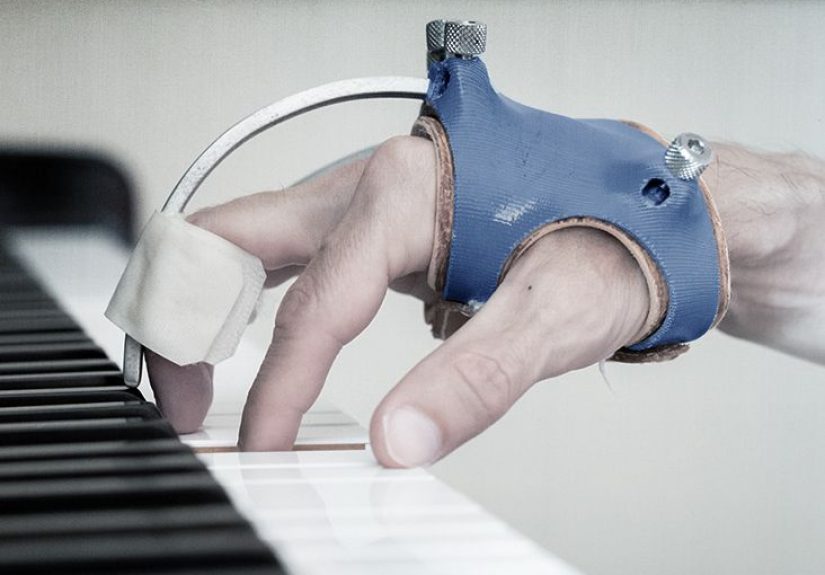
- Musician’s dystonia: Fingers curl or freeze only when playing the instrument.
- Runner’s or athlete’s dystonia: Abnormal leg or foot postures during running or sport-specific movements.
Common named focal dystonias
- Cervical dystonia (spasmodic torticollis): Involuntary neck muscle contractions cause the head to twist, tilt, or jerk. Often painful.
- Blepharospasm: Repeated eyelid spasms or forced eye closure that can lead to “functional blindness.”
- Spasmodic dysphonia: Voice sounds strained, breathy, or broken due to laryngeal muscle dystonia.
- Oromandibular dystonia: Jaw, tongue, and lower face muscles contract, affecting speaking and eating.
What causes dystonia?
Dystonia isn’t one single disease with one clear cause. It’s more like a family of disorders with different roots that all lead to similar movement problems.
Primary (idiopathic or genetic) dystonia
In primary dystonia, dystonia is the main neurological finding. Some cases are linked to gene variants (for example, DYT-TOR1A in early-onset generalized dystonia), while others are “idiopathic,” meaning we haven’t identified a clear cause yet. Genetic forms often begin in childhood or adolescence and may spread over time.
Secondary (acquired) dystonia
Secondary dystonia happens due to another condition or external factor, such as:
- Exposure to certain medications, especially dopamine-blocking antipsychotics (tardive dystonia)
- Brain injury, stroke, or lack of oxygen at birth
- Neurodegenerative diseases (such as Wilson disease or Parkinson’s disease)
- Infections or metabolic disorders
Tardive dystonia, for example, may appear after long-term use of neuroleptic drugs or certain anti-nausea medications and can persist even after the drug is stopped.
What’s going wrong in the brain?
While researchers are still filling in the details, several mechanisms appear to play a role:
- Abnormal communication in movement networks (basal ganglia–cerebellar–cortical circuits)
- Disordered sensory processing (the brain misreads body position and movement)
- Maladaptive neuroplasticity“overlearning” certain movement patterns in task-specific dystonia
In plain English: the brain’s “movement software” learns something incorrectly and keeps running that buggy code.
How dystonia is diagnosed
There’s no simple blood test that lights up “Dystonia!” on the screen. Diagnosis is based on:
- A detailed medical and medication history
- Neurological exam (watching posture, gait, and specific tasks)
- Family history and age at symptom onset
- Imaging (like MRI) to rule out structural causes
- Blood tests or genetic testing in selected cases
A movement disorder specialistusually a neurologist with special trainingis often the best person to confirm the diagnosis. In some cases, video of typical episodes (at home or during specific tasks) can be extremely helpful, especially for intermittent or task-specific dystonias.
How is dystonia treated?
There’s no single “magic pill” that cures all dystonia, but many people see major improvements with a combination of treatments. The key word is combinationmedical therapy, procedures, rehabilitation, and lifestyle strategies often work best together.
1. Botulinum toxin injections
For focal or segmental dystonia, botulinum toxin (BoNT) injections are often the frontline treatment. A neurologist injects tiny amounts into overactive muscles to reduce contractions for about 3–4 months at a time.
Benefits can include:
- Less abnormal posturing or twisting
- Reduced pain
- Improved ability to read, work, drive, or use screens (yes, even doom-scroll more comfortablyideally not too much!)
Side effects are usually local and temporary (like weakness in the injected muscle), but your doctor will discuss the risks and adjust doses over time.
2. Oral medications
Medications may be especially useful for generalized or segmental dystonia. Common classes include:
- Anticholinergics (e.g., trihexyphenidyl) to modulate dopamine–acetylcholine balance
- Baclofen, a muscle relaxant that acts on GABA receptors
- Benzodiazepines to reduce muscle overactivity and anxiety
These drugs can help, but side effectslike dry mouth, sleepiness, or confusionmust be balanced against benefits, especially in older adults.
3. Deep brain stimulation (DBS)
For people with severe dystonia who don’t respond well to medications and BoNT, deep brain stimulation may be an option. In DBS, a neurosurgeon places electrodes in specific brain regions (often the globus pallidus internus), connected to a battery-powered stimulator under the skin. The device delivers tiny electrical pulses that help normalize faulty movement signals.
DBS doesn’t help everyone and doesn’t “cure” dystonia, but for many suitable candidates it can lead to 40–60% improvement in motor symptoms and quality of life over time. Expectations must be realistic: it’s a big decision, usually offered at specialized centers after thorough evaluation.
4. Physical, occupational, and speech therapy
Rehabilitation is not just a feel-good add-onit’s a core pillar of care. Therapists may use:
- Stretching and strengthening to counter abnormal postures
- Task-specific retraining for writer’s cramp or musician’s dystonia
- Postural training and gait work for cervical or lower-limb dystonia
- Speech therapy for spasmodic dysphonia and oromandibular involvement
Newer neurorehabilitation approaches focus on retraining sensory–motor networks with carefully structured movement programsespecially for cervical and task-specific dystonias.
5. Sensory tricks and daily-life hacks
Many people with dystonia discover simple “sensory tricks” (also called geste antagoniste) that temporarily reduce symptomslike lightly touching the chin to ease neck twisting, or resting a finger near the eye to decrease blinking. These maneuvers are often surprisingly effective for seconds to minutes at a time.
Other practical hacks include:
- Using specialized pens or keyboard setups for hand dystonia
- Wearing scarves, collars, or braces to support the neck
- Adjusting lighting and reducing visual strain for blepharospasm
- Breaking tasks into shorter chunks to avoid fatigue-triggered worsening
Living with dystonia: beyond the clinic
Managing dystonia is a marathon, not a sprint. Most people benefit from an ongoing relationship with a movement disorder clinic and a supportive care team that may include neurologists, therapists, mental health providers, and social workers.
Support groupsboth in-person and onlinecan be invaluable. Being able to say, “My neck just dragged my head into my coffee cup again,” and hearing “Same!” from others can make a huge emotional difference.
It’s also crucial to address:
- Mental health: Counseling or medication for anxiety, depression, or trauma linked to chronic illness.
- Work and school: Workplace accommodations, ergonomic changes, or modified schedules.
- Relationships: Honest conversations about visible symptoms, pain, and energy levels.
When to see a doctor
Get medical attentionideally from a neurologist or movement disorder specialistif you notice:
- Recurrent twisting movements or abnormal postures you can’t control
- Eye blinking, jaw, or voice spasms that interfere with daily life
- New symptoms after starting a medication (especially antipsychotics or anti-nausea drugs)
- Symptoms rapidly worsening, spreading, or associated with other neurological changes
Early evaluation can help identify treatable causes and avoid years of “Maybe I’m just stressed?” guessing.
Real-world experiences and practical insights
Reading about dystonia in a textbook is one thing. Living with it is another universe. While every person’s experience is unique, some themes show up again and again in stories from people and families dealing with dystonia.
The long road to a name
For many, the journey starts with confusion. Maybe your neck starts pulling to the right during long drives. Friends joke that you’re “dramatic” or “tense.” You stretch, crack your neck, switch pillows, blame the chair, and keep going. Monthsor even yearslater, the twisting becomes more obvious, painful, and impossible to ignore. Multiple appointments may yield explanations like “stress,” “bad posture,” or “just a tic.”
Finally, someone mentions “movement disorder,” and you meet a neurologist who watches you walk, turn your head, and perform specific tasks. Within minutes, they say the word: “dystonia.” Oddly, that label can feel like relief. Nothing magical has changed in your muscles, but now your experience has a name, a community, and a roadmap.
Adjusting daily life (without giving up everything you love)
Many people with dystonia describe a period of “renegotiation” with daily life. You may need:
- A new ergonomic setup at your desk
- Voice-recognition software if typing or writing triggers symptoms
- Scheduled movement breaks to reset posture and reduce spasms
- Tweaks to driving habits, like using mirrors more to reduce frequent head turns
The goal isn’t to shrink your life around dystonia. It’s to re-engineer routines so your brain and body can work with you, not against you. Some people find that once they build in pacing and supportive tools, they actually become more productive and less exhausted than during the “push through it and collapse later” phase.
Managing emotional whiplash
Dystonia is unpredictable. You can have a “good neck day” followed by a day where your head feels like it has its own agenda. That inconsistency can be emotionally draining. Many people cycle through frustration (“Why can’t I control this?”), self-judgment (“I should be able to handle this”), and grief over changes in their abilities.
Over time, tools like cognitive behavioral therapy (CBT), mindfulness practices, or simply having a therapist who “gets it” can help you separate your identity from your symptoms. Dystonia may shape your routines, but it doesn’t define your worth, intelligence, or personality. If anything, the patience and creativity you build while managing dystonia often spill over into other parts of lifein a good way.
Working with your care team like a partner
One of the most empowering shifts many people describe is moving from “passenger” to “co-pilot” in their care. Instead of passively receiving treatments, they:
- Track symptoms, triggers, and responses to medications or injections
- Bring video clips of episodes to appointments
- Ask about rehab options, not just prescriptions
- Discuss goals clearly: driving, working, playing music, reading, or speaking comfortably
This collaboration helps clinicians fine-tune treatment. For example, if botulinum toxin injections reduce neck twisting but make your head feel “too heavy” to hold up, dosage and injection sites can be adjusted. If medications ease spasms but cloud your thinking, your team can reconsider the mix or timing.
Finding community and hope
Finally, there’s the power of not being alone. Many people find online support groups or patient organizations where others share everything from technical DBS questions to “How do you explain this to people who think you’re just stressed?” memes. Those spaces can provide practical tipsand also the rare gift of feeling seen without having to over-explain.
While there’s currently no universal cure for dystonia, there is progress. New research is exploring better medications, smarter stimulation technologies, and more effective neurorehabilitation programs. Meanwhile, countless individuals are building full, meaningful lives that include dystonia but aren’t ruled by it. If you or someone you love is dealing with dystonia, you’re allowed to be frustrated and hopeful at the same timeand to ask for every bit of help available.
Conclusion
Dystonia is a complex, network-level movement disorder that can affect nearly any muscle group and impact both physical function and emotional well-being. But it’s not a dead end. With accurate diagnosis, tailored treatment (botulinum toxin, medications, DBS, rehab), and smart coping strategies, many people dramatically improve their symptoms and reclaim activities that matter most to them.
If you recognize yourself in these descriptionstwisting movements, task-specific cramping, or unexplained posturesconsider talking to a neurologist, ideally a movement disorder specialist. The sooner dystonia is identified, the sooner you can build a personalized game plan to manage it.