Table of Contents >> Show >> Hide
- Why This Easter Rainbow Salad Works
- Easter Rainbow Salad Recipe Ingredients
- How to Make Easter Rainbow Salad
- Tips for the Best Easter Rainbow Salad
- Make-Ahead, Storage, and Food Safety
- Easy Variations for Your Easter Table
- What to Serve with Easter Rainbow Salad
- Experiences With Easter Rainbow Salad Recipe
- Final Thoughts
If your Easter table usually leans beige (ham, rolls, potatoes, repeat), this is your colorful wake-up call. This Easter Rainbow Salad Recipe is the bright, crunchy, sweet-savory centerpiece your spring menu has been waiting for. It’s loaded with seasonal produce, layered in beautiful bands of color, and finished with a fresh honey-herb vinaigrette that tastes like sunshine got a culinary degree.
The best part? This salad looks fancy enough for a holiday spread, but it’s built from very practical techniques: roast or prep a few vegetables, blanch the green ones quickly, keep everything crisp, and assemble right before serving. No chef hat required. If you can slice a radish and whisk dressing, you’re in business.
This version is a fully original, web-synthesized recipe inspired by popular Easter and spring salad patterns across trusted U.S. cooking sites: think beets and strawberries for color, asparagus and peas for peak spring flavor, radishes for bite, pistachios for crunch, and eggs because… well, it’s Easter. Let’s make a salad that actually gets talked about.
Why This Easter Rainbow Salad Works
A great holiday salad needs more than pretty colors. It needs contrast. This one nails it:
1) Color that looks intentional (not “fridge clean-out”)
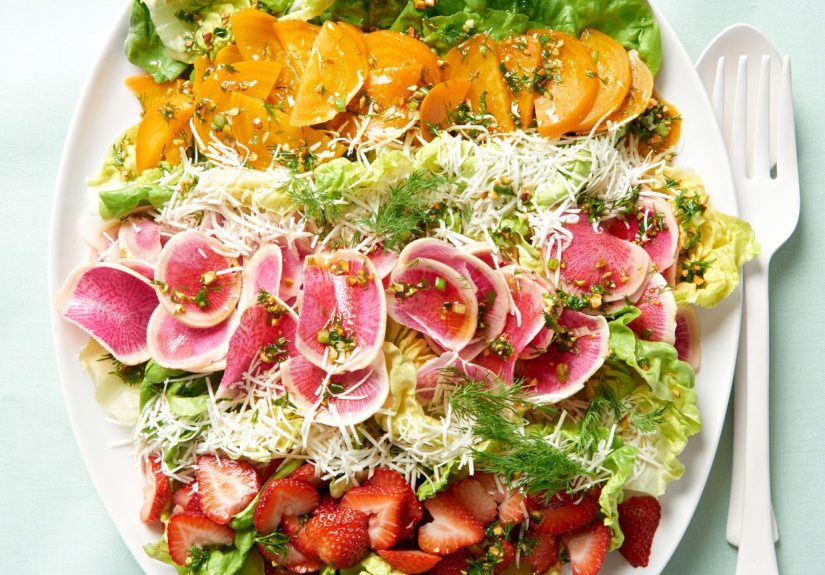
The rainbow layout uses naturally vibrant ingredients: green lettuce and herbs, golden beets, pink-red strawberries, pale green asparagus and peas, and bright radishes. The platter looks festive without food coloring, glitter, or anything suspicious.
2) A balance of sweet, peppery, creamy, and crunchy
Strawberries and honey bring gentle sweetness, radishes add a peppery pop, feta (or ricotta salata) gives salty creaminess, and pistachios bring the crunch. Hard-boiled eggs make it feel more substantial and Easter-friendly.
3) A composed salad is holiday-friendly
Instead of tossing everything together and hoping for the best, you arrange the ingredients in rows or sections. That keeps tender greens from getting crushed, lets guests see what’s in the bowl, and gives picky eaters a fair chance to negotiate with the radishes.
4) Make-ahead friendly steps
You can roast beets, blanch asparagus, boil eggs, and mix the dressing ahead of time. On Easter day, all you need to do is assemble and serve. That’s the kind of kitchen strategy that saves your sanity before guests arrive.
Easter Rainbow Salad Recipe Ingredients
This recipe serves 8 as a side dish (or 4 as a generous lunch salad).
For the Salad
- 1 large head Bibb or Boston lettuce, leaves separated and torn if large
- 5 ounces spring mix or baby spinach (optional, for extra volume)
- 2 medium golden beets, roasted, peeled, and thinly sliced
- 8 ounces strawberries, hulled and sliced
- 4 to 6 radishes (watermelon radishes if you can find them), thinly sliced
- 8 ounces asparagus, trimmed and cut into 2-inch pieces
- 1 cup peas (fresh or frozen and thawed)
- 4 large hard-boiled eggs, peeled and halved or quartered
- 4 ounces feta cheese or ricotta salata, crumbled or finely shredded
- 1/2 cup roasted salted pistachios, roughly chopped
- 2 tablespoons chopped fresh dill
- 2 tablespoons chopped fresh mint
- Optional: 1 small avocado, diced (for extra creaminess)
For the Honey-Herb Vinaigrette
- 1/3 cup white balsamic vinegar (or regular balsamic if that’s what you have)
- 2 tablespoons honey
- 1 tablespoon lemon juice
- 1 teaspoon Dijon mustard
- 1 small shallot, finely minced
- 1/2 teaspoon kosher salt
- 1/4 teaspoon black pepper
- 1/2 cup extra-virgin olive oil
- 1 tablespoon chopped dill
- 1 tablespoon chopped mint
Ingredient note: White balsamic keeps the dressing light in color, which helps the “rainbow” presentation stay bright. Regular balsamic tastes great too, but the vinaigrette will look darker.
How to Make Easter Rainbow Salad
Step 1: Roast the beets (or use pre-cooked)
If you’re roasting from scratch, wrap the beets in foil and roast at 400°F until tender (usually 40 to 60 minutes, depending on size). Let them cool, peel, and slice thinly. You can do this a day or two ahead and refrigerate.
Want the shortcut? Store-bought cooked beets work just fine. Holiday cooking is not the time to prove something to a root vegetable.
Step 2: Cook the eggs
Place eggs in a saucepan, cover with water, and bring to a boil. Turn off the heat, cover, and let sit for about 10 to 12 minutes for firm yolks. Transfer to ice water, cool, peel, and refrigerate until ready to use.
For a classic Easter salad look, cut them into halves or quarters right before serving. If you prefer jammy centers, that’s delicious too, but fully cooked eggs are the safer choice for gatherings with kids, older adults, or anyone at higher risk.
Step 3: Blanch the asparagus and peas
Bring a pot of salted water to a boil. Add the asparagus and cook for 1 to 2 minutes until bright green and tender-crisp. Scoop it out with a slotted spoon and drop it into ice water for 1 minute to stop the cooking.
Next, blanch the peas for about 30 seconds (if using fresh) or just warm briefly (if thawed frozen peas), then chill them too. Drain everything well and pat dry. This step matters: wet vegetables water down the dressing and make the platter look sad.
Step 4: Make the vinaigrette
In a bowl, whisk together the white balsamic vinegar, honey, lemon juice, Dijon mustard, shallot, salt, and pepper. Slowly drizzle in the olive oil while whisking until smooth and lightly thickened.
Stir in the dill and mint. Taste and adjust. If you like a brighter dressing, add a little more lemon. If your strawberries are extra tart, a tiny drizzle more honey makes everything sing.
Step 5: Build the rainbow (the fun part)
Arrange the Bibb lettuce (and spring mix, if using) on a large platter. Then layer the toppings in rows or curved bands:
- Asparagus + peas
- Golden beets
- Strawberries
- Radishes
- Eggs
Scatter the feta, pistachios, and fresh herbs across the top. Add avocado last if using.
Step 6: Dress and serve
Drizzle a little vinaigrette over the platter just before serving, and serve the rest on the side. That way the greens stay crisp and guests can add more if they want. (They will.)
Tips for the Best Easter Rainbow Salad
Use a composed style, not a big toss
Tender spring greens bruise easily. A composed salad keeps textures crisp and makes the colors pop. It also turns a simple side into a holiday centerpiece.
Slice asparagus on a bias
Thin diagonal cuts make asparagus look elegant and help it feel more tender in a salad. It’s a small trick that makes a big difference in texture.
Dry everything thoroughly
Water is the enemy of a bright vinaigrette. After blanching and rinsing produce, pat dry with paper towels or spin in a salad spinner so the dressing clings instead of pooling.
Dress just before serving
If the salad sits fully dressed too long, the greens lose their bounce. For best results, assemble the platter, refrigerate, then add dressing at the last minute.
Use what’s fresh and local
This recipe is flexible. If you can’t find watermelon radishes, use red radishes. If strawberries aren’t great yet, swap in orange segments or shaved carrots for color. The goal is a spring rainbow, not a scavenger hunt.
Make-Ahead, Storage, and Food Safety
Make-ahead plan (the stress-free version)
- 2 days ahead: Roast beets and refrigerate.
- 1 day ahead: Boil eggs, blanch asparagus, prep radishes and strawberries, make dressing.
- Day of: Assemble platter, add toppings, drizzle lightly, serve extra dressing on the side.
How long leftovers last
Undressed leftovers keep best. Store salad components in separate airtight containers if possible. Once dressed, the salad is still tasty, but it’s best eaten the same day. If the platter is already dressed, try to enjoy it within a day.
Produce safety tips
Rinse fresh produce under plain running water and gently rub or scrub firm items (like radishes) with a clean brush if needed. Skip soap, bleach, and “produce washes”they’re not recommended for fruits and vegetables. Dry produce with a clean towel to reduce moisture and help dressing stick.
If you’re using bagged greens labeled pre-washed or ready-to-eat, you usually don’t need to wash them again. Rewashing can increase the chance of cross-contamination if your sink or tools aren’t spotless.
Egg safety tips
Buy eggs from a refrigerated case, keep them cold (40°F or below), and use hard-cooked eggs within 1 week. For gatherings, keep the salad chilled until serving time, especially if it includes eggs and cheese.
Easy Variations for Your Easter Table
1) Citrus Easter Rainbow Salad
Add orange segments and a little orange zest to the dressing. This version plays especially well with ham or roasted chicken.
2) Creamy Spring Brunch Version
Swap the vinaigrette for a yogurt-dill dressing and add chopped bacon. This variation feels a little more brunch-y and a little less “I’m pretending this is a light lunch.”
3) Vegan Easter Rainbow Salad
Skip the eggs and cheese, add roasted chickpeas and avocado, and use maple syrup instead of honey in the dressing. Still gorgeous, still crunchy, still very much invited to Easter.
4) Main-Dish Salad Upgrade
Add grilled salmon, roast chicken, or quinoa. If you want this to carry the meal, protein is your best friend.
What to Serve with Easter Rainbow Salad
This Easter rainbow salad recipe pairs beautifully with:
- Glazed ham
- Roast chicken or turkey breast
- Lemon-herb salmon
- Deviled eggs (because Easter)
- Buttery rolls or a rustic sourdough loaf
- Roasted potatoes or a spring gratin
It also works on a brunch buffet next to quiche, frittata, or hot cross buns. Basically, if your table needs color and crunch, this salad is ready for duty.
Experiences With Easter Rainbow Salad Recipe
One of the reasons this salad keeps showing up on Easter tables is that it solves a very real holiday problem: everyone wants something fresh, but nobody wants a boring bowl of lettuce. A rainbow-style spring salad feels special the moment it hits the table. Guests usually react before they even taste itsomeone points, someone takes a photo, and someone immediately asks, “Wait, what’s in this?” That’s a good sign. A salad that starts conversations is doing more than filling space.
In family-style meals, this recipe also works because it’s flexible for different eaters. Some people pile on the beets and radishes. Others go straight for strawberries, eggs, and feta. Kids often like the “rainbow” idea more than the word “salad,” which is a useful parenting trick even if you’re just borrowing children for the afternoon. The composed layout lets everyone build a plate they actually want, instead of committing to one fully tossed mixture.
Home cooks also tend to love this recipe because the prep can be broken into easy chunks. Roasting beets the day before makes the holiday kitchen calmer. Blanching asparagus and peas takes only a few minutes, and the ice bath trick makes the vegetables look bright and snappy instead of drab. Many people who try this recipe for the first time say the biggest surprise is how much the texture matters: crisp radishes, tender asparagus, crunchy pistachios, creamy eggs, and soft berries all in one bite feels much fancier than the ingredients list suggests.
Another common experience? The dressing becomes a repeat recipe. The honey-herb vinaigrette is simple, but it tastes like the kind of thing you’d get at a restaurant and then try to guess for a week. It works on this Easter salad, but people end up using it on weekday greens, grain bowls, and even roasted vegetables. That’s the secret bonus of a good holiday recipe: it doesn’t disappear after the holiday.
For hosts, presentation is the real superpower here. You don’t need special tools, ring molds, or advanced plating skills. A large platter and a little intention go a long way. Some cooks make neat stripes like a decorated Easter egg; others do loose arcs of color. Both work. The only “rule” is to keep the wet ingredients dry and add dressing just before serving. That one habit alone makes the salad look fresh and polished instead of tired and soggy.
This salad also adapts well to what’s available. In some places, watermelon radishes are easy to find; in others, regular red radishes are the norm. Some markets have amazing asparagus in early spring, while others are still catching up. The recipe still succeeds because the rainbow concept is more important than one exact ingredient. If you keep the color, texture, and sweet-savory balance, you’ll still get that “wow” effect.
And maybe the most relatable experience of all: leftovers almost never make it to Monday. Even people who “aren’t salad people” tend to circle back for seconds. Once the platter starts to disappear, the recipe stops being a side dish and becomes part of the Easter tradition.
Final Thoughts
This Easter Rainbow Salad Recipe is the kind of dish that makes a holiday table feel alive: colorful, seasonal, and full of texture. It’s easy enough for a home cook, pretty enough for a centerpiece, and practical enough to prep ahead without chaos.
If you’re building an Easter menu and want one dish that brings freshness, color, and a little “wow,” this is it. Your ham may still be the main event, but this salad is absolutely stealing some of the spotlight.