Table of Contents >> Show >> Hide
- What egg yolk can actually do for your hair
- What egg yolk probably won’t do (myths worth retiring)
- Who egg yolk hair masks are best for
- Who should skip it (or be extra cautious)
- Safety first: raw egg, Salmonella, and basic hygiene
- How to use egg yolk on hair: the basic method
- Egg yolk mask recipes by hair type
- How often should you use egg yolk on hair?
- Troubleshooting: making egg yolk masks less gross and more effective
- Egg yolk for hair growth: what to do if shedding is the real issue
- FAQ
- Real-world experiences : what people tend to notice, learn, and tweak
- Conclusion
- SEO tags (JSON)
Somewhere between “my grandma swears by it” and “why does my shower smell like brunch,” egg yolk for hair has
become one of the internet’s most persistent DIY beauty rituals. And honestly? It’s not totally random. Egg yolk
is rich in fats and naturally occurring compounds that can make hair feel softer and look shinierespecially
if your strands are dry, frizzy, or stressed out from heat styling.
But here’s the truth (served sunny-side up): an egg yolk hair mask can improve the look and feel of hair
in the short term, yet it’s not a magic potion for faster hair growth or permanent “repair.” Hair you can see is
mostly dead keratin, so topical treatments are more like a great jacket than a new skeletonuseful, protective,
and confidence-boosting, but not a full-body makeover.
In this guide, you’ll get the real benefits, the myths to ignore, safety tips (because raw egg is… a choice),
and easy recipes for using egg yolk on hair without turning your bathroom into a cooking show.
What egg yolk can actually do for your hair
1) Add softness and shine (the “I slept eight hours” illusion)
Egg yolk contains lipids (fats) and emulsifiers that can coat the hair shaft, helping strands feel smoother and
look glossier. This is most noticeable on dry or porous hair, where rough cuticles scatter light and create
frizz. Think of egg yolk as a temporary “polish” that can make hair look more hydrated than it was five minutes ago.
2) Help reduce the look of frizz and flyaways
Frizz is often a mix of dryness, raised cuticles, and humidity. A yolk-based mask can temporarily weigh down
flyaways and help hair clump into smoother sections, which reads as less frizz and more “intentional hairstyle.”
(No promises if you’re battling a tropical humidity index, though.)
3) Improve the feel of damaged hairwithout truly “repairing” it
Hair treatments can’t stitch split ends back together permanently. What they can do is fill in tiny gaps on the
surface, reduce friction, and help hair feel less rough. Egg yolk can act like a DIY conditioning step that makes
damage less obvious for a whileespecially when paired with a gentle shampoo and conditioner afterward.
4) Support hair health indirectly (the “eat the omelet too” part)
If you’re using egg yolk for hair growth, the more evidence-based move is nutrition: hair follicles need adequate
protein, energy, and micronutrients. Eggs are a nutrient-dense food, and getting enough protein and key nutrients
matters for overall hair health. That said, most “hair growth” issues have multiple causesstress, hormones,
genetics, medical conditionsso diet is a piece of the puzzle, not the whole puzzle.
What egg yolk probably won’t do (myths worth retiring)
Myth: Egg yolk makes hair grow faster overnight
Hair growth happens at the follicle under the scalp. A topical yolk mask may help hair feel stronger (less breakage),
but that’s not the same as increasing the growth rate. If you notice “more length,” it’s often because hair is
breaking less or looking smoothernot because follicles hit turbo mode.
Myth: Egg yolk permanently repairs heat or bleach damage
Once hair fiber is damaged, you can improve manageability and reduce further damagebut you can’t truly reverse
it. If your ends are split, trimming is still the undefeated champion.
Myth: More egg = more better
Too much protein-heavy treatment (including DIY masks) can leave hair feeling stiff, dry, or brittleespecially
on some curl patterns or low-porosity hair. Balance matters: protein-like conditioning and moisture work best as a team.
Who egg yolk hair masks are best for
- Dry, frizzy hair: Yolk’s fatty components can make hair feel softer and more pliable.
- Heat-styled or color-treated hair: The coating effect can reduce roughness and improve slip.
- Curly/coily hair that needs lubrication: Many curl routines benefit from added softness and reduced friction.
- High-porosity hair: Often absorbs product quickly and can benefit from richer masks.
Who should skip it (or be extra cautious)
- Anyone with an egg allergy: Even scalp contact can trigger reactions in some people.
- People with sensitive or inflamed scalps: If you have open sores, severe dandruff, eczema, psoriasis, or infections, DIY masks may irritate or complicate things.
- Anyone at higher risk from foodborne illness: Raw egg can carry bacteria like Salmonella. Consider pasteurized eggs if you try this at all.
- If you hate lingering smells: Egg masks can be… assertive. (We’ll fix that.)
Safety first: raw egg, Salmonella, and basic hygiene
Let’s address the elephant in the bathroom: raw eggs can carry bacteria, and Salmonella can cause serious illness
in some people. Using raw egg on hair isn’t the same as eating it, but you can still contaminate your hands,
surfaces, towels, andif you’re unluckyyour mouth/eyes during rinsing.
Smart safety choices
- Use pasteurized eggs if you can find them. They’re heat-treated to reduce bacterial risk.
- Wash hands and surfaces with hot, soapy water before and after.
- Keep the mixture cold until use; don’t let egg sit warm on the counter “marinating” for an hour.
- Don’t save leftovers. Make it fresh, use it, toss the remainder.
- Avoid contact with eyes and mouth while applying and rinsing.
Also: rinse with cool water. Warm water can turn your DIY mask into a DIY scramble. Delicious? No. Memorable? Unfortunately, yes.
How to use egg yolk on hair: the basic method
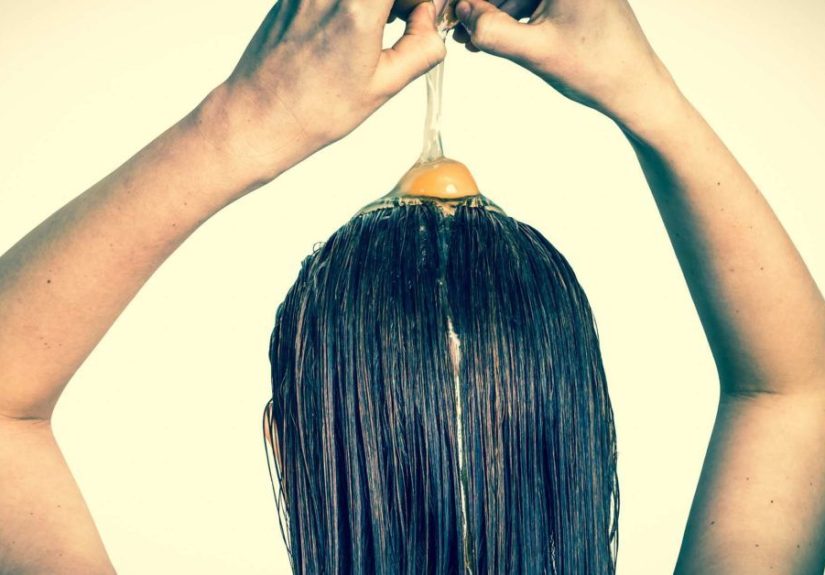
The simplest egg yolk hair mask (1-minute prep)
- 1–2 egg yolks (1 for short/fine hair, 2 for long/thick hair)
- Optional: 1–2 tablespoons water or conditioner (for easier spreading)
Step-by-step
- Separate the yolks. Try not to include egg white if you’re aiming for richer conditioning. (Egg white can be more “tightening” and may feel drying for some.)
- Whisk until smooth. No one wants “chunks” in their ends.
- Apply to damp hair. Lightly wet hair first; it helps distribution and reduces tugging.
- Focus on mid-lengths and ends. If your scalp is oily or sensitive, keep the yolk mostly off the roots.
- Cover and wait 10–20 minutes. A shower cap or plastic wrap keeps it from dripping like a sad omelet.
- Rinse with cool water. Take your timethis is not a speedrun.
- Shampoo gently, then condition. You may need two light shampoos if your hair holds onto oil easily.
Egg yolk mask recipes by hair type
For dry hair: egg yolk + olive oil (deep-conditioning vibe)
- 1–2 egg yolks
- 1 tablespoon olive oil (or avocado oil)
- Optional: 1 teaspoon honey (adds slip; can be sticky, so rinse well)
This is the “my ends have been through it” formula. Oil boosts softness, and honey can improve glide so detangling doesn’t feel like a competitive sport.
For frizz: egg yolk + yogurt (smoothness without heavy grease)
- 1 egg yolk
- 2 tablespoons plain yogurt
- Optional: a few drops of vanilla extract (for smell control)
Yogurt is a popular DIY add-in for manageability. If your hair gets weighed down easily, keep this mask shorter (10–15 minutes) and shampoo lightly afterward.
For coarse or curly hair: egg yolk + mashed avocado
- 1–2 egg yolks
- 2 tablespoons mashed ripe avocado (blend well to avoid bits)
- Optional: 1 teaspoon oil (if your hair is very thirsty)
This one is rich. Great for wash-day routines where you want softness and definition. Blend thoroughly unless you enjoy picking avocado out of curls like it’s confetti.
For oily roots + dry ends: “ends only” yolk mask
If your scalp gets oily quickly, apply yolk only from mid-length to ends. Let your scalp do its own thing. Not every inch of your head needs the same treatment.
How often should you use egg yolk on hair?
A good starting point is once every 1–2 weeks. More often isn’t automatically betterespecially if your hair starts to feel stiff or rough afterward.
If you notice dryness, crunchiness, or tangling after repeated use, take a break and focus on moisture-forward conditioning.
Signs you might be overdoing protein-style treatments
- Hair feels stiff, straw-like, or unusually rough
- More snapping/breakage when brushing
- Curls feel tight but not in a good way (less bounce, more “help me”)
If that happens, pause egg masks and switch to a moisturizing mask or conditioner for a couple of weeks.
Troubleshooting: making egg yolk masks less gross and more effective
“It smells like sulfur.”
- Add 1–2 drops of vanilla extract (yes, the baking kind).
- Follow with a lightly scented conditioner.
- Make sure you rinse thoroughly and shampoo gently.
“It’s hard to rinse out.”
- Use cool water (warm water can set proteins and make removal harder).
- Apply to damp hair, not bone-dry hair.
- Whisk well and consider thinning with a small amount of water or conditioner.
“My hair feels greasy afterward.”
- Use fewer yolks (fine hair often needs only one).
- Skip added oils and honey.
- Keep it off the scalp and shorten the processing time to 10 minutes.
- Use a gentle clarifying shampoo occasionally (not every wash day).
Egg yolk for hair growth: what to do if shedding is the real issue
If your main concern is hair shedding or thinningnot just frizz or drynessegg yolk masks are not the most
reliable solution. Shedding can be normal (many people lose dozens of hairs a day), but significant or sudden changes
can be linked to stress, illness, nutritional deficiencies, hormones, or medical conditions.
Consider talking with a healthcare professional or dermatologist if you notice:
- Sudden patchy hair loss
- Scalp redness, pain, scaling, or intense itch
- Clumps of hair coming out consistently
- Shedding that persists for months
Think of egg yolk masks as a cosmetic helperuseful for softness and shinewhile the “growth conversation” often belongs with evidence-based scalp and health strategies.
FAQ
Can I leave an egg yolk hair mask on overnight?
Not recommended. Longer isn’t automatically better, and leaving raw egg on hair for hours increases mess, irritation potential, and hygiene concerns. Stick to 10–20 minutes.
Will egg yolk help dandruff?
Dandruff often involves yeast and inflammation, and it usually responds better to proven anti-dandruff shampoos. Egg yolk might reduce dryness temporarily, but it’s not a dependable dandruff treatment.
Can I use egg yolk on color-treated hair?
Generally, a short conditioning mask won’t strip color the way harsh clarifiers might. Still, always rinse with cool water and shampoo gently. If your color is very fresh, patch-test on a small section first.
Is egg white better than egg yolk?
Egg white masks are often used for oily scalps because they feel “lighter,” but they can be more drying for some people. Egg yolk tends to be more conditioning because of its fats.
Real-world experiences : what people tend to notice, learn, and tweak
Because egg yolk hair masks sit in that sweet spot between “kitchen remedy” and “beauty dare,” the experiences people report are wonderfully consistent:
they often love the softness, dislike the cleanup, and eventually develop a personal system that makes it worth doing.
Below are composite-style experiences based on common DIY patternsuse them as a cheat sheet so you can skip the messiest lessons.
Experience #1: The dry-ends victory (and the “why is it squeaky?” surprise)
A common first-timer story goes like this: someone with dry ends tries a single yolk, rinses, and immediately notices
that hair feels smoother and looks shinier once it dries. They’re thrilleduntil the next attempt, when they use two yolks plus oil plus honey
“for extra conditioning” and end up with hair that feels coated. The fix usually isn’t quitting forever; it’s dialing the mask back.
Many people with fine hair do best with one yolk, no added oil, and a short processing time (10 minutes).
People with thick, coarse hair often tolerate the richer version better.
Experience #2: The rinse fiasco (aka the accidental scramble)
The most legendary mistake is rinsing with warm water. The result? Tiny cooked egg bits that cling to strands like they’ve signed a lease.
People who recover from this usually learn three rules: (1) rinse with cool water, (2) whisk thoroughly so the yolk is smooth,
and (3) apply to damp hair so the mask spreads evenly instead of gripping like glue. If someone does end up with stubborn residue,
they often have better luck with a gentle shampoo and lots of cool water rather than turning the heat up (which can make the problem worse).
Experience #3: The smell negotiation
Egg masks can leave a faint “eggy” scent, especially if hair isn’t rinsed completely or if the mixture sits too long.
DIYers who keep doing it tend to build a smell strategy: a drop or two of vanilla extract, a nicely scented conditioner,
or a follow-up rinse and shampoo that’s thorough but not harsh. The most successful approach is usually boring:
fresh egg, short processing time, and a complete rinse.
Experience #4: The “my hair feels stiff now” moment
Some people report that repeated egg masks make hair feel rigid or dry. This can happen when hair gets too much protein-like treatment
without enough moistureor when hair simply doesn’t like the ingredient combo. The tweak people report most often is spacing treatments out:
using egg yolk every other week (or less), and alternating with a moisturizing conditioner or mask.
Another pattern: keeping yolk mostly on ends while letting the scalp aloneespecially if the scalp is already oily or sensitive.
Experience #5: The practical “I’ll do this again” routine
The DIYers who stick with egg yolk masks often make the process idiot-proof:
they mix the mask in a bowl, apply it before showering, clip hair up, set a timer for 10–15 minutes,
and rinse with cool water before doing a normal shampoo-and-condition. They don’t treat it like a miracle;
they treat it like a once-in-a-while conditioning tricksimilar to how you might use a richer hair mask when hair feels extra dry.
When expectations stay realistic, satisfaction goes up.
Bottom line: egg yolk masks can be a fun, effective “softness and shine” boost when used carefully.
The best experience tends to come from small doses, short timing, cool rinsing, and a willingness to customize.
If you want dramatic growth changes, focus on scalp health, stress management, nutrition, and medical guidance when neededand let egg yolk be the supportive side character, not the main hero.
Conclusion
Egg yolk for hair is a classic DIY mask that can genuinely improve softness, shine, and manageabilityespecially for dry, frizzy, or chemically stressed strands.
Use it like a conditioning treatment: keep it short (10–20 minutes), rinse with cool water, shampoo gently, and don’t overdo it.
For hair growth concerns, think bigger than your mixing bowl: shedding and thinning often have underlying causes worth addressing with proven strategies and professional support.