Table of Contents >> Show >> Hide
- Why Older Adults Sometimes Dress in Surprising Ways
- The Most Common Clothing Mix-Ups That Make People Smile
- What These Clothing Choices Can Actually Tell Us
- How to Help Without Being Patronizing
- When the Funny Outfit Is Actually a Small Victory
- Style, Identity, and the Right to Be Unbothered
- Everyday Experiences Related to “Elderly People Who Probably Don’t Realize What They’re Wearing”
- Conclusion
We have all seen it: the grandfather in a neon vacation shirt that looks like it lost a fight with a souvenir shop, the grandmother wearing a “Cool Story Bro” tee she clearly received from a grandchild with questionable judgment, or the older gentleman proudly heading to brunch in slippers, plaid shorts, and a fishing hat that seems to have its own zip code. It is funny. It is charming. And sometimes it is also misunderstood.
The truth is, older adults do not always wear odd, mismatched, or accidental outfits because they have suddenly stopped caring. In many cases, what looks like a hilarious wardrobe choice is actually the result of something far more ordinary: reduced vision, lower contrast sensitivity, arthritis, memory issues, medication side effects, sensitive skin, or the simple desire to get dressed without turning the morning into an Olympic event.
That is what makes this topic more interesting than a quick laugh. Fashion mix-ups among seniors can be sweet, practical, revealing, and occasionally downright legendary. They also tell us something important about aging, independence, dignity, and how everyday tasks become more layered over time.
So yes, we are going to talk about the accidental slogan shirts, inside-out cardigans, mystery stains, and shoes that absolutely should not have left the house. But we are also going to look at why these things happen, what they can mean, and how families can respond with kindness instead of cringe.
Why Older Adults Sometimes Dress in Surprising Ways
Let’s start with the obvious: getting dressed is not always as easy as it sounds. When people are younger, choosing clothes can feel automatic. You open a closet, grab something weather-appropriate, coordinate a few colors, and move on. As people age, that “simple” process can become a chain of mini-decisions and physical tasks.
Vision changes can make it harder to distinguish colors, read small print, spot stains, or notice that a shirt is inside out. That means a person may honestly not realize they are wearing navy socks with black pants, a T-shirt with a wildly inappropriate slogan, or a blouse with one button heroically fighting for its life in the wrong hole.
Mobility and dexterity matter too. Arthritis, shoulder stiffness, balance issues, and reduced hand strength can make buttons, zippers, clasps, and tight sleeves feel like tiny instruments of chaos. In that situation, the most attractive garment in the closet quickly loses to the one that is soft, stretchy, and easy to wrestle into place.
Then there is cognitive load. Even older adults without dementia may feel overwhelmed by too many choices, especially early in the morning, when tired, or while managing multiple health conditions. If someone is living with memory changes, mild cognitive impairment, or dementia, a closet full of options can be less “fashion paradise” and more “decision-making escape room.”
And sometimes the explanation is gloriously simple: they like it. Maybe the shirt says “Retired But Dangerous.” Maybe the pants have an elastic waistband that feels like a warm hug. Maybe the cardigan is bright orange because it is easier to find. Comfort and confidence can outrank style rules at any age, and honestly, that may be the most evolved fashion philosophy of all.
The Most Common Clothing Mix-Ups That Make People Smile
1. The accidental slogan shirt
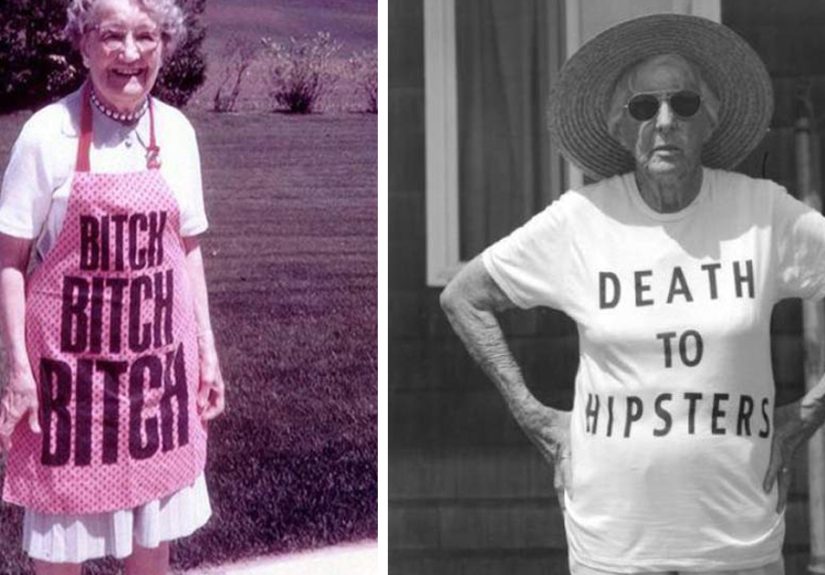
This is a classic. A grandchild gifts a novelty T-shirt. The older adult sees a nice color, a soft fabric, and maybe a cute dog graphic. What they do not see is the tiny line of text underneath that says something mildly sarcastic, wildly ironic, or accidentally spicy. Suddenly Grandma is gardening in a shirt that suggests she is the “Queen of Bad Decisions,” and no one knows whether to laugh or salute.
2. Mismatched colors that somehow become a statement
When contrast sensitivity changes, close shades can blend together. Black and navy become distant cousins. Brown and charcoal become roommates. Add dim bedroom lighting, and the result may be an outfit that looks assembled by a very confident raccoon. Yet here is the twist: sometimes the combination works purely because the wearer has no fear. Fashion people call that “bold.”
3. Backward, inside-out, or buttoned incorrectly
Shirts with subtle tags, pants with similar front and back cuts, or jackets with tricky fasteners can easily end up twisted, reversed, or unevenly buttoned. This is especially common when someone is dressing in a hurry, has limited shoulder mobility, or struggles to feel seams and orientation the way they once did.
4. Shoes chosen for ease, not elegance
Supportive shoes, slip-ons, soft slippers, orthopedic sandals, or decades-old sneakers often win because they are easy to put on and feel safe. Families may be horrified by the aesthetic. Older adults are usually too busy enjoying their pain-free feet to care. And frankly, comfortable shoes are one of the least ridiculous fashion decisions anyone can make.
5. Weather confusion outfits
One of the great mysteries of later life is the person who wears a heavy cardigan in summer and then says they are freezing in air conditioning. Temperature sensitivity, thinner skin, certain medications, and circulation changes can make older adults feel cold when everyone else is melting. To an outsider, the outfit looks odd. To the wearer, it feels sensible.
6. The “I’ve worn this three days in a row” special
Sometimes an outfit becomes a favorite because it is familiar, easy, and comfortable. Repetition can also happen when a person forgets they already wore it, resists changing clothes, or finds laundry management exhausting. What looks like stubbornness may actually reflect routine, memory changes, or the fact that the shirt in question is simply superior.
What These Clothing Choices Can Actually Tell Us
It is easy to treat strange outfits as harmless comedy, but they can occasionally offer useful clues. An older adult who suddenly starts dressing in very unusual ways may be dealing with a new vision problem, worsening arthritis, increased confusion, dizziness, or a reaction to medication. A person who once dressed carefully but now consistently wears stained, ill-fitting, or weather-inappropriate clothing may need extra support with daily tasks.
That does not mean every loud shirt is a medical mystery. It means patterns matter. If the change is sudden, dramatic, or paired with confusion, instability, forgetfulness, or difficulty managing other daily routines, it may be time for a gentle conversation or a check-in with a healthcare professional.
Families should pay special attention when clothing choices create safety risks. Examples include slippery shoes, garments that drag and increase fall risk, clothing that causes skin irritation, or outfits that are too difficult to remove for toileting. Fashion mishaps are one thing. Everyday comfort and safety are another.
How to Help Without Being Patronizing
Nobody wants to be treated like a child, especially by their own adult children or grandchildren. That is why helping with clothing needs a little tact.
Make the closet easier to navigate
Reduce clutter. Group outfits that go together. Use good lighting. Put frequently worn items at eye level. If needed, store only a few weather-appropriate choices where they are easy to reach. This makes dressing simpler without turning the bedroom into a lecture hall.
Choose fabrics and fasteners wisely
Soft materials, front closures, stretch waistbands, easy-on shoes, magnetic buttons, and tag-free garments can reduce frustration. The best adaptive clothing does not scream “medical.” It just makes life easier.
Preserve personal style
Even when someone needs help, they still deserve agency. If your dad loves plaid, let him keep the plaid. If your aunt wears turquoise with the loyalty of a devoted fan club, work with it. The goal is not to erase personality. The goal is to support comfort, dignity, and independence.
Offer two good options instead of twenty bad ones
This trick works beautifully. Too many choices can create fatigue or confusion. Two clear, appealing options keep the person involved while making the task manageable.
Use humor carefully
A shared laugh can be lovely. Mockery is not. “That shirt is legendary” lands better than “You look ridiculous.” Older adults know when they are being laughed at instead of laughed with, and dignity matters more than a punchline.
When the Funny Outfit Is Actually a Small Victory
Here is the part people often miss: a weird outfit can be a sign of independence. If an older adult with stiff hands, low vision, or early memory problems got fully dressed by themselves, that is not a fashion disaster. That is a win. Sure, the cardigan may be backward and the socks may be from different centuries, but they managed an important daily task on their own.
There is real value in that. Dressing independently supports confidence, routine, and self-respect. Many caregivers eventually realize that perfect coordination is not the goal. Participation is. If the person is clean, comfortable, seasonally appropriate, and happy, the outfit has already done its job.
That perspective changes everything. The “wrong” outfit becomes evidence of effort. The odd shoes become the pair they can actually fasten. The repeated shirt becomes the one that does not itch, pinch, or confuse. Once you understand the why, the joke softens and the empathy shows up.
Style, Identity, and the Right to Be Unbothered
Let us also give older adults some credit. Sometimes they realize exactly what they are wearing and simply do not care. After decades of jobs, child-rearing, bills, social expectations, and uncomfortable dress shoes, many seniors enter an elite phase of life known as “freedom from fashion nonsense.”
This is the era of practical sneakers with everything, giant sun hats, cardigans the color of sherbet, and reading glasses on decorative chains that somehow look both efficient and regal. Some older adults intentionally choose clothes that younger people find odd because they have earned the right to be comfortable. That is not decline. That is mastery.
There is something refreshing about a person who values softness over trend cycles and stability over style approval. In a culture obsessed with looking curated, older adults often remind us that clothing can also be simple, functional, and joyfully unserious.
Everyday Experiences Related to “Elderly People Who Probably Don’t Realize What They’re Wearing”
Anyone who has spent time with older relatives has probably collected a few unforgettable wardrobe memories. Maybe it was the grandfather who showed up to a family barbecue wearing a visor from 1994, pajama pants, and a polo shirt with the collar folded in three different directions. Nobody corrected him because he was happy, comfortable, and somehow still the best-dressed person there in spirit.
Or maybe it was an older aunt who loved clothes but had begun struggling with her eyesight. She once wore one navy shoe and one black shoe to church, not because she was making a bold artistic statement, but because the closet lighting was dim and both pairs felt identical by touch. She laughed when she found out later and said, “Well, at least both of them were sensible.” That kind of reaction says a lot. The embarrassment was brief. The humor lasted longer.
In many families, novelty shirts are the main culprit. A grandson buys a shirt with a meme. A granddaughter gifts a hoodie because it looks cozy. The older adult sees a cheerful design and puts it on without reading the smaller print. Suddenly a sweet 78-year-old is walking through the grocery store wearing a slogan that sounds like it was written by a sarcastic internet comedian. The family notices immediately. The wearer usually notices never.
There are also the practical experiences that are less funny when you see them up close. An older man with arthritis may wear the same zip-up sweatshirt almost every day because buttons hurt his fingers. A woman with dry, sensitive skin may reject half her closet because seams feel scratchy and waistbands dig in. A person with memory changes may put on layers that do not make sense together because each item, on its own, seems like the next logical step.
Caregivers often learn that “odd outfits” are really problem-solving in disguise. If slippers keep appearing outside the house, it may be because lace-up shoes are too hard to manage. If someone keeps wearing winter socks in warm weather, it may be because thinner pairs slide around and feel unsafe. If a bright red sweater appears every other day, it may simply be easier to see in a drawer full of muted colors.
Some of the most touching moments come when families stop focusing on whether the outfit is correct and start noticing what it allows. A mismatched outfit might mean the person dressed without assistance. A repeated outfit might mean they found something that makes them feel secure. A wild combination of prints might mean they are still expressing personality in a world that increasingly asks older adults to be quiet, practical, and invisible.
That is why these experiences stay with people. They are funny, yes, but they are also deeply human. Clothes become part comedy, part adaptation, part biography. The old cap, the oversized cardigan, the soft shoes, the mystery T-shirt from a grandkid’s birthday joke, all of it tells a story. And in the best families, that story is met with warmth, a little gentle teasing, and a lot of love.
Conclusion
“Elderly People Who Probably Don’t Realize What They’re Wearing” is a catchy title, but the reality behind it is richer than a quick laugh. Older adults may wear unusual outfits for many reasons: changing vision, sensitive skin, stiffness, memory issues, medication effects, comfort, routine, or plain old personal preference. What seems odd from the outside often makes perfect sense from the inside.
That is why the best response is not ridicule. It is curiosity, kindness, and the occasional appreciative grin when Grandpa confidently strolls into lunch wearing a hat that belongs on a fishing boat and a shirt that says something he definitely did not read. Aging changes daily tasks, but it does not erase identity. Sometimes the most “incorrect” outfit in the room is really a portrait of resilience, independence, and a person who has fully graduated from caring what anyone else thinks.
And honestly, that is a style statement many younger people are still trying to learn.