Table of Contents >> Show >> Hide
- What Happened: The Near-Miss That Got Everyone’s Attention
- How Close Is “Close” in Space?
- Why This Near Miss Matters Beyond One Scary Week
- What Changed After 2019
- What Needs to Happen Next (Without Turning Space Into a DMV Line)
- Experience Notes: Living in the Age of Near Misses (500+ Words)
- The mission operator experience: the calm voice over the boiling calendar
- The constellation operator experience: scale turns every day into traffic day
- The astronomer experience: the sky is beautiful… and occasionally photobombs your data
- The regular-person experience: you’re using space, whether you think about it or not
- Conclusion: A Close Call, a Clear Warning
Space is often sold to us as an endless, silent voidan infinite parking lot where you can leave your stuff in orbit and no one will notice.
Reality check: low Earth orbit (LEO) is starting to look more like a busy freeway at rush hour, except the cars are traveling at “blink and you’re
a cloud of regret” speeds and the road has no lanes, no stoplights, anduntil recentlyno universally enforced rules of the road.
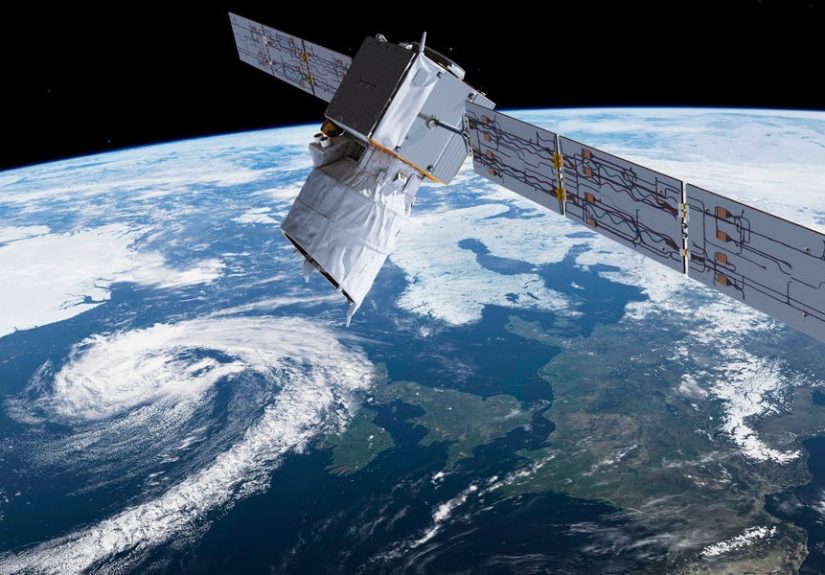
One of the most cited wake-up calls came when the European Space Agency (ESA) and SpaceX found themselves in an uncomfortable situation:
a predicted close approach between ESA’s Aeolus satellite and a SpaceX Starlink satellite (often identified in coverage as “Starlink 44”).
The two spacecraft ultimately did not collidethanks to a carefully planned avoidance maneuverbut the incident highlighted something
bigger than a single close call: modern LEO traffic is scaling faster than our shared habits, tools, and coordination practices.
What Happened: The Near-Miss That Got Everyone’s Attention
The cast: Aeolus and a Starlink satellite
ESA’s Aeolus is an Earth-observation mission designed to measure global wind profilesdata that can improve weather forecasting and climate science.
SpaceX’s Starlink satellites are part of a sprawling broadband constellation built to deliver internet service from orbit. On paper, these missions
are totally compatible: one studies Earth’s atmosphere, the other beams connectivity to Earth’s surface. In practice, they both have to share the
same increasingly popular orbital neighborhood.
The timeline (aka “the week space turned into email drama”)
Conjunction alertswarnings that two objects may pass unusually closeare common in satellite operations. What made this situation notable was
the combination of increasing predicted risk, coordination friction, and the fact that “close” in orbit can go from “meh” to “move now” as new
tracking updates tighten the uncertainty.
- Initial alert: Tracking data indicated Aeolus and a Starlink satellite were predicted to pass close enough to trigger concern.
-
Risk evolves: Updated estimates changed the predicted probability and geometry of the encounter, pushing it toward operational
decision thresholds. - Coordination attempts: ESA and SpaceX exchanged communications, but timing and internal routing issues became part of the story.
-
Decision time: ESA ultimately executed a collision avoidance maneuver for Aeolus rather than waiting for the other satellite
to move.
The maneuver: small burn, big meaning
Avoidance maneuvers often look unimpressive on a human scale. You’re not “swerving” like an action moviethere’s no screeching tire sound in space
(unless you count the sound of a project manager’s soul leaving their body). Instead, operators plan a gentle change in velocity to alter the time
and distance of closest approach. ESA’s public description of the Aeolus maneuver emphasized that the change was relatively modestmeasured in
hundreds of meters of orbital altitudeyet sufficient to create a safer miss distance.
If you’re thinking, “Wait… all that stress for a few hundred meters?”yes. In orbit, a few hundred meters can be the difference between
“awkwardly close handshake” and “catastrophic collision plus thousands of debris fragments that make future operations harder.”
How Close Is “Close” in Space?
Conjunction assessment: the art of worrying responsibly
Collision avoidance doesn’t start with panicit starts with math and uncertainty. Conjunction assessment combines:
(1) tracking data about where objects are believed to be,
(2) models for how those objects move, and
(3) uncertainty estimates that describe how wrong those predictions could be.
The result is not a single “distance” but a probability-informed risk picture: how likely is a collision at time of closest approach given what we
know (and what we don’t)?
NASA and other operators often describe collision avoidance as a structured processscreening for possible close approaches, refining risk as the
encounter approaches, and coordinating if maneuvering is needed. The key is that the decision is usually made under uncertainty: you rarely know
exact positions to the centimeter, especially for objects you don’t control.
Probability thresholds: why one operator’s “meh” is another’s “MOVE”
Different organizations use different maneuver thresholds depending on mission risk tolerance, fuel margins, maneuverability, and operational load.
ESA has publicly discussed using a probability threshold on the order of 1 in 10,000 (10-4) for initiating avoidance planning in the
Aeolus case. Large constellations may adopt different thresholds because their satellites face many more close approachesso even low-probability
events can add up at scale.
Think of it like driving: if you drive once a month, you can be extra cautious and still arrive on time. If you drive all day every day,
you need a system that avoids accidents without slamming the brakes for every leaf that crosses the road. In space, “braking” costs fuel and
planning bandwidth, so thresholds become a balance between safety and sustainability.
Why uncertainty is the villain (not just “crowded orbit”)
Crowding matters, but uncertainty amplifies crowding into operational chaos. If you knew every satellite’s position perfectly, you could schedule
clean, efficient “traffic separations.” In reality, uncertainty clouds the picture, and sometimes the safest move is a conservative maneuver.
That’s one reason the Aeolus–Starlink situation resonated: it wasn’t only about two satellitesit was about the modern reality of many operators
relying on shared tracking, imperfect coordination channels, and evolving predictions.
Why This Near Miss Matters Beyond One Scary Week
Megaconstellations turn “rare” into “routine”
LEO used to be busy, but not like this. With mega-constellations, the number of tracked objects and close approaches skyrockets.
In recent years, Starlink satellites alone have performed an eye-popping number of collision avoidance maneuvers over short periods, illustrating
how conjunction management becomes a daily operational burden at constellation scale.
The headline lesson: when you multiply the number of satellites, you multiply the number of possible encounters. Even if the probability of any
single collision is low, the system-wide risk can become meaningful because the number of “rolls of the dice” increases dramatically.
Automation helpsbut coordination still needs humans (and standards)
SpaceX has emphasized automation for Starlink, including autonomous collision avoidance capabilities. Automation is a big deal because it can
respond quickly and consistently. But automation doesn’t eliminate the need for coordination; it changes it.
If two spacecraft both “autonomously” decide to move in a way that surprises the other operator, you can accidentally create new risk.
That’s why best-practice guidance stresses communication of planned maneuvers and the importance of shared protocols.
In other words: autopilot is great. Two autopilots with no shared “rules of the road” is… a high-speed improv show.
And space is the worst venue for improv.
The debris problem: collisions don’t just end missionsthey create new hazards
A satellite collision can generate a cloud of debris that threatens other spacecraft. This is where the “cascade” fear comes from:
debris increases the chance of more collisions, creating more debris, and so on. You don’t need Hollywood-level explosions for the long-term
consequences to be severe. Even small fragments can disable satellites, and each fragmentation event raises the background risk for everyone.
What Changed After 2019
Better awareness that “email” is not a traffic management system
Coverage of the Aeolus–Starlink near miss often focused on a painfully modern detail: communications and on-call processes.
Reports described how the coordination did not proceed smoothly, and how internal routing issues contributed to delays in response.
The broader industry takeaway wasn’t “someone forgot to hit reply”it was that we need robust, redundant, accountable channels for conjunction
coordination at scale.
The awkward truth is that the space industry outgrew ad hoc coordination faster than it grew shared infrastructure. The solution isn’t
“send better emails.” It’s standardized interfaces, updated contact systems, defined response timelines, and widely accepted norms for
decision-making when both parties can maneuver.
Regulators are leaning in (because physics is not a suggestion)
In the United States, orbital debris mitigation rules and licensing expectations have been evolving, with policymakers focusing more on
disposal reliability, maneuverability, and safe operations for large constellations. These efforts don’t replace operational coordination,
but they raise the baseline: you should not be allowed to treat orbit like an unlimited junk drawer.
Also notable: public reporting and industry discussion suggest operators are actively adjusting constellation strategies to reduce collision risk,
including changes in operating altitudes and disposal practices. The fact that these strategies are being debated in publicby engineers,
regulators, and researchersis itself a sign that “space traffic” is now a mainstream operational reality, not a niche concern.
What Needs to Happen Next (Without Turning Space Into a DMV Line)
1) Shared data standards and interoperable coordination
Many conjunction issues are solvable with better shared information: timely ephemerides (predicted trajectories), uncertainty characterization,
and transparent maneuver intent. Operators should be able to exchange this information reliablyeven across nations, licensing regimes, and
different satellite architectureswithout improvising a new format every time.
2) Clear “right-of-way” norms for maneuver responsibility
One recurring question is: who should move? In aviation and maritime environments, well-defined right-of-way rules reduce ambiguity.
Space needs something similar, but tailored to orbital mechanics and mission constraints. A useful norm would consider:
maneuver capability, fuel margins, mission criticality, and which operator can make the cleanest, least disruptive adjustment.
Without norms, every conjunction becomes a negotiation under deadlinenever a fun hobby.
3) Automation with transparency (and guardrails)
Autonomy should reduce risk, but only if it’s predictable and shareable. That means:
(a) publishing or standardizing how autonomous systems choose maneuvers,
(b) ensuring those maneuvers are communicated in time for others to screen and respond, and
(c) preventing “ping-pong” dynamics where two satellites repeatedly adjust in reaction to each other.
4) “Fail safe” design and fast disposal
The safest collision avoidance strategy is preventing dead, uncommandable objects from lingering in busy corridors.
Designing satellites to deorbit reliably at end of lifeand to do so quickly when they failreduces long-term collision risk.
This is where engineering meets policy: disposal reliability, propulsion redundancy, and operational altitude choices all shape the debris future.
Experience Notes: Living in the Age of Near Misses (500+ Words)
If you’ve never worked in satellite operations, “near miss” might sound like a one-off headline. For people in the field, it’s increasingly a
recurring rhythmpart engineering, part logistics, part sleep deprivation. And yes, sometimes it comes with a side of gallows humor, because
humor is what you do when your job description is basically: “keep expensive things from kissing at 17,000 miles per hour.”
The mission operator experience: the calm voice over the boiling calendar
In many control rooms, conjunction management looks like a calendar that refuses to behave. A conjunction alert arrives, and the first response is
rarely panicit’s triage. Is this a routine close approach with plenty of miss distance? Or is uncertainty shrinking as tracking updates roll in?
Teams review screening outputs, refine the risk picture, and loop in flight dynamics specialists who can model maneuver options that won’t sabotage
the mission’s science or service commitments.
The emotional rollercoaster isn’t “we’re doomed,” it’s “we can’t waste fuel,” followed quickly by “we can’t waste time.”
A well-run team develops a kind of professional chill: coffee in one hand, orbital elements in the other, and a steady willingness to say,
“Okay, let’s run three options and pick the one that buys the most safety with the least long-term cost.”
The constellation operator experience: scale turns every day into traffic day
For mega-constellation operators, the experience is different: conjunctions aren’t occasional events; they’re a stream. The challenge becomes
building systems that can monitor huge numbers of predicted encounters, separate signal from noise, and respond consistently without burning fuel
like it’s free (because it’s notevery maneuver is a trade).
Engineers who work at this scale often talk about “operational burden” in the same way a city talks about road maintenance: you don’t get to opt
out. You can only build better infrastructure. That means automation, but also continuous tuningthresholds, filters, and coordination playbooks
that evolve as the orbital environment changes. The most practical mindset is not “avoid every close approach,” but “avoid the risky ones
efficiently, and make your behavior predictable to everyone else.”
The astronomer experience: the sky is beautiful… and occasionally photobombs your data
Astronomers have a unique relationship with satellite constellations. Many understand the benefits of global connectivity and the value of
Earth-observation missions. But they also live with the reality that satellites can streak through telescope exposures and complicate observations.
The experience is often described as a mix of adaptation and advocacy: redesigning observation strategies while pushing for mitigations like
improved satellite brightness control and better coordination about orbital deployments.
The “near miss” story lands differently here. It’s not just an operational scare; it’s a reminder that the sky is now a shared resource with real
trade-offs. When orbit gets riskier, it’s not only satellites at stakeit’s the scientific and cultural value of a sky we all look at.
The regular-person experience: you’re using space, whether you think about it or not
Even if you’ve never tracked a satellite in your life, you probably benefit from space infrastructure dailyGPS timing, weather forecasts, disaster
response imagery, and (in many places) satellite internet. The “ESA and SpaceX narrowly avoided collision” headline is a reminder that these
services aren’t magic. They’re built on physical systems with real constraints. When orbit becomes crowded, resilience becomes a design goal, not a
marketing slogan.
And there’s a strange emotional shift happening for the public: space is no longer just “missions” and “moonshots.”
It’s maintenance. It’s coordination. It’s the unglamorous work of keeping the infrastructure working so the glamorous parts can happen at all.
The good news is that the tools and policies are catching up. The uncomfortable news is that they have tobecause physics does not do refunds.
Conclusion: A Close Call, a Clear Warning
The ESA–SpaceX near miss didn’t end in debris. That’s the headline. The deeper story is that the incident served as a preview of the future:
more satellites, more conjunctions, more reliance on automated systems, and more need for shared standards that work across operators and borders.
If LEO is going to remain usefulfor science missions like Aeolus, for broadband services like Starlink, and for the next wave of innovationwe need
space traffic management to be as normal (and as boring) as air traffic management. Because the moment space safety becomes exciting is usually the
moment everyone loses.