Table of Contents >> Show >> Hide
- What “Fabric-Effect” Ceramics Really Means
- A Linen Brand Walks Into a Ceramics Studio
- Meet the Collections: Onda and Buto
- Materials & Finishes: Where the “Fabric” Illusion Happens
- Why Fabric-Effect Ceramics Feel So Good Right Now
- How to Style a Table Around Fabric-Effect Ceramics
- Practical Stuff: Care, Durability, and Daily Use
- Shopping Smarter: What to Look For
- The Emotional Logic of Texture
- Experiences: Living With Fabric-Effect Ceramics (500-ish Words of Real-World Vibes)
- Conclusion: Soft Power for Your Table
- SEO Tags
Some plates are born to hold dinner. Others? They want to be the conversation. Fabric-effect ceramics fall into the second category:
tableware that looks and feels like it borrowed a sweater from your linen closet and never gave it back. And when that idea comes from a
luxury linen brand, the result is exactly as delightfully extra as it soundsin the best possible way.
“Fabric effect ceramics” isn’t about printing a textile pattern on a plate like a novelty T-shirt. It’s about texture: the subtle grain, the
soft ripples, the faint imprint that makes your fingertips go, “Wait… is this clay or cloth?” In this piece, we’ll dig into what the fabric
effect actually is, why it’s so satisfying, and how Society Limonta’s ceramic collections (notably Onda and Buto) translate textile thinking
into porcelain and stoneware without losing the soul of either material.
What “Fabric-Effect” Ceramics Really Means
Fabric-effect ceramics are made to mimic the tactile qualities of textilesespecially linenthrough physical surface treatments.
Instead of relying on color alone, the surface carries the story: a lightly pebbled interior, a gauzy imprint, a matte finish that reads
soft even though it’s fired hard.
In practice, the “fabric effect” usually comes from one of two moves: (1) pressing a fabric or gauze into clay while it’s still workable,
so the fibers leave a fine imprint, or (2) using a refined slip finish to create a velvety sheen that suggests softness rather than gloss.
Done well, the result is subtlemore “quiet luxury” than “look at my plate, it’s cosplaying as a napkin.”
A Linen Brand Walks Into a Ceramics Studio
If you know Society Limonta for its textiles, the ceramics make a weird kind of perfect sense. Linen people are texture people.
They notice the difference between crisp and washed, between slubby weave and smooth finish, between “nice” and “I want to rub this
between my fingers for five minutes.” Translating that sensitivity into tableware is less of a pivot and more of a natural next step:
expanding the table from cloth under the meal to the objects holding it.
The concept is simple: table linens and tableware shouldn’t competethey should harmonize. You can pair a rumpled linen napkin with a plate
that has a faint textile imprint and suddenly the table feels curated, not crowded. It’s tone-on-tone styling, but for your fingertips.
Meet the Collections: Onda and Buto
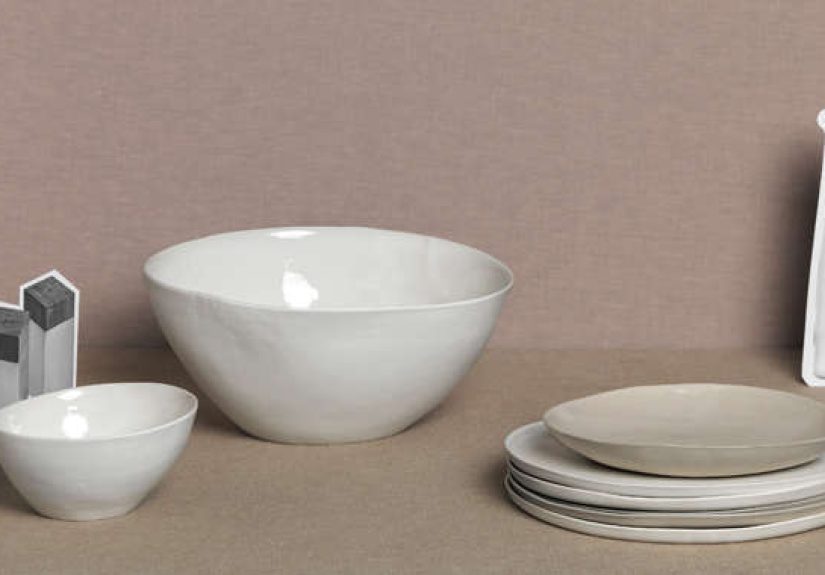
The collections most often discussed under the “fabric effect” banner are Onda and Buto. The design language is
minimal and calm: clean lines, organic silhouettes, and a neutral palette that plays well with almost any food (and yes, food is the real main
character at dinneryour plates should understand their role).
Onda: The Quiet Wave
Onda leans into gentle movementshapes that feel slightly fluid, like they were sketched by someone who had recently stared at the ocean and
decided to keep it subtle. Many pieces have a refined profile that reads modern without feeling cold.
Buto: Minimal, But Make It Tactile
Buto tends to feel a touch more grounded and essential, often emphasizing matte surfaces and the kind of texture that makes even plain butter
toast feel like a plated moment. If Onda is a soft wave, Buto is a calm shoreline.
Materials & Finishes: Where the “Fabric” Illusion Happens
The magic of fabric-effect ceramics isn’t one single trickit’s a layered approach that uses both material choice and finishing technique to
create “softness” in a hard object. Here’s what that typically looks like in the Society Limonta ceramic story.
Limoges Porcelain: Light, Refined, and (Sometimes) Shockingly Thin
Limoges porcelain is famous for being a “true” porcelain tradition associated with hard-paste production and refined serviceware. In a tableware
context, it’s prized for its bright, clean look and its ability to be thin without feeling flimsylike the silk shirt of ceramics, except you can
put pasta on it without violating fashion law.
Some Society Limonta pieces are described as remarkably light (even paper-thin in certain references), which amplifies the sensory contrast:
your eyes expect weight, your hands get something airy, and your brain briefly pauses to re-buffer reality.
Stoneware: Warmth, Body, and the Best Canvas for Texture
Stoneware brings a different energymore rustic, more earthy, more “Sunday dinner that starts at 4 pm for no logical reason.” It’s an ideal base
for fabric impressions because it can hold surface detail beautifully, and it pairs naturally with matte, textile-like finishes.
Terra Sigillata: The “Soft Sheen” Finish
Terra sigillata is often described as an ultra-refined clay slip that can create a soft sheen on the surface of ceramic work. It’s not a loud,
glassy shine; it’s more like the quiet glow you get from well-worn linen in afternoon light. That finish can make porcelain look less “perfect”
and more tactilelike it’s inviting touch rather than reflecting it.
Linen Gauze Imprint: Texture You Can Feel
The headline fabric-effect move is the linen gauze application: placing linen gauze (or a linen cloth) against soft clay so the weave leaves an imprint.
The result can be a delicate interior texture that reads like fabric pressed into the ceramic surfacevisible, but not shouty; tactile, but still
refined. It’s the kind of detail you don’t fully notice until your fingers do.
Why Fabric-Effect Ceramics Feel So Good Right Now
Design trends come and go, but texture has a longer shelf life than hype. Pattern can date quickly; texture tends to read timeless because it’s rooted
in material truth. Fabric-effect ceramics land in that sweet spot: modern minimalism with an artisanal wink.
They also solve a very practical styling problem: if you keep your palette neutral (ivory, sand, smoke, soft gray, muted greens), you can mix and match
linens and ceramics without the table looking like a craft store exploded. A textured plate becomes the “pattern,” so your napkins can stay calmor
your napkins can go bold while your plates keep the peace.
How to Style a Table Around Fabric-Effect Ceramics
Think of fabric-effect plates as the quietest “statement piece” you’ll ever own. They don’t need fireworks. They need good supporting actors:
linen, wood, glass, and a few intentional moves.
1) Start with linen (because: obviously)
- Runner over full tablecloth if you want a lighter, modern look.
- Washed linen tablecloth if you want that relaxed, European “we just happen to live like this” energy.
- Napkins with a bit of slub to echo the ceramic imprinttexture talking to texture.
2) Keep the palette tight, then let the food be the color
Fabric-effect ceramics shine (politely) when the palette stays controlledthink cream, sand, smoky gray, pale green. Then serve something vibrant:
blood orange salad, blistered tomatoes, a bright herb sauce. Suddenly your table looks like an editorial spread, but you’re still wearing sweatpants.
3) Mix porcelain and stoneware on purpose
Mixing isn’t chaotic if there’s a shared logic. Combine similar shapes, related neutrals, and complementary finishes (matte with matte, soft sheen with soft sheen).
Use one “anchor” elementlike consistent flatware or glasswareto keep everything feeling cohesive.
4) Use low, simple centerpieces
The plates already have texture. Your centerpiece doesn’t need to audition for a reality show. Keep it low (so people can see each other), use one
or two materials (glass + greenery, or ceramic + fruit), and let the table feel spacious.
Practical Stuff: Care, Durability, and Daily Use
Here’s the good news: the Society Limonta US product descriptions commonly note dishwasher-safe and microwave-suitable use for many ceramic pieces.
That puts these ceramics in the “artisanal, but not precious” categorymade to be used, not imprisoned in a cabinet like a fancy ghost.
That said, “dishwasher safe” doesn’t mean “dishwasher invincible.” If you want these pieces to age beautifully:
- Load with space: avoid clanking and stacking, especially with thinner porcelain pieces.
- Go gentle on detergent: harsh detergents and aggressive jets can be rough on delicate finishes over time.
- Avoid metal-trim adjacency: if you mix in metallic-trim china, wash that separately to avoid wear and accidental scratching.
- Hand-wash when you can: especially if you’ve cooked something that turns into cement the moment it cools (hello, baked-on cheese).
For stoneware, you’ll typically get a sturdier everyday feel; for thin porcelain, you’ll want to treat it like what it is: strong for its weight,
but still a refined material that deserves a bit of respect.
Shopping Smarter: What to Look For
If you’re shopping fabric-effect ceramics (especially handmade pieces), the “imperfections” are part of the point. You’re not buying identical clones;
you’re buying variations within a design language. Look for:
- Consistent form, subtle variation: rims and curves should feel intentional, while minor surface differences feel human.
- Texture that’s delicate, not scratchy: fabric imprint should read as refinedlike linen, not sandpaper.
- Finishes that make sense together: matte and soft-sheen surfaces should feel deliberate, not mismatched.
- Use-case clarity: check whether pieces are described as dishwasher/microwave safe if you plan to use them daily.
Pricing for designer handmade porcelain can land in “investment plate” territory; for example, individual dinner plates on the Society Limonta US shop
are commonly listed around the $100 mark (and yes, your wallet may need a small pep talk). But for people who entertain oftenor simply love the ritual
of a beautiful everyday tablethese are the kinds of pieces that quietly elevate everything you serve.
The Emotional Logic of Texture
The real appeal of fabric-effect ceramics isn’t just aestheticsit’s the way they change your behavior. Texture slows you down. It makes you notice.
It makes a weekday meal feel less like “fuel intake” and more like “a moment.” And that’s the whole point of good design: it doesn’t just decorate life;
it edits it into something you actually want to live in.
Experiences: Living With Fabric-Effect Ceramics (500-ish Words of Real-World Vibes)
Imagine you’re setting the table on a random Tuesday. Nothing fancyjust roasted vegetables, a grain bowl, maybe a piece of salmon that you’re hoping
won’t stick to the pan this time. With ordinary plates, you’d probably eat standing at the counter “just for a second” (famous last words).
But with fabric-effect ceramics, something sneaky happens: you plate the food a little more thoughtfully. You reach for the linen napkin. You sit down.
The texture is doing its quiet persuasion job.
People who love these pieces often describe the same small delight: the moment a guest runs a fingertip across the surface and pauses.
“Is that… linen?” they ask, and you get to nod like you’re casually the kind of person who knows the difference between a matte finish and a soft sheen.
(Whether you learned it five minutes ago is between you and the internet.) The plate becomes an icebreaker that isn’t trying too hard.
Fabric-effect ceramics also play extremely well with seasonal shifts. In warmer months, the texture pairs with sun-washed linens and simple glassware,
making fruit, salads, and grilled food look brighter by contrast. In colder months, the same plates feel cozy beside darker linens, candles, and wood,
giving soups and pastas a grounding backdrop. It’s one of those rare “design investments” that doesn’t force you into one vibe. It adapts.
There’s also a practical experience that surprises people: textured interiors can make certain foods look better without you doing anything.
A creamy risotto against a subtly textured surface looks more dimensional. Olive oil drizzles catch the light differently. Even a plain yogurt bowl
with honey and nuts looks like a photo you’d save for “someday when my life is together.” Texture adds depth the way a great linen shirt does:
it’s simple, but never flat.
If you entertain, these ceramics can help you cheat your way to a pulled-together table. Instead of relying on loud patterns or themed decor,
you build the mood with materials: linen + ceramic + glass + a little greenery. Guests remember how the table felt, not just how it looked.
And because the palette is usually calm, you can mix in vintage pieces (a slightly mismatched wine glass, a borrowed serving bowl) without the setup
feeling chaotic. The ceramics act like a neutral anchor with personality.
The best “experience” might be the simplest: these pieces encourage everyday ceremony. Not the fussy kindno one’s asking you to fold napkins into swans.
Just the gentle upgrade of eating from something made with intention. You notice the weight, the edge, the slight variation that proves a human hand was involved.
And somehow, even leftovers feel less like an afterthought when they land on a plate that looks like it has its own soft textile memory baked into the clay.
Conclusion: Soft Power for Your Table
Fabric-effect ceramics from Society Limonta sit in a rare sweet spot: minimalist without being sterile, artisanal without being fussy, and elevated without
demanding that you live in a showroom. The textile imprint and refined finishes create a sensory bridge between linen and claybetween what you set on the table
and what you serve on it.
If you’re drawn to calm palettes, tactile surfaces, and table settings that feel effortless (even when you absolutely made an effort), fabric-effect ceramics
might be your next favorite “everyday luxury.” They don’t shout. They don’t beg for attention. They just make everything you eat feel a little more intentional
and that’s a design win you can taste.