Table of Contents >> Show >> Hide
- Why journalism belongs in medicine (and not just on hospital TV)
- Why medicine belongs in journalism (and not just in medical dramas)
- The ethics overlap: “Do no harm” meets “minimize harm”
- The untold stories hiding inside “normal” appointments
- A practical framework for uncovering patient stories responsibly
- Specific examples: what “untold stories” look like in real clinical life
- For clinicians: using narrative without losing the science
- For journalists: covering patient conditions without turning patients into props
- Conclusion: when stories and science meet, care gets better
- Experiences and real-world lessons from the “journalism to medicine” crossover (extra ~)
If medicine had a slogan, it might be: “We need the whole story.” And if journalism had one, it might be:
“Prove itthen tell it clearly.” Put them together and you get a powerful (and slightly chaotic) super-skill:
the ability to uncover what’s really happening inside a patient’s lifeand inside their bodywithout turning them into a headline or a case number.
In the exam room, stories can reveal the difference between “mystery symptoms” and a real diagnosis. In the newsroom, stories can reveal the difference
between “a scary health trend” and an evidence-based explanation that doesn’t accidentally set the internet on fire. In both places, the goal is the same:
get the facts right, respect the human being, and leave people better informed than you found them.
This article explores how journalism tools (interviewing, verification, narrative structure, and ethical decision-making) blend with medical tools
(clinical reasoning, patient-centered communication, confidentiality, and health literacy) to uncover the untold stories behind medical conditionsespecially
the ones that don’t show up neatly on a lab report.
Why journalism belongs in medicine (and not just on hospital TV)
The patient interview is basically reportingjust with more hand sanitizer
The best clinicians don’t only collect symptoms; they collect context. Journalism trains you to ask open-ended questions, follow timelines, listen for what’s
missing, and gently revisit confusing details without making the person feel interrogated. That’s not “soft” workit’s clinical intelligence.
Think of the medical history as a living, breathing long-form feature. The “lede” is the chief complaint, the “nut graf” explains why it matters,
and the supporting paragraphs include medication changes, exposures, stressors, sleep, work, family responsibilities, food access, and those tiny details
patients casually droplike, “It started after I switched to night shifts,” or “I stopped taking my inhaler because it costs more than my car payment.”
Journalists and clinicians share the same enemy: jargon
In journalism, jargon makes readers bounce. In medicine, jargon makes patients nod politely while thinking, “I have no idea what you just said, but I don’t want
to look dumb.” Clear communication is not a vibe; it’s a safety feature. Using plain language and confirming understanding can prevent mistakes, reduce confusion,
and strengthen shared decision-making.
A quick mental test: if your explanation sounds like it came from a printer that only knows Latin, it needs translation. The goal isn’t to “dumb it down.”
It’s to “smart it up” so it works in the real worldwhere people are tired, stressed, and processing a lot.
Why medicine belongs in journalism (and not just in medical dramas)
Medical stories require evidence, not just emotion
Patients’ experiences are realand they matter. But journalism adds the discipline of separating “what happened to one person” from “what is generally true.”
Medicine adds a second discipline: understanding uncertainty. Good health reporting doesn’t treat every new study like a miracle, and it doesn’t treat every anecdote
like a warning label.
Medical thinking encourages a few habits that make journalism more accurate:
- Ask “compared to what?” (Absolute risk vs. relative risk can change the whole story.)
- Look for confounders (Was it the supplementor the fact people taking it also exercise more?)
- Understand baselines (A “doubling” of a rare outcome might still be rare.)
- Respect time (Some illnesses are quick; others are slow, subtle, and misread for years.)
The best health stories explain systems, not just individuals
A patient’s condition is never only biology. Access to care, insurance rules, transportation, work schedules, language barriers, discrimination, and
caregiver support all shape outcomes. Medical conditions can look “noncompliant” on paper while being totally logical in real life. Journalism is great at
investigating systems; medicine is great at seeing how systems become symptoms.
The ethics overlap: “Do no harm” meets “minimize harm”
Privacy isn’t a technicalityit’s the foundation of trust
In medicine, confidentiality is a core ethical obligation. Patients must be able to share sensitive information without fearing it’ll become gossip, a social media
post, or an “interesting story” at a dinner party. That trust is what makes honest care possible.
In journalism, the ethical pressure is different but related: you might have legal permission to publish something and still have no moral business doing it.
Responsible reporting balances the public’s need for information against potential harmespecially when dealing with vulnerable people.
HIPAA: the most famous law people cite incorrectly at parties
HIPAA is real and important, but it’s also widely misunderstood. In everyday terms: it limits how covered health entities (and their partners)
can share protected health information. It doesn’t stop patients from telling their own stories. It also gets misused as a blanket excuse to shut down all
conversationeven when an interview or public information request could be handled appropriately.
When sharing patient stories for education, reporting, or public awareness, ethical best practice is simple:
get permission when needed, protect identity when possible, and never treat a patient’s life like content you’re entitled to.
De-identification is harder than it looks
Removing a name isn’t always enough. A rare diagnosis, a specific date, an unusual job title, or a recognizable event can identify someone in a community.
Responsible storytellers use careful de-identification, avoid unnecessary details, and consider whether the person could still be recognized by people in their
lifeeven if a stranger wouldn’t know.
The untold stories hiding inside “normal” appointments
1) The diagnostic odyssey (aka “Why does no one believe me?”)
Many patients with autoimmune diseases, rare disorders, complex pain syndromes, or overlapping conditions don’t arrive with a neat timeline and one clear symptom.
They arrive with a stack of “normal” test results and a growing fear that it’s all in their head. The untold story here is often not “mystery illness.”
It’s mismatch: the symptoms are real, but the current test didn’t measure the right thing at the right time.
Journalism skills help by building the timeline: first symptom, first change, first trigger, first “this is interfering with my life.”
Medical skills help by using that timeline to guide differential diagnosis and decide what to test nextand what to stop repeating.
2) The invisible condition (symptoms that don’t photograph well)
Some conditions don’t show up as a cast, a scar, or a dramatic scan. Chronic migraine, long COVID, IBS, depression, anxiety, PTSD, and many autoimmune disorders
can be disabling while still looking “fine” from the outside. The untold story is often the daily trade-offs:
“I can work, but I can’t also cook dinner,” or “I can attend school, but I sleep the rest of the day.”
These are the details that change care plans. They also change public understanding. A good story makes invisible illness visible without turning it into
a spectacle.
3) The “non-medical” detail that is actually the diagnosis
In medicine, it’s easy to focus on vitals and labs. In real life, the diagnosis sometimes lives in the patient’s environment:
mold exposure, workplace chemicals, a new pet, a recent move, food insecurity, a violent relationship, medication affordability, or a sleep schedule that looks
like a ransom note.
Journalism trains you to ask: “What changed?” Medicine trains you to ask: “Which changes matter biologically?”
Together, they help uncover causality without jumping to conclusions.
A practical framework for uncovering patient stories responsibly
Step 1: Start with curiosity, not assumptions
Whether you’re a clinician or a writer, begin with open questions:
“Can you walk me through what a typical day looks like?” “When did you first notice something was off?”
“What worries you most about this?” “What do you wish people understood?”
Step 2: Build a timeline (the spine of the story)
Timelines reduce confusion. They also reveal patterns: symptoms that appear after medication changes, after infections, during stress, or around sleep disruption.
A simple “before/after” can do more than a thousand vague adjectives.
Step 3: Verify without invalidating
Verification isn’t distrust. It’s respect for accuracy. In journalism, you confirm details. In medicine, you confirm history with records, tests, and follow-up.
The key is tone: “Let’s double-check this so we don’t miss anything,” lands very differently than “Are you sure?”
Step 4: Translate the science
Good storytellers explain. Great storytellers explain without talking down. Use plain language, define terms, and keep it concrete:
“This medicine reduces inflammation,” instead of “It’s an immunomodulator.” If you must use a big word, give it a smaller friend.
Step 5: Confirm understanding (teach-back without the awkwardness)
A simple technique can prevent a lot of mistakes: ask someone to repeat the plan in their own words. Frame it as a test of your explanation, not their intelligence:
“I want to make sure I explained it clearlycan you tell me how you’ll take this at home?”
Step 6: Protect dignity in what you include (and what you leave out)
Not every detail is necessary. If a detail doesn’t improve understanding, safety, or public value, it might just be harm disguised as color.
Responsible storytelling protects the person’s privacy, agency, and future self.
Specific examples: what “untold stories” look like in real clinical life
Example A: The teen with “stress stomach”
A 16-year-old has months of abdominal pain, fatigue, and weight changes. They’re told it’s anxiety, school stress, or “just hormones.”
A journalism-style timeline reveals symptoms worsening after meals, frequent bathroom trips, and missed classes due to exhaustion.
A medical lens recognizes red flags and broadens the evaluation. The untold story isn’t “a dramatic rare disease.”
It’s that vague labels can delay real careand that careful listening can shorten the path to answers.
Example B: The working parent who “won’t follow the plan”
A patient with type 2 diabetes keeps missing appointments and isn’t taking medication consistently. On paper, it looks like nonadherence.
The story reveals night shifts, no paid time off, unreliable transportation, and a pharmacy copay that competes with groceries.
Journalism exposes the barriers; medicine responds with workable options: simpler regimens, community resources, adjusted follow-up methods,
and communication that doesn’t shame the person for living in reality.
Example C: The patient who fears the label more than the illness
A patient with mental health symptoms worries that documentation will affect employment, custody, or insurance.
The untold story here is the tension between seeking care and fearing stigma. Ethical storytelling (in clinic notes or public pieces) avoids casual
negative descriptors, focuses on observed facts, and centers what supports the patient’s safety and autonomy.
For clinicians: using narrative without losing the science
Narrative medicine doesn’t replace evidence-based care; it helps you apply evidence to a specific human. The story clarifies goals (“I need enough energy
to get through my shift”), constraints (“I can’t store insulin at work”), and values (“I’m willing to try therapy, but I don’t want sedating meds”).
A helpful mindset is: story generates hypotheses; science tests them. When you do that well, you get care that is both accurate and humane
not either/or.
For journalists: covering patient conditions without turning patients into props
The most common trap in health storytelling is “inspiration-only” or “tragedy-only.” Real people are neither motivational posters nor cautionary tales.
Strong reporting:
- Explains uncertainty (what doctors know, what they don’t, what’s still being studied).
- Adds context (how common the condition is, what treatment looks like, what access barriers exist).
- Centers agency (how the person wants to be described, what they hope readers learn).
- Avoids oversharing (no unnecessary details that could harm the person later).
When done right, patient storytelling improves public understanding, reduces stigma, and pressures systems to work betterwithout sacrificing a person’s privacy
for clicks.
Conclusion: when stories and science meet, care gets better
Journalism and medicine are both truth-seeking professions with different tools and different risks. Journalism teaches curiosity, clarity, and accountability.
Medicine teaches clinical reasoning, empathy, and confidentiality. Together, they help reveal the untold stories behind medical conditionsthe lived reality that
shapes symptoms, outcomes, and trust.
The future of healthcare and health communication will belong to people who can do two things at once:
honor the patient’s story and respect the evidence. That’s not just better storytelling. It’s better medicine.
Experiences and real-world lessons from the “journalism to medicine” crossover (extra ~)
Because this topic lives in the messy middle of real life, here are several composite “field notes” drawn from common scenarios clinicians, patients, and
health writers regularly encounter. Think of them as the kind of practical experiences you only learn after you’ve asked the right question… five minutes too late.
1) The moment you realize the “small detail” was the whole story
A patient describes dizziness that “comes and goes.” The first pass focuses on blood pressure, hydration, and labs. Then they casually add,
“It only happens when I’m cleaning the back storage room.” A journalist’s instinctWhat’s different about that room?opens the door to environmental
triggers: chemicals, poor ventilation, possible mold, or even carbon monoxide exposure. The medical takeaway: symptoms don’t occur in a vacuum.
The storytelling takeaway: always ask for the scene, not just the symptom.
2) When a timeline turns confusion into a clue
In many appointments, symptoms are described like a shuffled playlist: fatigue, headaches, nausea, brain fog, joint painno clear order. Building a timeline,
even on a scrap of paper, can reveal a pattern: symptoms began two weeks after an infection, worsened after intense exercise, or spiked after a medication change.
A journalism habit (“Let’s anchor this to dates”) becomes a clinical tool (“That pattern changes the differential”).
Bonus: timelines help patients feel believed because they can finally see their experience organized into something that makes sense.
3) The day plain language prevents a mistake
A patient is discharged with instructions that sound simpleuntil you translate them into real life. “Take twice daily” is clear to clinicians, but many people
interpret it as “two pills at once.” The “teach-back” momentasking the person to repeat how they’ll take itcatches misunderstandings before they turn into
problems. In journalism terms, this is like reading your draft aloud and realizing the sentence only made sense in your head. The lesson: clarity is a patient
safety strategy, not just good communication manners.
4) The ethical gut-check: “Can I tell this story?” vs. “Should I?”
A powerful patient narrative can educate the public, reduce stigma, and motivate action. But it can also follow the patient foreverinto future jobs, schools,
relationships, and legal situations. Responsible storytellers pause and ask: Is this detail essential for understanding, or is it just emotionally gripping?
Could this person be recognized by their community? Are we giving them real control over what’s shared? The best stories protect the patient’s future self,
not just the audience’s curiosity.
5) The “systems story” hiding behind a single diagnosis
Sometimes the untold story isn’t the diagnosisit’s the obstacle course around it: the specialist shortage, the insurance denial, the months-long wait,
the pharmacy backorder, the lack of transportation, the language barrier, the unpaid time off. When you combine journalism’s systems thinking with medicine’s
patient-centered approach, you stop blaming individuals for structural failures. The experience-based insight: when patients “disappear,” they often didn’t
stop caringthey ran into a wall the system pretends isn’t there.
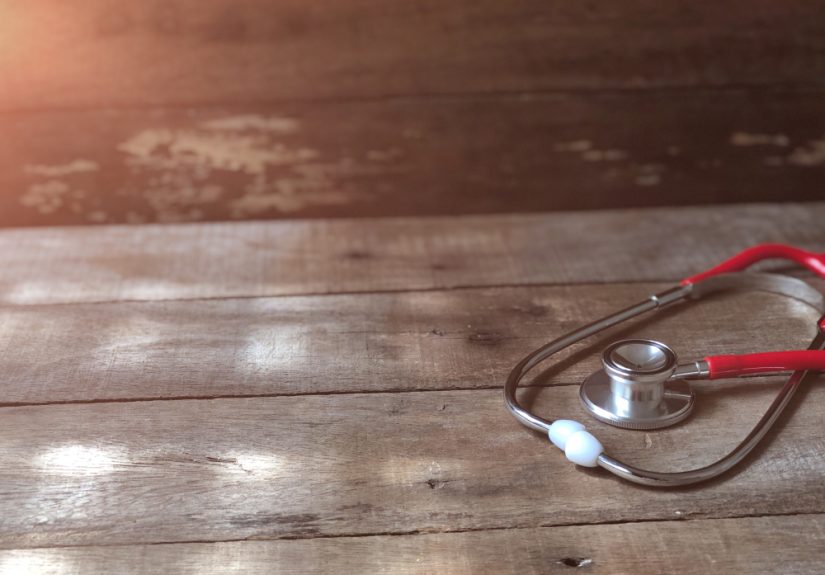
These experiences point to one core truth: better outcomes often start with better questions. Whether you’re holding a notepad or a stethoscope, your job is
to listen long enoughand carefully enoughfor the real story to show up.