Table of Contents >> Show >> Hide
- What Is Next Level Baker, Exactly?
- Why the Premise Works So Well for the Holiday Season
- The Mentor Lineup Is Doing a Lot of Heavy Liftingin the Best Way
- The Three-Tier Kitchen Is More Than a Gimmick
- What Kind of Challenges Should Viewers Expect?
- Why This Could Be Catnip for Viewers Burned Out on Generic Holiday Content
- Who Will Probably Love This Show Most?
- The Bigger Appeal: It Celebrates the Madness We Secretly Love
- Extra: Why Next Level Baker Feels So Familiar If You’ve Ever Survived December in a Kitchen
- Final Take
The holidays are supposed to be calm, magical, and full of buttery aromas drifting through a spotless kitchen. In reality, they are often a flour storm with festive lighting. One person is overmixing the batter, someone else is “eyeballing” the cinnamon, and there is always at least one cookie tray that comes out looking emotionally damaged. That delicious chaos is exactly why Next Level Baker feels like such a smart idea for holiday TV.
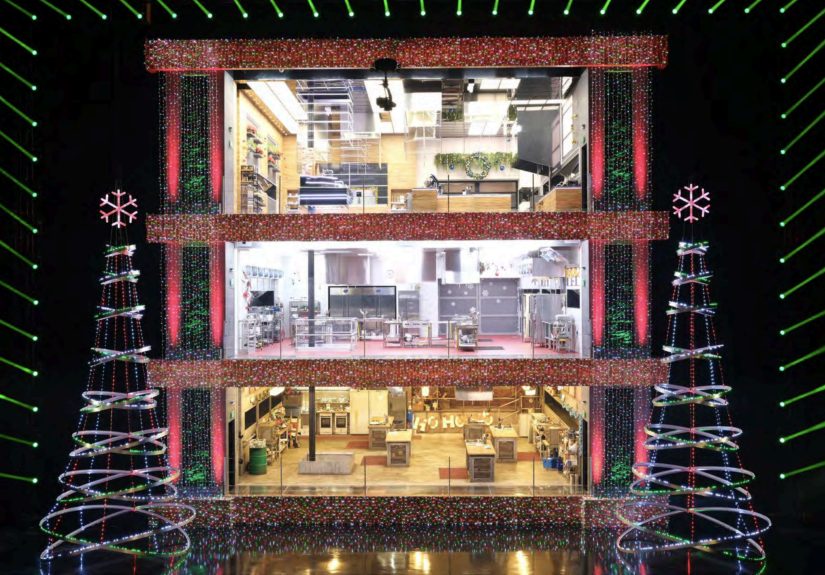
The Gordon Ramsay food-competition universe is already built on pressure, speed, and dramatic reveals, but this seasonal spinoff swaps sauté pans for sugar, spice, laminated dough, and fragile desserts that can go from glorious to tragic in about 45 seconds. Add Carla Hall and Candace Nelson to the mix, throw bakers into a flashy multilevel kitchen dressed like a winter spectacular, and suddenly holiday baking becomes a spectator sport. Not a gentle one, either. This is not your aunt’s cookie swap. This is a battle for bragging rights, a cash prize, and the kind of TV glory that comes with surviving a festive kitchen under pressure.
If you love baking competitions, holiday programming, or the oddly comforting sight of talented people trying to frost a cake while the clock screams at them, Next Level Baker is aiming right at your sweet spot. Here is why this series has all the ingredients to become a seasonal binge watch, plus what makes it different from the usual lineup of peppermint-dusted baking shows.
What Is Next Level Baker, Exactly?
At its core, Next Level Baker takes the franchise mechanics viewers already know from Next Level Chef and retools them for holiday dessert drama. The format centers on a three-tier kitchen setup, with each level offering a different kind of environment, equipment situation, and stress level. In other words, some bakers get the culinary equivalent of a luxury suite, while others get the “good luck, soldier” version.
The competitors come from three lanes of modern baking culture: home bakers, professional bakers, and social media bakers. That trio is part of what makes the concept click. Baking is no longer confined to pastry school or grandma’s recipe box. It now lives in test kitchens, neighborhood bakeries, TikTok feeds, and midnight hobby sessions with too much vanilla extract and not enough counter space. By putting those worlds side by side, the show taps into how Americans actually experience baking in 2025: professionally, personally, and very online.
And because this is a holiday event series, the tone is festive without going soft. Expect decorated sets, seasonal themes, and a lot of visual spectacle, but do not mistake ornaments for mercy. Holiday baking can be unforgiving. Sugar crystallizes. Yeast sulks. Chocolate seizes. Cakes sink for reasons known only to the baking gods. That tension is where the show should thrive.
Why the Premise Works So Well for the Holiday Season
There is a reason holiday baking content always returns like clockwork. It blends nostalgia with aspiration. Viewers are drawn to desserts that feel familiar, but they also want to see something bigger, shinier, taller, and more ridiculous than what they would actually attempt at home. The holidays are when everyday bakers suddenly start saying things like, “Maybe I can make a croquembouche,” as though stress were a hobby.
Next Level Baker understands that emotional zone. It is selling comfort and competition at the same time. That is a tricky balancing act, but when it works, it really works. The holidays invite sentiment, tradition, and shared meals. Competitive baking adds urgency, precision, and the possibility that a gingerbread structure may collapse on national television. That combination is TV catnip.
The show also arrives at a moment when food television is increasingly driven by personality, visual payoff, and cross-platform appeal. A baking show has to look great, move fast, and feel meme-ready without losing the craftsmanship that makes viewers care. That is especially true when some contestants come from social media backgrounds, where presentation is practically a second ingredient. Next Level Baker seems built for that hybrid audience: viewers who want technical skill, but also want sparkle, speed, and at least one dessert that makes them mutter, “Well, that seems unnecessary. I love it.”
The Mentor Lineup Is Doing a Lot of Heavy Liftingin the Best Way
Gordon Ramsay brings the franchise energy
Ramsay remains the anchor. He knows how to sell urgency, and he knows how to make a kitchen feel like the last place on earth where a person should forget their salt. In a holiday baking format, his presence gives the show a useful edge. Without him, the whole thing risks becoming too sugary. With him, it gets a spine.
Carla Hall adds warmth, instinct, and baking credibility
Carla Hall is the kind of TV presence who can make a competition feel human without sanding off the stakes. She brings warmth, sharp taste, and the ability to connect with contestants in a way that feels encouraging rather than generic. Holiday television lives or dies on vibe, and Hall has vibe for days. She also knows how to talk about food in a way that is inviting instead of intimidating, which matters in a format meant to appeal to both serious bakers and curious viewers.
Candace Nelson gives the show dessert authority
Candace Nelson is a particularly smart addition because she represents a modern dessert empire perspective. She understands branding, retail appeal, baking precision, and the polished finish audiences expect from celebratory sweets. Holiday baking is not just about flavor; it is also about presentation. A pie can taste heavenly, but if it looks like it lost a fight on the way to the table, people notice. Nelson brings the kind of eye that can separate “pretty good” from “holiday centerpiece.”
Together, the trio gives the show a broad range of authority: Ramsay for pressure and pace, Hall for flavor and heart, Nelson for pastry polish and commercial-level expectations. That is not just a judging panel. That is a stress sandwich with excellent taste.
The Three-Tier Kitchen Is More Than a Gimmick
One of the smartest parts of the Next Level franchise has always been the kitchen design. It is theatrical, yes, but it also changes how contestants perform. Environment matters, especially in baking, where temperature, timing, tools, and workspace can make the difference between a crisp tart and a soggy emotional memoir.
By adapting the three-level format for a baking series, Next Level Baker turns technical skill into strategy. A baker may have excellent instincts, but can they still deliver when equipment is limited? Can they improvise when the setup is less than ideal? Can they stay precise under seasonal pressure, with decorative expectations piled on top of structural challenges? Holiday baking is already detail-heavy. Add uneven playing conditions and suddenly every whisk stroke feels dramatic.
This is also where the show separates itself from more traditional baking competitions. It is not just about making the prettiest yule log or the most elegant tart. It is about adapting across conditions. That makes the series feel less like a postcard and more like a survival test wearing a Christmas sweater.
What Kind of Challenges Should Viewers Expect?
While the exact bake-by-bake lineup is part of the fun, the premise points toward a mix of sweet and savory holiday-inspired creations, nostalgic desserts, party-ready centerpieces, and bakes that reward both imagination and technical control. That means viewers can reasonably expect categories like cookies, cakes, pastries, enriched doughs, plated desserts, and highly decorative creations that need to look festive without tipping into edible craft project territory.
The most effective holiday baking challenges tend to work on two levels. First, they ask contestants to tap into familiar seasonal flavor profiles: spice, citrus, chocolate, caramel, cranberry, peppermint, molasses, nuts, and warm baking aromatics that practically come with a soundtrack. Second, they demand professional-level execution. A gingerbread creation is not interesting just because it is cute. It is interesting when it has clean lines, balanced texture, and enough structural integrity to survive being moved across a set.
That is where Next Level Baker has real potential. Holiday baking often looks whimsical from the outside, but underneath the sparkle it is deeply technical. Meringue stability, dough development, sugar work, proofing, glazing, layering, cooling, and transport all matter. The best competitions let viewers appreciate both the fantasy and the engineering. This one seems built to do exactly that.
Why This Could Be Catnip for Viewers Burned Out on Generic Holiday Content
Holiday entertainment can sometimes fall into two very tired categories: aggressively sentimental or aggressively forgettable. Baking competitions offer a better path because they create genuine suspense around something joyful. No one has to save a town inn. No one has to learn the true meaning of Christmas by opening a candle shop. Instead, people have to temper chocolate correctly while cameras roll. Honestly, that is cleaner storytelling.
Next Level Baker also benefits from a built-in audience that already understands the Next Level format. There is no need to teach viewers the basic language of the franchise. The show can jump straight into the action and let the seasonal spin do the novelty work. For fans of Ramsay’s competition style, that familiarity is a feature, not a bug.
At the same time, the baking focus broadens the appeal. Some viewers prefer baking shows because the craft feels more relatable than high-end savory cooking. Plenty of people have baked cookies, brownies, banana bread, pies, or birthday cakes. Fewer people have seared scallops in a fine-dining panic. Baking TV pulls in home viewers by whispering, “You, too, have once overconfidently trusted a timer.”
Who Will Probably Love This Show Most?
This series looks tailor-made for several groups. First, there are the established Ramsay fans who will watch him judge almost anything, including, presumably, a high-stakes toast tournament. Second, there are holiday baking devotees who count December in sticks of butter. Third, there is the social-media-savvy audience that loves seeing creators move from phone screens to network television.
It also has family-watch potential. Holiday baking shows are among the easiest competition formats to watch with other people because the stakes feel fun, the visuals are inviting, and everyone immediately becomes an expert from the couch. “That crumb looks dry,” says a person who burned refrigerated cookie dough yesterday. It is a beautiful ritual.
The Bigger Appeal: It Celebrates the Madness We Secretly Love
The most relatable thing about holiday baking is that it is never just about food. It is about memory, ambition, hosting pressure, family expectations, edible nostalgia, and the annual delusion that this year we will somehow be calm. We will not be calm. There will be powdered sugar on dark clothing. There will be one missing ingredient that sends someone to the store in slippers. There will be a cooling rack crisis.
That is why a show like Next Level Baker has real emotional appeal. It does not just showcase polished desserts. It dramatizes the gap between holiday fantasy and kitchen reality. And weirdly, that gap is part of the magic. The season is more memorable because things go slightly sideways. A cookie tray bakes unevenly. A frosting swirl goes rogue. The pie crust shrinks like it got stage fright. Then everyone laughs, eats it anyway, and calls it tradition.
TV that captures that spirit without losing the thrill of competition stands a very good chance of becoming part of people’s holiday routine.
Extra: Why Next Level Baker Feels So Familiar If You’ve Ever Survived December in a Kitchen
Here is the sneaky genius of a show like Next Level Baker: even when the desserts are more polished, the pressure is still recognizable. Anyone who has ever tried to bake “just a few things” in December knows that holiday baking begins as a wholesome plan and ends as a mild identity crisis with aprons.
You start simple. Maybe cookies. Maybe a cake. Maybe one dramatic dessert to prove that you are thriving. Then the season escalates. Suddenly you are comparing butter brands like a Victorian chemist, arguing with parchment paper, and explaining to your family that no, the kitchen is not “a mess,” it is “mid-process.” This is exactly the energy that makes holiday baking television so addictive. It transforms a private seasonal spiral into communal entertainment.
That is why viewers do not just watch baking competitions for recipes. They watch for recognition. They watch because they know the heartbreak of a cracked cheesecake, the betrayal of underwhipped cream, and the strange confidence that arrives after saying, “I can absolutely make that,” about a dessert involving spun sugar and architectural ambition. Competitive baking may be elevated, but the emotional storyline is pure everyday life.
There is also something deeply comforting about seeing talented bakers work under pressure and still make beautiful things. Holiday life can feel cluttered and chaotic, and baking offers a rare illusion of order. Measure this. Fold that. Chill for 20 minutes. Preheat the oven. In theory, baking is structure. In practice, especially in December, it is structure interrupted by doorbells, errands, guests, wrapping paper, and one person asking if the cookies are done every six minutes. Watching a show built around that kind of pressure feels weirdly therapeutic.
The best part is that holiday baking is full of tiny disasters that become family folklore. The lopsided layer cake. The gingerbread house that collapsed like a real-estate bubble. The pie that looked suspicious but tasted incredible. The cookies that came out ugly and vanished first. Next Level Baker is likely to tap into that truth: perfection is impressive, but resilience is what makes baking memorable.
And then there is the sensory pull. Holiday baking is one of the few kitchen activities that feels cinematic in real life. The scent of cinnamon and brown sugar. The sound of a mixer running while the windows fog up. The ridiculous satisfaction of glazing something that did not exist two hours earlier. These are small pleasures, but they matter. They are part of why baking becomes a seasonal language for celebration, generosity, and low-key showing off.
That is also why competition raises the stakes so beautifully. The audience knows these bakes are not just desserts. They are symbols. A centerpiece cake says, “I came prepared.” A perfect cookie box says, “I have my life together,” whether or not that is true. A holiday tart with glossy fruit and a flawless shell says, “Please ignore the fact that I have been awake since 5 a.m.” Baking has always carried emotion, and holiday baking doubles it.
So when Next Level Baker turns up the pressure with a winter wonderland set, tight deadlines, high standards, and bakers from wildly different backgrounds, it is not just creating spectacle. It is magnifying the exact feelings people already associate with December kitchens: excitement, ambition, nostalgia, stress, pride, panic, generosity, and the hope that what comes out of the oven will be worth the mess. Usually, somehow, it is.
If the show captures even half of that experience, it will not just be another seasonal competition. It will feel like a glossy, high-stakes version of what viewers are already living at homeminus the mystery container in the fridge and the relative who insists they “don’t really do sweets” before eating four cookies.
Final Take
Next Level Baker has the right ingredients to become a holiday TV standout: a proven franchise structure, a strong mentor trio, a visually ambitious set, a format that rewards both technique and adaptability, and a seasonal theme that practically invites viewers to lean in with cocoa in hand. It promises spectacle, skill, and enough festive kitchen pressure to keep things lively without losing the warmth that makes holiday baking so appealing in the first place.
In other words, if your idea of seasonal joy includes beautifully decorated desserts, competitive panic, and the comforting reminder that everyone is one overbaked batch away from chaos, this may be your kind of December television.