Table of Contents >> Show >> Hide
- What Is a Globe Pendant Light (and Why It Never Seems to Go Out of Style)?
- The Big Decision: Clear, Frosted, Opal, or Smoked?
- Where Globe Pendant Lights Work Best
- Size, Scale, and Proportion: How Big Should a Globe Pendant Be?
- Hanging Height: The “Don’t Bonk Your Head” Rules
- Bulbs, Brightness, and Color Temperature: Make the Globe Glow (Not Glare)
- Style Pairing: How to Make Globe Pendant Lighting Look Intentional
- Installation and Safety Basics (Short, Useful, Not Scary)
- Cleaning and Maintenance: Yes, Glass Globes Show Fingerprints
- Buying Guide: How to Choose the Right Globe Pendant Light
- Final Thoughts: The Globe Pendant Light Is Popular for a Reason
- Real-World Experiences With Globe Pendant Lights (The Stuff You Learn After Living With Them)
A globe pendant light is the design equivalent of a good white T-shirt: it goes with everything, it rarely looks
“too much,” and somehow it always ends up being the thing people compliment. It’s a simple ideaone glowing sphere
suspended from the ceilingbut that clean silhouette can read as mid-century cool, modern minimal, vintage-romantic,
or “I definitely have my life together” (even if your junk drawer says otherwise).
In this guide, we’ll break down what makes globe pendant lighting so versatile, how to pick the right size and finish,
how high to hang it (without bonking anyone’s head), what bulbs make it look expensive, and where it works bestfrom
kitchen islands to entryways to bathrooms. We’ll keep it practical, specific, and just funny enough to stay awake.
What Is a Globe Pendant Light (and Why It Never Seems to Go Out of Style)?
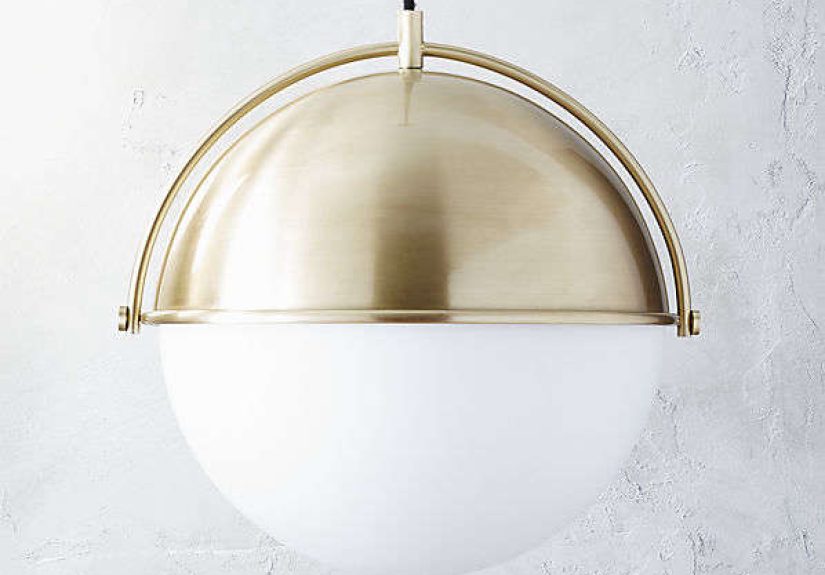
A globe pendant is a hanging light fixture defined by a round shadeusually glass, sometimes acrylic, occasionally
paperforming a sphere (or near-sphere). That geometry is the whole point: it’s visually calm, symmetrical, and
easy to pair with other shapes in a room. In mid-century modern interiors, globe forms became a staple because they
echoed the era’s love of clean lines and soft curves. Today, that same “quiet” outline fits right into contemporary
kitchens, transitional dining rooms, and even cozy entryways where you want a statement that doesn’t shout.
The other reason globes endure is the way they handle light. A globe shade tends to glow in multiple directions, which
helps a space feel evenly lit rather than spotlighted. That makes it especially useful in rooms that need both function
and atmospherelike kitchens that double as hangout zones, or dining rooms where you don’t want your guests to look like
they’re being interrogated.
The Big Decision: Clear, Frosted, Opal, or Smoked?
The shade finish changes everythingbrightness, glare, mood, even how “fancy” the fixture looks. Here’s how to choose
without overthinking yourself into a lighting identity crisis.
Clear glass globes
Clear globes are crisp, airy, and versatile. They show off the bulb, so they look best with a decorative filament-style
LED (or any bulb that isn’t… let’s say “storage-closet chic”). Clear glass also keeps sightlines opengreat in kitchens
where you don’t want bulky fixtures blocking the view across an island.
Pro tip: If you choose a clear globe, pick a bulb that looks intentional. Many designers recommend matching the bulb
style to the fixture so the whole thing reads polished, not “I grabbed whatever was on sale.”
Frosted or opal glass globes
Frosted (including opal white) softens the light and hides the bulb. Translation: fewer harsh shadows, less glare,
and a more “glowy” effect. If your kitchen has a lot of hard surfaces (stone counters, glossy tile, stainless steel),
an opal globe pendant light can keep the room from feeling visually sharp.
Smoked or tinted globes
Smoked glass looks moodier and more modern, but it can cut light output. If you love the vibe, compensate with brighter
bulbs or layered lighting (under-cabinet lights, recessed, etc.). Think of smoked globes as the candlelit dinner of
pendant lights: romantic, but not always great for reading tiny nutrition labels.
Seeded or textured glass
Textured glass adds character and helps disguise minor dust and fingerprints. It’s a smart choice in real-life homes
where the kitchen is busy and the entryway is basically a launchpad for chaos.
Where Globe Pendant Lights Work Best
Kitchen islands
This is the classic globe pendant light habitat. A pair or trio over an island gives you task lighting for prep and
a focal point for the room. Because globes are visually simple, you can repeat them without making the space feel crowded.
Dining tables
Over a dining table, a globe pendant feels timeless. Frosted or opal globes are especially flattering here because the
light is softergood for faces, good for food, good for pretending your Tuesday leftovers are a “plated experience.”
Entryways and foyers
Globe pendants shine in entryways because they’re welcoming and sculptural without being fussy. Even a small entry can
handle a classic globe because it doesn’t visually “weigh down” the ceiling.
Bedrooms
A single globe pendant can replace a table lamp, freeing up nightstand space. If you’re doing this, aim for a softer
bulb and consider a dimmeryour eyes will thank you when you’re not being hit with stadium lighting at 11 p.m.
Bathrooms (with one crucial caveat)
Bathrooms can absolutely use globe pendantsespecially in pairs flanking a mirror or as a statement over a tubbut you
must pay attention to the fixture rating. Look for damp-rated fixtures where appropriate, and make sure installation
follows local electrical code.
Size, Scale, and Proportion: How Big Should a Globe Pendant Be?
Globe pendant lights come in a wide range of diameters, and the “right” size depends on ceiling height, surface size,
and how many fixtures you’re using. These guidelines keep the fixture proportional without requiring a degree in
Architectural Overthinking.
Over a kitchen island: pick diameter first, then quantity
For a medium-size island, globes around the 8–14 inch range are common, depending on ceiling height and the visual
weight you want. One larger statement globe can work, but most islands look best with two or three smaller globes for
balanced coverage.
Spacing between multiple pendants
A practical approach is to space fixtures roughly 24–36 inches apart (measured from center to center), adjusting based
on pendant size and island length. Another helpful rule: double the pendant’s diameter to estimate comfortable spacing
between fixtures. This keeps the grouping from looking either cramped or oddly far apart.
Over a dining table
If you’re using one fixture, choose a globe (or globe cluster) that looks substantial enough to anchor the table.
With multiple globes, keep them aligned with the table length and centered so nobody feels like they’re sitting in the
“dim corner seat.”
Hanging Height: The “Don’t Bonk Your Head” Rules
The most cited rule of thumb for pendants over a kitchen island or table is to hang the bottom of the fixture about
30–36 inches above the surface. That tends to preserve sightlines while providing useful illumination.
Adjusting for taller ceilings
If you have ceilings higher than 8 feet, you’ll typically raise the pendant a bitoften adding a couple inches per
extra foot of ceiling heightso the fixture still feels integrated rather than dangling too low.
Real-life checkpoints before you commit
- Sightline test: Sit and stand where people actually use the space. Can you see across the island or table comfortably?
- Headroom test: If someone tall leans in to serve food or grab a snack, are they safe?
- Glare test: If the bulb is visible (clear globe), does it feel harsh from common angles?
Bulbs, Brightness, and Color Temperature: Make the Globe Glow (Not Glare)
A globe pendant light can look expensive or… like a bright orb of regret, depending on the bulb. Focus on three things:
brightness (lumens), warmth (Kelvin), and dimming compatibility.
How bright should it be?
For kitchens, you generally want enough light for tasks without creating glare. Many lighting guides suggest aiming for
a combined output in the ballpark of a few thousand lumens across all island pendants (the exact number depends on how
much other lighting your kitchen has). If you’re doing three pendants, that often means choosing bulbs that provide a
solid mid-range output eachbright enough to chop onions safely, not so bright you feel like you’re filming a cooking show.
Warm vs. neutral light (Kelvin)
For most homes, warm white around 2700K–3000K is a go-to range for living areas and dining-adjacent kitchens because it
feels inviting. If your kitchen is heavily task-oriented, you may prefer a slightly more neutral white (around 3000K–3500K)
so countertops and food colors look crisp. The key is consistency: try not to mix wildly different temperatures in the
same sightline unless you’re intentionally layering zones.
Dimmers: the cheat code for “perfect lighting”
If there’s one upgrade that instantly improves globe pendant lighting, it’s a dimmer. It lets you run brighter for prep,
softer for dinner, and very soft for that late-night “I came in for water and somehow found cheese” moment.
Style Pairing: How to Make Globe Pendant Lighting Look Intentional
Globe pendants are famously adaptable, but a few styling choices make them look like they belongrather than like they
were selected by spinning a wheel labeled “lighting.”
Match the metal finish to something already in the room
Brushed nickel plays nicely with stainless appliances and cooler palettes. Aged brass warms up white kitchens and looks
great with wood tones. Matte black adds contrast in modern and farmhouse spaces. You don’t need everything to matchbut
repeating a finish (hardware, faucet, or cabinet pulls) helps the fixture feel planned.
Consider visual “weight”
Clear globes feel lighter; opal and smoked feel heavier. If your kitchen already has strong visual elements (bold veining,
dramatic cabinetry, busy backsplash), clear globes can keep things from feeling too dense. If the space is very simple,
an opal globe or a larger scale fixture can add just enough presence.
Oversized globes: statement without chaos
Oversized pendants (including large glass globes) can work beautifully because they cast light broadly and become a focal
point. Just make sure the scale suits the room and the hanging height keeps the fixture from overwhelming the sightlines.
Installation and Safety Basics (Short, Useful, Not Scary)
Most globe pendant lights are hardwired. If you’re replacing an existing fixture, the swap can be straightforward, but
if you’re adding new locations or dealing with complex ceilings, it’s worth bringing in a licensed electrician.
Checklist before you buy
- Ceiling type: Standard, vaulted, or sloped (and whether the fixture supports it).
- Rating: Dry vs. damp rated (especially important for bathrooms or humid spaces).
- Bulb base: Common bases like E26/E27, plus max wattage or LED equivalent guidance.
- Dimming: “Dimmable” on the fixture is step oneconfirm your bulb and dimmer switch are compatible, too.
- Adjustable downrod/cord: You want enough length to hang correctly, but not so much that you’re coiling cord like headphone wires in 2009.
Cleaning and Maintenance: Yes, Glass Globes Show Fingerprints
The most common “surprise” with a glass globe pendant light is that it behaves like glass. Meaning: it collects dust,
cooking film (in kitchens), and fingerprints from anyone who tries to “just straighten it a tiny bit.”
Simple cleaning routine
- Turn off power and let the bulb cool fully.
- Use a microfiber cloth to dust the globe.
- For smudges, wipe with a slightly damp microfiber cloth, then dry immediately to prevent streaks.
- If needed, use a small amount of mild soap in lukewarm wateravoid harsh cleaners that can haze finishes.
If your globe is removable, cleaning becomes easier (and more thorough). Just set it down on a towel, work gently, and
resist the urge to do this at midnight after two cups of coffee. That’s how people end up Googling “glass shade replacement”
at 12:17 a.m.
Buying Guide: How to Choose the Right Globe Pendant Light
Start with function, then style
Ask what the light needs to do. If it’s mainly task lighting over an island, prioritize brightness, glare control, and
easy-to-clean materials. If it’s ambiance in an entryway, you can lean into softer diffusion and statement scale.
Don’t ignore the bulb visibility factor
With clear globes, the bulb becomes part of the design. Choose a bulb shape and color temperature that looks good
even when the light is off.
Think in “layers,” not one magic fixture
Globe pendants look best when they’re part of a layered lighting plan: overhead for general glow, pendants for focal/task,
and under-cabinet or sconces for depth. This is how rooms feel finishednot just “lit.”
Final Thoughts: The Globe Pendant Light Is Popular for a Reason
If you want a fixture that plays well with almost any interior style, a globe pendant light is one of the safest bets
you can make without being boring. Choose the right glass finish, hang it at a comfortable height, pair it with a good bulb,
and it will quietly upgrade your space every single daylike a great haircut that grows out nicely.
Real-World Experiences With Globe Pendant Lights (The Stuff You Learn After Living With Them)
People usually fall in love with globe pendant lights in the showroom (or while doom-scrolling kitchen photos), but the
real “review” happens after a few weeks of normal life. One common experience: the clear-globe fantasy
is beautiful… until the first time you turn the lights on at night and realize the bulb is basically starring in its own
one-person Broadway show. Homeowners who go with clear glass often end up swapping bulbs once or twice before it feels right.
A softer filament-style LED, a slightly lower lumen output, or a warmer color temperature can turn “glare city” into a
cozy glow without changing the fixture at all.
Another frequent lesson is that hanging height is emotional. On paper, the standard 30–36 inches above a
countertop sounds simple. In real life, people discover that an inch or two can change everythingespecially with larger
globes. Hang them a touch too low and your tallest friend will start doing that subtle duck-and-weave maneuver every time
they reach for chips. Hang them too high and they can feel disconnected, like they’re floating up there minding their own
business instead of lighting your workspace. A smart approach many homeowners use is to temporarily mark heights (or even
mock up with painter’s tape) and test sightlines from the stools, sink, and main walkway before committing.
Then there’s the very real issue of kitchen grime. Globe pendants near a cooktop pick up a light film over
timeespecially clear glass. The “experience” here is usually a Saturday morning realization that your once-crystal-clear
globe is now a slightly mysterious planet. The fix is simple: regular quick wipes beat occasional deep-clean marathons.
People who keep a microfiber cloth handy (and do a fast swipe every week or two) report that the globes stay bright and
streak-free with minimal effort.
A surprisingly common story: someone installs globes and then decides the room feels “off,” not because the fixtures are wrong,
but because the light temperature doesn’t match the rest of the house. If your nearby recessed lights are
cool-white and your pendants are warm, the kitchen can look like it’s hosting two different lighting parties at once.
Many homeowners find that choosing a consistent Kelvin rangeoften warm white in the 2700K–3000K neighborhoodmakes the whole
space feel calmer. Others intentionally go slightly more neutral over task zones (like the island) while keeping surrounding
lights warmer, but the key is doing it deliberately instead of accidentally.
One of the best lived-in takeaways is that globe pendants can be the easiest “style bridge” when your home
isn’t one single aesthetic. Maybe your kitchen is modern-ish, your dining room is transitional, and your entryway has a vintage
mirror you refuse to part with. A simple globeespecially in opal glass or clear glass with a classic metal finishcan connect
those worlds without forcing a total redesign. People often describe them as the fixture that “doesn’t fight” everything else,
which is honestly a rare and valuable personality trait.
Finally, there’s the “I wish someone told me” category: dimmers. Homeowners who add dimmers almost always say
they’d do it again. Globe pendants over an island can shift from bright prep lighting to soft evening glow instantly, and that
flexibility makes the kitchen feel more like a living spacebecause it is. If you’re going to spend time choosing the perfect
globe pendant light, give it the supporting cast it deserves: a compatible dimmer, the right bulbs, and a hanging height that
works for the way you actually live.