Table of Contents >> Show >> Hide
- Why Cameos Hit Harder When the Movie Is… Not
- What Makes a Cameo “Great” Instead of Just “Famous”
- 12 Great Cameos That Deserved a Better Movie
- Christopher Lloyd as Doc Brown A Million Ways to Die in the West (2014)
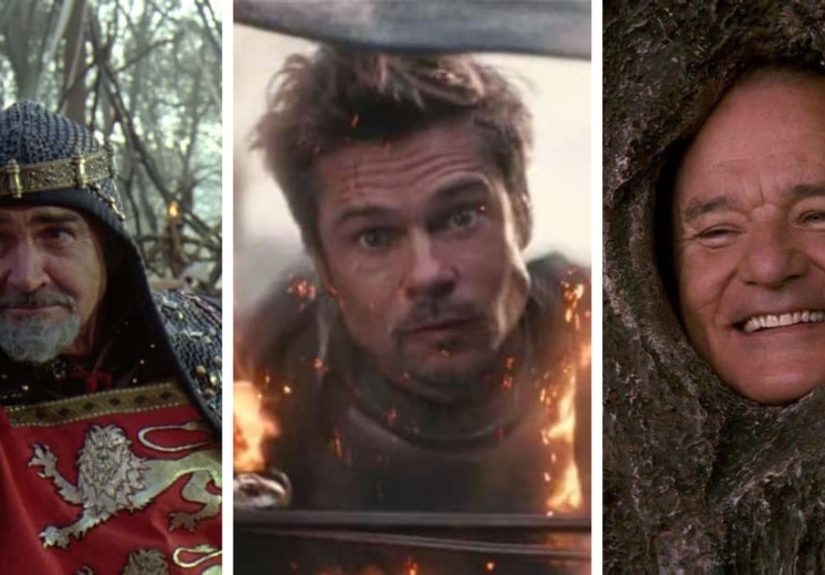
- Sean Connery as King Richard Robin Hood: Prince of Thieves (1991)
- Matt Damon as a punk frontman EuroTrip (2004)
- Keith Richards as Captain Teague Pirates of the Caribbean: At World’s End (2007)
- Jimmy Buffett saving the margaritas Jurassic World (2015)
- Bill Murray as Agent 13 Get Smart (2008)
- Anchorman’s “everybody showed up” brawl Anchorman 2: The Legend Continues (2013)
- Ben Affleck & Matt Damon parodying themselves Jay and Silent Bob Strike Back (2001)
- Tom Cruise (plus friends) in the movie-within-the-movie Austin Powers in Goldmember (2002)
- Brad Pitt as Vanisher Deadpool 2 (2018)
- Michael Jackson as “Agent M” Men in Black II (2002)
- Paul McCartney as Uncle Jack Pirates of the Caribbean: Dead Men Tell No Tales (2017)
- Al Pacino turning one scene into a thunderstorm Gigli (2003)
- How to Use Cameos Without Accidentally Making Things Worse
- Common Viewer Experiences With Great Cameos in Not-So-Great Movies (Extra)
- Conclusion
Every movie has a dream: to be the one you recommend with wild confidence“Trust me, it’s amazing.”
And every movie has a reality: sometimes it’s a little clunky, a little messy, and held together by vibes, nostalgia,
and a suspicious amount of slow-motion.
But thenlike a cinematic lifesaver thrown from the back of a limousinesomeone famous strolls in for 30 seconds,
delivers a perfect joke (or a perfectly unhinged moment), and suddenly you’re sitting up like, “Wait. That ruled.”
That’s the power of a great cameo in a not-so-great movie: it doesn’t fix the whole thing, but it creates a highlight
you’ll remember longer than the plot.
Why Cameos Hit Harder When the Movie Is… Not
1) They’re a shot of pure surprise
If a film is already firing on all cylinders, you’re busy enjoying it. If it’s struggling, your brain becomes a
bored security guard: alert, skeptical, and ready to shout “ID please!” at anything that looks interesting.
A cameo shows up, flips the energy, and your attention returns like it just heard snacks are free.
2) They create a “story outside the story”
A cameo isn’t just a characterit’s a mini-event. The audience starts playing an extra game:
“Why are they here?” “How did this happen?” “Did they owe someone a favor?” That behind-the-scenes mystery can be more fun
than the actual third act.
3) They give the movie one perfect, meme-ready moment
Not every film earns a place in the cultural scrapbook. But a great celebrity cameo can manufacture one.
It’s a shortcut to rewatchability: you might never revisit the whole movie, but you’ll absolutely rewatch
that scene.
What Makes a Cameo “Great” Instead of Just “Famous”
It has a clear purpose
The best cameos aren’t random. They either punch up a joke, deepen a reference, deliver a burst of nostalgia,
or act like a perfectly timed plot-speed-bump that makes you laugh.
It’s brief enough to feel like a magic trick
Cameos are like hot sauce: powerful in small doses, regrettable if you keep pouring.
The ideal cameo arrives, does damage (comedic or emotional), and disappears before the movie can overexplain it.
The celebrity is “in on it”
A cameo works best when the star is willing to look silly, self-referential, or oddly ordinary.
The joy comes from watching someone with major cultural gravity act like a human punchline for a moment.
12 Great Cameos That Deserved a Better Movie
“Not-so-great” is subjective, of course. Some of these films have fans, defenders, and at least one friend who insists
the director’s cut “changes everything.” Still, these cameos are widely remembered as the parts that
outshine the surrounding chaos.
Christopher Lloyd as Doc Brown A Million Ways to Die in the West (2014)
When a comedy is hit-or-miss, nostalgia can land like a guaranteed laugh. Christopher Lloyd showing up as Doc Brown
is a prime example: a quick, clever jolt of Back to the Future energy that feels like it wandered in from a better timeline.
The gag works because it’s clean and confidentno long speech, no “remember this?” lecture, just the right
wink-and-nod for anyone who grew up quoting Doc.
Sean Connery as King Richard Robin Hood: Prince of Thieves (1991)
Some cameos are funny. Others are pure movie-myth. Sean Connery appearing at the end as King Richard carries the
kind of “legend walks on screen” aura that immediately upgrades the scene. He doesn’t need time; he needs presence.
It’s the cinematic equivalent of adding a chef’s kiss right before serving: even if the meal was uneven, the last bite
makes you smile.
Matt Damon as a punk frontman EuroTrip (2004)
“Scotty Doesn’t Know” lives in the pop-culture attic, refusing to be thrown out. Matt Damon’s cameo works because it’s
aggressively unexpected: a major dramatic star showing up in full punk mode, belting out a ridiculous song with total commitment.
It’s the kind of cameo that doesn’t just brighten the movieit becomes the thing people mention first.
Keith Richards as Captain Teague Pirates of the Caribbean: At World’s End (2007)
The Pirates franchise has always thrived on swagger, and Keith Richards is basically swagger in human form.
His appearance as Captain Teague (Jack Sparrow’s father) feels like a fun “origin stamp,” especially given how often
fans connect the character’s vibe to Richards. Even if the movie’s plot is doing backflips off a moving ship,
this cameo anchors the moment in pure rock-and-roll myth.
Jimmy Buffett saving the margaritas Jurassic World (2015)
This is cameo comedy at its simplest and best: chaos erupts, panic spreads, and one man prioritizes what matters most
carrying two margaritas while fleeing airborne dinosaurs. It’s a blink-and-you-miss-it gag, but it’s also one of those
perfectly human moments that punctures blockbuster seriousness with something dumb and delightful.
Bill Murray as Agent 13 Get Smart (2008)
Bill Murray can make almost any scene watchable through sheer deadpan gravitational pull. Here, the joke is wonderfully absurd:
a classic spy punchline made literal, with Murray stranded in a ridiculous undercover position and quietly miserable about it.
It’s not about action or plotit’s about timing, tone, and Murray making boredom entertaining, which is basically his superpower.
Anchorman’s “everybody showed up” brawl Anchorman 2: The Legend Continues (2013)
Sometimes a cameo isn’t a cameoit’s a parade. The big news-team battle in Anchorman 2 turns into a rapid-fire stream
of recognizable faces, transforming the scene into a chaotic game of “Wait, is that?!” Even people who felt the sequel didn’t
match the original tend to remember this sequence because it swings for the fences with gleeful, ridiculous confidence.
Ben Affleck & Matt Damon parodying themselves Jay and Silent Bob Strike Back (2001)
A good cameo doesn’t just remind you a celebrity existsit uses their public image like a prop. Affleck and Damon popping in
to spoof Good Will Hunting energy is funny precisely because they’re willing to be obnoxious, greedy, and hilariously “bad”
at acting within the joke. It plays like a bonus scene from an alternate universe where Oscar winners make the world’s
dumbest sequel on purpose.
Tom Cruise (plus friends) in the movie-within-the-movie Austin Powers in Goldmember (2002)
“Wait… is that Tom Cruise?” is a powerful feelingespecially when it arrives inside a fake version of the movie you’re already watching.
The opening “film within a film” is a cameo buffet: Cruise as Austin Powers, plus a stacked roster of familiar faces
playing along with the meta-joke. Even if you consider Goldmember the weakest of the trilogy, that opening is hard to forget
because it’s so committed to the bit.
Brad Pitt as Vanisher Deadpool 2 (2018)
Here’s a cameo that’s basically a magic trick. Brad Pitt plays an invisible charactermeaning the “performance” is mostly absence
and the reveal is a lightning-fast visual punchline. The joke isn’t just “Look, a star!” The joke is the absurdity of using a
globally recognizable actor for a role you can’t even see… until you can. It’s delightfully wasteful, in the best way.
Michael Jackson as “Agent M” Men in Black II (2002)
Sequels often chase the original’s charm and come up short, but cameos can still be a bright spot. Michael Jackson appearing
as an alien lobbying to join the agency is memorable because it leans into playful weirdness without overstaying its welcome.
It’s a bizarre detourexactly the kind that fits the Men in Black universe, even when the movie itself feels like it’s
running on fumes.
Paul McCartney as Uncle Jack Pirates of the Caribbean: Dead Men Tell No Tales (2017)
Some franchises age like wine. Others age like a fancy candle: still expensive, but you’re not totally sure what it’s doing anymore.
Either way, Paul McCartney showing up as “Uncle Jack” is undeniably funoddly theatrical, perfectly scruffy, and just off-kilter enough
to feel like a story you’d hear at a tavern. It’s the kind of cameo that makes you grin even if you’re mentally checking your watch
during the main plot.
Al Pacino turning one scene into a thunderstorm Gigli (2003)
Great actors have a gift: they can show up for a short stretch and still feel like the most alive thing in the movie.
Pacino’s appearance is often cited as the moment that wakes the film upsuddenly the energy spikes, the dialogue gets sharper,
and you remember what it looks like when a performer can command a room. It doesn’t “save” the whole movie, but it absolutely
gives it a scene people still talk about.
How to Use Cameos Without Accidentally Making Things Worse
Make the cameo serve the scene, not the marketing
The moment a cameo feels like an advertisement, the spell breaks. The best cameos act like they belong:
a punchline that lands, a character detail that fits, or a quick surprise that doesn’t demand applause.
Don’t let the cameo bully the story
A cameo should be a spice, not a substitute. If the film stops dead to spotlight the celebrity,
the audience stops watching the movie and starts watching the stunt. That can be fun oncebut it gets old fast.
Choose the “right kind” of famous
The funniest cameos often come from unexpected casting: a serious actor doing something silly, a musician playing a pirate,
or a sports legend showing surprising comedic timing. The contrast is where the electricity lives.
Common Viewer Experiences With Great Cameos in Not-So-Great Movies (Extra)
If you’ve ever watched a not-so-great movie all the way through, you already know the emotional roller coaster:
the hopeful opening, the mid-movie bargaining (“It’s building to something, right?”), and the late-act realization that your snack
choices were the most carefully planned part of the evening. And then, out of nowhere, a cameo pops up and turns the entire experience
into something strangely worth it.
A common experience is the “pause-and-yell” momentthe scene hits, you pause the screen, and you either shout or message someone like,
“WHY IS HE HERE?” That’s the unique social power of celebrity cameos: they create instant shareable reactions. Even when a movie
is uneven, a cameo can turn it into a mini-event, because now you have something to talk about beyond “the pacing was weird.”
Another familiar vibe is the “rewind proof test.” Not every good scene gets rewound. A true great cameo does. You back it up ten seconds,
not because you missed the plot, but because you want to watch the surprise land againlike replaying a perfect punchline. It’s especially
satisfying when the cameo is quick and clean: a single line, a blink-and-you-miss-it reveal, or a visual gag that feels like a magician’s
flourish. Rewinding becomes a vote: this moment deserves a second look.
Cameos also show up as “movie-night mediators.” Picture a group watch where opinions start splitting:
one person is having fun, one person is suffering, and one person is quietly Googling how long the runtime is without looking rude.
A cameo can unify the room for a second. Everyone laughs, everyone recognizes the face, everyone gets the same jolt of energy.
It becomes a brief ceasefire in the great “Is this movie good?” debate.
Then there’s the oddly specific experience of the “cameo saves the memory, not the movie.” Years later, you might not recall the villain’s
plan or even the main character’s name, but you’ll remember the cameo with perfect clarity. You’ll say things like,
“That movie was kind of a mess, but the part where Bill Murray was… in the tree?” or “The dinosaurs were doing dinosaur things,
but that guy ran away with two margaritas.” The cameo becomes a mental bookmark, the one polished coin you keep from a pocketful of loose change.
Finally, there’s the sneaky emotional experience: a cameo can feel like the filmmakers are winking at you, admitting they know the movie
is a little ridiculous. That tiny moment of self-awareness can make the whole film easier to enjoy. You stop demanding perfection and start
watching with a lighter heart. In a weird way, great cameos teach viewers a useful skill: not every movie has to be brilliant to be memorable.
Sometimes it just needs one scene that makes you sit up, laugh, and think, “Okay… that was worth it.”
Conclusion
Great celebrity cameos are tiny, high-impact storytelling tools. In a not-so-great movie, they can feel like a rescue flare:
a moment of surprise, craft, or pure silliness that reminds you why movies are fun in the first place. They won’t rewrite a weak script,
but they can absolutely create a scene you’ll quote, replay, and bring up for yearsoften starting with, “You won’t believe who shows up.”