Table of Contents >> Show >> Hide
- What Hair Oiling Actually Does
- Hair Oiling Benefits: The Real Ones, Not the Fairy Tales
- What Hair Oiling Cannot Do
- How to Choose the Best Hair Oil for Your Hair Type
- How to Do Hair Oiling the Right Way
- Common Hair Oiling Mistakes
- How Often Should You Oil Your Hair?
- When to Skip Hair Oiling
- Common Experiences With Hair Oiling: What People Often Notice
- Final Thoughts
- SEO Tags
Hair oiling has officially escaped grandma’s beauty cabinet and strutted onto modern bathroom shelves like it owns the place. One minute it’s coconut oil in a steel bowl, the next it’s a sleek glass bottle labeled “elixir” and priced like it pays rent. But behind the hype, there’s a reason hair oiling has lasted for generations: when done well, it can make hair feel softer, look shinier, and behave a little less like it woke up angry.
That said, hair oiling is not magic. It won’t turn three dry ends into a shampoo commercial by morning, and it won’t fix every kind of hair loss. What it can do is help reduce dryness, improve slip, tame frizz, and protect hair from some daily wear and tear. The trick is choosing the right oil, using the right amount, and knowing when your scalp would rather be left alone.
In this guide, you’ll learn the real benefits of hair oiling, how to choose an oil for your hair type, how to do it without looking like you deep-fried your head, and what kind of results people often notice over time.
What Hair Oiling Actually Does
Let’s clear something up first: hair oiling mostly helps the hair fiber and, in some cases, the scalp environment. In practical terms, that means it can coat the hair shaft, reduce friction, add softness, improve shine, and help the hair feel less brittle. If your strands are dry, heat-styled, color-treated, curly, coily, or generally dramatic, oil can be a useful supporting character in your routine.
Think of it like this: conditioner is the friend who helps you after wash day, while hair oil is the one who makes sure you don’t completely fall apart by Thursday.
Used correctly, hair oiling may help:
- Reduce the look and feel of dryness
- Improve softness and shine
- Decrease friction during combing and styling
- Help minimize frizz and roughness
- Support healthier-looking ends, especially on damaged hair
- Protect some hair types from moisture loss before shampooing
That last point matters. Some oils work especially well as a pre-wash treatment, meaning you apply them before shampoo to help limit that stripped, squeaky, “my hair feels like straw with ambition” effect.
Hair Oiling Benefits: The Real Ones, Not the Fairy Tales
1. It can help reduce breakage from dryness and friction
Dry hair tangles more easily, and tangled hair breaks more easily. Oil adds slip, which means your comb, brush, fingers, and patience all have a better chance of surviving the detangling process. This is especially helpful for textured, curly, coily, and chemically processed hair, which tends to need more lubrication.
2. It can make hair look shinier and feel smoother
If your hair looks dull, poufy, or permanently offended by humidity, a small amount of oil can smooth the cuticle and create more light reflection. Translation: your hair looks shinier, more polished, and a little less like it fought a leaf blower.
3. Some oils may help protect against protein loss
This is where coconut oil earns its gold star. Of all the oils people put on their hair, coconut oil has some of the best-known evidence for helping reduce protein loss in both damaged and undamaged hair. That doesn’t make it the perfect oil for every person, but it does explain why it remains a favorite for pre-wash treatments.
4. It may support a healthier-feeling scalp for some people
Some people enjoy scalp massage with oil because it feels soothing and can make the scalp feel less tight or dry. A few oils are also used in scalp care routines because they’re gentle carrier oils or because they blend well with other ingredients. But here’s the catch: not every scalp likes oil. If your scalp is oily, flaky, acne-prone, or sensitive, more oil may be the last thing it wants.
5. It can make damaged hair look better even when it isn’t “fixed”
Hair oiling is often cosmetic in the best possible sense. It can improve how hair looks and behaves right now. Split ends won’t magically seal themselves back together like a rom-com reunion, but oil can temporarily smooth roughness and help hair appear healthier between trims.
What Hair Oiling Cannot Do
Hair oiling has many strengths, but it also has limits. It does not replace medical treatment for significant hair loss. It does not cure dandruff, scalp psoriasis, fungal infections, or inflammatory scalp conditions. And it does not guarantee faster hair growth just because an influencer rubbed it in under moody lighting.
If you have sudden shedding, bald patches, severe itching, redness, pain, or thick scalp scale, that’s your cue to talk to a dermatologist instead of starting a romance with three random oils and a prayer.
How to Choose the Best Hair Oil for Your Hair Type
Choosing oil is less about trends and more about texture, density, scalp behavior, and how much residue you can emotionally tolerate.
For dry, thick, curly, or coily hair
Heavier oils usually work better here because this hair type often needs more help holding onto softness. Coconut oil can be a strong option as a pre-wash treatment. Some people also like castor oil blends, though pure castor oil can feel thick enough to file taxes. Argan oil can be helpful when you want softness without too much stiffness.
For fine or straight hair
Choose lighter oils and use very little. Argan oil and jojoba oil are popular because they tend to feel less heavy. Fine hair can go from glossy to “why does my head look like a breadstick?” in about seven seconds, so start with a drop or two on the mid-lengths and ends only.
For color-treated or heat-damaged hair
Look for oils that help smooth and soften without making hair greasy. Argan oil is a common pick for shine and frizz control. Coconut oil can work well before washing if your hair feels rough or porous. The goal is support, not saturation.
For frizz-prone hair
Light to medium oils often do the job best. Argan oil is a classic choice because it adds softness and shine without feeling too heavy on many hair types. Jojoba oil can also work well if you want a more subtle finish.
For an oily or dandruff-prone scalp
Be careful with scalp oiling. A flaky scalp is not always a dry scalp. Sometimes it’s dandruff or seborrheic dermatitis, and adding more oil can make the situation worse. In that case, skip scalp oiling and use oil only on the lengths and ends.
For people interested in rosemary oil
Rosemary oil gets a lot of attention in hair growth conversations, and there is some encouraging evidence behind it. But it should be diluted with a carrier oil, used carefully, and treated like a scalp treatment rather than a miracle potion. If your scalp is sensitive, patch-test first. If you’re dealing with significant thinning, consider it a conversation starter with a dermatologist, not a replacement for one.
How to Do Hair Oiling the Right Way
Step 1: Start with the smallest amount possible
This is not one of those “more is more” situations. Most people need far less oil than they think. Begin with a few drops for fine hair and a teaspoon or so for thicker, longer, or textured hair. You can always add more. Removing too much oil, on the other hand, can require a shampoo sequel.
Step 2: Decide whether you are oiling the scalp, the hair, or both
If your scalp is healthy and not particularly oily, you may choose to massage a small amount into the scalp. If you have dandruff, scalp irritation, acne around the hairline, or a very oily scalp, keep the oil away from the roots and focus on the hair itself.
Step 3: Apply to the mid-lengths and ends first
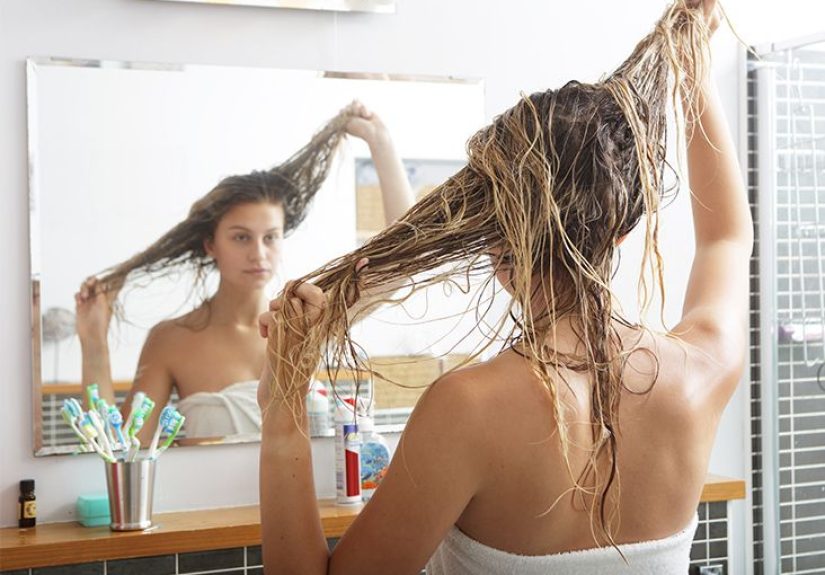
This is where dryness and damage usually show up. Warm a small amount between your palms, then smooth it over the mid-lengths and ends. If there’s any left, use the residue near the crown rather than pouring fresh oil directly on top like salad dressing.
Step 4: Massage gently if using on the scalp
Use your fingertips, not your nails. A gentle massage can feel relaxing and help distribute the oil. Keep it light and brief. Your scalp wants kindness, not a wrestling match.
Step 5: Let it sit
For a pre-wash treatment, many people let oil sit for 20 to 60 minutes. Some leave it on longer or overnight, but that works better for certain hair types than others. If your scalp is sensitive or you’re new to oiling, shorter is smarter. Long soaks are not automatically better.
Step 6: Wash thoroughly
Use shampoo to remove the oil, and don’t be shocked if you need to cleanse twice after a heavier treatment. Follow with conditioner if your hair likes it. The ideal result is soft, clean hair, not roots that could fry an egg.
Common Hair Oiling Mistakes
- Using too much oil: This is the fastest path to greasy roots and regret.
- Putting oil on an irritated scalp: If the scalp is inflamed, itchy, or flaky from a scalp condition, oil may backfire.
- Skipping patch testing: Essential oils can irritate skin, especially when undiluted.
- Expecting instant growth: Softer hair can happen quickly. New growth is a slower, more complicated story.
- Using thick oils on fine hair: Not every head wants the same level of richness.
- Confusing shine with healing: Hair can look better immediately even if damage still exists.
How Often Should You Oil Your Hair?
This depends on your hair type and tolerance for buildup.
- Dry, textured, thick, or damaged hair: one to two times a week may work well
- Fine or easily weighed-down hair: once a week or less, often just on the ends
- Scalp treatments with diluted rosemary oil: follow product or professional guidance and watch carefully for irritation
Consistency matters more than intensity. A small, sensible routine usually works better than one giant oil event followed by a month of avoidance.
When to Skip Hair Oiling
Hair oiling is not for every situation. You may want to skip or modify it if:
- You have seborrheic dermatitis or stubborn dandruff
- Your scalp is itchy, burning, red, or broken out
- You react easily to fragrance or essential oils
- Your hair is so fine that most oils flatten it instantly
- You are having sudden or unexplained hair loss
In those cases, a targeted scalp product or a dermatologist-guided routine may be a much better move than adding more oil.
Common Experiences With Hair Oiling: What People Often Notice
One of the most interesting things about hair oiling is how differently it feels depending on the person. For someone with thick, curly hair, oiling can feel like relief. Their hair may become easier to detangle, less puffy after drying, and more cooperative on day two and day three. They often describe it as their hair finally “settling down,” which is a polite way of saying it stopped behaving like a startled cloud.
People with fine, straight hair tend to have the opposite learning curve. Their first experience is often either delightful or hilariously greasy, with very little space in between. Once they figure out that one or two drops are enough, they usually notice that their ends look smoother and shinier without the whole head looking heavy. The lesson is simple: on fine hair, oil is a seasoning, not a sauce.
Those with color-treated or heat-styled hair often report the quickest cosmetic payoff. Hair that felt rough after bleaching, blow-drying, curling, or straightening can seem softer almost immediately after a good pre-wash oil treatment. The ends may look less frazzled, and brushing can become easier. No, the damage is not magically erased, but the daily struggle may feel less dramatic, and honestly, sometimes that is the victory.
Another common experience is that the scalp tells the truth very quickly. If your scalp loves gentle oiling, it may feel comfortable and calm. If it hates it, it usually wastes no time making that point. Some people notice extra itch, more flakes, or bumps along the hairline after putting oil directly on the scalp. That doesn’t mean hair oiling is bad. It means the routine should shift. Many people do best when they keep oil on the hair shaft and avoid the scalp completely.
There is also the emotional side of the routine, which people rarely talk about enough. Hair oiling can slow a person down in a good way. The process of sectioning the hair, warming a small amount of oil in your hands, and taking ten quiet minutes to massage or smooth it through the strands can feel grounding. It turns a basic grooming step into a ritual. For some, that ritual is the real benefit. Softer hair is nice, but softer stress levels are not exactly a bad bonus.
Over a few weeks, people often notice more manageable hair rather than dramatic transformation. Their brush may catch less. Their hair may feel less crunchy at the ends. Humidity may become mildly annoying instead of a full personality crisis. And they often become much better at reading their own hair: when it needs moisture, when it needs clarifying shampoo, and when it absolutely does not need another heavy product layered on top of six others.
In other words, the best hair oiling experience usually comes from observation, not obsession. The people who get the most out of it are rarely the ones dumping half a bottle on their roots because a stranger online promised “overnight growth.” They’re the ones who adjust the amount, pick the right oil, pay attention to their scalp, and treat hair oiling like a helpful tool instead of a magical destiny. Sensible? Yes. Boring? Maybe. Effective? Usually far more than the dramatic version.
Final Thoughts
Hair oiling can absolutely deserve a place in a smart hair care routine. The benefits are real when expectations are realistic: softer strands, better slip, less roughness, more shine, and added support for dry or damaged hair. The best oil depends on your hair type, scalp behavior, and styling habits. Coconut oil stands out for pre-wash protection, argan oil is a favorite for lightweight smoothing, jojoba oil works well when you want a lighter touch, and rosemary oil may be worth discussing if hair thinning is part of the picture.
The secret is not using the most expensive oil or copying the most dramatic routine. It’s knowing your hair, respecting your scalp, and using just enough to help rather than overwhelm. Done right, hair oiling is not hype. It’s simple maintenance with very shiny public relations.