Table of Contents >> Show >> Hide
- What HS scars look like (and why they’re different)
- The unglamorous truth: controlling HS is step one for scar improvement
- At-home scar care for HS: what’s worth your time
- 1) Silicone gels and silicone sheets (best evidence for raised scars)
- 2) Moisturizers + barrier protection (comfort counts)
- 3) Gentle scar massage (only when HS is quiet)
- 4) “Scar creams” with extras: approach with healthy skepticism
- 5) Retinoids (for texture/discoloration, but HS-specific proof is limited)
- In-office scar treatments for HS
- Surgery for HS scars and tunnels: when removing tissue is the treatment
- Recovery and wound care: the part nobody puts on the brochure
- How to choose the right scar strategy (a simple decision map)
- FAQs people actually ask (but may whisper)
- Real-life experiences with HS scars (500+ words; composite, anonymized)
- Wrap-up
Hidradenitis suppurativa (HS)also called acne inversadoesn’t just leave painful flares in the moment. It can leave souvenirs:
scars that pull, bump, darken, dent, or feel like “ropes” under the skin. And unlike a typical scraped-knee scar, HS scarring
often comes with a plot twist: the same area can flare again, which means scar care has to be smart, gentle, and realistic.
This guide breaks down what HS scars can look like, what creams can (and can’t) do, which in-office procedures may help,
and when surgery is actually the best “scar treatment” because it removes tunnels and chronic damaged tissue. You’ll also get
a longer, real-life experience section at the endbecause scars aren’t just skin-deep, and HS is definitely not a “just use this gel” situation.
What HS scars look like (and why they’re different)
HS scars can show up in a few main stylessometimes all at once on the same person, because HS likes variety the way nobody asked for:
- Rope-like or bridged scars: thicker bands that can restrict movement or rub painfully.
- Raised scars: hypertrophic scars or keloids that may itch or ache.
- Pitted or sunken scars: depressed areas where deeper inflammation damaged tissue.
- Discoloration: post-inflammatory hyperpigmentation (dark marks) or persistent redness.
- “Tunnels” (sinus tracts): channels under the skin that can form when repeated abscesses and scarring continue.
The biggest difference between HS scarring and many other scar types: HS scarring often sits on top of (or right next to)
ongoing inflammation. If the disease is still active in that spot, you can’t treat scars as if the skin is calm and stable.
In HS, scar improvement usually starts with HS control.
The unglamorous truth: controlling HS is step one for scar improvement
If you’re actively flaring in the same area you’re trying to “fade,” it’s like repainting a wall while the sprinklers are still going off.
Dermatology care that reduces flares can reduce new scarring and make existing scars more treatable.
What “control” can look like (big picture)
- Topicals and oral meds (often antibiotics or anti-inflammatory approaches) to calm active disease.
- Hormonal options for people whose HS tracks with menstrual cycles or androgen sensitivity.
- Biologics for moderate-to-severe HS in appropriate patients (FDA-approved options include adalimumab; secukinumab and bimekizumab are also approved for adults with moderate-to-severe HS).
- Procedures (like deroofing or laser approaches) to remove tunnels and chronically inflamed tissue that drives repeated flares.
You don’t need to memorize drug names to treat scars effectivelyyour dermatologist does. What matters is the strategy:
reduce new inflammation first, then target the scar type you actually have.
At-home scar care for HS: what’s worth your time
Home care won’t erase HS scars overnight (or maybe ever), but it can help texture, comfort, and discolorationespecially for
newer scars and for raised scars that are still “active” and itchy.
1) Silicone gels and silicone sheets (best evidence for raised scars)
Silicone is one of the most evidence-supported over-the-counter scar options for raised scars. Silicone gel sheets appear to work better
than silicone ointments for many people, but both require consistent useoften daily for weeks to months.
- Use only on closed skin: not on open, draining, or infected HS lesions.
- Consistency matters: think “daily habit,” not “special occasion.”
- Watch for irritation: friction areas (like underarms or groin) can get rashy; take breaks if the skin gets angry.
2) Moisturizers + barrier protection (comfort counts)
HS scars can feel tight, chafe easily, and itch. A plain moisturizer can reduce friction and discomfort. In high-rub zones,
a barrier ointment (like petrolatum or zinc oxide-style barrier creams) may reduce irritation from movement and sweat.
This doesn’t “remove” scars, but it can make daily life less annoyingand that matters.
3) Gentle scar massage (only when HS is quiet)
Scar massage may help soften tight tissue over time, but it’s a “do no harm” zone: massage is for stable, healed skin only.
If a spot is tender, inflamed, draining, or feels like it’s brewing a flare, skip the rubbing and focus on medical HS control.
4) “Scar creams” with extras: approach with healthy skepticism
Many scar creams combine botanical ingredients, vitamins, and fragrances. Some people like them; evidence is mixed, and
irritation is common in HS-prone areas. If you try one, pick fragrance-free, patch-test it, and stop if you get burning, itching,
or new bumps. HS skin doesn’t tolerate drama.
5) Retinoids (for texture/discoloration, but HS-specific proof is limited)
Topical retinoids (like adapalene) can improve skin texture and are sometimes used for certain kinds of scarring in acne, but HS scarring is not identical
to acne scarring. Some dermatologists may use retinoids cautiously on stable HS-scarred skin for texture and discolorationespecially when follicles and
comedones are part of the picture.
- Expect irritation at first: dryness and peeling are common.
- Avoid active lesions: retinoids can sting and worsen irritation on inflamed skin.
- Pregnancy caution: always ask a clinician if pregnant, trying to conceive, or breastfeeding.
In-office scar treatments for HS
When HS is controlled (or at least calmer), in-office treatments can help raised scars, discoloration, and texture. The key is choosing a method
that matches the scar type and the location (folds and friction zones are not the same as cheeks or forehead).
1) Steroid injections (for raised, itchy, painful scars)
Intralesional corticosteroid injections are commonly used in dermatology to flatten hypertrophic or keloid scars and reduce symptoms like itch and pain.
In HS, these injections may also be used for inflamed nodulesso your dermatologist can decide whether the target is a scar, a flare, or both.
2) Laser approaches: hair reduction and resurfacing (two different goals)
“Laser for HS” can mean two different things:
- Laser hair removal: can reduce HS activity in some people by targeting hair follicles that contribute to blockage and inflammationoften most useful in mild-to-moderate disease and in hair-bearing areas.
- Laser resurfacing (e.g., CO2 laser): may improve texture or treat tunnels, depending on technique and device settings.
Hair-removal lasers are not a magic wand for severe, heavily scarred areasdeep scar tissue can limit penetration, and advanced HS may need different strategies.
Resurfacing lasers can help certain surface changes but must be chosen carefully to avoid triggering inflammation in sensitive HS zones.
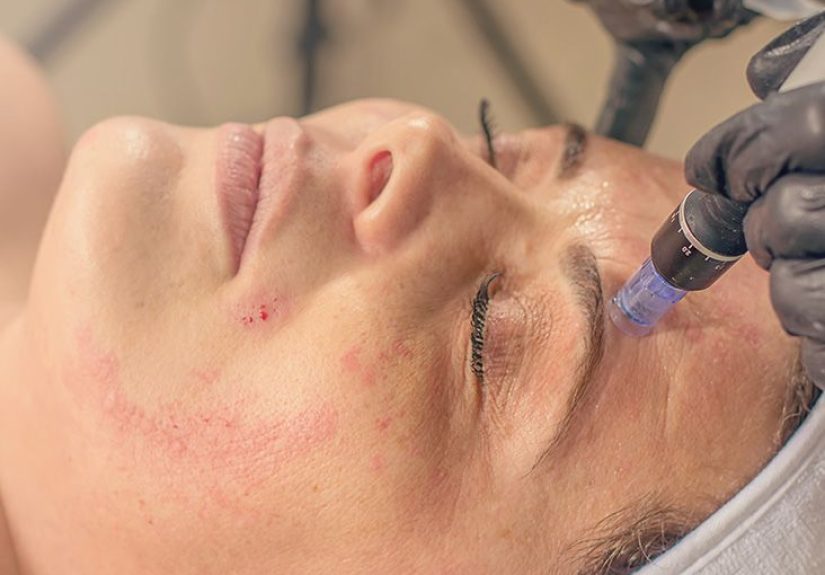
3) Microneedling or dermabrasion (select cases, cautious use)
These procedures aim to remodel collagen and improve texture. They may help shallow textural irregularities, but HS skin can be reactive, and friction zones
have higher risk of irritation. If considered, it’s typically after disease is stable and under an experienced clinician who understands HS.
4) Pigment-focused treatment for dark marks
Post-inflammatory hyperpigmentation can linger, especially in skin that’s prone to pigment changes. Dermatologists may suggest topical options (such as azelaic acid,
retinoids, or other pigment-modulating agents) depending on the area and sensitivity. Because HS commonly affects folds, anything irritating can backfireso
this is one place where “stronger” is not always “better.”
Surgery for HS scars and tunnels: when removing tissue is the treatment
For many people, the most effective “scar treatment” isn’t a creamit’s removing the chronic HS structure under the skin that keeps causing flares.
Surgical and procedural options can reduce recurrence in the treated area and improve function, comfort, and appearance over time.
Deroofing (unroofing): targeted removal of tunnels
Deroofing removes the “roof” over HS tunnels/sinus tracts so the area can heal from the inside out. It’s typically used for recurring tunnels and localized
disease. Compared with simply draining an abscess, deroofing is designed to address the tunnel structure that fuels repeat inflammation.
- Best for: persistent tunnels, recurring lesions in the same spot.
- How it heals: often by secondary intention (open healing), with wound care support.
- Trade-off: you may still get scarring, but the goal is fewer repeat flares and a more stable result.
Excision and wide excision: removing chronically affected tissue
Excision removes HS-damaged tissue; wide excision removes lesions plus a margin of surrounding tissue and may go deeper, depending on severity.
This can be the best option for severe, long-standing HS with extensive scarring and tunnels.
- Best for: severe disease, extensive scarring, or areas with repeated failure of medical therapy.
- Closure options: healing open, stitches, skin grafts, or tissue flaps (especially for larger defects).
- Reality check: surgery can reduce disease in the treated area, but HS may still appear elsewhere.
CO2 laser deroofing / laser surgery for tunnels
CO2 laser techniques can be used to treat HS tunnels and chronic lesions, including laser deroofing approaches. Studies describe CO2 laser as a safe, effective
option for HS tunnels with relatively fast healing and low pain perception in selected patients.
Incision and drainage (I&D): relief now, not a scar plan
Draining an abscess can relieve pain in the moment, but it doesn’t remove tunnels or prevent recurrence in the same area. That’s why many HS resources
emphasize that I&D is not the long-term solution for chronic HS structuresand it can still leave scarring.
Recovery and wound care: the part nobody puts on the brochure
If you do procedures or surgery, wound care is the “after” that determines a lot of your outcome. Practical considerations often include:
- Dressings that don’t stick (non-adherent is your best friend).
- Moist wound healing as advised by your clinician.
- Managing friction with clothing choices and activity modifications.
- Watching for infection (worsening redness, heat, swelling, fever, foul odor beyond normal drainage).
Pro tip: if your plan is “I’ll just tough it out,” you deserve better. Ask your care team for a wound-care routine that matches your location
(underarm, groin, under-breast folds all behave differently).
How to choose the right scar strategy (a simple decision map)
If you have raised scars (keloid/hypertrophic)
- Start: silicone sheets/gel on closed skin + friction reduction
- Next: dermatologist options like steroid injections or other scar-directed therapies
If you have pitted/sunken scars
- Start: set expectations (these are harder to “fill”)
- Discuss: selective resurfacing approaches (laser/microneedling) only when HS is stable
If you have tunnels or recurring lumps in the same scarred area
- Priority: treat the HS structure (often deroofing, laser deroofing, or excision) rather than chasing surface appearance
- Then: consider scar refinement later
If discoloration is the main issue
- Start: gentle, non-irritating routines and minimize friction
- Consider: dermatologist-guided pigment options tailored to your skin type and location
FAQs people actually ask (but may whisper)
Can HS scars go away completely?
Some discoloration can fade, and some raised scars can flatten, but many HS scars won’t fully disappearespecially deep scars or scars tied to tunnels.
Improvement is still meaningful: less pain, less tightness, smoother texture, fewer recurrent flares in the same spot, and more confidence moving through the world.
Is it safe to use scar products on HS areas?
Many are safe on healed, stable skin. Avoid using scar sheets/creams on open wounds, draining lesions, or skin that’s actively inflamed.
If you’re unsure, treat it like a food allergy: test small, go slow, stop if your skin protests.
Will surgery leave new scars?
Yessurgery creates scars. The point is that the new scar may be more stable and less inflamed than the cycle of recurring HS lesions and tunnels.
Many people accept a cleaner scar in exchange for fewer painful flares.
Real-life experiences with HS scars (500+ words; composite, anonymized)
People describe HS scarring in a way that doesn’t show up in dermatology diagrams: “It’s not just what it looks likeit’s how it behaves.”
One common experience is that scars in friction zones feel like they have opinions. Underarm scars can pull when you reach for a shelf.
Groin scars can sting when you walk fast, climb stairs, or sit too long. Under-breast scarring can turn a bra band into an ongoing negotiation.
The emotional part is often just as loud: some people say they stop wearing sleeveless tops not because of the scars themselves,
but because they’re tired of explaining why they “look bruised” or why their skin has rope-like lines.
With creams and at-home options, the most common “win” isn’t a dramatic before-and-after photo. It’s comfort.
Many people find that a simple, fragrance-free moisturizer plus a barrier ointment reduces chafing, especially during hot weather.
Silicone sheets and gels come up a lot in scar discussionsparticularly for raised scars that itch or feel thick.
The learning curve is real: silicone can slip in sweaty areas, edges can roll, and sensitive skin may need shorter wear times at first.
But some people report that with steady use (and patience that deserves a medal), raised scars can soften and feel less tight.
The frustration is also consistent: if HS is still flaring in the same area, no topical is going to “out-skincare” a tunnel under the skin.
Laser and procedures are described with mixed feelingshope plus budgeting.
Laser hair removal is often framed as “helpful, but not free,” especially because insurance coverage varies and the treatment plan involves multiple sessions.
Those who benefit often describe fewer ingrown hairs, fewer small flares, and less day-to-day inflammation in hair-bearing areas.
Others point out the limits: advanced scarring can make results harder, and treatments can be uncomfortable.
When people talk about CO2 laser approaches or resurfacing, the theme is caution: it can help in the right hands, but you want a clinician who understands HS,
not just lasers in general.
Surgery stories tend to be the biggest turning pointsboth in relief and in reality.
People who undergo deroofing often describe it as “finally dealing with the thing under the skin.”
The wound care afterward is the main event: dressing changes, managing drainage, and learning what “healing from the inside out” actually looks like.
Many describe a trade-off they’d choose again: a more predictable scar and less recurring pain in that exact spot.
Wide excision experiences can be more intensebigger wounds, longer healing, sometimes grafts or flapsand the recovery can require planning time off work and help at home.
But for severe, long-standing HS, some people describe excision as giving them back basic movement they didn’t realize they’d been guarding for years.
Across all these experiences, the most consistent advice is surprisingly practical:
(1) treat HS early if you can, because preventing scars is easier than remodeling them;
(2) don’t put irritating “miracle” products on sensitive, fold-area skin;
(3) choose clinicians who take pain seriously and understand HS specifically; and
(4) measure success in more than appearanceless friction pain, easier movement, fewer flares, and less mental load count as real progress.
HS scars can be stubborn, but people are stubborn tooand the best plans respect both.
Wrap-up
HS scars are treatable, but not with one universal trick. The best results usually come from a layered plan:
stabilize the disease, match treatment to the scar type, and use procedures or surgery when tunnels and chronic tissue are driving repeat flares.
Creams can help comfort and raised scars; in-office treatments can refine texture and symptoms; surgery can be transformative when scars are tied to tunnels.
Most importantly: you deserve care that treats HS scars as a medical and quality-of-life issuenot a cosmetic footnote.