Table of Contents >> Show >> Hide
- Why Fresh Pumpkin Makes a Difference
- Ingredients for the Best Homemade Fresh Pumpkin Pie
- How to Make Fresh Pumpkin Puree
- How to Prepare the Crust So It Stays Crisp
- Step-by-Step Homemade Fresh Pumpkin Pie Recipe
- Flavor Notes: What Makes This Pie So Good
- Common Pumpkin Pie Problems and How to Fix Them
- Serving Ideas for Fresh Pumpkin Pie
- How to Store Pumpkin Pie
- Why This Homemade Fresh Pumpkin Pie Recipe Works
- Final Thoughts
- Experience: What It Feels Like to Make a Homemade Fresh Pumpkin Pie
- SEO Tags
There are two kinds of pumpkin pie people in this world: the ones who politely accept a slice at Thanksgiving, and the ones who hover near the dessert table like emotional support pilgrims waiting for their second piece. This homemade fresh pumpkin pie recipe is for both camps. It delivers a silky, warmly spiced filling, a flaky crust, and that deep, real pumpkin flavor that makes canned shortcuts suddenly feel a little too… corporate.
If you have ever wondered whether making pumpkin pie from fresh pumpkin is worth it, the answer is yeswith one tiny condition. You need to control the moisture. Fresh pumpkin puree can be a little more unpredictable than canned puree, but once you roast it well and thicken it if needed, the reward is a pie that tastes more vivid, more delicate, and more homemade in the best possible way. In other words, it tastes like autumn got dressed up for dinner.
This guide walks you through everything: choosing the right pumpkin, making fresh puree, mixing a smooth filling, blind-baking the crust, avoiding cracks, storing leftovers, and serving the pie like the hero you are. You will also get a full recipe card and a longer reflection at the end about the experience of baking this classic from scratch.
Why Fresh Pumpkin Makes a Difference
A great fresh pumpkin pie recipe starts with the right expectations. Fresh pumpkin does not automatically mean better pie, but it does mean more control over flavor. When done well, fresh puree gives the filling a cleaner pumpkin taste, a more natural sweetness, and a softer, less canned texture. It feels more seasonal and a little more special, especially if you enjoy the process of cooking from scratch.
The catch is simple: fresh pumpkin holds more water. That extra moisture can lead to a soggy crust, loose filling, or a pie that bakes forever and still looks suspiciously wobbly. The secret is to roast the pumpkin instead of boiling it, then puree it until smooth and reduce it slightly if it seems watery. Think of it like pumpkin pie therapy: less water, fewer issues, happier center.
For the best results, use a sugar pumpkin or pie pumpkin, not a giant carving pumpkin. Smaller pumpkins are sweeter, smoother, and less watery. They are built for baking, while giant jack-o’-lantern pumpkins are mostly built for spooky faces and regret.
Ingredients for the Best Homemade Fresh Pumpkin Pie
For the Pumpkin Puree
- 1 small sugar pumpkin or pie pumpkin, about 2 1/2 to 3 pounds
For the Pie Crust
- 1 single 9-inch homemade butter pie crust or a good-quality store-bought crust
- Pie weights, dried beans, or uncooked rice for blind-baking
For the Filling
- 2 cups fresh pumpkin puree
- 2 large eggs
- 1 large egg yolk
- 3/4 cup packed light brown sugar
- 1/4 cup granulated sugar
- 1 tablespoon all-purpose flour
- 1 1/2 teaspoons ground cinnamon
- 1 teaspoon ground ginger
- 1/4 teaspoon ground nutmeg
- 1/8 teaspoon ground cloves
- Pinch of black pepper
- 1/2 teaspoon kosher salt
- 1 teaspoon pure vanilla extract
- 1 cup evaporated milk
- 1/2 cup heavy cream
This combination gives you the deep spice of a classic pumpkin pie, the rich body of a custard pie, and the structure needed for fresh puree. The small amount of flour helps stabilize the filling, which is handy when you are working with homemade pumpkin.
How to Make Fresh Pumpkin Puree
- Preheat your oven to 375°F.
- Cut the pumpkin in half from stem to base. Scoop out the seeds and stringy bits. Save the seeds if you want a snack later and feel like being annoyingly productive.
- Roast cut-side down on a parchment-lined baking sheet for 40 to 50 minutes, or until the flesh is very tender.
- Cool slightly, then scoop out the flesh. Transfer it to a food processor or blender and puree until completely smooth.
- Check the texture. If the puree looks loose or watery, place it in a saucepan over medium-low heat and cook for 10 to 15 minutes, stirring often, until thicker. Let it cool before using.
You need about 2 cups of puree for one pie. If you have extra, refrigerate it for a few days or freeze it in measured portions. Future-you will be thrilled.
How to Prepare the Crust So It Stays Crisp
A soggy bottom is tragic in British baking shows and equally tragic in your kitchen. Because pumpkin pie filling is essentially a custard, a quick blind-bake helps the crust stay flaky instead of turning into damp cardboard with ambition.
- Roll out your pie dough and fit it into a 9-inch pie plate.
- Chill the crust for 20 minutes.
- Preheat the oven to 375°F.
- Line the crust with parchment and fill it with pie weights, beans, or rice.
- Bake for 20 minutes.
- Remove the weights and parchment, then bake 5 to 8 minutes more, until the bottom looks dry and matte.
- Cool slightly while you make the filling.
If the crust edges brown too quickly later, cover them with a pie shield or strips of foil. This is not cheating. This is wisdom.
Step-by-Step Homemade Fresh Pumpkin Pie Recipe
- Preheat the oven to 425°F.
- Whisk the eggs and yolk in a large bowl until combined.
- Add the sugars, flour, spices, salt, and vanilla, then whisk until smooth.
- Whisk in the pumpkin puree until fully blended.
- Gradually add the evaporated milk and heavy cream, whisking gently so you do not whip too much air into the custard.
- Let the filling rest for 10 minutes. This helps the spices hydrate and the bubbles settle down.
- Pour the filling into the partially baked crust. Place the pie plate on a rimmed baking sheet for easier handling.
- Bake at 425°F for 15 minutes.
- Lower the oven temperature to 350°F and continue baking for 35 to 45 minutes, or until the edges are set and the center still has a slight jiggle.
- Cool on a wire rack for at least 2 hours before slicing. Then refrigerate if not serving the same day.
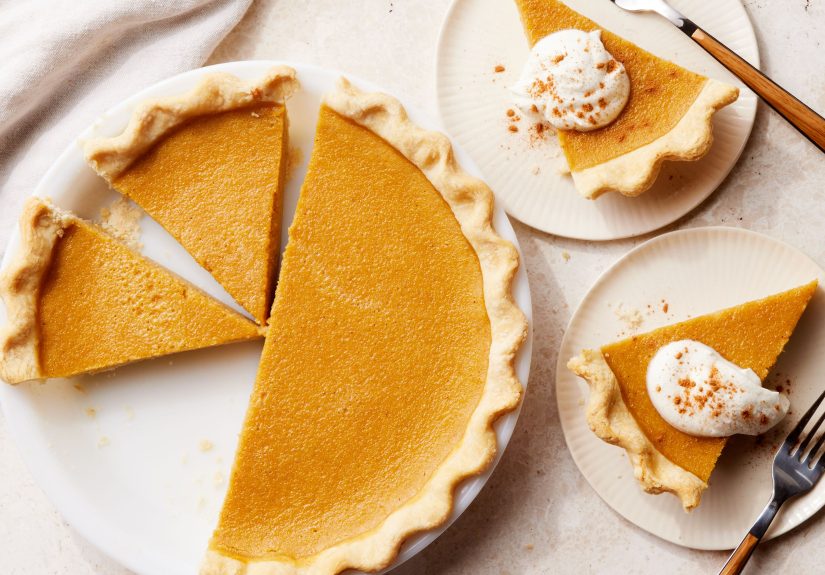
The pie is done when the outer 2 to 3 inches look set and the center trembles gently like Jell-O, not like a wave pool. If you prefer a thermometer, the center should be in the range where the custard has set without overbaking. Overbaking is the fast lane to cracks.
Flavor Notes: What Makes This Pie So Good
This homemade pumpkin pie from scratch is built around balance. Brown sugar gives the filling a little caramel depth, while granulated sugar keeps the sweetness clean. Evaporated milk brings classic pumpkin pie flavor, and heavy cream adds body without making the texture too dense.
The spice blend is warm but not aggressive. Cinnamon leads, ginger brightens, nutmeg adds softness, cloves bring depth, and a tiny pinch of black pepper makes the whole pie taste more alive. It does not scream, “I dumped the spice cabinet in here.” It just tastes complete.
Vanilla rounds everything out, and the fresh pumpkin puree gives the filling a lighter, more nuanced flavor than you might expect. It tastes less flat and a little more elegant. That said, it still belongs under a ridiculous cloud of whipped cream.
Common Pumpkin Pie Problems and How to Fix Them
1. The filling is too loose
Your puree was probably too wet, or the pie needed more time. Reduce watery puree on the stove before mixing the filling, and do not pull the pie too early.
2. The pie cracked
Usually, this means the custard overbaked. Next time, remove the pie while the center still jiggles slightly. Sudden temperature changes can also contribute, so let it cool gradually on a wire rack.
3. The crust got soggy
Blind-bake the crust, use a metal or glass pie plate that holds heat well, and avoid overly wet puree. Baking the pie on a preheated sheet pan can also help the bottom crust firm up.
4. The spices taste dull
Let the filling rest for a few minutes before baking so the spices can bloom into the mixture. Fresh spices also matter more than people like to admit.
Serving Ideas for Fresh Pumpkin Pie
You can serve this pie plain, but why stop there when whipped cream exists? A few favorite options:
- Classic whipped cream: Softly whipped heavy cream with a spoonful of sugar and a splash of vanilla.
- Maple whipped cream: Add maple syrup instead of sugar for a cozy fall twist.
- Warm spice finish: Dust the top lightly with cinnamon, nutmeg, or pumpkin pie spice.
- Candied pecans: For crunch and drama.
This pie is best served cool or at cool room temperature. Warm pumpkin pie can be lovely, but fully cooled pie slices more cleanly and has a silkier texture.
How to Store Pumpkin Pie
Because pumpkin pie is a custard pie, it should not sit out all day pretending it is a decorative object. Let it cool for a couple of hours, then refrigerate it within about 4 hours of baking. Cover loosely and store it in the fridge for up to 2 to 3 days for best quality.
You can also make the puree ahead of time. Store homemade pumpkin puree in an airtight container in the refrigerator for up to 5 days, or freeze it in 1-cup portions. That makes holiday baking a lot easier and significantly less chaotic.
Why This Homemade Fresh Pumpkin Pie Recipe Works
The recipe works because it solves the biggest issues that usually sabotage fresh pumpkin pie. Roasting concentrates flavor and reduces water. Pureeing until smooth removes fibrous texture. Cooking off extra moisture makes the custard more stable. Blind-baking protects the crust. And baking hot at first, then lower and slower, helps set the filling without punishing it.
In other words, this is not just a cute fall baking project. It is a smart one. It gives you the charm of homemade pie with the structure of a recipe that has actually been thought through. Revolutionary, I know.
Final Thoughts
If you love classic fall desserts, this homemade fresh pumpkin pie recipe deserves a spot in your regular rotation. It is rich but not heavy, cozy but not one-note, and impressive without requiring a culinary degree or a hotline to your grandmother. The flavor is deeply autumnal, the texture is silky, and the process feels satisfying in a way that opening a can simply never will.
Fresh pumpkin pie asks for a little more attention, but it gives plenty back. The smell of the roasting pumpkin, the flaky crust, the spice-filled kitchen, the first clean slice after coolingthis is the kind of dessert that feels like a tradition even the first time you make it. And once you get it right, you may find yourself becoming that person who says, “Oh, this old thing? I made the puree from scratch,” while pretending not to enjoy the compliments. You will enjoy them. Deeply.
Experience: What It Feels Like to Make a Homemade Fresh Pumpkin Pie
Making a pie from fresh pumpkin is not just about dessert. It is an experience that starts long before the first slice lands on a plate. It begins with choosing the pumpkin itself, which feels oddly important, like you are casting the lead actor in a very delicious fall production. You pick up a few sugar pumpkins, inspect them with unnecessary seriousness, and suddenly you are emotionally invested in squash.
Then comes the roasting. The kitchen starts to smell warm, earthy, and sweet in a way that feels much more personal than opening a can. It is the kind of aroma that makes people drift into the kitchen and ask, “What are you making?” even though they clearly already know. There is something deeply satisfying about scooping the soft flesh from the roasted pumpkin and watching it turn into smooth puree. It feels old-fashioned in the best way, like you are participating in a ritual people have repeated for generations.
There is also a little suspense built into the process. Fresh puree is not as perfectly predictable as canned puree, so you pay closer attention. Is it too wet? Should it cook down a bit more? Does the custard look smooth enough? Oddly, that extra attention makes the pie feel more meaningful. You are not just following steps. You are learning the ingredient. You are understanding how pumpkin behaves, how spices bloom, and how a pie transforms from loose filling into something sliceable and glorious.
And then there is the moment the pie goes into the oven. That is when the house really changes. The butter from the crust, the cinnamon and ginger from the filling, the mellow sweetness of the pumpkinall of it starts to mingle in the air. It is one of those smells that instantly makes a room feel more welcoming. Even if your day was chaotic, even if your sink is full of dishes plotting revenge, the smell of pumpkin pie makes life feel suspiciously under control.
Watching the pie bake is its own tiny drama. You keep checking the crust, rotating the pan, peeking at the center, trying to decide whether the jiggle is “perfectly set” or “call the authorities.” Then you pull it from the oven, and for a while it looks too soft to trust. But as it cools, it settles into itself. The surface smooths. The filling firms. The whole pie starts to look like something worthy of a holiday table, a weekend dinner, or a Tuesday when you simply need emotional support in dessert form.
The best part might be slicing it later. You cut through the tender filling and flaky crust and see those clean layers. The texture tells you immediately whether the effort paid off. When it has, the pie is silky, fragrant, and balancedless sugary than expected, more pumpkin-forward, and somehow both rustic and elegant. Topped with whipped cream, it feels generous. Shared with other people, it becomes memorable. Homemade fresh pumpkin pie has a way of slowing everyone down for a minute. People take a bite, pause, and then say something nice with their mouths still half full, which is honestly the highest compliment a pie can receive.
That is what makes the whole experience worth it. It is not just that the pie tastes wonderful. It is that making it creates a small occasion all by itself. It turns an ordinary afternoon into something cozy and intentional. It gives you a dessert with a story, not just a recipe. And once you have made it from scratch, you never look at pumpkin pie quite the same way again.