Table of Contents >> Show >> Hide
- What Are “Kamikaze Drone Jets,” Exactly?
- Why a Jet Engine Changes the Threat
- Meet the Names You’ll Hear: Geran-3 and Geran-5
- How They’re Being Used: The “Annoying” Part Is the System, Not One Drone
- So… How Dangerous Are They, Really?
- Limits and Tradeoffs: Jet-Powered Doesn’t Mean Invincible
- How Defenders Are Responding (Without Spending a Fortune Per Shot)
- Why This Matters Outside Ukraine
- FAQ: Quick Answers People Actually Ask
- Conclusion: Dangerous Enough to Change the Math
- Experiences From the Front Line of the Sky (Reported, Not Romanticized)
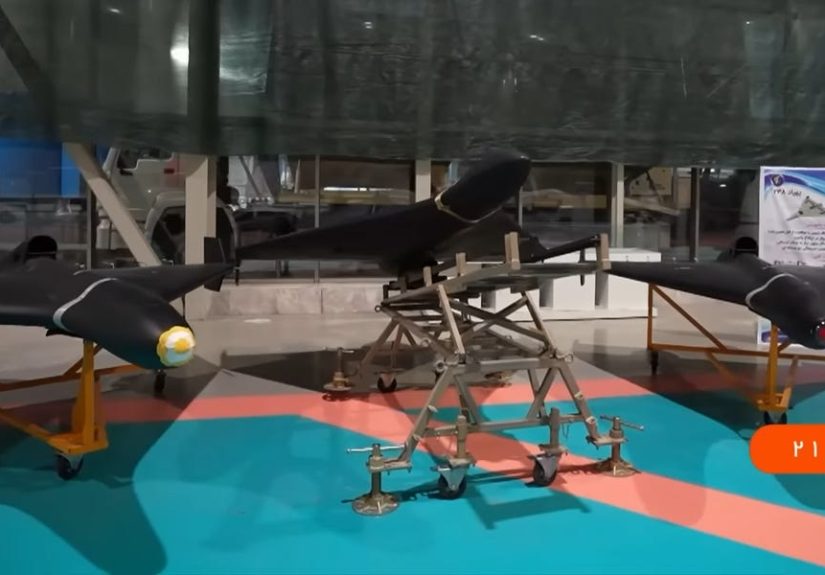
Imagine a “kamikaze drone” that shows up like a cheap cruise missile’s scrappy cousin: still disposable, still built for one-way trips, but now fast enough to shrink your reaction time from “we’ve got a minute” to “wait, that was now.” That’s the anxiety-inducing premise behind Russia’s reported jet-powered one-way attack dronesoften discussed under names like Geran-3 and Geran-5which are linked in open reporting to the broader Shahed/Geran family.
These aren’t fighter jets. They’re kamikaze drones with jet engines: relatively small aircraft that carry explosives and are meant to crash into targets. The danger isn’t just the boom at the end. It’s the way speed, scale, and tactics combine to stress air defenses and raise the odds that some drones get throughespecially when they’re launched in large waves alongside missiles and decoys.
So how dangerous are they, really? Let’s unpack what “new,” “jet,” and “kamikaze” mean in practiceand why defenders are taking them seriously.
What Are “Kamikaze Drone Jets,” Exactly?
The technical term you’ll see in serious defense writing is one-way attack (OWA) drone or loitering munition. “Kamikaze” is the popular label: the drone is the weapon, not just the delivery truck. It flies to a target area using navigation systems (often satellite/inertial guidance), then dives into the target and detonates.
For context, Russia has used propeller-driven Shahed-type drones (often called Geran-2 in Russian service) for long-range strikes for years. Jet-powered variantscommonly tied in reporting to Shahed-238-style designsare discussed as the next step: faster, potentially harder to intercept, and more “missile-like” in how they arrive.
Think of it like upgrading from a scooter to a motorbike. The route might be similar, but the time you have to react is not.
Why a Jet Engine Changes the Threat
1) Speed compresses the defender’s decision-making
Speed isn’t just a number on a spec sheetit’s a tax on every part of air defense. Faster drones reduce the time available to detect, track, classify, assign a shooter, and engage. In a real-world defense network, each of those steps has friction: radar coverage gaps, crowded airspace, false tracks, limited interceptors, and the human factor. Jet power squeezes that timeline.
2) Faster drones can complicate interception options
Prop-driven one-way drones can sometimes be engaged by a wider range of optionsguns, short-range systems, and even improvised solutionsdepending on conditions. With jet-powered drones, the “intercept window” may narrow, pushing defenders toward more capable (and often more expensive) methods unless they develop new low-cost counters (like interceptor drones).
3) “Missile-like” behavior without “missile-like” pricing (maybe)
Part of what makes one-way drones strategically annoying is cost imposition: if a defender uses a very expensive interceptor to shoot down a comparatively cheaper attacker, the economics get painful over time. Jet-powered drones likely cost more than prop-driven versionsbut if they still remain cheaper than many traditional cruise missiles, they can occupy an awkward middle ground: more capable than the slow drones, cheaper than the fancy missiles.
4) They can be paired with swarm tactics
Even the best air defenses have limits. When attackers send large wavesmixing drones, decoys, and missilesthe goal often isn’t that every drone hits. It’s that the defense gets saturated, confused, and depleted. Jet-powered drones add urgency and complexity to that kind of layered strike package.
Meet the Names You’ll Hear: Geran-3 and Geran-5
Open reporting frequently links Russia’s jet-powered one-way drones to the Shahed lineage and uses Russian labels like Geran-3 (often associated with a jet-powered Shahed-238-type variant). More recently, reporting has also discussed a Geran-5 as a newer, higher-speed evolution in this “Geran” family.
Important reality check: With wartime systems, specifications float around the internet like balloons at a kid’s birthday partylots of confidence, varying accuracy, and occasional loud popping sounds when claims don’t hold up. Still, multiple mainstream and defense-focused outlets converge on a few themes:
- Jet propulsion (turbojet or similar small jet engine) enabling higher speed than earlier prop-driven designs.
- Long-range strike intent, often aimed at infrastructure and targets deep behind the front line.
- Scaled production and repeated use as part of broader drone/missile strike campaigns.
In plain English: these drones are meant to arrive faster, stretch defenses, and keep pressure on cities and critical infrastructure.
How They’re Being Used: The “Annoying” Part Is the System, Not One Drone
If you imagine air defense as a goalkeeper, Russia isn’t just taking one shot. It’s running a whole drill: feints, rebounds, screens, and lots of balls on goal at once.
Mass launches and saturation
Analyses of Russia’s long-range strike patterns describe large drone waves as a recurring featuresometimes mixed with missilesdesigned to saturate defenses. Even if interception rates are high, the math can still be brutal: when enough drones are launched, some will likely leak through.
Decoys and mixed packages
Decoys (or simpler drones) can be used to trigger radars, consume interceptor missiles, and distract operators. In a mixed strike, slower drones might draw attention while faster threats exploit gaps. Jet-powered drones can be particularly valuable here because their speed can punish hesitation.
Targeting beyond the front line
One-way drones have been widely reported as tools for striking energy infrastructure, logistics, and urban targets. The strategic effect isn’t only physical damage; it’s also psychological and economic: disrupted power, disrupted repair schedules, and the constant requirement to defend large areas night after night.
So… How Dangerous Are They, Really?
Danger is a mix of capability, quantity, and context. A single jet-powered one-way drone is dangerous, but not magic. The bigger danger is what happens when these drones are integrated into a sustained campaign.
They’re dangerous because they shrink the margin for error
In air defense, timing matters. Faster inbound threats reduce the time to respond. That can increase the chances that a drone reaches a targetespecially in complex attack nights when defenders are juggling multiple tracks.
They’re dangerous because they strain air defense economics
Even if jet-powered drones cost more than earlier models, they can still be used in ways that force defenders to spend scarce resources. If defenders respond with expensive missiles every time, stockpiles and budgets feel it. If they hold fire to save missiles, they risk hits. That’s the attacker’s favorite kind of dilemma: “choose your pain.”
They’re dangerous because their success rate doesn’t need to be high
One key misconception: people assume a weapon must “usually” get through to matter. Not in this kind of war. If a campaign launches drones frequently enough, even a modest leak-through rate can create frequent damageespecially against widespread infrastructure targets.
They’re dangerous because adaptation is continuous
Ukraine’s defenders have adapted with electronic warfare, guns, missiles, and creative counter-drone methods. Russia adapts in responseadjusting routes, adding features, changing launch patterns, and introducing new variants. Jet-powered drones are part of that evolutionary loop.
Limits and Tradeoffs: Jet-Powered Doesn’t Mean Invincible
Jet-powered one-way drones have strengths, but they also come with constraints:
Cost and complexity rise
A jet engine adds cost, supply-chain pressure, and maintenance/logistics complexity. That may limit how many can be produced and used compared with simpler prop-driven drones.
Range can be a balancing act
Higher speed often means higher fuel consumption. Designers can compensate with fuel capacity, efficiency improvements, or altered flight profiles, but there’s usually a tradeoff somewhere: payload, endurance, or cost.
They still rely on guidance and communications
Even “autonomous” one-way drones typically depend on navigation systems that can be disrupted, spoofed, or degradedthough both sides have been improving resilience and counter-resilience over time. It’s a cat-and-mouse game, not a one-time trick.
How Defenders Are Responding (Without Spending a Fortune Per Shot)
If jet-powered drones increase the pressure on traditional air defense, the natural response is to add more layersespecially cheaper layers.
Interceptor drones: fighting drones with drones
One of the most talked-about developments is the push for interceptor drones: relatively low-cost drones designed to intercept incoming one-way attackers. The idea is simple: stop spending gold bars to swat flies. If it works at scale, it can rebalance the economics.
Guns, short-range systems, and smarter integration
Traditional guns and short-range air defense can still matter, especially when integrated into a broader detection and cueing network. The goal is to reserve high-end missiles for the hardest targets (like fast missiles) while using cheaper means against drones when possible.
Electronic warfare and detection innovations
Electronic warfare remains part of the toolkit, alongside acoustic sensors, distributed spotters, and improved command-and-control. The specific mix changes as the threat changes.
Why This Matters Outside Ukraine
The big takeaway isn’t only “Russia built a faster drone.” It’s that modern conflict is showing how mass-produced, relatively affordable aerial threats can impose huge costs on defendersespecially when aimed at infrastructure and cities.
For militaries and homeland security planners, the lesson is uncomfortable: you can’t rely on a small number of exquisite systems alone. Defense has to be scalable, layered, and economically sustainable.
FAQ: Quick Answers People Actually Ask
Are these drones basically cruise missiles?
They can be cruise-missile-like in effectfast, long-range, and explosivebut they’re generally discussed as cheaper and simpler than many traditional cruise missiles, with different tradeoffs in payload and survivability.
Does “jet-powered” mean they’re harder to shoot down?
Often, yesbecause speed reduces reaction time and can narrow engagement opportunities. But “harder” doesn’t mean “impossible,” especially with layered defenses and evolving counter-drone methods.
What’s the biggest danger: the tech or the tactics?
Tactics. A single drone is a threat; a sustained campaign that mixes drones, decoys, and missiles is a strategy designed to wear defenses down over time.
Conclusion: Dangerous Enough to Change the Math
Russia’s new jet-powered kamikaze drones are dangerous not because they’re futuristic wunderwaffles, but because they change the defender’s math: less warning time, tougher engagement windows, and more pressure to spend scarce resources. Combined with saturation tactics, they increase the chance that at least some drones reach targetsespecially when attacks recur night after night.
The good news (if we can call any of this “good”) is that defenses evolve too: interceptor drones, smarter integration, and layered systems are already reshaping the contest. The bad news is that this is an arms race measured in weeks and months, not decadesand the people living under sirens don’t get to opt out of the update cycle.
Experiences From the Front Line of the Sky (Reported, Not Romanticized)
When people talk about “danger,” they often picture the explosion. But many Ukrainians who’ve lived through long-range drone campaigns describe something broader: the nightly routine of uncertainty. The danger starts earlier than the impactat the moment your phone buzzes with an alert, the moment you hear a distant sound that doesn’t belong to the city, the moment you realize you’re measuring time in “how long until it gets here?” instead of “what day is it?”
One repeated theme in reported accounts is how the soundscape shapes fear. Propeller-driven drones have an infamous audible signaturepeople compare it to a lawn mower or a moped that refuses to leave the block. Jet-powered drones, by contrast, are often described as arriving with less “warning theater.” The details vary by location and conditions, but the emotional takeaway is consistent: speed feels like theft. It steals the minute you might have used to move to a safer room, to wake a child, to text someone back, to decide whether you’re overreacting. Faster threats don’t just compress radar timelines; they compress human timelines.
Air-defense crews and local responders, in turn, are often described as living inside an exhausting loop. Even successful interceptions can create dangerous debris, fires, and secondary emergenciesmeaning “stopped” doesn’t always equal “over.” And on nights when attacks come in waves, defenders may face a brutal sequencing problem: protect critical infrastructure, protect dense neighborhoods, protect everything everywhere all at once. The stress is not only technical; it’s moral. People have to decide what they can cover with what they have.
Another reported experience is the way drone campaigns reshape normal life through fatigue. Sleep is fragmented. Work shifts bend around alerts. Families develop ritualscharging power banks, keeping flashlights in one place, setting shoes near the bedbecause preparedness becomes a form of control in a situation that offers very little. Over weeks and months, that routine becomes its own kind of damage: not as visible as a crater, but still real in how it narrows people’s world.
And then there’s the “infrastructure anxiety” that shows up in interviews and city reporting: not just fear of being hit, but fear of what happens afterpower outages, heat loss in winter, water pressure changes, transit disruptions, hospitals running on backup systems. Jet-powered drones add another layer to that worry because they symbolize adaptation: the sense that even as defenses improve, the attacker is also rewriting the playbook. It’s not just the drone you fear; it’s the idea that the next wave might be different.
Finally, many accounts highlight a stubborn, practical resilience: people learn patterns, help neighbors, share information, and support repair crews. The experience isn’t a movie montage; it’s a checklist, repeated. In that context, the danger of jet-powered kamikaze drones is partly psychological: they’re a reminder that the threat is evolving, and that “getting used to it” isn’t the same as being safe.