Table of Contents >> Show >> Hide
- From Suitcase PCs to True Laptops: The Early Years (1980s)
- The 1990s: Laptops Go Mainstream
- 2000s: Wi-Fi, Multimedia, and the Age of the Netbook
- 2010s: Ultrabooks, 2-in-1s, and the Cloud
- 2020s: Remote Work, AI Laptops, and What Comes Next
- How Today’s Laptops Compare to the Past
- Real-World Experiences: Living Through the Laptop Evolution
- Conclusion: From 24-Pound Bricks to Everyday Essentials
If you’ve ever complained that your laptop is “too heavy,” try lugging around an
early 1980s portable that weighed over 20 pounds and needed an outlet just to
turn on. The story of how laptops have changed over time is really a story about
how work, school, and everyday life have gone mobile, wireless, and increasingly
intelligent.
From suitcase-sized machines with tiny monochrome screens to today’s feather-light,
AI-powered notebooks, laptops have evolved dramatically in just a few decades.
Let’s walk through the major eras of laptop history, see how technology and design
have shifted, and look at what might be coming next.
From Suitcase PCs to True Laptops: The Early Years (1980s)
The first generation of “portable” computers was portable in the same way a
bowling ball is portable: technically yes, practically not fun.
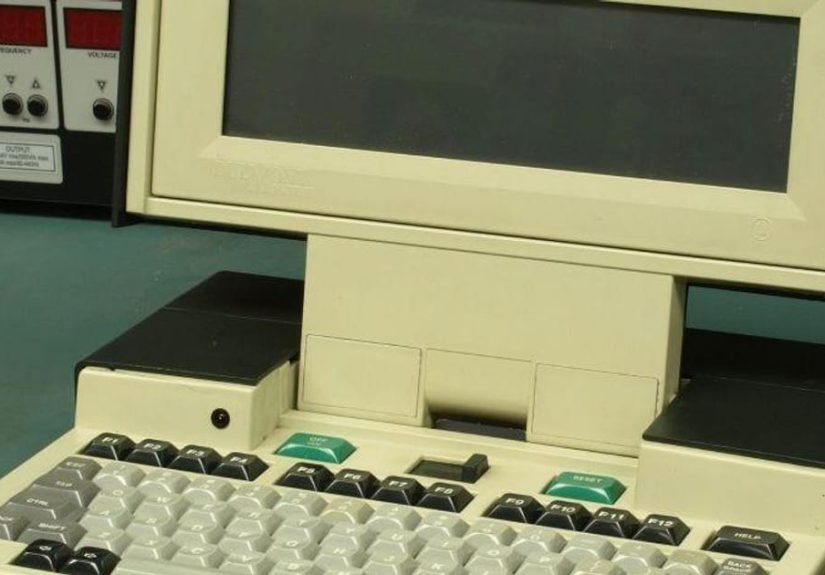
In 1981, Adam Osborne introduced the Osborne 1, widely considered
the first commercially successful portable computer. It weighed about
24.5 pounds, had a 5-inch screen, two floppy drives, and still needed to be
plugged into an AC outlet.
It was essentially a desktop you could drag to another room or onto an airplane
if you were very determined (and had strong shoulders).
Around the same time, the GRiD Compass appeared, designed by
Bill Moggridge. Its magnesium case, clamshell design, and screen that folded over
the keyboard set the basic shape of the modern laptop.
It was rugged and advanced enough to be used by NASA, but with a price tag
that could reach $10,000 in the early 1980s, it was definitely not a student
laptop.
Other early contenders like the Epson HX-20 pushed the idea
further, offering built-in batteries and more compact form factors.
Still, these machines were niche tools for business travelers, engineers,
and government agencies. The average person wasn’t tossing one into a backpack.
The 1990s: Laptops Go Mainstream
From “Luggable” to Everyday Notebook
By the 1990s, laptops started transitioning from novelty gadgets to credible
alternatives to desktop PCs. Advances in LCD displays, battery
technology, and power-efficient processors meant laptops could run
longer, weigh less, and do more than ever before.
The term “notebook” emerged as designs became smaller and
lighter, approximating the size of an actual paper notebook. Laptops shed
external components, integrated pointing devices, and made 3.5-inch disks and
later CD-ROMs standard.
Iconic Designs and Business Adoption
This decade saw iconic lines like IBM’s ThinkPad and Apple’s PowerBook help
define what a laptop should look and feel like. Sleek black cases, integrated
trackpoints or trackpads, and improved keyboards made these machines comfortable
for long hours of work.
Businesses began issuing laptops to employees, not just executives. Portability
was becoming a productivity tool: sales teams could demo software on-site,
managers could work on the road, and students could type term papers in the dorm
rather than in crowded computer labs.
2000s: Wi-Fi, Multimedia, and the Age of the Netbook
Going Wireless and Always Online
If the 1980s and 1990s were about making laptops possible, the 2000s were about
making them essential. Built-in Wi-Fi turned laptops
into always-connected devices, perfect for the growing internet age. Cafés,
airports, and college campuses began offering wireless networks, and laptops
quickly became the preferred way to get online outside the office.
At the same time, laptops evolved from business machines into full multimedia
devices. Larger color displays, DVD drives, better speakers, and dedicated
graphics hardware made it possible to watch movies, play games, and edit photos
or videos on the go.
Netbooks: Tiny, Cheap, and Everywhere (for a While)
In the late 2000s, the netbook craze hit. These were small,
inexpensive laptops designed mostly for web browsing and light productivity.
They traded performance and screen size for low price and portability. For a
few years, they were everywhere: students loved them, travelers packed them,
and manufacturers raced to release more models.
Netbooks foreshadowed what people really wanted from mobile computers:
something light, affordable, and good enough for email, web apps, and streaming.
But once tablets and better ultrabooks arrived, netbooks quickly faded away.
2010s: Ultrabooks, 2-in-1s, and the Cloud
Thinner, Lighter, Faster
In the 2010s, laptop design went on a serious diet. Intel popularized the
ultrabook category: sleek, thin, and light laptops with
solid-state drives (SSDs), long battery life, and premium materials like
aluminum and carbon fiber.
SSDs were a game-changer, replacing slower spinning hard drives with flash
storage. Suddenly, laptops could boot in seconds, open apps almost
instantly, and survive more bumps and drops without data loss. Combined with
efficient processors and better batteries, day-long use on a single charge
became realistic instead of wishful thinking.
2-in-1s and Touchscreens
Inspired partly by tablets, manufacturers began pushing
2-in-1 laptops that could flip, fold, or detach into tablets.
Touchscreens, stylus support, and flexible hinges turned laptops into
sketchpads, presentation screens, or media tablets depending on the moment.
This era blurred the line between laptop and tablet. While not everyone needed
a detachable screen, many appreciated the versatility of propping up a laptop
in “tent mode” to watch movies or using a pen to mark up PDFs.
Cloud-First Computing
Another major shift was the rise of cloud services and
cloud-centric laptops. Chromebooks and other lightweight devices leaned heavily
on browser-based apps, online storage, and productivity suites like Google
Workspace and Microsoft 365.
Instead of storing everything locally, users could rely on fast internet
connections and cloud apps. That made it easier to collaborate in real time and
reduced the pain of losing a deviceyour work was still safe in the cloud.
2020s: Remote Work, AI Laptops, and What Comes Next
How the Pandemic Rewired Laptop Use
The COVID-19 pandemic didn’t just boost laptop salesit fundamentally changed
how we use them. As offices, schools, and public spaces closed,
millions of people suddenly needed a reliable laptop at home to stay employed,
educated, and connected.
Video calls, remote collaboration platforms, virtual classrooms, and VPNs became
everyday tools. For many, the laptop became less of a device and more of a
lifeline. Even after restrictions eased, hybrid and remote work models stuck
around, keeping demand for capable, portable laptops strong.
AI-Ready Laptops and Modern Hardware Trends
In the mid-2020s, the PC market began recovering from earlier slowdowns, with
analysts noting renewed growth in global shipments. Gartner and IDC report that
PC shipments, including laptops, have been rising again, driven by
Windows 10 end-of-support upgrades and the rollout of
AI-capable PCs.
Modern laptops increasingly include NPUs (neural processing
units) or other specialized hardware for tasks like on-device AI, noise
reduction in calls, background blur, security features, and advanced graphics.
At the same time, manufacturers are pushing thinner designs with high-refresh
displays, Wi-Fi 6/7, fast USB-C and Thunderbolt ports, and very efficient
processors.
Future Trends: Foldables, Sustainability, and Beyond
Looking forward, experts expect laptops to keep evolving toward:
- Foldable and dual-screen designs that can expand into
larger workspaces. - More sustainable materials and modular parts to make
repairs and upgrades easier. - Even deeper AI integration for real-time translation,
content creation, and personalization.
In other words, tomorrow’s laptop may feel less like a “computer” and more like
a flexible, intelligent assistant that happens to fold up and fit in your bag.
How Today’s Laptops Compare to the Past
Design and Portability
Compare a 24-pound Osborne 1 to a modern ultraportable that weighs under
3 pounds and is thinner than a spiral notebook. Contemporary lightweight
laptops typically feature slim, compact designs, durable builds, and all-day
battery life.
Features that are now normalbacklit keyboards, precision trackpads, high-res
displays, webcams, and multiple wireless standardswould have been science
fiction in the early 1980s.
Performance and Storage
Early portable computers struggled to run basic programs with limited memory and
no hard drive. Today’s mid-range laptops include multi-core CPUs, dedicated or
integrated GPUs capable of light gaming or content creation, and SSDs that can
hold terabytes of data.
This leap in performance doesn’t just mean faster spreadsheets. It enables
complex tasks like video editing, 3D modeling, and machine learning to happen on
a device you can throw into a backpack.
Connectivity and the Role of the Laptop
Laptops once lived in a world dominated by desktops. Now they share the stage
with smartphones and tablets. Global stats show that desktops and laptops still
account for a significant share of web access, even as mobile inches ahead in
some regions.
But the way we connect has changed: instead of dial-up modems or office-only
networks, we have Wi-Fi at home, in public spaces, on planes, and even on
trains. Laptops have shifted from being “work tools” to being everything tools:
for streaming, shopping, learning, gaming, and creating.
Real-World Experiences: Living Through the Laptop Evolution
It’s one thing to list specs and timelines; it’s another to look at how laptops
feel in everyday life. For a lot of people, the evolution of laptops maps
directly onto the evolution of their careers, education, and hobbies.
Imagine a college student in the early 1990s. Lugging a thick notebook computer
to the library was a commitment: batteries didn’t last very long, the screen
was dim, and the device took a while to boot up. You saved assignments to floppy
disks and printed them in the computer lab, hoping the printer didn’t jam on
page two of your 15-page paper.
Fast-forward to the mid-2000s. Wi-Fi is now a campus necessity, not a luxury.
Students show up with colorful consumer laptops, open them in class, and
collaborate on shared documents in real time. Laptops are still a bit chunky,
but they’re clearly personal devicesdecorated with stickers, used for music,
movies, and late-night instant messaging.
Jump ahead again to the late 2010s. A typical knowledge worker might have a
slim ultrabook with a high-resolution screen, lightning-fast SSD, and a
work-issued VPN. A single device now handles email, video meetings, presentations,
and side projects. You can carry it comfortably in a messenger bag all day, and
the battery often lasts long enough that you forget when you last charged it.
Then, suddenly, 2020 happens. The laptop that was once just a “work machine”
becomes the command center for your entire life. It’s your office, classroom,
social hub, and entertainment system. You’re doing video calls from your
kitchen table, streaming workout classes, helping kids submit homework through
online portals, and maybe even learning a new skill through online coursesall
on that same device.
That sudden shift also exposed a lot of practical lessons. People realized
quickly that a cheap, underpowered laptop isn’t so fun when you’re trying to
run three video calls, a spreadsheet, a browser with 25 tabs, and a chat app at
the same time. Many upgraded to machines with better processors, more RAM, and
larger screens. Cameras, microphones, and speakersonce afterthoughtsbecame
deal-breakers.
The experience of using a modern laptop is also much more personal and
continuous. You might start a project on your laptop, continue it on your
phone, then pick back up on the laptop againwith files and settings synced
through the cloud. Automatic backup and version history mean that accidentally
closing a document is annoying, not catastrophic.
For gamers and creators, the change is even more dramatic. A “gaming laptop”
that fits in a backpack can now rival or beat older desktops, with high-refresh
displays, discrete GPUs, and advanced cooling systems. Creators who once needed
a full desktop workstation can now edit 4K video, process RAW photos, or run
audio production software on a laptop during travel.
Perhaps the biggest experiential change, though, is psychological. Earlier
laptops felt like specialized equipment; you used them when you needed to.
Today’s laptops feel like extensions of ourselvesalways nearby, ready to help
with work, creativity, communication, or relaxation. We notice them most not
when they’re present, but when they’re missing, slow, or out of battery.
As AI-enhanced laptops become more common, the experience will likely shift
again. Instead of just opening apps and typing, we’ll talk to our devices more,
ask them to summarize information, generate content, or automate tasks in the
background. The “computer” part will fade a bit into the background, leaving us
with something that feels more like a partner than a tool.
Conclusion: From 24-Pound Bricks to Everyday Essentials
In just over forty years, laptops have transformed from expensive, suitcase-sized
curiosities into everyday essentials that power our work, learning, creativity,
and entertainment. Early portable computers proved that mobility was possible.
The 1990s and 2000s refined the formula, bringing better screens, batteries,
and wireless networking. The 2010s added ultrabooks, 2-in-1s, SSDs, and cloud
integration. The 2020s are shaping laptops into AI-aware, hybrid-work machines
that can adapt to almost any use case.
As designs get thinner, smarter, and more sustainable, one thing hasn’t
changed: the laptop remains the sweet spot between power and portability. It’s
the digital backpack you carry into the futureonly now, it fits in an actual
backpack and no longer threatens your spine.