Table of Contents >> Show >> Hide
- Why Baked Salmon Works So Well for Healthy Eating
- Choose Your Salmon Like a Weeknight Strategist
- Food-Safe Prep: 5 Minutes That Matter
- The Foolproof Core Method for Baked Salmon
- Three Oven Strategies for Different Moods
- Flavor Blueprints You Can Repeat All Month
- One-Pan Salmon Meals for Busy Nights
- How to Avoid Dry Salmon Every Single Time
- Meal Prep, Storage, and Reheating
- A 20-Minute Weeknight Salmon Formula
- Conclusion
- Extended Real-World Experiences (500+ Words)
Baked salmon is the weeknight hero that asks for very little and gives a lot back. It’s quick, it’s satisfying, and it makes you look like the kind of person who has their life togethereven if your laundry basket says otherwise. If you’ve ever overcooked salmon into a sad pink eraser, don’t worry. You’re not cursed. You just needed a better method.
This guide gives you a practical, flavor-packed, no-drama system for baking salmon fast while keeping it juicy and nutritious. You’ll learn which oven temperatures work best, how to season without overthinking, how to build complete sheet-pan meals, and how to store leftovers so tomorrow’s lunch still tastes like a win. We’ll also cover food safety, because “healthy meal” and “questionable refrigeration choices” should never appear in the same sentence.
By the end, you’ll have enough salmon confidence to improvise dinners on autopilot. Think: less takeout panic, more “wow, I made this in 20 minutes” energy.
Why Baked Salmon Works So Well for Healthy Eating
1) It’s nutrient-dense without being complicated
Salmon is famous for high-quality protein and heart-friendly fats, especially omega-3s. In normal human terms: it helps keep you full, supports your goals if you’re trying to eat better, and pairs well with vegetables, grains, or salads without requiring a culinary degree.
2) It fits real schedules
Most baked salmon meals land between 12 and 20 minutes of cook time, depending on thickness and oven temperature. That means salmon can realistically happen on Tuesday at 7:12 p.m. when your energy level is “cereal for dinner.”
3) It scales from solo dinner to meal prep
One fillet? Easy. A full side for a family? Still easy. Salmon also stores well when cooked properly, so you can make one batch and transform leftovers into rice bowls, wraps, salads, or grain plates.
Choose Your Salmon Like a Weeknight Strategist
Fresh vs. frozen
Both are excellent. Frozen salmon is often flash-frozen close to harvest, making it convenient and high quality. If you buy frozen, thaw safely and you’re good to go. Don’t let “frozen” scare you into ordering expensive delivery.
Skin-on vs. skinless
Skin-on fillets are beginner-friendly. The skin helps protect the flesh from direct heat and can make transfer from pan to plate easier. Bake skin-side down and lift the fish off after cooking. If you love crispy skin, higher heat helps.
Portion size that makes sense
For everyday meals, aim for roughly 4 to 6 ounces per person. If you’re serving hearty sides or multiple proteins, go lighter. If it’s the main event after leg day, go bigger. You make the rules.
Food-Safe Prep: 5 Minutes That Matter
Safe thawing methods
Best method: thaw overnight in the refrigerator. Need speed? Seal fish in a bag and thaw in cold water, or use microwave defrost and cook immediately afterward. Never thaw seafood on the counter.
Quick pre-bake setup
- Pat salmon dry with paper towels for better browning.
- Check for pin bones by running your fingers along the center line.
- Use a foil- or parchment-lined sheet pan for easy cleanup.
- Lightly oil the fish or pan to prevent sticking.
Know the doneness safety target
Use a food thermometer. For safety, fish should reach an internal temperature of 145°F at the thickest part. If you don’t have a thermometer, the flesh should be opaque and flake easily with a fork.
The Foolproof Core Method for Baked Salmon
Use this when you want consistent results every time
- Preheat oven to 425°F. Line a sheet pan with foil or parchment.
- Season simply: olive oil, kosher salt, black pepper, lemon zest.
- Optional flavor boost: add garlic, Dijon, smoked paprika, or fresh herbs.
- Place fillets skin-side down with space between pieces.
- Bake 10 to 14 minutes (thickness matters more than weight).
- Check doneness: thermometer at 145°F or flaky, opaque center.
- Rest 2 minutes and serve with lemon wedges.
That’s it. No basting ritual. No sauce panic. No forty-two-step marinade. Just reliable salmon that tastes clean, rich, and fresh.
Three Oven Strategies for Different Moods
High-heat quick bake (450°F, about 8–12 minutes)
Best for thin fillets and crispy edges. Great when you’re hungry now. Watch closely, because a minute too long can move you from “perfectly tender” to “why is this dry.”
Balanced roast (400–425°F, about 12–18 minutes)
The everyday champion. It gives you a wider margin for error and works beautifully for most grocery-store fillets. If you only memorize one range, memorize this one.
Low-and-slow roast (275–300°F, about 25–35 minutes)
Ideal for thicker cuts or larger pieces when you want especially gentle texture. This method is forgiving and fantastic for meal prep because it keeps the fish delicate and less prone to drying out.
Flavor Blueprints You Can Repeat All Month
Lemon-Dill Weeknight Classic
Mix olive oil, lemon zest, lemon juice, chopped dill, garlic, salt, and pepper. Bright, clean, and impossible to hate. Pair with roasted potatoes and green beans.
Maple-Dijon Glaze
Stir Dijon mustard, a little maple syrup, garlic powder, black pepper, and a pinch of salt. Sweet-savory balance, excellent caramelization, kid-friendly without tasting boring.
Miso-Ginger Umami
Combine white miso, grated ginger, rice vinegar, a touch of honey, and sesame oil. Bold flavor, minimal ingredients, great with rice and quick cucumber salad.
Smoky Chili-Lime
Mix olive oil, smoked paprika, chili powder, lime zest, and cumin. This one turns into excellent taco salmon the next day. Add avocado and pickled onions if you want full dinner-party energy on a Tuesday.
One-Pan Salmon Meals for Busy Nights
Sheet-Pan Meal #1: Salmon + Asparagus + Baby Potatoes
Start potatoes first (they take longer), then add asparagus and salmon for the final stretch. Finish with lemon and herbs. Balanced plate, minimal dishes, maximum smugness.
Sheet-Pan Meal #2: Salmon + Broccoli + Sweet Potato Cubes
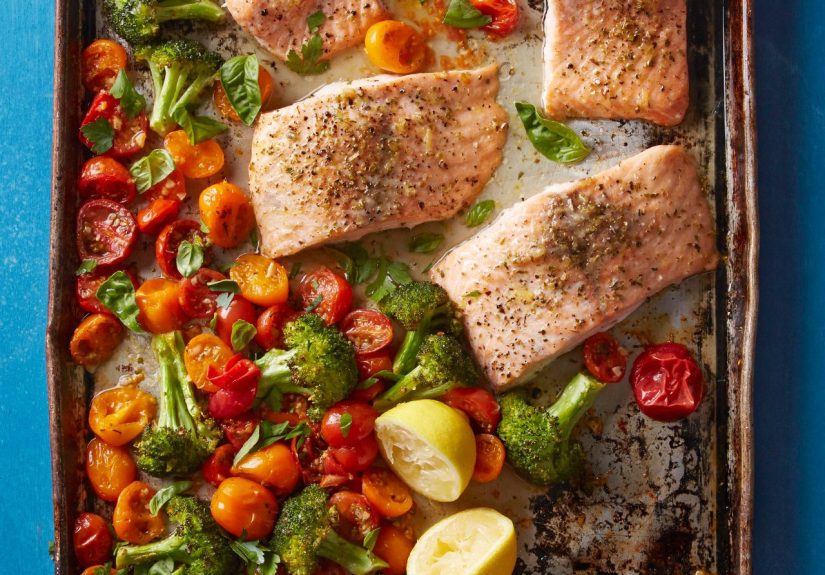
Roast sweet potatoes until almost tender, add broccoli, then salmon. Drizzle all with garlic oil. Great for meal prep containers and easy reheating.
Sheet-Pan Meal #3: Salmon + Cherry Tomatoes + Zucchini
Fastest option. Perfect when your kitchen timer is basically your bedtime alarm. Add capers and fresh parsley for a Mediterranean vibe.
How to Avoid Dry Salmon Every Single Time
- Don’t rely on time alone. Thickness changes everything.
- Use a thermometer. Guessing is for game night, not fish.
- Pat fish dry first. Excess moisture fights browning.
- Don’t overcrowd the pan. Steam is not roast.
- Skip aggressive reheating. Gentle heat keeps texture intact.
- Season enough. Under-seasoned salmon tastes flat, even when cooked perfectly.
Meal Prep, Storage, and Reheating
Cooling and storage
Refrigerate cooked salmon promptlywithin 2 hours (within 1 hour if it’s very hot out). Store in airtight containers. For best quality and safety, eat refrigerated leftovers within 3 to 4 days.
Freezing leftovers
You can freeze cooked salmon, but texture is best when eaten fresh. Wrap tightly to limit freezer burn. Label containers with date and flavor (future-you will be grateful).
Reheating without wrecking texture
Reheat gently in a low oven (around 275°F) until just warm. Or flake cold salmon into salads, grain bowls, wraps, and pasta. Cold salmon with a lemony yogurt dressing is underrated and honestly elite.
A 20-Minute Weeknight Salmon Formula
- Preheat oven to 425°F and line pan.
- Toss broccoli with oil, salt, and pepper; spread on one side of pan.
- Season salmon with salt, pepper, garlic powder, lemon zest.
- Bake broccoli 5 minutes first, then add salmon.
- Bake 10–12 more minutes.
- Finish with lemon juice and chopped herbs.
- Serve with microwaved brown rice or quinoa.
Dinner solved. Dishes minimal. Appetite satisfied. Budget protected.
Conclusion
If your goal is healthier meals that actually fit real life, baked salmon is one of the smartest tools in your kitchen. It’s fast, flexible, nutrient-dense, and endlessly adaptable. Once you master temperature, timing, and a handful of flavor templates, you can build restaurant-level dinners in less time than it takes to decide what to watch.
Keep a few fillets in the freezer, memorize one reliable bake method, and rotate sauces so dinner never feels repetitive. You don’t need complicated meal plansyou need one dependable system. This is that system.
Extended Real-World Experiences (500+ Words)
One of the most common experiences people share about learning to bake salmon is this: their first few tries were either dry, bland, or both. Then they changed just one habitusing a thermometerand suddenly everything improved. A home cook I coached through a simple routine went from “I only trust restaurant salmon” to “I can make this on a Wednesday in 15 minutes.” The difference wasn’t talent. It was structure.
Another pattern comes from busy parents. They don’t need a fancy recipe. They need repeatable dinners that kids won’t reject and adults won’t resent. A maple-Dijon salmon became a weekly staple in one household because it balanced sweet and savory without tasting like dessert. Their system was brilliant in its simplicity: salmon on one side of the sheet pan, small potato wedges on the other, green beans added halfway through. They made extra salmon on purpose and turned leftovers into wraps for school lunches. The parent told me the biggest win wasn’t nutritionit was mental relief. No nightly “what do we make?” spiral.
College students and first-apartment cooks report a different kind of success story: salmon made them feel like “real adults” in the kitchen. One beginner used to avoid fish because they thought it was fragile and expensive. They started with frozen portions, thawed safely in the fridge overnight, then baked at 425°F with just salt, pepper, and lemon. Total active effort: maybe five minutes. That small success created confidence, and confidence created momentum. Soon they were adding sauces, trying side vegetables, and building full meal-prep boxes for the week.
Fitness-focused eaters often love salmon for another reason: it doesn’t feel like “diet food.” Chicken breast can be great, but it can also get repetitive fast. Salmon has richer flavor and enough natural fat to stay satisfying. Several people who were trying to reduce takeout found that salmon bowls solved the craving gap. Their bowl formula looked like this: rice or quinoa, baked salmon, crunchy cucumbers, shredded carrots, and a fast sauce made from yogurt plus lemon and herbs. It felt substantial and fresh, and most importantly, it didn’t feel restrictive.
There are also experiences from people who thought they disliked salmonuntil they stopped overcooking it. One person said they had spent years ordering salmon out but refusing to cook it at home because every attempt tasted chalky. After switching to a lower-temp roast for thicker fillets, their results changed completely. The fish stayed tender and flaked in large, buttery pieces. They started cooking larger portions at once and serving it at room temperature the next day over salad with olive oil and citrus. Their verdict: “I wasn’t bad at salmon. I was just rushing it.”
Finally, people navigating healthier eating patterns often say baked salmon gives them consistency. Not perfectionconsistency. When life gets chaotic, having one reliable, nutritious meal template makes everything easier. You can swap seasonings, change vegetables, pick different grains, and still keep the same core method. That predictability is powerful. It lowers decision fatigue, reduces food waste, and keeps you from defaulting to expensive convenience meals.
The biggest takeaway from real kitchens is simple: success with salmon is rarely about chef-level skills. It’s about a short checklistsafe thawing, hot oven, proper seasoning, doneness check, and smart leftovers. Once those habits are in place, salmon stops being intimidating and starts becoming one of the easiest wins in your weekly routine.