Table of Contents >> Show >> Hide
- Step 1: Learn What “Certified Land Surveyor” Really Means in Your State
- Step 2: Understand What Land Surveyors Actually Do
- Step 3: Choose the Best Education Path
- Step 4: Look for a Program That Supports Licensure
- Step 5: Build Math, Law, and Technology Skills Early
- Step 6: Get Entry-Level Experience as Soon as Possible
- Step 7: Pass the Fundamentals of Surveying (FS) Exam
- Step 8: Apply for Surveyor-in-Training or Equivalent Status
- Step 9: Accumulate Supervised, Progressive Experience
- Step 10: Keep Detailed Records of Your Work
- Step 11: Pass the Principles and Practice of Surveying (PS) Exam
- Step 12: Complete Any State-Specific Exams or Requirements
- Step 13: Get Licensed, Then Keep Learning
- Common Mistakes to Avoid
- Why the Career Is Worth It
- Experience and Lessons From the Field
- Final Thoughts
If you have ever looked at a property line and thought, “That seems suspiciously important,” congratulations: you already have the seed of a land surveyor’s mindset. Land surveying is one of those careers that mixes math, law, geography, technology, and just enough outdoor work to keep your office chair from feeling too confident. It is also a profession where details matter a lot. One misplaced boundary line is not a cute typo. It is a lawsuit with hiking boots.
If you are trying to become a certified land surveyor, the first thing to know is this: the exact title varies by state. In one place, the license may be called Professional Land Surveyor (PLS). Somewhere else, it may be Professional Surveyor (PS), Registered Professional Land Surveyor (RPLS), or Professional Surveyor and Mapper. The path is similar across the United States, but state boards have their own rules, forms, exams, and favorite ways to make you read the fine print.
This guide breaks the process into 13 practical steps so you can move from curious beginner to licensed professional without wandering into the legal equivalent of quicksand. Whether you are still in school, changing careers, or already working on a survey crew, this roadmap will help you understand how to build a real land surveying career.
Step 1: Learn What “Certified Land Surveyor” Really Means in Your State
Before you buy a new field notebook and start calling yourself the Boundary Whisperer, check your state board’s official terminology. Most states regulate surveying through a licensing board, and those boards define who may sign plats, certify legal documents, and offer surveying services to the public.
That means your first job is not heroic. It is administrative. Visit your state board website, read the licensure section, and answer four questions:
- What is the official license title?
- What education is required?
- How much supervised experience is required?
- What national and state-specific exams must you pass?
This step saves time because “how to become a certified land surveyor” is a national search phrase, but licensure is handled state by state.
Step 2: Understand What Land Surveyors Actually Do
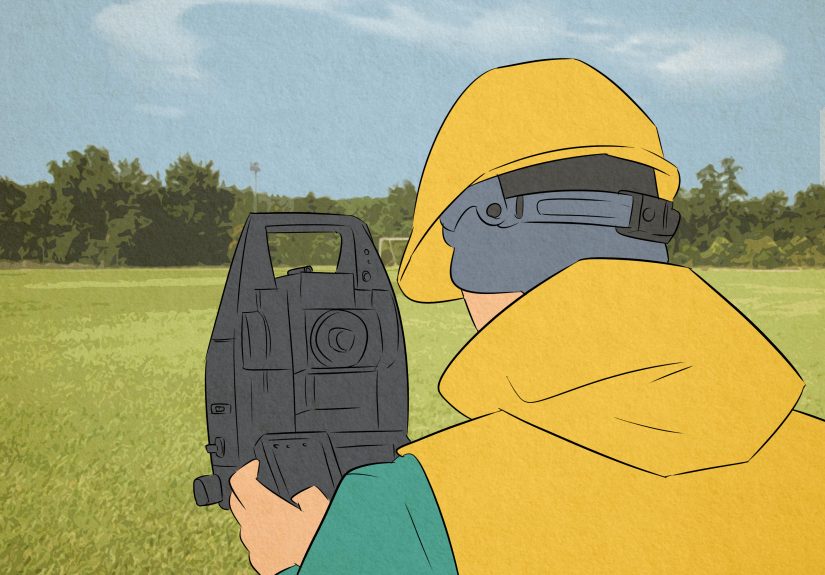
A lot of people think surveyors just stand in fields holding equipment and looking wise. There is some of that, to be fair. But the profession is far broader. Surveyors establish and retrace property boundaries, support construction and infrastructure projects, prepare legal descriptions, analyze evidence, interpret deeds, use GNSS and total stations, work with GIS data, and produce maps and plats that affect ownership, development, and public safety.
In other words, this career sits at the crossroads of science and law. If you enjoy precision, problem-solving, outdoor work, and technology, surveying can be an excellent fit. If you dislike details, ambiguity, weather, and the phrase “please verify the monumentation,” you may need a strong cup of coffee and a serious pep talk.
Step 3: Choose the Best Education Path
The most common route into the profession is earning a degree in surveying, geomatics, civil engineering technology, or a closely related field. In many states, a bachelor’s degree is the cleanest path to licensure. In others, an associate degree or a state-approved mix of coursework and work experience may still qualify you.
What to study
Strong programs usually include coursework in boundary law, survey computations, mapping, geodesy, GIS, CAD, photogrammetry, statistics, and field methods. If you are selecting a school, pay attention to whether the curriculum aligns with the expectations of your state board and whether the program is respected in the profession.
Why program quality matters
Good surveying education is not just about passing a class. It teaches you how to think. You are not only learning to measure land. You are learning to interpret evidence, evaluate uncertainty, and defend your conclusions. That matters when real property rights are on the line.
Step 4: Look for a Program That Supports Licensure
Not every degree with a shiny technical name is equally helpful for licensure. Review your state board requirements and compare them with the curriculum. Some boards are flexible. Others are very specific about semester hours, survey-related coursework, or approved programs.
A smart move is to contact both the school and your state board before enrolling. Ask whether graduates commonly qualify for the FS exam, a surveyor-in-training certificate, or the full professional pathway. Five minutes of asking can save years of “but my advisor said…” later.
Step 5: Build Math, Law, and Technology Skills Early
Surveying rewards people who are comfortable with numbers, but it is not just a math career. It is a legal and technical profession too. You should work on three skill buckets from the start:
- Math and analysis: geometry, trigonometry, statistics, error analysis, and coordinate geometry
- Legal reasoning: deeds, easements, riparian rights, evidence, boundary principles, and land records
- Technology: CAD, GIS, GNSS, total stations, drones where permitted, and data processing workflows
Modern surveyors do not choose between boots and software. They need both. The field captures reality. The office turns it into defensible work product.
Step 6: Get Entry-Level Experience as Soon as Possible
If you want to become a licensed land surveyor, start working around surveyors early. Internships, summer jobs, rod-person positions, survey technician roles, and office support jobs all help you understand the workflow. You will learn how records research connects to field evidence, how construction staking differs from boundary work, and why a seasoned crew chief can spot trouble faster than a fancy spreadsheet.
This is where theory becomes real. You begin to understand that surveying is not only about locating points. It is about judgment, documentation, communication, and consistency.
Step 7: Pass the Fundamentals of Surveying (FS) Exam
For many candidates, the Fundamentals of Surveying exam is the first major checkpoint. This exam is typically the gateway to becoming a surveyor-in-training, land surveyor-in-training, or equivalent pre-licensure candidate.
Do not treat the FS as a casual quiz you will “just feel out.” Create a study plan. Review surveying mathematics, boundary law basics, measurement science, mapping, geodesy, and professional practice topics. Work practice problems. Use current exam specifications. And try not to wait until the night before unless your hobbies include panic.
Step 8: Apply for Surveyor-in-Training or Equivalent Status
After passing the FS exam, many states allow or require you to apply for a pre-licensure credential such as LSIT, SIT, or a similar status. This credential matters because it documents progress and signals that you are officially on the licensure path.
Some states require a certain amount of education or work experience before issuing this status. Others are more flexible. Either way, this step makes you easier to hire and gives future employers confidence that you are serious about becoming licensed.
Step 9: Accumulate Supervised, Progressive Experience
This is the part that separates interested people from licensed professionals. Most states require several years of qualifying experience under the supervision of a licensed surveyor. The key word is not just experience. It is progressive experience.
That means your responsibilities should grow over time. Early on, you might collect field data, perform calculations, and assist with research. Later, you should be interpreting records, resolving discrepancies, preparing plats, making boundary decisions under supervision, and understanding the legal consequences of your work.
What counts as good experience?
The best experience includes a mix of office and field work, exposure to boundary analysis, and time spent with licensed professionals who actually teach. You do not want four years of pressing one button and calling it career development. You want experience that builds judgment.
Step 10: Keep Detailed Records of Your Work
You may think you will remember every project, supervisor, and date. You will not. Keep a careful log of your employment, project types, responsibilities, references, and milestones. Many boards want verification of work history, references from licensed surveyors, and evidence that your experience was both progressive and relevant.
This is also where professional habits begin. Accurate documentation is not busywork in surveying. It is part of the culture of defensible practice.
Step 11: Pass the Principles and Practice of Surveying (PS) Exam
Once you meet your board’s experience requirements, the next major hurdle is the Principles and Practice of Surveying exam. This exam is designed for candidates who already have substantial professional experience, so it tests judgment and applied competence, not just classroom memory.
Study like a future license holder, not like a stressed student. Review boundary law, business and professional practice, evidence evaluation, computations, and the reasoning behind field and office decisions. The PS is where the profession asks, “Can we trust this person to do real work that affects the public?” That is a very fair question.
Step 12: Complete Any State-Specific Exams or Requirements
Many states add a jurisdiction-specific component after the national exams. This may include a state law exam, a board exam, a map or plat submission, a jurisprudence review, fingerprinting, references, or a special application packet with enough paperwork to make a printer nervous.
For example, some states require a state-specific surveying exam. Others want an acceptable sample plat or map. Others emphasize particular education pathways or course-hour thresholds. This is why copying someone else’s career advice without checking your own board is a terrible strategy.
Step 13: Get Licensed, Then Keep Learning
Once you meet the education, exam, experience, and state-specific requirements, you can apply for your professional license. That is the headline moment. But it is not the end of the story. Good surveyors keep learning because laws change, technology evolves, and professional standards do not stay frozen in amber.
After licensure, focus on continuing education, ethics, networking, and specialization. You may branch into boundary surveying, construction staking, hydrography, geospatial data, forensic surveying, public-sector work, or business ownership. If you plan to practice in more than one state, you may also use multistate records and comity processes to expand your reach.
Common Mistakes to Avoid
- Assuming every state has the same rules
- Choosing a degree without checking licensure compatibility
- Ignoring boundary law because “I like the field more”
- Waiting too long to take the FS exam
- Failing to document work experience carefully
- Working under supervision that does not actually develop your judgment
- Thinking licensure ends the learning process
Why the Career Is Worth It
Surveying is one of those professions that rarely gets celebrity treatment, yet it quietly shapes roads, subdivisions, public works, real estate transactions, utilities, and development projects across the country. It offers a mix of field work, analysis, legal reasoning, and technology that few careers can match.
It also tends to appeal to people who like solving puzzles with real consequences. A land surveyor does not just produce numbers. A surveyor produces clarity. And in a world where confusion is practically a subscription service, clarity is valuable.
Experience and Lessons From the Field
Anyone can read the 13 steps and nod along. The real education begins when you start seeing how surveying feels in practice. Early in a surveying career, almost everyone learns the same humbling lesson: the field never cares how confident you were in the truck. You can arrive at a site with perfect optimism, brand-new gear, and a beautiful checklist, only to discover thick brush, confusing record calls, missing monuments, and a client who says, “The old fence is probably close enough.” It usually is not.
One of the most useful experiences for a future licensed surveyor is working on retracement surveys. On paper, a retracement can sound straightforward. In reality, it teaches you how to think like an investigator. You compare deeds, plats, prior surveys, monuments, occupation lines, and physical evidence. Sometimes the answer is neat. Sometimes the answer is messy and requires careful professional judgment. That is when you realize surveying is not just measurement. It is evidence-based decision-making.
Another major lesson comes from office work. New people often believe the “real” surveying happens outdoors. Then they spend time reducing field data, reviewing title material, checking closures, drafting plats, and writing descriptions. Suddenly the office stops looking like the boring part and starts looking like the place where raw observations become a defensible professional opinion. A strong surveyor learns to respect both worlds equally.
There is also the human side of the profession. You may work with attorneys, engineers, contractors, developers, homeowners, public agencies, and other surveyors who all want different things from the same parcel of land. Learning how to communicate clearly, calmly, and accurately is a career advantage. The best surveyors are rarely the loudest people in the room. They are the ones who can explain complicated boundary issues in plain English without sounding vague or evasive.
Perhaps the biggest experience-based lesson is this: your reputation begins long before your license arrives. Show up prepared. Ask smart questions. Take notes. Admit what you do not know. Double-check your work. Respect chain of custody for field data and records. Develop the habit of being reliable when nobody is watching. By the time you qualify for licensure, people should already think of you as someone who works like a professional. The license then confirms what your habits have been saying all along.
Final Thoughts
If you want to become a certified land surveyor, start with the truth that the profession is both technical and legal, practical and analytical, old-school and high-tech. The path usually includes education, the FS exam, supervised experience, the PS exam, and state-specific requirements. But beyond the checklist, success comes from developing judgment, discipline, and credibility.
Do that well, and you will not just enter a profession. You will join one that helps define how land is understood, used, and protected. That is a pretty solid career outcome for someone who started by wondering where the property line really was.