Table of Contents >> Show >> Hide
- What Does Airport Ground Crew Actually Do?
- Basic Requirements to Become Ground Crew at an Airport
- How to Become Ground Crew at an Airport: Step by Step
- Step 1: Learn which ground crew role fits you best
- Step 2: Build the right baseline skills
- Step 3: Prepare for security and hiring screenings
- Step 4: Apply directly through airline and ground handling career sites
- Step 5: Tailor your resume for airport ground crew jobs
- Step 6: Prepare for the interview
- Step 7: Complete training and start learning fast
- Do You Need Aviation School to Become Ground Crew?
- How Much Do Airport Ground Crew Make?
- What Makes a Strong Ground Crew Candidate?
- Career Growth After You Become Ground Crew
- Final Thoughts
- A Longer Look at the Real Experience of Becoming Airport Ground Crew
If you have ever watched an airplane push back from the gate and thought, “I want to be part of that machine,” airport ground crew might be your lane. Or your ramp. Same idea. Ground crew workers are the people who keep aircraft moving safely and on time behind the scenes. They load bags, guide planes, operate equipment, assist with departures, handle cargo, work with cabins, and do the sort of job that makes the entire airport operation look smootheven when it absolutely is not.
The good news is that becoming ground crew at an airport usually does not require a college degree. In many cases, you can get started with a high school diploma or GED, the ability to pass security and background requirements, and a willingness to work outdoors while everyone else is posting photos from inside the terminal with coffee in hand. It is demanding work, but it can also be one of the best entry points into aviation.
This guide explains how to become airport ground crew, what the job really involves, what employers usually look for, and how to improve your odds of getting hired without sounding like you learned everything from an action movie baggage scene.
What Does Airport Ground Crew Actually Do?
The term ground crew is broad. At one airport, you may hear “ramp agent.” Somewhere else, it might be “ground operations crew,” “fleet service agent,” “station agent,” “cargo agent,” or “cabin experience agent.” The titles vary, but the core mission is the same: prepare aircraft for arrival, turnaround, and departure safely, quickly, and accurately.
Common airport ground crew duties
Depending on the airline, airport, and specific role, ground crew may:
- Load and unload baggage, cargo, and mail
- Guide aircraft to and from parking positions
- Operate tugs, belt loaders, carts, and other ground service equipment
- Help with aircraft servicing, cabin preparation, and waste disposal
- Assist passengers with special needs
- Support de-icing or weather-related operations in cold climates
- Work around tight turnaround deadlines so flights leave on time
In plain English: you are part logistics worker, part safety professional, part team athlete, and part problem-solver. The plane does not care that it is raining, the bags do not care that it is 5:10 a.m., and the departure clock definitely does not care that your left glove disappeared again.
Ground crew is not one single job
If you want to become ground crew at an airport, you should know that there are several entry points. A ramp-focused role is the most obvious path, but some employers hire for mixed positions that combine ramp work with customer service or cabin duties. That means you may be able to start in:
- Ramp Agent: Handles baggage, cargo, aircraft guidance, and outdoor operations
- Ground Operations Crew: A wider role that may include cabin prep, equipment use, and customer assistance
- Fleet or Station Agent: Often combines ramp and terminal responsibilities
- Cargo Agent: Focuses more on freight handling and shipment coordination
Basic Requirements to Become Ground Crew at an Airport
While every employer has its own hiring checklist, most airport ground crew jobs in the United States ask for a very similar foundation.
1. Be at least 18 years old
This is one of the most common minimum requirements. If you are still in high school, that does not mean aviation is off the table forever. It just means your runway starts a little later.
2. Have a high school diploma or GED
Most entry-level airline and ground handling positions do not require a college degree. A diploma or GED is often enough to qualify for an initial application. That makes airport ground crew one of the more accessible career paths in aviation.
3. Have legal authorization to work in the United States
This is standard for airline and airport hiring. Employers also often ask whether you are eligible to work without sponsorship.
4. Be able to pass background and security checks
This part matters a lot. Many ground crew jobs require access to secure areas of the airport, which often means getting a Security Identification Display Area (SIDA) badge or similar airport credential. That process may involve fingerprinting, a criminal history records check, a security threat assessment, and required security training. In some airports, badge holders may also need driver training if the job includes operating vehicles in restricted areas.
5. Meet the physical demands of the job
Ground crew is hands-on work. Employers often expect you to lift bags or items up to around 70 pounds, bend and kneel frequently, work in awkward positions, and handle long periods of standing, walking, and outdoor exposure. Translation: this is not a “mostly seated, occasional stretching” role.
6. Hold a valid driver’s license
Many ramp and ground operations jobs involve motorized equipment or airport vehicles, so a valid license is commonly required. In some roles, your driving record also matters.
7. Be willing to work irregular hours
Airports do not shut down because your ideal bedtime is 10:30 p.m. Ground crew schedules can include early mornings, evenings, weekends, holidays, overtime, and last-minute operational changes. If you need a perfectly predictable Monday-to-Friday rhythm, this job may feel like a long-term disagreement with your calendar.
How to Become Ground Crew at an Airport: Step by Step
Step 1: Learn which ground crew role fits you best
Start by reading job descriptions carefully. Some people picture “airport ground crew” as only baggage handling, but the field is much wider than that. If you like outdoor, physical work and equipment operation, ramp jobs are the obvious target. If you prefer a mix of physical tasks and helping travelers, look for station agent or ground operations crew roles. If logistics interests you more than people-facing tasks, cargo jobs may be a better fit.
Step 2: Build the right baseline skills
You do not need to show up with a pilot license and a dramatic airport backstory. But you should bring the kinds of skills employers value in fast, safety-sensitive environments:
- Reliability and punctuality
- Comfort working on teams
- Basic communication skills
- Ability to follow procedures without freelancing
- Stamina for physical labor and outdoor work
- Calm decision-making under time pressure
Previous experience in warehouses, delivery work, logistics, hospitality, retail, ground transportation, or customer service can help. It is not always required, but it can make your application stronger because it shows you can handle pace, people, and procedures.
Step 3: Prepare for security and hiring screenings
Before you apply, make sure your paperwork is in order. Have your identification documents ready, keep your driver’s license current, and be prepared for background checks, fingerprinting, and badge-related processes. Some employers also require drug testing, physical ability testing, and hearing or vision checks.
This is not the glamorous part of the career path, but it is the part that keeps the process moving. A missing document can stall a job offer faster than a baggage cart with a flat tire.
Step 4: Apply directly through airline and ground handling career sites
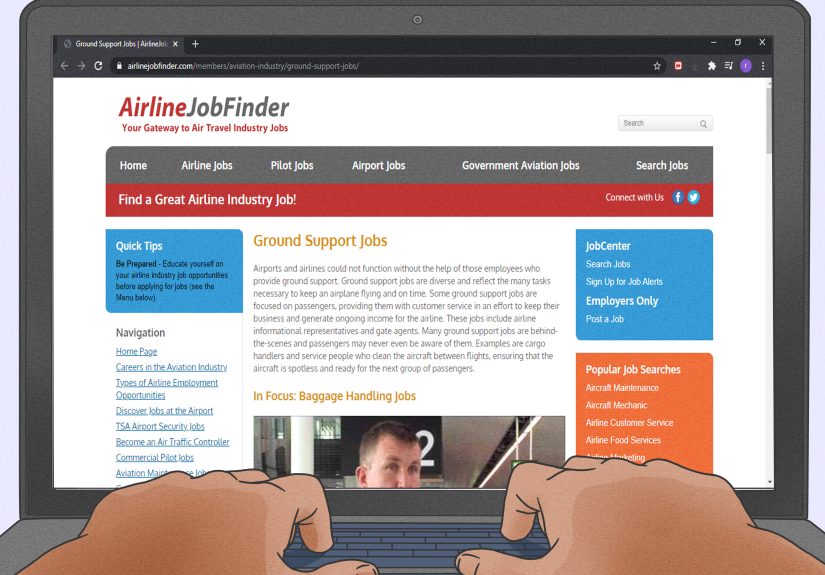
The smartest move is to apply through official airline or airport service company career pages. Look for openings with titles like:
- Ramp Agent
- Ground Operations Crew
- Fleet Service Agent
- Station Agent
- Cargo Agent
- Cabin Experience Agent
- Ground/Ramp Service Agent
Major airlines, regional carriers, and ground handling companies all hire for these roles. Some positions are part-time to start, which can be a good way to get into aviation and then move into full-time work later.
Step 5: Tailor your resume for airport ground crew jobs
Your resume should sound like a future ground crew professional, not like a generic document that has been applying to coffee shops, tech startups, and dog daycares all in the same week. Highlight:
- Physical work experience
- Safety-focused roles
- Equipment operation
- Shift work or overtime experience
- Customer service under pressure
- Team-based environments
- Clean attendance and reliability
Use action verbs and real outcomes. “Loaded and moved high-volume inventory accurately in fast-paced conditions” sounds a lot stronger than “helped with stuff in warehouse.”
Step 6: Prepare for the interview
Airport ground crew interviews usually focus on work ethic, safety, teamwork, communication, and flexibility. Be ready to answer questions like:
- How do you handle working under time pressure?
- Tell us about a time you followed safety procedures closely.
- How do you work with teammates during a physically demanding shift?
- Are you comfortable working outdoors in all weather?
- Can you work weekends, holidays, or rotating shifts?
Good answers are specific and practical. Employers are not looking for a speech about your lifelong fascination with jet engines unless it connects to your ability to do the job. They want to know whether you will show up, stay alert, follow protocol, and contribute to a safe turnaround.
Step 7: Complete training and start learning fast
Once hired, you will usually complete company training and airport-required badge training. Depending on the role, that may include safety procedures, radio communication, marshalling awareness, equipment familiarization, driving rules, security access, and operating standards for the ramp.
The first few weeks matter. Ground crew jobs reward people who ask smart questions, pay attention, and do not pretend they know everything on day one. Aviation has very little patience for confident guessing.
Do You Need Aviation School to Become Ground Crew?
Usually, no. Most entry-level airport ground crew jobs are trained on the job. You do not need an aviation degree to start loading bags, operating approved equipment, helping with aircraft turns, or earning your initial airport badge.
That said, extra training can still help. Courses in logistics, occupational safety, customer service, or transportation operations may strengthen your resume. If your long-term goal is to move into airport operations leadership, dispatch support, maintenance planning, cargo supervision, or another aviation specialty, then formal education may become more useful later.
For getting your foot in the door, though, employers usually care more about work readiness than fancy credentials. They want someone dependable, coachable, physically capable, and serious about safety.
How Much Do Airport Ground Crew Make?
Pay varies by employer, airport, city, shift schedule, union status, and exact role. As a broad benchmark, one closely related federal occupation category, Aircraft Service Attendants, reported a mean hourly wage of about $20.25 and a median hourly wage of about $18.80. In real life, some employers post entry-level ramp pay around the high teens or low twenties per hour, with overtime, shift premiums, and benefits affecting the total package.
Ground crew jobs can also come with valuable perks depending on the company, including travel privileges, health benefits, retirement plans, paid time off, and internal career development. In other words, the hourly rate matters, but the total compensation story can be much bigger than the number on the job ad.
What Makes a Strong Ground Crew Candidate?
If you want to stand out in airport ground crew hiring, focus less on sounding impressive and more on sounding useful. Employers tend to value candidates who show:
- Safety awareness: You follow procedures and do not cut corners
- Physical stamina: You can handle repetitive, demanding work
- Teamwork: Ramp operations depend on coordination
- Adaptability: Weather, delays, and schedule changes happen constantly
- Communication: Clear communication prevents mistakes
- Professionalism: Even behind the scenes, standards matter
One underrated trait is humility. Ground crew work has systems, signals, rules, and timing built for safety. The best new hires are confident enough to work hard and humble enough to learn the right way first.
Career Growth After You Become Ground Crew
One reason many people aim for airport ground crew jobs is that they can open doors across aviation. A ramp or ground operations role can lead to:
- Lead ramp agent
- Trainer or instructor roles
- Cargo operations
- Station or operations supervisor
- Airport customer service leadership
- Aircraft servicing specialties
- Broader airline operations careers
At several airlines, ground-level roles are treated as entry points into the larger company. That means the job is not just about loading bags today. It can also be your way into a long-term aviation career tomorrow.
Final Thoughts
If you are serious about learning how to become ground crew at an airport, here is the short version: meet the basic hiring requirements, get comfortable with physical outdoor work, prepare for airport security screening, apply directly through official airline or ground handling career pages, and show employers that you are reliable, safe, and ready to work as part of a team.
This career is not glamorous in the movie-trailer sense. You will sweat, lift, hustle, adjust, repeat, and occasionally question why weather has such a personal problem with aviation. But if you like fast-moving environments, real responsibility, and the satisfaction of helping aircraft depart safely and on time, ground crew can be one of the most practical ways to start an aviation career.
And unlike a lot of jobs, you get the rare privilege of pointing at a departing aircraft and thinking, “Yeah, that got out on time because our team handled business.” That is not a bad feeling to clock out with.
A Longer Look at the Real Experience of Becoming Airport Ground Crew
Once you actually become ground crew at an airport, the experience tends to be more intense, more physical, and more rewarding than many applicants expect. On paper, the role may sound simple: load bags, move equipment, support departures, follow procedures. In reality, the job feels like stepping into a live operation where timing, teamwork, and awareness matter every minute.
One of the first things new hires usually notice is the pace. Aircraft turnarounds happen on the clock, not on “whenever everyone feels ready” time. You learn quickly that a few minutes matter. A delayed bag load, a miscommunication on equipment placement, or slow movement during a busy bank of flights can affect the entire operation. That pressure is real, but it also teaches discipline fast. Many new ground crew workers say the job sharpens their awareness because every task has a sequence, and every sequence has a reason.
The second big experience is physical adaptation. Even people who think they are in decent shape can be surprised by the mix of lifting, crouching, climbing, walking, pushing, and working in heat, cold, wind, or rain. Your body usually needs a few weeks to adjust. After that, many workers find a rhythm. They learn how to move smarter, pace themselves, and use the right technique instead of trying to power through every task like they are auditioning for a sports documentary.
Another memorable part of the experience is the team culture. Ground crew work is hard to fake because it is deeply visible. Your coworkers know pretty quickly whether you show up ready, whether you help without being asked, and whether you stay calm when the ramp gets hectic. That is why strong crews often become tight-knit. The work creates trust. You are relying on each other in loud, fast, safety-sensitive conditions, and that builds a different kind of respect than you find in slower jobs.
New hires also experience a steep learning curve around safety and communication. Radio etiquette, secure-area rules, vehicle routes, equipment spacing, marshalling awareness, and aircraft danger zones are not background details; they are essential. At first, this can feel overwhelming. Then it starts to click. You begin to understand that aviation runs well because people repeat correct habits consistently, not because anyone is improvising genius moves on the ramp.
Emotionally, the job can be satisfying in a very concrete way. You see the result of your work immediately. A plane arrives. Your team gets in position. Bags move, equipment rotates, servicing happens, boarding finishes, the aircraft pushes back, and another departure is on its way. That cycle can be exhausting, but it is also motivating. You are not wondering whether your work mattered. You can literally watch it leave the gate.
For many people, that is the moment airport ground crew stops being “just a job” and starts feeling like the beginning of a real aviation career.