Table of Contents >> Show >> Hide
- Why Lemon Works So Well (It’s Not Just the “Fresh” Smell)
- What You’ll Need
- The Pro Lemon-Steam Method (Fast, Easy, Actually Works)
- Deep-Clean Add-Ons: How to Handle the “Nope” Messes
- Don’t Forget the Outside (Because Greasy Buttons Are a Thing)
- Safety Tips So You Clean Like a Pro (Not Like a Cautionary Tale)
- How Often Should You Clean Your Microwave?
- Microwave Maintenance: The Tiny Habits That Save You Big Cleaning
- FAQ: Lemon Microwave Cleaning Questions People Actually Ask
- of Real-Life Microwave Lemon-Cleaning Experiences (So You Know What to Expect)
- Conclusion
If your microwave currently smells like “last week’s fish + yesterday’s popcorn + a mysterious tomato sauce incident,”
you’re not alone. Microwaves are basically splash zones with buttons. The good news: you can get yours sparkling with
one humble lemon and a little steam magicno harsh fumes, no elbow-grease Olympics.
This guide shows you the lemon method step-by-step, plus pro-level tips for stuck-on gunk, greasy ceilings, funky odors,
and the sneaky spots most people miss. You’ll finish with a microwave that looks (and smells) like it didn’t just survive
a food fight.
Why Lemon Works So Well (It’s Not Just the “Fresh” Smell)
Cleaning a microwave with lemon works for two main reasons:
- Steam loosens grime: Heated lemon water creates steam that softens dried splatters so you can wipe them away instead of chiseling them off.
- Citric acid helps cut grease and odors: Lemon’s natural acidity helps break down greasy film and leaves a bright, clean scent behind.
Translation: you’re not “scrubbing,” you’re persuading the mess to give up.
What You’ll Need
- 1 lemon (fresh is best, but bottled lemon juice can work in a pinch)
- Microwave-safe bowl or large glass measuring cup
- Water
- Soft sponge or microfiber cloth
- Optional: dish soap, white vinegar, baking soda
- Optional: toothbrush or cotton swabs for crevices
- Optional: oven mitts (highly recommended if you value your fingerprints)
The Pro Lemon-Steam Method (Fast, Easy, Actually Works)
Step 1: Make the lemon-steam bowl
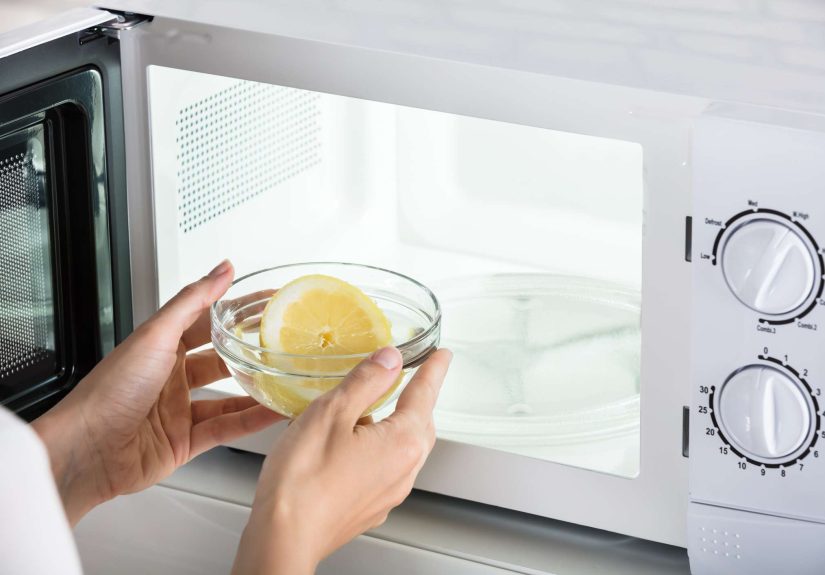
Fill a microwave-safe bowl with about 1 cup of water. Slice the lemon in half, squeeze the juice into the bowl, then
drop the squeezed halves (or a few lemon slices) into the water.
Pro tip: If your microwave is extra greasy, add a tiny drop of dish soap. Not a bubble bathjust a drop.
Step 2: Heat until steamy
Place the bowl in the center of the microwave. Heat on high until the mixture is steaming and the window fogs upusually
about 2 to 5 minutes depending on your microwave’s power.
- If your microwave is mild-mess level: start around 2–3 minutes.
- If it looks like a marinara volcano erupted: go closer to 4–5 minutes.
Step 3: Let it sit (this is where the magic happens)
When the timer ends, don’t open the door yet. Let the bowl sit inside for about 5 minutes. This lets the
steam work on dried splatters and greasy film.
Step 4: Carefully remove the bowl
Open the door slowly (hot steam = surprise sauna). Use oven mitts or a thick towel to remove the bowlhot glass and hot
water are not the time to test your bravery.
Step 5: Wipe everything down, top to bottom
Dip your cloth/sponge into the warm lemon water (not scalding) and wipe the interior:
- Ceiling first (gravity is undefeated)
- Back wall
- Sides
- Bottom
- Door interior and edges
Rinse your cloth as needed. If you hit a stubborn spot, hold the warm, damp cloth against it for 10–15 seconds, then wipe.
Most gunk will slide off like it suddenly remembered it has somewhere else to be.
Deep-Clean Add-Ons: How to Handle the “Nope” Messes
For burnt-on sauce splatters
If tomato sauce has turned into microwave pottery, do a second steam cycle. Then use a soft sponge with a little baking soda
paste (baking soda + a few drops of water). Gently rub, then wipe clean.
Don’t use abrasive pads. They can scratch the interior surface, and scratched surfaces can hold onto grime and odors.
For greasy film that keeps coming back
Grease can leave an invisible “kitchen fog” layer, especially on the ceiling. After the lemon wipe-down, do a final pass with
a cloth dampened with plain water. If it still feels slick, use a water-and-vinegar wipe (lightly damp, not dripping).
For lingering odors (fish, curry, burned popcorn)
Lemon helps, but some smells have main-character energy. Try one of these:
- Extra lemon steam: Run the lemon method again with fresh lemon.
- Quick deodorize: Microwave half a lemon briefly, then let it sit with the door closed a few minutes.
- Baking soda rest: Leave an open box or small bowl of baking soda in the microwave overnight (when not in use).
For crumbs and mystery bits under the turntable
Remove the turntable and roller ring. Wash them in warm, soapy water like you would a plate. Wipe the base underneaththis is
where crumbs go to start new lives.
Don’t Forget the Outside (Because Greasy Buttons Are a Thing)
Control panel and buttons
Use a barely damp microfiber cloth. You want “light mist,” not “accidentally poured water into electronics.” Wipe gently around
buttons and edges. Dry immediately.
Handle and door edges
Handles collect fingerprints, cooking vapors, and everything your hands touched while holding a burrito. Wipe with warm soapy
water, then rinse-wipe with clean water and dry.
Vents and seams
Avoid spraying cleaner directly into vents. Instead, wipe with a damp cloth and use a cotton swab for tight seams.
Safety Tips So You Clean Like a Pro (Not Like a Cautionary Tale)
- Use microwave-safe glass or ceramic. No metal, no mystery plastics.
- Watch the steam. Open the door slowly and keep your face back.
- Handle hot bowls carefully. Use oven mitts if the bowl is hot.
- Don’t overshoot the heat time. You want steaming, not boiling over.
- Skip harsh chemicals and abrasives. Strong fumes and scratchy tools aren’t microwave-friendly.
- Never mix cleaners. Especially anything involving bleachjust don’t.
How Often Should You Clean Your Microwave?
A quick wipe once a week (or whenever something splatters) prevents “fossilized soup” from happening. If you use the microwave
daily, a lemon-steam clean every couple of weeks keeps odors and buildup under control.
Microwave Maintenance: The Tiny Habits That Save You Big Cleaning
- Cover food: Use a microwave-safe lid or paper towel to block splatters.
- Wipe spills immediately: Fresh mess wipes in seconds; old mess demands a committee.
- Don’t ignore the ceiling: That’s where splatters go to hide.
- Air it out: Leave the door open a minute after cleaning so moisture doesn’t linger.
FAQ: Lemon Microwave Cleaning Questions People Actually Ask
Can I use bottled lemon juice instead of a fresh lemon?
Yes. Add a couple tablespoons of lemon juice to a cup of water. Fresh lemon tends to smell better and gives you peels/slices
to toss in for extra citrus power, but bottled works when that’s what you’ve got.
How long should I microwave the lemon water?
Long enough to create lots of steam and fog the windowusually 2 to 5 minutes. Then let it sit about 5 minutes so steam can
loosen the mess before you wipe.
What if my microwave still looks stained?
Some stains are “historic.” Try another steam cycle, then use a gentle baking soda paste. Avoid harsh abrasives that can scratch
surfaces and make future cleanup harder.
Will lemon disinfect my microwave?
Steam cleaning plus wiping removes a lot of residue and helps freshen odors. For food-safety concerns, the most important thing
is removing buildup and cleaning regularly, especially after spills. If you need disinfection for a specific reason, use a
manufacturer-safe method and avoid harsh chemical fumes in a small enclosed appliance.
of Real-Life Microwave Lemon-Cleaning Experiences (So You Know What to Expect)
The first time most people try the lemon method, the biggest surprise is how little “cleaning” it feels like. You’re not attacking
the mess with brute forceyou’re basically running a tiny spa day for your microwave, and the grime checks out early. You’ll start
the cycle, hear the gentle rumble of the turntable, and then the window fogs up like your microwave is thinking deep thoughts.
When you open the door after the wait, the inside smells bright and citrusylike your appliance just got back from a wellness retreat.
The second surprise is where the mess actually lives. People tend to wipe the bottom and the door and call it a day, but the ceiling
is usually the true crime scene. That’s where oatmeal pops, spaghetti sauce splatters, and cheese explosions quietly set up camp.
After steaming, that ceiling grime often wipes off in one pass, and it feels almost suspiciouslike, “Where was this cooperation
earlier when I was scrubbing?” The steam is the negotiator your sponge could never be.
Then there’s the “burnt popcorn” phase, which is basically a rite of passage. You can clean every visible surface and still catch
a whiff of last Friday night’s snack tragedy. The lemon method helps a lot, but in real-life use, odors sometimes need a repeat
roundespecially if the smell is baked into hidden corners or the roller ring under the turntable. In those cases, people often
report that doing the lemon steam twiceplus washing the turntable and wiping the door sealsfinally gets the job done. It’s not
that the lemon method failed; it’s that the smell was stubborn and had emotional attachment to your appliance.
Another common experience: the bowl is hotter than you expect. Even if you only microwaved for three minutes, that water can be
near-boiling, and the glass can hold heat. The “pro” move is grabbing oven mitts before you open the door, not after you realize
your fingertips are making life choices. Also, if you’ve ever had the water bubble up suddenly when disturbed, you’ll appreciate
the slow-and-steady approach: open carefully, let steam escape, then remove the bowl with protection.
Finally, once you’ve done this a few times, you’ll notice the method becomes more preventive than corrective. If you run a quick
lemon steam every couple of weeks, messes rarely become “hard mode.” Wiping takes minutes, not muscle. And there’s a quiet confidence
that comes from opening your microwave and not flinching. It’s a small win, surebut it’s also the kind of small win that makes your
kitchen feel calmer, cleaner, and way more under control.
Conclusion
Cleaning a microwave with lemon is the rare life hack that’s actually worth the hype: it’s quick, low-effort, and it makes your
kitchen smell like you’ve got your act together. Steam does the heavy lifting, lemon tackles grease and odors, and you get a clean
microwave without turning your afternoon into a scrubbing marathon. Keep it consistent, cover your food, and your microwave will
stop looking like a crime scene and start acting like the helpful appliance it promised to be.