Table of Contents >> Show >> Hide
- Why Top-Load Washers Get Gross (Even When You’re “Pretty Sure” They Don’t)
- Before You Start: Safety + Quick Prep
- Method 1: The Easiest WayUse the “Tub Clean / Clean Washer / Basket Clean” Cycle
- Method 2: Deep Clean With Chlorine Bleach (When Odors or Germs Are the Main Problem)
- Method 3: Vinegar or Citric Acid (Best for Hard Water ScaleUse Thoughtfully)
- Don’t Skip These Grimy “Side Quests”
- How Often Should You Clean a Top-Load Washing Machine?
- How to Prevent Odors Between Deep Cleans
- Troubleshooting: If Your Washer Still Smells After Cleaning
- FAQ: Quick Answers That Actually Help
- Extra : Real-World “Experience” Lessons (What People Usually Learn the Hard Way)
- Conclusion
Your top-load washer works hard. It spins, it swishes, it bravely accepts that one sock that’s somehow always
full of sand. But here’s the plot twist: your washing machine can get… dirty. (Yes, the thing that cleans
things needs cleaning. Life is unfair.)
The good news: cleaning a top-load washing machine isn’t complicated, expensive, or a “whole weekend” situation.
With the right routine, you can kick out funk, remove buildup, and keep your laundry smelling like laundry
not like a damp gym bag that learned to file taxes.
Why Top-Load Washers Get Gross (Even When You’re “Pretty Sure” They Don’t)
A top-loading washer is basically a warm, wet hangout spot that regularly hosts detergent, fabric softener,
dirty water, skin oils, lint, and mineral deposits. Over time, those guests overstay their welcome and leave
behind residueespecially if you wash in cold water, use too much detergent, or have hard water.
Common signs your washer needs a cleaning
- Musty smell when you open the lid
- Clothes that come out “clean” but don’t smell fresh
- Visible grime under the rim, around the tub ring, or on the agitator/impeller
- Brown flakes in the wash (aka “mystery confetti,” not festive)
- Detergent or softener buildup in dispensers
Before You Start: Safety + Quick Prep
What you’ll need (pick the method you prefer)
- Microfiber cloths or soft rags
- An old toothbrush or small nylon brush
- Dish soap (mild) for surface cleanup
-
One of the following for the tub:
- Washing machine cleaner tablet/powder (manufacturer-friendly option)
- Liquid chlorine bleach (sanitizing powerhouse)
- Distilled white vinegar or citric acid (good for mineral scale when appropriate)
- Optional: rubber gloves, especially if using bleach
Two rules that save your lungs (and your day)
- Never mix bleach with vinegar, ammonia, or other cleaners. Dangerous fumes are not a vibe.
- Check your owner’s manual for the recommended cleaning cycle and approved cleaners.
Method 1: The Easiest WayUse the “Tub Clean / Clean Washer / Basket Clean” Cycle
Many modern top-load washers include a dedicated cleaning cycle (names vary: “Tub Clean,” “Clean Washer,”
“Basket Clean,” “Self Clean,” or something similarly confident). This is usually the simplest, most
manufacturer-approved way to clean a top-load washing machine.
Step-by-step
- Start empty. No clothes, no towels, no “I’ll just toss in these three shirts.”
-
Add cleaner. Use a washing machine cleaner tablet/powder as directed.
If your manual allows it, you may be able to use liquid chlorine bleach insteadfollow your brand’s guidance. - Select the cleaning cycle and choose hot water if the cycle allows.
- Let it finish. Don’t interrupt it. This is your washer’s spa day.
-
Wipe down the inside. When the cycle ends, wipe the tub, underside of the lid, and the top rim.
Pay special attention to the tub ring area where gunk likes to hide. - Leave the lid open for a few hours so everything dries out.
Pro tip: If your washer is extra stinky or you’ve never cleaned it before, run a second rinse cycle
afterward to flush loosened residue.
Method 2: Deep Clean With Chlorine Bleach (When Odors or Germs Are the Main Problem)
Bleach is excellent at sanitizing and knocking out odor-causing microbes. If your washer smells like mildew,
or you’ve had a “something crawled in there and gave up” moment, bleach is often the fastest reset.
How to do it safely
- Ventilate. Open a window or run a fan. Bleach has a personality.
- Empty the washer. (Again: no laundry.)
-
Add bleach. If you have a bleach dispenser, fill it to the max line.
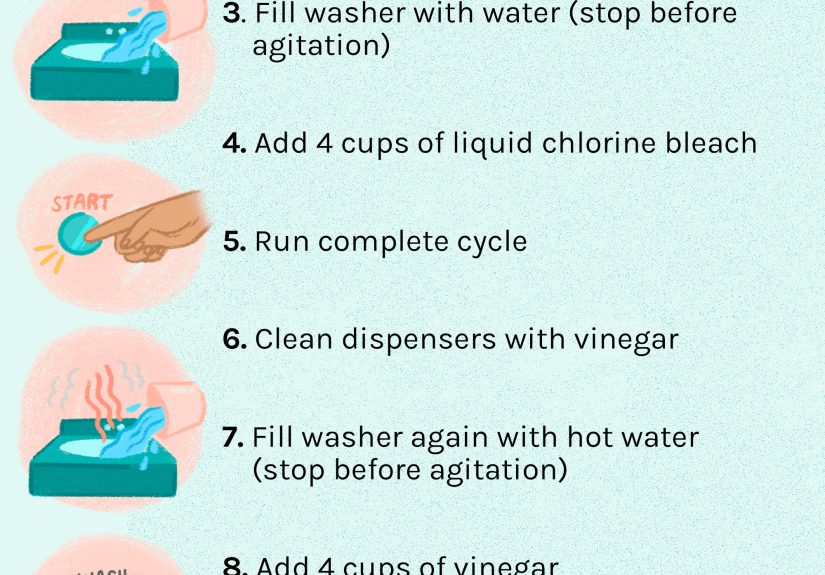
If you don’t, add bleach to the tub after it begins filling with water (so it dilutes quickly). - Run the hottest, largest cycle (or the washer’s cleaning cycle if it allows bleach).
-
Optional soak for “vintage funk.” If your washer allows pausing, let it agitate for a minute,
then pause and soak 30–60 minutes before finishing the cycle. - Run an extra rinse to make sure no bleach residue remains.
- Wipe key areas. Use a damp cloth to wipe the tub, rim, lid underside, and dispensers.
Bleach cautions (worth reading)
- Never combine bleach with vinegar, ammonia, hydrogen peroxide, or acidic cleaners.
- If you recently used vinegar or another cleaner, rinse thoroughly first before using bleach.
- Don’t overdo itmonthly is usually plenty for maintenance (unless your manual suggests otherwise).
Method 3: Vinegar or Citric Acid (Best for Hard Water ScaleUse Thoughtfully)
Vinegar is popular because it cuts mineral deposits and can help with odors. But there’s nuance: repeated vinegar
use may degrade rubber components over time in some machines, and some manufacturers don’t recommend it as a
routine cleaner. If you want a “scale-fighter” approach, consider using vinegar occasionallyor use citric acid
(often found in descaling products) as an alternative that many people prefer for mineral buildup.
If you choose vinegar (occasional use)
- Start with an empty tub.
- Add distilled white vinegar to the tub (or follow your washer brand’s instructions if they provide a quantity).
- Run the hottest, largest cycle.
- Run a second hot rinse cycle afterward (no vinegar) to flush loosened residue.
- Wipe the rim and lid underside.
If you choose citric acid (descaling-focused)
- Use a washer-safe descaler or citric-acid-based cleaner according to the package instructions.
- Run the tub clean cycle or the hottest empty cycle.
- Follow with an extra rinse if recommended.
Bottom line: Vinegar can be useful, but it shouldn’t be your washer’s daily driver. For routine cleaning,
many brands prefer washing machine cleaner tablets/powders or approved cleaners.
Don’t Skip These Grimy “Side Quests”
1) Clean the dispensers (detergent + fabric softener)
Dispensers are residue magnets. Remove them if your washer design allows, then wash with warm water and a drop of
dish soap. Scrub the corners with a toothbrush, rinse, dry, and reinstall. If they don’t remove, wipe what you can
reach and use the brush for the tight spots.
2) Clean the agitator or impeller area
Top-load washers come in two common styles:
- Agitator: a tall center post that twists and turns.
- Impeller: a low-profile cone or disc at the bottom.
Either way, grime can collect around the base, under caps, and in little seams. If your agitator has a removable
cap or softener cup, pop it off (gently) and clean underneath. Wipe the center column and the base where lint
paste likes to form.
3) Wipe the tub rim and underside of the lid
The underside of the lid and the top rim (especially under the lip) can grow mildew because moisture gets trapped.
Wipe with a damp cloth and mild soap. If you see stubborn spots, use a washer-safe cleaner and a soft brush.
4) Check the inlet screens (if your manual allows)
If you have hard water, the small screens where hoses connect can collect mineral grit. Some brands recommend
periodic inspection/cleaning. If you’re comfortable and your manual supports it, shut off the water, disconnect
hoses, and gently clean screens. If that sounds like a plumbing plotline you didn’t sign up for, a technician can
help.
5) Clean the exterior (yes, it counts)
Wipe the control panel and outside surfaces with a damp microfiber cloth and mild soap. Skip abrasive cleaners:
you’re cleaning a washer, not sanding a deck.
How Often Should You Clean a Top-Load Washing Machine?
A simple rule: once a month is ideal for most households, especially if you do frequent loads,
use cold water often, or notice odors. Some manufacturers also suggest cleaning at least monthly or every set
number of cycles to keep performance steady.
How to Prevent Odors Between Deep Cleans
- Leave the lid open after loads so the tub can dry.
- Measure detergent. More soap does not equal more clean; it often equals more residue.
- Go easy on fabric softener. It can leave a waxy film that traps smells.
- Use hot water sometimes. Occasional hot washes help reduce buildup.
- Don’t let wet laundry sit. Move it to the dryer (or hang it) promptly.
- Run an extra rinse if you notice suds or residue.
Troubleshooting: If Your Washer Still Smells After Cleaning
Try these fixes
- Run a second cleaning cycle with a washer cleaner tablet (or approved cleaner).
- Check the drain hose for kinks or gunky buildup (a common odor source).
- Inspect the tub ring area for hidden slime under the rimwipe thoroughly.
- Confirm you’re using HE detergent if your washer requires it; too many suds can trap gunk.
-
Consider your water. Hard water can leave mineral deposits that hold onto odors; a descaling
cleaner may help.
If smells persist even after multiple cleanings, it may be time for a service callespecially if there’s standing
water, slow draining, or recurring residue.
FAQ: Quick Answers That Actually Help
Can I use baking soda?
Baking soda can help deodorize and loosen grime, but it’s not a standalone disinfectant. It’s best used as a
supporting player (for example, a follow-up rinse or gentle scrub paste for small spots), not the main event.
Can I clean my washer with vinegar and bleach in the same cycle?
No. Never mix them. If you want to use both at different times, run a full rinse cycle between
products so they don’t interact.
Do I really need a washing machine cleaner tablet?
Not strictlybut they’re convenient, designed for washers, and often manufacturer-approved. If you want the
simplest “set it and forget it” method, a cleaner tablet plus the tub clean cycle is hard to beat.
Extra : Real-World “Experience” Lessons (What People Usually Learn the Hard Way)
Let’s talk about the most common washer-cleaning origin story: everything seems fine… until one day your towels
come out smelling like they were dried in a haunted basement. Nobody plans for this. It just happens. And then
suddenly you’re standing in the laundry room sniffing a washcloth like a detective in a very low-budget mystery.
Here’s what tends to be true in a lot of households: the smell isn’t “dirt,” it’s buildup. People often
use a little too much detergent (because the cap markings are basically a guessing game), and the extra soap
doesn’t magically disappear. It clings to the inner tub, mixes with body oils, grabs lint, and forms a film that’s
basically a welcome mat for stink. The funny part is that the washer still runs. It doesn’t complain. It just…
quietly becomes a soup pot.
Another common lesson: fabric softener can be the “nice-smelling villain.” It smells great in the bottle, but
over time it can coat parts of the washer and trap odor. Many people notice the biggest improvement simply by
cutting the amount in half (or swapping to occasional use), then running a proper tub-clean cycle monthly.
Suddenly, laundry starts smelling like “clean” again instead of “clean-ish, but with a subplot.”
If you have hard water, the experience is different: the washer may not smell terrible, but it slowly collects a
chalky mineral layer. That layer can make detergent less effective and turn “fresh” into “meh.” In these homes,
people tend to get the best results when they rotate: routine monthly cleaning with a washer cleaner tablet, and
an occasional descaling clean (citric-acid-based products are popular) to keep mineral deposits from building up.
One more reality check: cold-water washing is great for clothes and energy bills, but it can be a buildup party
for your machine if it’s the only setting you use. People who wash mostly cold often see a big difference by
adding just one hot load per week (towels are a good candidate) and leaving the lid open after the last load of
the day. It’s boring advice, but boring advice is usually what works.
Finally, the most “I can’t believe that was the problem” moment: the rim and tub ring area. This is where grime
hides like it pays rent. People run cleaner cycles and think they’re donethen wipe under the rim and discover a
secret ecosystem. If your washer still smells after a clean cycle, wiping that top edge thoroughly is often the
missing step that turns “better” into “actually fresh.”
Conclusion
Cleaning a top-load washing machine is one of those small chores that pays off fast: fresher laundry, fewer
mystery odors, and a washer that runs happier for longer. Pick the method that matches your machine (and your
tolerance for bleach smell), clean the hidden hotspots, and stick to a simple monthly rhythm. Your future self
and your towelswill be grateful.