Table of Contents >> Show >> Hide
- Why a Good Title Matters So Much
- Step 1: Get Clear on Your Audience and Purpose
- Step 2: Collect Your Raw Material (Keywords, Benefits, Emotions)
- Step 3: Use Proven Headline Formulas (So You’re Not Starting From Zero)
- Step 4: Make It Clear, Specific, and Honest
- Step 5: Add Power Words and Emotion (Without Going Full Clickbait)
- Step 6: Optimize Your Title for SEO Without Ruining It
- Step 7: Brainstorm Many Titles, Then Pick the Best
- Step 8: Adapt Your Title to the Format
- “With Pictures”: Matching Your Title to Your Visuals
- Common Title Mistakes to Avoid
- Real-World Experiences: What Tends to Work (and What Doesn’t)
- Final Thoughts: A Simple Checklist for Good Titles
Your title is the tiny sentence that decides whether your hard-worked article gets attention or gets ignored.
On social feeds, search results, and email inboxes, people don’t see your introduction or your beautiful conclusion.
They see one thing first: the title.
That’s why professional editors, marketers, and copywriters routinely spend as much time on a headline as they do on the rest of the piece.
A good title has to grab attention, hint at the benefit, stay accurate, and still sound like a human wrote it.
In true wikiHow spirit, think of this as a practical step-by-step guide to coming up with a good title, with “pictures” in mind:
the mental picture your words create, plus the actual images you pair with your content.
We’ll walk through how to brainstorm, use proven headline formulas, optimize for SEO, and match your title to your visualswithout sounding like a robot or a spammy clickbait farm.
Why a Good Title Matters So Much
A strong title does three big jobs at once:
- Attracts the right people. It signals who the content is for and what problem it solves.
- Sets expectations. Readers should know, roughly, what they’ll get if they click.
- Represents your brand. Tone, word choice, and style all communicate your voice.
On top of that, your title has to be short enough to scan, descriptive enough for search engines, and interesting enough to stand out in a scrolling blur of other headlines.
No pressure, right?
The good news: good titles are less about “genius inspiration” and more about a repeatable process.
Let’s break it down into simple, wikiHow-style steps.
Step 1: Get Clear on Your Audience and Purpose
Before you write a single word of your title, answer two questions:
- Who am I talking to?
- What do I want them to do or feel?
A title for busy small-business owners will look different from a title for high-school students or hobby photographers.
Professional headline guides repeatedly stress that your title should address a specific audience and highlight a benefit they care about.
For example:
- “How to Plan a Week’s Worth of Healthy Dinners in 30 Minutes” speaks to time-starved adults.
- “10 Easy Drawing Ideas for Beginners Who ‘Can’t Draw’” speaks to nervous newcomers.
Once you’re clear on audience and purpose, everything elsekeywords, length, emotional tonegets easier to decide.
Step 2: Collect Your Raw Material (Keywords, Benefits, Emotions)
Think of title writing like cooking: you need ingredients before you can plate something delicious.
Grab a notebook (or a doc) and jot down three small lists:
1. Core Keywords
What would someone type into Google or Bing to find this piece?
Most content marketing pros recommend putting your most important keyword near the beginning of the title when possible, because it can improve search relevance and click-through rate.
For example, for this article the primary keyword might be:
“how to come up with a good title”, with related phrases like “headline ideas” or “catchy titles”.
2. Clear Benefits
What does the reader gain?
Save time, avoid mistakes, learn a method, get inspired?
Many of the most effective headline formulas revolve around promising a result: more clicks, better grades, easier mornings, less stress.
3. Emotions and Tone
Do you want your title to feel reassuring, urgent, playful, or authoritative?
Guides on writing catchy headlines often emphasize emotion: curiosity, fear of missing out, relief, excitement.
Once you’ve got keywords, benefits, and emotions on the page, you’re ready to start shaping them into real titles.
Step 3: Use Proven Headline Formulas (So You’re Not Starting From Zero)
There’s no need to invent the entire universe of titles yourself.
Marketers and copywriters have tested headline formulas for decades, and certain patterns consistently perform well.
Popular Title Types You Can Steal Immediately
- How-to titles: “How to Come up With a Good Title (With Pictures)”
- List titles: “17 Easy Ways to Brainstorm Better Headlines”
- Question titles: “Struggling to Name Your Article? Try This 3-Step Trick”
- “This vs. That” titles: “Good Titles vs. Clickbait: What’s the Difference?”
- Result-driven titles: “Write Headlines that Double Your Click-Through Rate”
To create your own, combine your topic, audience, and benefit with one of these shapes.
For example, if you’re writing about budgeting for beginners:
- How-to: “How to Start a Budget When You Have No Idea Where to Begin”
- List: “9 Simple Budget Tricks for People Who Hate Math”
- Question: “Always Broke Before Payday? Try This Beginner Budget Plan”
Using formulas doesn’t make your title boring; it gives you a reliable skeleton so you can focus on the details, like word choice and tone.
Step 4: Make It Clear, Specific, and Honest
The fastest way to ruin a relationship with your readers is with misleading titles.
Experts consistently warn that clarity beats cleverness: people should understand what your piece is about in a split second.
Some simple ways to boost clarity:
- Use concrete nouns and verbs. “Grow Your Email List to 1,000 Subscribers” is clearer than “Unlock Explosive Growth.”
- Be specific. Numbers, time frames, and details help: “in 10 Minutes,” “with $0 Budget,” “in College.”
- Avoid vague buzzwords. “Game-changing,” “disruptive,” and “next-level” rarely tell people anything useful.
- Match the promise to the content. If you promise “in 5 Minutes,” make sure the tutorial actually takes about that long.
Think of your title as a contract: you’re promising a certain kind of information or experience.
Keep that promise and readers will trust youand keep clicking your stuff.
Step 5: Add Power Words and Emotion (Without Going Full Clickbait)
Once you’ve got a clear, honest title, you can dial up the interest with more vivid language.
Guides on catchy headlines often suggest using “power words” that convey urgency, curiosity, or strong benefits.
Consider the difference:
- “Tips for Writing Blog Titles”
- “7 Simple Tricks for Writing Blog Titles People Actually Click”
The second one adds:
- A number (“7”)
- A power word (“simple”)
- A benefit (“people actually click”)
That said, don’t promise the moon just to get a click.
“You Won’t Believe What Happens Next” vibes might work once or twice, but readers quickly get tired of exaggerated, empty promises.
Step 6: Optimize Your Title for SEO Without Ruining It
Search engines and humans both read your title, so you need to keep them both happy.
Fortunately, basic SEO for titles is pretty straightforward:
- Put your main keyword near the front if it still sounds natural.
- Stay within typical length limits: around 50–60 characters is often recommended so titles don’t get cut off in search results.
- Use related phrases naturally instead of stuffing the same keyword four times.
- Write for people first. If adding a keyword makes your title weird, prioritize clarity and readability.
Multiple headline studies suggest that titles around 8–12 words tend to perform well for clicks and shares, which often lines up with good SEO length too.
The key idea: SEO is there to help the right people find your content, not to turn your title into a robotic keyword salad.
Step 7: Brainstorm Many Titles, Then Pick the Best
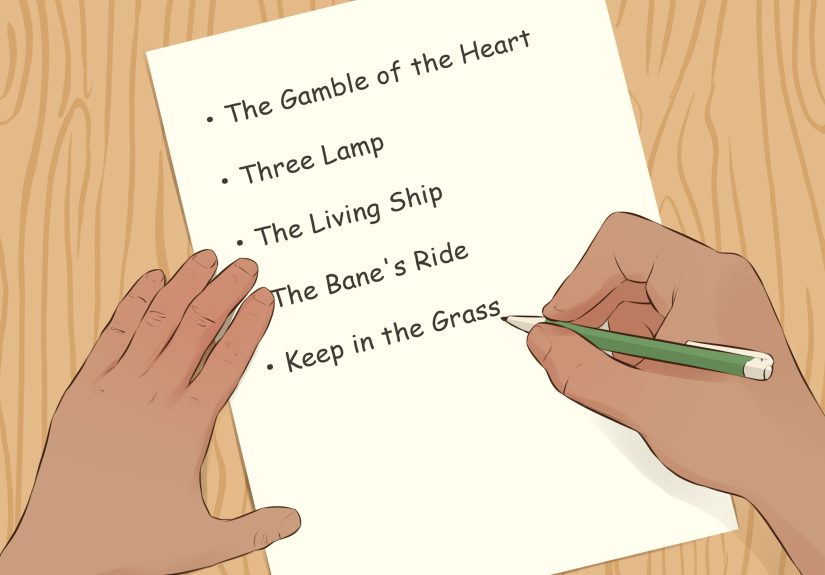
One of the most underrated tricks from professional copywriters is simple:
don’t stop at the first decent title you write.
Some headline coaches recommend writing 20, 30, or even 50 options for a single piece before choosing one.
You won’t use most of them, but that’s the point: the first ideas are usually generic.
The great ones tend to show up after you’ve warmed up.
Try this mini-routine:
- Write 10 quick titles as fast as possible, without judging them.
- Circle the 2–3 that feel strongest.
- Tweak those: change the verb, add a number, tighten the phrasing.
- Ask a friend or teammate which one they’d be most likely to click.
If you have access to analytics or A/B testing tools, experiment with different titles for the same article and keep an eye on click-through rates.
Many marketing teams use their own data to refine headline practices instead of blindly following “universal” rules.
Step 8: Adapt Your Title to the Format
The perfect title for a search result isn’t always the same as the perfect title for an email or YouTube video.
The core idea can be similar, but you’ll want to adjust for context.
Blog Posts and Articles
Focus on clarity, keywords, and specific benefits.
List posts, how-tos, and question titles work especially well for blogs.
Example:
“How to Come up With a Good Title (with Pictures) for Any Blog Post”
Social Media Posts
Here, you’re competing with memes, cat videos, and hot takes.
Keep titles short, punchy, and emotionally engaging.
Curiosity gaps (without lying) can work well:
“I Fixed One Word in My Blog Titles and My Traffic Spiked”
Email Subject Lines
Subject lines are just tiny titles with extra pressure.
Strong guides on email subject lines recommend being specific about what’s inside and why it matters now.
Example:
“New Cheat Sheet: 25 Headline Formulas You Can Copy Today”
Video Titles
Video platforms reward clarity and keywords, but also personality.
Include your main phrase plus a hook:
“How to Come up With a Good Title (With Pictures) – Real Examples”
“With Pictures”: Matching Your Title to Your Visuals
On wikiHow and other visual platforms, your title doesn’t stand alone.
It works together with your thumbnails, diagrams, and photos.
That “with Pictures” bit isn’t just decorationit promises that the article is visual and step-by-step.
To keep that promise:
- Show the result in the image. If your title is about organizing a closet, the main photo should show a satisfying “after” shot, not a random pile of clothes.
- Use images that match the mood. A gentle, reassuring article about anxiety shouldn’t have an intense, chaotic picture.
- Use captions to reinforce the title. Short labels under images can repeat key phrases and benefits in a natural way.
Think of your title as the movie trailer line and your pictures as the preview clipsthey should tell a consistent micro-story together.
Common Title Mistakes to Avoid
Even experienced writers fall into a few classic traps.
Watch out for these:
- Being too vague. “Thoughts on Life” could be anything. “5 Tough Money Lessons I Learned in My 20s” is clearer.
- Trying to be clever instead of clear. A pun is cute, but not if nobody understands what the piece is about.
- Over-promising. If your article is “The Only Guide You’ll Ever Need,” it should feel substantial enough to justify that claim.
- Stuffing keywords. “Good Blog Title How to Title Blog Title SEO Titles” makes both humans and algorithms back away slowly.
- Ignoring your own data. If your audience consistently clicks simple, straightforward titles, don’t force complicated ones just because a template said so.
Real-World Experiences: What Tends to Work (and What Doesn’t)
Let’s zoom out and look at what often happens when people start taking titles seriously.
These patterns show up again and again for bloggers, marketers, and creators across different platforms.
1. The “Tiny Change, Big Results” Title Upgrade
Many site owners notice that when they rewrite old posts with weak titles, they get surprising bumps in trafficeven though the article content stays the same.
Swapping something like “Holiday Budgeting Ideas” for “7 Holiday Budget Tricks That Save You Money Without Killing the Fun” can dramatically improve clicks because the second title:
- Uses a number (“7”)
- Includes a benefit (“save you money”)
- Addresses an objection (“without killing the fun”)
Over time, these small upgrades compound: more clicks, more shares, more search signals that your content is useful.
2. The “Do I Really Need 20 Titles?” Moment
Writing lots of headline variations can feel silly at first.
But most people who try it discover a predictable pattern:
- Titles 1–5: basic and a bit boring.
- Titles 6–10: weirder and more playful as you relax.
- Titles 11–20: a mix of strong, refined ideas once you’ve gotten past the obvious ones.
Creators who stick with this habit usually end up with a few “go-to” formats that consistently work for their audience, which makes future title brainstorming much faster.
3. Pictures That Don’t Match the Promise
Another common experience: a great title undercut by a confusing image.
Imagine an article called “How to Calm Your Dog During Thunderstorms (With Pictures)” that uses a stock photo of a happy dog on a sunny lawn.
Technically cute, but completely off-theme.
When the title and image feel mismatched, people hesitate to click because something feels “off.”
When they matchtitle promises calm, image shows a dog snuggling calmly with its ownerpeople instantly see what the article is about and whether it’s for them.
4. Learning Your Audience’s Personality
Over time, you’ll start noticing patterns in what your readers respond to:
- Some audiences love bold promises and strong language.
- Others prefer modest, practical titles that feel like quiet advice from a friend.
- Some respond better to numbers; others to questions or “how-to” phrases.
Treat these reactions as feedback, not judgments.
When a title flops, it doesn’t mean you’re bad at writing; it just means you learned something about your readers’ tastes.
5. The Confidence Snowball
The more you practice, the less intimidating title writing becomes.
At first, you might stare at the cursor for ten minutes, thinking, “Every title I write sounds terrible.”
After a few weeks of using formulas, writing multiple options, and paying attention to what works, you’ll find yourself casually tossing out solid headlines in conversation.
That confidence snowballs: you test more, learn faster, and gradually develop your own style.
Your titles start to sound like youjust a slightly more focused, click-worthy version of you.
Final Thoughts: A Simple Checklist for Good Titles
When you’re done drafting, run your title through a quick checklist:
- Does it clearly describe what the content is about?
- Does it speak to a specific audience or need?
- Is there a clear benefit or outcome?
- Is the length reasonable for search and social?
- Does it use keywords naturally, without stuffing?
- Does the mood match the content and the pictures?
If you can say “yes” to most of those questions, you’ve probably got a good title.
From there, the fun part begins: pairing it with helpful pictures, publishing your work, and watching the clicks roll inone honest, well-crafted headline at a time.