Table of Contents >> Show >> Hide
- First, a Quick Reality Check: Deadheading vs. Pruning
- Step 1: Identify What Type of Hydrangea You Have
- Step 2: Pick the Right Moment to Deadhead
- Step 3: Use the Right Tools (and a Tiny Bit of Hygiene)
- Step 4: The Horticulturist’s “Where to Cut” Method
- How to Deadhead Hydrangeas by Type
- Should You Deadhead Hydrangeas in Fall or Leave Them?
- Common Deadheading Mistakes (and How to Avoid Them)
- Pro Tips to Get More from Deadheading
- FAQ: Quick Answers Horticulturists Hear All the Time
- Field Notes: of Real-World Deadheading Experiences
- Conclusion
- SEO Tags
Hydrangeas are the drama queens of the shrub world: they show up in full, fluffy glam… and then slowly turn into crunchy brown pom-poms like they’ve just realized
it’s Monday. Deadheading (removing spent blooms) is how you keep the plant looking tidy, encourage some varieties to rebloom faster, and avoid the classic
gardening heartbreak: “I cut the wrong thing and now I have zero flowers.”
Here’s the horticulturist-approved way to deadhead hydrangeaswith the key nuance that makes the whole thing work: where your hydrangea forms next year’s buds.
Get that right, and deadheading is easy. Get that wrong, and your shrub will punish you by producing nothing but leaves (which is… not why we’re all here).
First, a Quick Reality Check: Deadheading vs. Pruning
Let’s clear up the most common confusion:
- Deadheading = removing the spent flower (sometimes with a short bit of stem) to clean up the plant and sometimes encourage more blooms.
- Pruning = removing stems/branches to shape the shrub, reduce size, remove dead wood, or improve blooming long-term.
Deadheading is usually a light, low-risk haircut. Pruning is a full-on makeover. The tricky part is that some hydrangeas put next season’s flower buds on older stems,
so a “simple” snip can accidentally remove tomorrow’s show.
Step 1: Identify What Type of Hydrangea You Have
You don’t need a botany degreejust enough ID to know whether your plant blooms on old wood (last year’s stems), new wood (this year’s growth), or both.
That determines how cautious you need to be.
The Most Common Types (and What They Mean for Deadheading)
-
Bigleaf hydrangea (Hydrangea macrophylla):
Mopheads and lacecaps; many bloom on old wood, some reblooming cultivars bloom on old and new wood. -
Oakleaf hydrangea (Hydrangea quercifolia):
Cone-shaped blooms and oak-shaped leaves; typically old wood. -
Mountain hydrangea (Hydrangea serrata):
Similar to bigleaf, often old wood. -
Panicle hydrangea (Hydrangea paniculata):
Cone-shaped blooms; blooms on new wood. -
Smooth hydrangea (Hydrangea arborescens):
Includes ‘Annabelle’ types; blooms on new wood.
If you’re unsure, use the “bloom timing clue” horticulturists love: shrubs that bloom earlier tend to set buds on older wood; shrubs that bloom later in summer often bloom on new growth.
It’s not perfect, but it’s a helpful starting point.
Step 2: Pick the Right Moment to Deadhead
Deadheading is best when flowers look tired (fading, browning, flopping) but the plant is still actively growing.
Timing is also where gardeners accidentally step on the rake:
deadheading too late in the season can remove forming buds or stimulate tender growth that won’t harden off before cold weather.
A Simple Timing Rule That Works in Most of the U.S.
- During the growing season (summer): Deadhead when blooms fade for a cleaner look and, for some varieties, faster rebloom.
- Late summer into early fall: Start slowing down. In many regions, avoid significant deadheading after late August or early September.
- Fall and winter: Deadheading becomes optional. Many gardeners leave dried blooms for winter interest and to help protect buds below.
Climate matters. If you garden in a colder zone where hydrangea buds can be winter-killed, leaving old flower heads through winter can be a small layer of protection (and free winter décor).
If you garden where winter is mild, you can be more flexiblebut you still don’t want to trigger soft late-season growth.
Step 3: Use the Right Tools (and a Tiny Bit of Hygiene)
For most deadheading, you only need:
- Hand pruners (bypass pruners are ideal for clean cuts)
- Gloves if you like having hands that don’t look like you wrestled a raccoon
- Rubbing alcohol or disinfecting wipes to clean blades between plantsespecially if you’re removing any diseased material
Sharp pruners matter. Crushing stems makes the plant heal slower and can invite problems. Think “surgical snip,” not “paper shredder.”
Step 4: The Horticulturist’s “Where to Cut” Method
Here’s the core technique you’ll use again and again:
The Standard Deadheading Cut
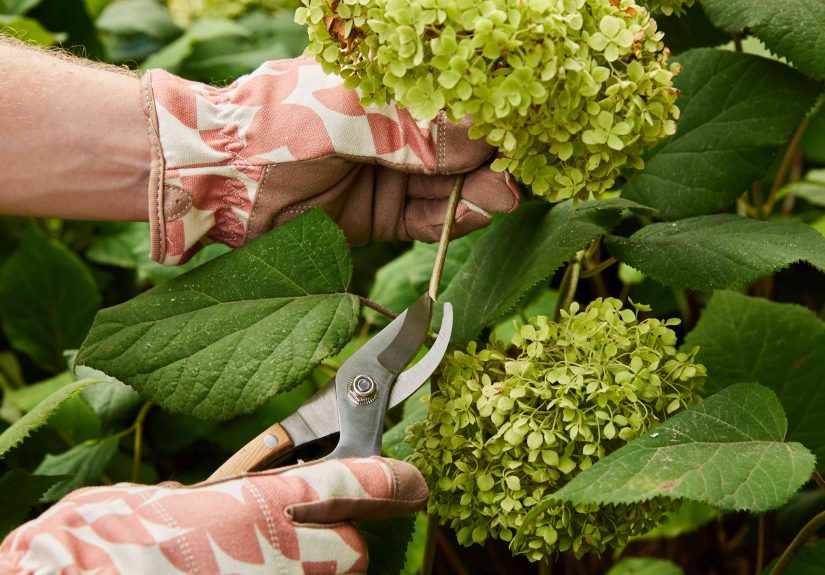
- Hold the spent bloom with one hand so it doesn’t tug on the stem.
- Look below the flower head for the first full set of healthy leaves (not the tiny leaflets right under the bloom).
- Make your cut just above that set of leaves (a slight angle is fine).
This method keeps the plant tidy without taking an unnecessary amount of stem. Butand this is the big “but”old-wood bloomers require extra caution later in the season.
How to Deadhead Hydrangeas by Type
Bigleaf Hydrangeas (Mophead & Lacecap)
Bigleaf hydrangeas are the reason “hydrangea advice” is so confusing. Many set next year’s flower buds on old wood, and those buds can form surprisingly early.
That means the best deadheading technique depends on the time of year.
- Early to mid-summer: Use the standard deadheading cut (to the first full set of leaves) if your shrub is actively growing.
- Late summer and beyond: Switch to a “minimal stem” cutremove mostly the flower head with as little stem as possible.
If you have a reblooming cultivar (often marketed as “repeat-blooming” or “everblooming”), deadheading can help the plant redirect energy toward new blooms.
Still, the safest late-season move is a lighter snip.
Oakleaf Hydrangeas
Oakleaf hydrangeas are wonderfully architecturaland they tend to bloom on old wood. They also often look great as the blooms age into rosy-tan cones.
- If you want winter interest: Leave the dried blooms until late winter/early spring cleanup.
- If you want a tidier look now: Deadhead lightly, removing just the bloom with a short stemespecially later in the season.
Oakleafs generally need little pruning unless they’re outgrowing their space. Deadheading is mostly about aesthetics.
Panicle Hydrangeas
Panicle hydrangeas bloom on new wood, which makes them the relaxed, low-drama friend in the hydrangea group.
Deadheading won’t usually risk next year’s flowers the way it can with bigleaf types.
- Deadhead for looks any time the blooms fade or flop.
- If you’re shaping stems, you can cut back to a strong set of leaves or a plump bud/node.
- Many gardeners leave dried panicle blooms for winter interest and prune more intentionally in late winter or early spring.
Smooth Hydrangeas (Including ‘Annabelle’ Types)
Smooth hydrangeas also bloom on new wood, so deadheading is mostly about encouraging fresh-looking flowers and keeping the shrub from looking like it’s wearing last season’s outfit.
- Deadhead spent blooms back to a healthy set of leaves.
- For very heavy flower heads, removing spent blooms can reduce stem flop and improve appearance.
- If your plant is a vigorous rebloomer, removing faded blooms can help it push fresh growth.
Should You Deadhead Hydrangeas in Fall or Leave Them?
Horticulturists often give the most satisfying answer in gardening: it dependsbut in a useful way.
- Leave them if you like winter interest, want a little bud protection, or garden in a colder zone.
- Remove them if you hate the look of dried blooms, live in a mild winter region, or want a cleaner winter garden.
The safest compromise: if you deadhead in fall, do it gently (remove mainly the bloom) and avoid cutting long stems on old-wood bloomers.
Common Deadheading Mistakes (and How to Avoid Them)
Mistake 1: Cutting Too Far Down “Because It Looks Better”
It might look more balanced to chop a long stem down to match the restbut on old-wood hydrangeas, that can remove next season’s buds.
When in doubt, take off less.
Mistake 2: Deadheading After Early September in Cold-Winter Regions
Late-season cutting can push new growth that won’t harden off before frost, or it can remove buds that are already forming.
If you’re itching to snip, keep it minimal and focus on cleanup in spring instead.
Mistake 3: Confusing Deadheading With “Cutting Back”
Deadheading is not the same as reducing size. If your shrub is huge, the fix is usually better siting, choosing a smaller cultivar, or strategic pruning at the right timenot random mid-season hacking.
Mistake 4: Using Dull or Dirty Pruners
A clean cut heals faster. Dirty blades can spread disease. Keep it simple: wipe blades when you move between plants or when you’ve removed anything questionable.
Pro Tips to Get More from Deadheading
Tip 1: Turn Spent Blooms into Dried Arrangements
If you’re going to remove blooms, you might as well get a free centerpiece out of it. For drying, many gardeners cut blooms after they’ve matured and become slightly papery.
Hang them upside down in a well-ventilated spot, or place stems in a vase with a small amount of water and let them dry slowly.
Tip 2: Deadhead Right After a Rain (or Water First)
Hydrangea stems are more flexible when the plant is hydrated. A quick deadheading session after watering can reduce accidental snapping.
Tip 3: Watch for Buds Under the Bloom
On old-wood types, you may see swollen buds or fresh growth below the spent flower. That’s your signal to keep cuts high and minimal.
FAQ: Quick Answers Horticulturists Hear All the Time
Will deadheading hurt my hydrangea?
Generally, no. Deadheading isn’t required for plant health, but it can improve appearance and may encourage faster rebloom in varieties capable of repeating.
What if I never deadhead?
Your hydrangea will survive. Blooms will fade and eventually drop. You may get fewer “encore” blooms on repeat bloomers, but the plant won’t hold a grudge.
How do I know if mine blooms on old wood or new wood?
Plant labels help, but if the label is long gone, use bloom timing and plant type. Bigleaf and oakleaf often bloom on old wood; panicle and smooth bloom on new wood.
If you’re still unsure, deadhead lightly (remove mostly the bloom) and avoid major pruning until you’ve observed a full season.
Can I deadhead hydrangeas in winter?
You can, but it’s optional. Many gardeners leave dried blooms for winter interest and bud protection, then clean up in late winter or early spring.
Field Notes: of Real-World Deadheading Experiences
If you spend enough time around gardeners (or answer enough horticulture questions), you start to notice patternslike how hydrangeas inspire equal parts devotion and mild panic.
Here are a few “real garden” scenarios that come up again and again, and what they teach about deadheading.
The “I Thought I Was Helping” Mophead Incident
One of the most common stories goes like this: a gardener sees browned mophead blooms in late fall, grabs pruners, and gives the shrub a satisfying cleanup… then wonders why it
barely flowers the next summer. The lesson isn’t “never deadhead” (because you absolutely can). The lesson is that bigleaf hydrangeas often store next year’s potential along
last year’s stems. In the real world, the safest late-season move is a tiny snipjust the bloomso you get neatness without deleting tomorrow’s buds.
The Panicle Hydrangea That Forgives Everything
On the flip side, panicle hydrangeas are the friend who shows up even if you text them back three days late. Gardeners regularly deadhead panicles whenever they feel like it,
and the plants keep blooming because they flower on new growth. In practice, many people end up leaving panicle blooms to dry on the shrub because the tan cones look great in
winter light (and because it’s nice to have a garden task you can postpone without consequences). Then, when late winter arrives, they prune for shape and strengthresulting in
sturdy stems that hold those big summer blooms like they’re carrying a trophy.
The ‘Annabelle’ Flop-and-Fix Cycle
Smooth hydrangeasespecially big, heavy bloomersoften teach gardeners about physics. The flowers get enormous, rain arrives, and suddenly your shrub looks like it fainted.
Deadheading won’t solve every flop, but gardeners often notice that removing spent blooms (and later, pruning correctly in the dormant season) can help manage weight and improve
the look of the plant. In day-to-day garden life, deadheading smooth hydrangeas is less about protecting buds and more about keeping things looking fresh and preventing the shrub
from turning into a tangled bouquet pile.
The “Dried Bouquet Bonus”
Deadheading becomes a lot more fun when it turns into free home décor. Many gardeners time their cuts so blooms are mature enough to dry welloften when petals feel papery and
colors shift into antique tones. The shrub gets cleaned up, and the vase gets filled. It’s one of the rare gardening moments where the “cleanup” task feels like a reward.
The practical takeaway: if you want to dry blooms, don’t rush to remove flowers the second they fade. Let them develop character first.
The Takeaway from All These Gardens
In real landscapes, perfect rules matter less than good habits: identify your hydrangea type, stop heavy snipping late in the season, and take off less when you’re unsure.
Deadheading should feel like a gentle tune-upnot a high-stakes surgery. When you treat it that way, hydrangeas usually respond with what you wanted all along: more beauty,
less stress, and a garden that looks intentionally cared for (even if you did it while wearing pajama pants and holding iced coffee).
Conclusion
Deadheading hydrangeas is simple once you respect the plant’s blooming style. The horticulturist’s approach is: know your type, time your snips, and cut conservatively on old-wood varieties.
Deadhead during the growing season for a cleaner look and potential rebloom, then ease up as fall approaches. If you’re ever unsure, remember the safest hydrangea rule:
take off lessyou can always cut more later, but you can’t tape buds back on.