Table of Contents >> Show >> Hide
- Step 1: Decide what “a good bedroom” means for you
- Step 2: Start with layoutbecause pretty can’t fix awkward
- Step 3: Choose a color palette that helps your nervous system chill out
- Step 4: Build a bedscape (a.k.a. the “hotel effect” without hotel prices)
- Step 5: Layer lighting so your bedroom doesn’t feel like a parking garage
- Step 6: Rugs and curtainsyour secret weapons for instant “finished”
- Step 7: Wall decor without the “dorm room collage panic”
- Step 8: Storage that doesn’t ruin the vibe
- Step 9: Finishing touches that make the room feel “you”
- Common bedroom decorating mistakes (and how to fix them fast)
- Real-World Bedroom Decorating Experiences (What People Learn the Hard Way)
- Conclusion
Your bedroom is the only room in your house that sees you at your best (freshly showered) and your most honest
(hair doing interpretive dance, socks that don’t match, and a phone charger you’d fight for). So decorating it isn’t
about impressing strangersit’s about building a space that helps you exhale.
The good news: you don’t need a giant budget, a design degree, or a personality that “naturally loves throw pillows.”
You just need a plan, a little strategy, and permission to make choices that serve your lifesleep, morning routines,
getting dressed, maybe reading a chapter instead of doomscrolling (no judgment; we’ve all been there).
Step 1: Decide what “a good bedroom” means for you
Before you buy anything, define the job your bedroom needs to do. Is it mainly for sleep? Is it also a “get-ready”
zone, a reading nook, a work-from-home corner, or a baby monitor headquarters? A bedroom that works feels calm because
it’s designed around real habitsnot fantasy versions of you who fold laundry immediately.
Try the three-word vibe test
Pick three words that describe how you want the room to feel. Examples:
calm, cozy, uncluttered or bright, airy, simple or moody, warm, cocoon-like.
When you’re torn between options, the vibe words break the tie.
Make a “must-have” list (and a “nice-to-have” list)
- Must-have: what you need daily (good bedside lighting, a laundry spot, blackout curtains, more storage).
- Nice-to-have: what would be lovely (a bench at the foot of the bed, an accent chair, an art wall).
Step 2: Start with layoutbecause pretty can’t fix awkward
The fastest way to make a bedroom feel “designed” is to make it feel intentional. Layout is the backbone: where the bed
goes, how you move around it, and what zones exist besides “pile of clothes” and “sleep.”
Let the bed be the anchor
In most bedrooms, the bed is the largest itemso it should look like it belongs there on purpose. If possible, place it
on the longest uninterrupted wall (usually the wall you see first when you walk in). If doors, windows, or closets get in
the way, aim for “balanced,” not perfect.
Use wall-mounted lighting when surface space is tight
If your nightstands are tiny (or nonexistent), wall sconces free up space and make a small room feel less crowded. This is
one of those design moves that looks fancy but is mostly just practical.
Example: a small bedroom layout that feels bigger
- Use one nightstand if you mustmatch it with a wall sconce on the other side for symmetry.
- Choose a bed with under-bed storage or add bins so your dresser doesn’t have to do all the heavy lifting.
- Skip oversized accent chairs; try a small stool or bench that can double as a drop zone.
Step 3: Choose a color palette that helps your nervous system chill out
Paint color and palette choices do more than “look nice.” They set the emotional temperature of the room. Bedrooms tend to
feel best in softer, gentler toneswarm whites, calming neutrals, muted greens, and blue-graysbecause those colors don’t
shout at you when you’re trying to power down.
Three easy bedroom palettes (with specific examples)
-
Soft warm white + natural wood + black accents:
A cozy, clean baseline that works with almost any style.
(Think creamy whites like Sherwin-Williams Alabaster or similar warm whites.) -
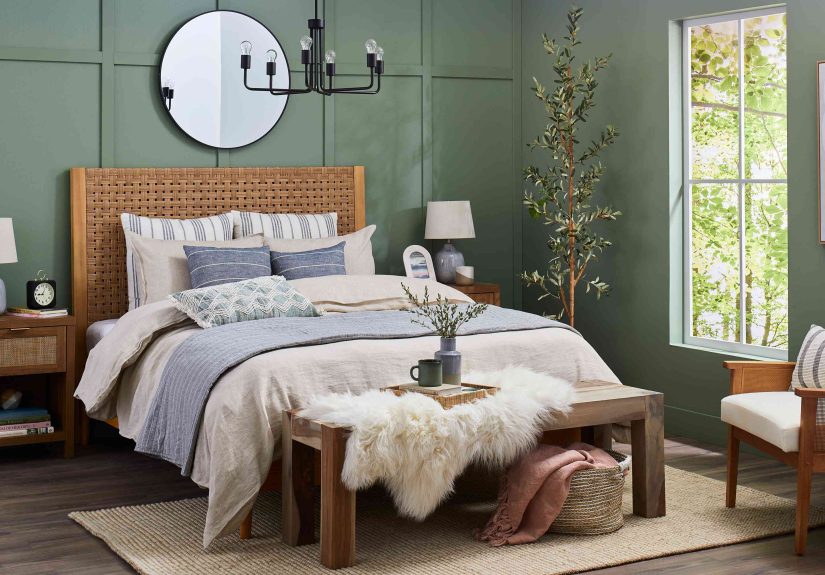
Muted green + cream + brass or warm wood:
Peaceful and groundedgreat if you want a “nature” vibe without moving into a cabin.
(Evergreen Fog–style greens are popular for that calm, muted look.) -
Blue-gray + crisp white + linen textures:
Light, airy, and classicespecially good if your room gets strong daylight.
Pro move: pick one “hero” color and let the rest be supporting actors
If everything competes for attentionpaint, bedding, rug, artthe room feels busy. Choose one hero element:
the wall color, a statement headboard, a patterned rug, or bold artwork. Then keep the other big pieces calmer.
Step 4: Build a bedscape (a.k.a. the “hotel effect” without hotel prices)
If you do nothing else, make the bed look finished. A well-styled bed makes the whole room feel pulled togetherlike you
have your life together even if you ate cereal for dinner (iconic).
A simple layering formula that works in real life
- Base: sheets you actually like touching (comfort matters more than thread-count bragging rights).
- Middle: a quilt or coverlet for texture and easy daytime “made bed” vibes.
- Top: duvet/comforter for warmth and volume.
- Finish: one throw blanket + 2–4 extra pillows (not twelve; your floor is not a pillow daycare).
Mix texturescotton, linen, wool, bouclé, even velvetto make neutral palettes feel rich instead of flat. Texture is how you
get “cozy” without turning the room into a clutter museum.
Step 5: Layer lighting so your bedroom doesn’t feel like a parking garage
Great bedrooms don’t rely on one harsh overhead light. They use multiple sources so the room can shift modes: bright for
getting dressed, soft for winding down, focused for reading, and gentle for midnight “where is my water” missions.
The three layers to aim for
- Ambient: ceiling fixture or flush mount for general light (bonus points if it’s dimmable).
- Task: bedside lamps or sconces for reading, plus good light near a dresser or mirror.
- Accent: a floor lamp, picture light, or soft glow near a shelf to add depth.
Bulb tip: choose warm light
Warm white bulbs (often around the 2400K–3000K range) tend to feel more relaxing in bedrooms than cool, blue-toned light.
If your room feels “off” at night, this is frequently the fix that makes everything feel instantly cozier.
Step 6: Rugs and curtainsyour secret weapons for instant “finished”
Rugs and window treatments do a lot of invisible work: they soften sound, add warmth, and make a room feel complete.
Even if you keep everything else simple, these two choices can carry the design.
Rug placement that feels good underfoot
In most bedrooms, the easiest layout is placing a large rug under the lower portion of the bed so your feet land on something
soft in the morning. In smaller spaces, you can use runners on each side or a smaller rug near the foot of the bed to get
the cozy effect without crowding the room.
Hang curtains higher than you think
A classic trick designers use: mount curtain rods higher (close to the ceiling when possible) and extend them wider than the
window frame. It makes windows look larger and ceilings feel taller. Make sure curtains are long enough to skim the floor
for a polished look.
Budget trick that looks expensive
If your curtains look limp or “meh,” adding drapery weights can help them hang in cleaner folds and feel more substantial.
It’s one of those small changes that punches above its price.
Step 7: Wall decor without the “dorm room collage panic”
Wall decor is where personality shows upbut it works best when it’s intentional. You don’t need to fill every inch.
Choose one approach and commit.
Three wall strategies that rarely fail
- One big piece: oversized art above the bed or dresser for instant impact.
- A small gallery: 3–7 frames with a consistent spacing and a shared color story.
- Texture wall: wallpaper, paneling, or a painted accent that becomes the “art.”
If you’re renting (or just allergic to commitment), try removable wallpaper, picture ledges, or leaning art on a dresser.
It’s stylish, flexible, and you can change it when your taste evolves (which it willbecause humans are allowed to grow).
Step 8: Storage that doesn’t ruin the vibe
Bedrooms feel peaceful when surfaces stay clear. That doesn’t mean you have to become a minimalist monk. It just means
giving your stuff a homepreferably behind doors, inside drawers, or in good-looking containers.
Small-bedroom storage ideas that actually help
- Go vertical: wall shelves, tall wardrobes, hooks behind doors.
- Use under-bed space: bins, drawers, or a storage bed frame.
- Double-duty furniture: a bench with hidden storage, a nightstand with drawers.
A helpful mindset: store like with like. Sleep stuff together (books, eye mask, charger). Get-ready items together
(hair tools, skincare). Laundry stuff together (hamper, lint roller, spare hangers). When items are grouped, they’re easier
to put awayand easier to find when you’re running late.
Step 9: Finishing touches that make the room feel “you”
This is where your bedroom stops being a showroom and starts being a sanctuary. Keep it simple: one scent you love, one plant
(real or convincing), one meaningful object, and one “comfort upgrade.”
Comfort upgrades worth considering
- Better pillows (sleep is the pointlet’s honor that).
- Layered blankets so you can adjust temperature without drama.
- Soft bedside lighting so evenings feel calmer.
- A tray or catchall to prevent “tiny clutter” from multiplying like gremlins.
Common bedroom decorating mistakes (and how to fix them fast)
- Everything is the same tone: Add texture (linen, wood, a nubby throw, a woven basket).
- One overhead light only: Add two lamps or sconces and a dimmer if possible.
- Curtains are too short: Swap for longer panels or raise the rod and choose floor-length.
- Too many small decor items: Replace five small things with one larger statement piece.
- No “landing zones”: Add a small dish, tray, or hook so daily items don’t pile up.
Real-World Bedroom Decorating Experiences (What People Learn the Hard Way)
When people redecorate a bedroom, the first instinct is often to chase a “look.” A specific style. A perfect color. A
headboard that makes the room feel like a boutique hotel where someone else magically does laundry. But in practice, the
bedrooms that feel best usually come from a different approach: solve the daily annoyances first, then layer in beauty.
One common experience: folks underestimate how much lighting affects mood. A bedroom can have gorgeous paint, beautiful
bedding, and stylish furnitureyet still feel strangely uncomfortable at night if the light is too cool or too harsh. When
people switch to warmer bulbs, add dimmers, or introduce a couple of extra light sources (like sconces or a soft floor lamp),
the room often feels “done” in a way that new decor alone couldn’t accomplish. It’s less about buying more and more about
making the room adaptable to different moments: morning, evening, and everything in between.
Another big lesson is that “cozy” is mostly texture, not clutter. Many people try to make a bedroom cozy by adding lots of
objectsextra pillows, extra decor, extra everythinguntil it becomes visually noisy (and harder to clean, which is not the
relaxing lifestyle anyone ordered). The bedrooms that read as cozy tend to use a few tactile elements with intention: a
soft rug that’s pleasant underfoot, curtains that give the windows a gentle frame, layered bedding that looks inviting, and
one or two materials (wood, linen, wool, woven rattan) that bring warmth without chaos.
There’s also the classic “small bedroom reality check.” People often buy furniture that’s beautiful on its own but too bulky
for the roomespecially nightstands and dressers. The fix is usually not dramatic; it’s strategic. Swap wide nightstands for
slimmer ones. Choose wall-mounted shelves or sconces to free surface space. Use under-bed storage so you don’t need an extra
cabinet. And if your bed takes up most of the room (hello, modern housing!), lean into a simplified layout and let a great
bedscape, strong lighting, and a rug do the heavy lifting.
Window treatments are another area where people get surprised. A bedroom can feel oddly unfinishedeven with nice furniture
if the windows are bare or the curtains are too short. When people mount rods higher and use longer panels that skim the
floor, the room often feels instantly taller and more intentional. It’s one of those “why didn’t I do this sooner” changes.
And for anyone who’s bought budget curtains and felt disappointed: it’s incredibly common. Adding weight (literallydrapery
weights) or choosing a slightly heavier fabric can make a big difference in how polished the room feels.
Finally, many people discover that a bedroom isn’t just a design projectit’s a routine project. The best-looking room won’t
stay that way if there’s nowhere to put chargers, books, water glasses, or the clothes you’ll “put away later.” Bedrooms that
stay calm usually have tiny systems: a tray on the nightstand, a hamper that’s actually convenient, a hook for tomorrow’s
outfit, a drawer for cords. It’s not glamorous, but it’s the secret sauce. A decorated bedroom is nice. A bedroom that makes
daily life smoother? That’s the one you’ll love a year from now.
Conclusion
Decorating a bedroom is a mix of strategy and comfort: start with a layout that works, choose calming colors, build a
layered bed, add lighting that can shift with your day, and finish with curtains, rugs, and personal touches. When you
prioritize function and feeling, your bedroom becomes more than a roomit becomes a reset button.