Table of Contents >> Show >> Hide
- Before You Start: What You’re Looking For
- How to Find the Big Dipper: 10 Steps (Real-World Friendly)
- Step 1: Pick the right time (don’t fight the Sunhe’s undefeated)
- Step 2: Find a decent viewing spot (a.k.a. “not under a stadium light”)
- Step 3: Let your eyes adapt (your eyeballs need a warm-up)
- Step 4: Face generally north (close counts)
- Step 5: Search for a bright “bowl” first (four stars in a box)
- Step 6: Attach the handle (three stars making a gentle curve)
- Step 7: Confirm with the “pointer stars” trick (because cheating is efficient)
- Step 8: Use season cues (the Big Dipper does the nightly “clock” thing)
- Step 9: Troubleshoot common “wait, is that it?” problems
- Step 10: Level upuse the Big Dipper as a “sky signpost”
- What If You Live Far South?
- Simple Gear That Makes Finding the Big Dipper Easier
- Conclusion: Your New Favorite Seven-Star Shortcut
- Field Notes: Real Experiences Finding the Big Dipper (Extra )
The Big Dipper is the night sky’s most famous “oh hey, I recognize that!” star pattern. It’s like the cosmic equivalent of spotting a familiar logo on a highway signsuddenly you’re oriented, confident, and mildly smug. Technically, the Big Dipper isn’t a full constellation. It’s an asterism: a recognizable pattern of stars that lives inside the constellation Ursa Major (the Great Bear). But don’t let the vocabulary scare you off. You don’t need a telescope, a PhD, or a wizard robe. You need a clear-ish night, a little patience, and the willingness to point at the sky like you’re explaining something important to a confused raccoon.
In this guide, you’ll learn exactly how to find the Big Dipper in 10 practical steps, plus how to use it as a sky GPS to locate the North Star (Polaris) and other bright targets. We’ll also cover real-world troubleshootingcity lights, confusing star fields, seasonal changesand end with a longer “field notes” section full of lived-style stargazing experiences to make the whole thing feel less like homework and more like an adventure you can actually do tonight.
Before You Start: What You’re Looking For
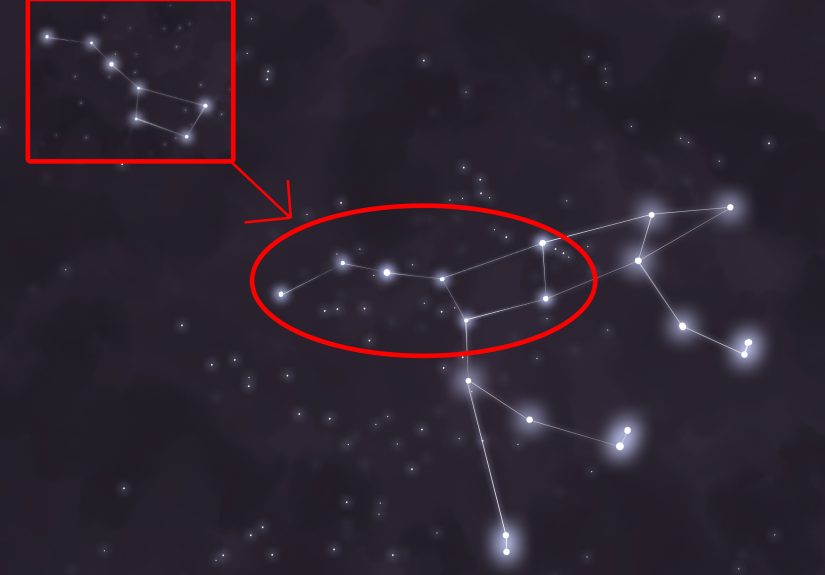
The Big Dipper is made of seven bright stars arranged like a ladle: four stars form the “bowl,” and three form the “handle.” In the United States, it’s one of the first star patterns many people learn because it’s fairly bright andhere’s the best partoften visible even when the sky isn’t perfect.
Quick mental image
- Bowl: four stars that look like a small box or cup
- Handle: three stars curving away from the bowl like a bent spoon
And yes, it’s called a “dipper” because it looks like something you’d use to scoop water or soupbecause humans have always looked at the sky and thought, “That reminds me of kitchen utensils.”
How to Find the Big Dipper: 10 Steps (Real-World Friendly)
-
Step 1: Pick the right time (don’t fight the Sunhe’s undefeated)
You’ll want a time when it’s fully darkgenerally at least an hour after sunset. Twilight can be pretty, but it’s also the sky’s way of hiding the stars behind a soft-glow filter. If you’re in a bright city, go later when more lights are off and your eyes have had time to adjust.
-
Step 2: Find a decent viewing spot (a.k.a. “not under a stadium light”)
The Big Dipper can punch through mild light pollution, but it’s not a superhero. If possible, step away from direct lights and give yourself a wide view of the sky. A backyard, a park, a rooftop, or a quiet street can work. If you can see more stars when you turn your body slightly away from nearby lights, you’re doing it right.
-
Step 3: Let your eyes adapt (your eyeballs need a warm-up)
Night vision improves dramatically after 10–20 minutes in the dark. During that time, keep phone brightness low and avoid white flashlights. If you need light, use a red setting or cover a small light source with something reddish. Your future selfwho can actually see faint starswill thank you.
-
Step 4: Face generally north (close counts)
In the Northern Hemisphere, the Big Dipper hangs out in the northern sky. You don’t need perfect “true north” precision; just aim for the half of the sky where you’d expect north to be. If you have a compass app, greatuse it briefly, then dim your screen again.
-
Step 5: Search for a bright “bowl” first (four stars in a box)
Beginners often try to find the whole spoon at once and get overwhelmed. Don’t. Start by looking for a four-star box. It may tilt, rotate, or look like a slightly squashed rectangle depending on the season and the time of night. Once you spot that bowl shape, you’re basically holding the map’s “You Are Here” sticker.
-
Step 6: Attach the handle (three stars making a gentle curve)
From one corner of the bowl, three stars arc away like a bent handle. The curve is your clueit looks like a subtle smile or a banana that’s trying to be polite. If you’re unsure which way the handle goes, look for the smoothest three-star curve extending from the bowl rather than a straight line.
-
Step 7: Confirm with the “pointer stars” trick (because cheating is efficient)
Here’s the classic confirmation move: locate the two stars on the outer edge of the bowl (the side opposite the handle). These are often called the pointer stars. If you draw an imaginary line through them and extend it outward, you’ll hit Polaris (the North Star).
This is helpful because Polaris sits in a relatively sparse part of the sky. If your “pointer line” shoots into a busy patch of bright stars and chaos, you may be pointing from the wrong bowl edgeor you may have found a different “box” entirely.
-
Step 8: Use season cues (the Big Dipper does the nightly “clock” thing)
The Big Dipper appears to rotate around Polaris as Earth turns. That means it can look:
- High overhead-ish in spring evenings (often the easiest time for beginners)
- Off to the northwest on summer nights
- Lower in the north during fall evenings
- More to the northeast and “upright-ish” in winter evenings
If you don’t see it right away, don’t assume it’s gone forever. It may just be lower, rotated, or partly blocked by trees/buildings. Move to a spot with a cleaner northern horizon.
-
Step 9: Troubleshoot common “wait, is that it?” problems
Most Big Dipper hunts go wrong for predictable reasons. Here’s how to fix them fast:
- Light pollution hides the dimmer star: One of the seven is noticeably dimmer than the others. In bright areas, you might only see 6 at first. Try later at night, or find a darker corner.
- You found a random four-star box: Lots of star groupings can imitate a “bowl.” Use the handle curve + pointer-stars-to-Polaris test to confirm.
- Trees/buildings are blocking the north: The Big Dipper can sit low depending on season/time. Change locations or find a more open view.
- Moon glare: A bright Moon washes out stars like a spotlight on a stage. Try again on a darker night or when the Moon is lower.
-
Step 10: Level upuse the Big Dipper as a “sky signpost”
Once you’ve found it, the Big Dipper becomes your shortcut to other famous sights:
- Find Polaris (North Star): Follow the bowl’s pointer stars outward to Polaris, which marks true north.
- “Arc to Arcturus”: Follow the curve of the handle outward and you’ll reach Arcturus, a bright orange star that often steals the show in spring and summer.
- “Then speed on to Spica”: Keep going in the same general direction from Arcturus to find Spica (useful on spring evenings).
In other words: the Big Dipper isn’t just a destination. It’s a launchpad.
What If You Live Far South?
The Big Dipper is a Northern Hemisphere favorite. If you’re far enough south, it can sit very low on the horizon or disappear entirely. But for most of the continental United States, you have a good chance of seeing it at some point in the nightespecially with a clear northern view. If you’re traveling, latitude matters: the farther north you are, the higher and more consistently visible the Big Dipper tends to be.
Simple Gear That Makes Finding the Big Dipper Easier
You don’t need muchbut these help
- A stargazing app (used briefly, with screen dimmed): great for confirming you’ve got the right pattern
- Binoculars: not required to find the Big Dipper, but fun for exploring nearby star fields
- A red light or red headlamp setting: protects night vision and keeps you from blinding your friends
- A chair or blanket: looking up for 20 minutes is a neck workout nobody signed up for
Conclusion: Your New Favorite Seven-Star Shortcut
Finding the Big Dipper is one of the fastest ways to feel at home in the night sky. With the 10 steps above, you’re not just memorizing a shapeyou’re learning a reliable method: pick a decent spot, let your eyes adjust, search north, lock onto the bowl, attach the handle, and confirm with the pointer stars to Polaris. Once you’ve done it a few times, you’ll start spotting it casuallylike recognizing a friend across a crowded room, except the friend is a cosmic ladle and the room is the universe.
And the best part? The Big Dipper doesn’t just sit there looking pretty. It helps you navigate, teaches you how the sky moves through the seasons, and opens the door to “star-hopping” your way to other bright targets. Tonight, go find it. Tomorrow night, find it faster. The night after that, teach someone elseand watch them do the exact same delighted “Oh! I see it!” face you probably made.
Field Notes: Real Experiences Finding the Big Dipper (Extra )
The first time I tried to find the Big Dipper on purpose, I made the classic rookie mistake: I assumed it would look exactly like the neat, upright diagram from a textbook. Spoiler: it did not. In real life, the Big Dipper has the audacity to rotate. Some nights it’s “right-side up,” other nights it’s on its side, and occasionally it looks like it’s doing an interpretive dance about gravity. I spent a solid ten minutes staring at a random four-star box, convinced I’d discovered a “rare alternate dipper.” It turns out I’d discovered “a rectangle.”
The breakthrough was using the pointer-stars trick like a secret handshake. Once I realized the two outer bowl stars should “point” toward Polaris, everything snapped into place. That test is unbelievably grounding: it turns star-finding from “guesswork and hope” into “method and confirmation.” I’ve used it on camping trips, in suburban cul-de-sacs, and once from a hotel parking lot where the lighting design seemed personally offended by astronomy. Even then, when the dimmest star refused to show up, the rest of the pattern still gave me enough structure to confirm the asterism and move on to Polaris.
Another memorable moment: I tried teaching a friend who insisted they couldn’t see any stars because “the city blocks everything.” So we played a game: we stood in the shadow of a building, waited two minutes, and compared how many stars we could count versus standing directly under a streetlight. The difference was immediatelike someone had turned the sky’s brightness slider down. Then we did the Big Dipper hunt using the “bowl first” strategy. When they finally saw the handle curve attach to the bowl, they got quiet in that very specific way people do when their brain is filing a new kind of wonder. It wasn’t dramatic. It was better: it was real.
My favorite “Big Dipper lesson” happened on a spring night when the Dipper was high and obvious. I got overconfident and started pointing at everything like a tour guide with a laser pointer (I did not have a laser pointer, only enthusiasm). Then a thin cloud drifted through and erased half the sky. Suddenly, I couldn’t see the full dipperjust a couple of stars. I panicked for three seconds, then remembered: a little cloud isn’t a moral failure. So I waited. The cloud moved. The pattern reassembled itself. The sky taught me a surprisingly useful life skill: sometimes the best stargazing technique is patience.
Since then, finding the Big Dipper has become my “baseline calibration” whenever I’m under the night sky. If I can spot it, I know my eyes are adjusted and the conditions are at least workable. If I can’t, I troubleshoot: move away from lights, wait longer, look for Polaris first, or accept that the Moon is running the show tonight. The Big Dipper isn’t just a cluster of starsit’s a ritual. A small, repeatable way to reconnect with the sky that’s been above you the whole time, even when you’ve been too busy to notice.