Table of Contents >> Show >> Hide
- What Are Grubs, Exactly?
- How To Tell If Grubs Are Ruining Your Lawn
- The Best Ways To Get Rid Of Grubs In Your Lawn
- How To Prevent Grubs From Coming Back
- What Not To Do When You Have Grubs
- A Practical Step-by-Step Plan for Homeowners
- Real-World Experiences: What Homeowners Learn the Hard Way
- Final Thoughts
If your lawn suddenly looks like it gave up on life, you are not automatically dealing with grubs. Sometimes grass turns brown because it is thirsty, compacted, diseased, over-loved, under-loved, or simply being dramatic. But when sections of turf peel back like a cheap rug and hungry skunks treat your yard like an all-night buffet, white grubs become prime suspects.
Grubs are the larvae of scarab beetles, including Japanese beetles, masked chafers, and May or June beetles. They live below the surface and feed on grass roots. A few grubs are normal. A full underground chew party is not. The good news is that you usually do not need a scorched-earth response. The best grub control plan starts with proper identification, smart lawn care, and only using stronger measures when the damage and grub counts actually justify it.
In this guide, you will learn how to spot grub damage, confirm whether grubs are really the issue, choose the safest and most effective ways to get rid of them, and help your lawn recover without turning your weekend into a chemistry experiment gone wrong.
What Are Grubs, Exactly?
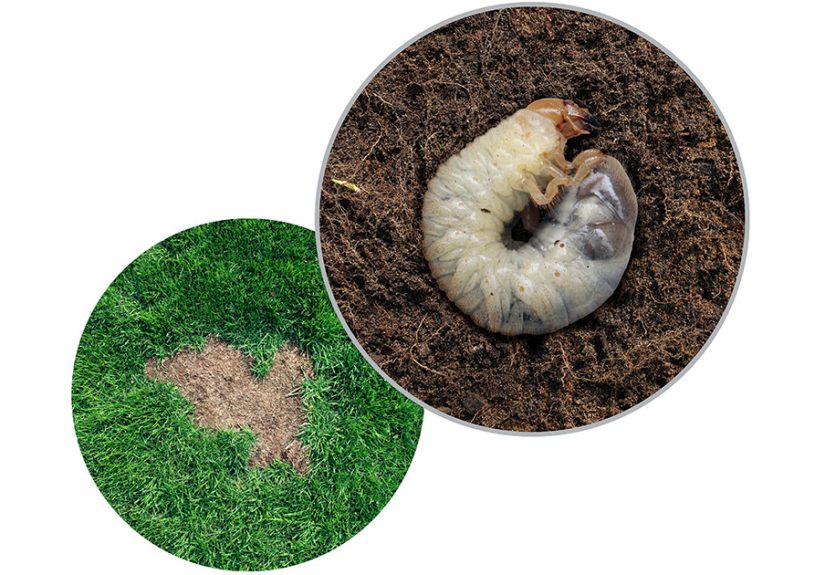
White grubs are soft-bodied, C-shaped larvae with creamy white bodies, brown heads, and six legs near the front. They live in the root zone of the lawn and feed on turfgrass roots. That root feeding is what causes the real trouble. Grass can survive a lot of things, but having its roots chewed off is not one of its favorite hobbies.
Not every lawn with grubs needs treatment. That point matters more than many advertisements would like to admit. Healthy turf can often tolerate a low grub population, especially when the lawn is well-watered, properly mowed, and not already stressed by heat or drought. In other words, grubs are often part of the story, not always the entire villain monologue.
How To Tell If Grubs Are Ruining Your Lawn
Common Signs of Grub Damage
Grub damage often shows up in late summer to early fall, although the exact timing depends on the species and your local climate. The classic symptoms include irregular brown patches, wilted grass that does not perk up after watering, turf that feels spongy underfoot, and sod that lifts up easily because the roots are gone. If raccoons, skunks, crows, or other wildlife are suddenly digging up your lawn, that is another strong clue. They are not landscaping. They are hunting lunch.
The tricky part is that grub injury can look a lot like drought stress. Both can cause gray-green or brown patches. That is why treating first and asking questions later is a bad strategy. If you guess wrong, you may spend money, stress your lawn, and still end up staring at the same sad patch of grass.
Do the Simple Lawn Check Before You Treat
The best way to confirm grubs is to inspect the lawn. Cut a square foot flap of turf at the edge of a damaged area and peel it back. Check the top few inches of soil and the root zone. If the grass comes up easily and you find several white, C-shaped larvae underneath, you likely have a grub problem.
As a general rule, treatment is often considered when you find around 5 to 10 grubs per square foot, though the threshold varies with grub species, turf type, soil moisture, and overall lawn health. A strong, well-maintained lawn may tolerate more. A drought-stressed, thin lawn may show injury at lower numbers. That is why grub control should be based on both counting the insects and reading the condition of the lawn itself.
The Best Ways To Get Rid Of Grubs In Your Lawn
1. Start With Lawn Recovery and Stress Reduction
If the damage is mild, the first move is often not killing more things. It is helping the lawn survive what is already happening. Deep watering during dry periods can reduce visible stress and help remaining roots support the grass. Raise your mowing height slightly so the lawn can photosynthesize more efficiently and shade the soil. Avoid scalping the lawn, which only makes a stressed yard more stressed. Think of it as asking someone to run a marathon in flip-flops.
If you have compacted soil or heavy thatch, aeration and dethatching can improve root growth and help water move into the soil. Overseeding thin areas in the proper season also helps the lawn recover faster once grub feeding slows down. These steps do not eliminate grubs overnight, but they make your lawn much less likely to collapse under pressure.
2. Treat Only the Areas That Need Help
Grub damage is often patchy, not uniform. One of the smartest lawn care moves is spot treatment instead of blasting the entire yard just because one section looks rough. If you know where the hot spots are, focus your efforts there. This saves money, reduces unnecessary product use, and keeps the rest of your lawn from getting dragged into a war it did not ask for.
If your lawn has a history of repeated grub damage in the same areas year after year, those spots deserve extra monitoring. Beetles often return to the same favorable sites, especially if the lawn has the right moisture and soil conditions for egg-laying.
3. Consider Biological Controls First
Homeowners who want a lower-impact option often look at beneficial nematodes. These microscopic organisms seek out susceptible grubs in the soil and can help reduce populations when used under the right conditions. They are generally most useful when grubs are small and active, and they need moisture to perform well. Dry soil and blazing sun are not their love language.
Another biological option people often ask about is milky spore. Here is the catch: milky spore is mainly associated with Japanese beetle grubs and does not serve as a universal grub solution. It is not the magical one-size-fits-all answer many lawn owners hope for. If you do not know which grub species you have, assuming milky spore will solve everything is like bringing a butter knife to a toolbox problem.
4. Know When Professional or Product-Based Treatment Makes Sense
If grub counts are high, the lawn is actively failing, and wildlife is tearing it apart, product-based treatment may be justified. The important point is timing. Preventive approaches and curative approaches are not the same thing, and panic-buying a bag with a grub picture on it is not a strategy.
In general, treatments aimed at young, newly hatched grubs are more effective than late treatments aimed at large, mature grubs. Spring treatments are often disappointing because older grubs are harder to control and may not feed long enough to justify the effort. That is one reason many lawn experts recommend avoiding impulsive spring applications unless local guidance clearly supports them.
If you decide to use a pesticide, the safest route is to follow the product label exactly and consider hiring a licensed lawn care professional if you are unsure. Laws, labels, and product availability vary by state. For a homeowner blog, the honest answer is simple: correct diagnosis and timing matter more than grabbing the strongest-sounding bag off a store shelf.
How To Prevent Grubs From Coming Back
Build a Lawn That Can Handle Some Pressure
The healthiest lawns are not grub-proof, but they are much harder to wreck. Proper mowing height, sensible fertilizing, occasional aeration, and overseeding thin turf all strengthen the root system. A dense lawn is better at tolerating feeding damage and recovering afterward.
Thatch management also matters. Excess thatch can create a friendlier environment for egg-laying and reduce how effectively water and treatments move into the soil. If your thatch layer is thick, dethatching or aerating can improve the lawn’s resilience.
Use Water Wisely
Watering is where lawn care gets a little sneaky. During egg-laying season, some beetles prefer moist turf for laying eggs, so heavily irrigated lawns can be more attractive. But once grubs are already feeding, drought stress can make the visible damage much worse. Translation: overwatering can encourage the problem early, while smart watering helps the lawn tolerate damage later.
The practical takeaway is to avoid mindless daily sprinkling. Water deeply and deliberately based on the season, weather, and condition of the lawn. A lawn that is always soggy is not healthy. A lawn that is chronically drought-stressed is not winning awards either.
Monitor Hot Spots Every Year
If you have had grub damage before, do not wait for the lawn to send out distress signals in all caps. Check known trouble spots during the season. Lift a small section of sod, count what is there, and make decisions based on evidence. That simple habit can prevent both over-treatment and under-reaction.
What Not To Do When You Have Grubs
Do not assume every brown patch is a grub infestation. Do not treat the whole yard without checking the soil. Do not expect one miracle cure to work on every grub species in every state. Do not rely on marketing language instead of reading what the product is actually meant to do. And do not ignore the lawn’s health while focusing only on the insects.
One of the biggest mistakes homeowners make is trying to fix a weak lawn with only grub control. If the turf is already thin, under-watered, compacted, scalped, or poorly fed, even a moderate grub population can push it over the edge. A stronger lawn is often the difference between “annoying patch” and “full suburban tragedy.”
A Practical Step-by-Step Plan for Homeowners
- Inspect the damaged area instead of guessing.
- Count the grubs in about a square foot of soil.
- Evaluate lawn stress, root loss, and animal digging.
- If damage is light, improve watering, mowing, and recovery practices first.
- If damage is concentrated, focus on hot spots instead of treating everything.
- If the infestation is severe, choose a control option appropriate for your region and season, or hire a licensed professional.
- Repair damaged turf with overseeding or renovation once feeding pressure drops.
- Monitor the same areas next season so you can act early and intelligently.
Real-World Experiences: What Homeowners Learn the Hard Way
One homeowner notices a few odd brown circles in August and assumes the lawn just needs more water. So the sprinklers run every evening, the water bill climbs, and the grass still looks miserable. When the sod is finally pulled back, the roots are mostly gone and grubs are sitting underneath like tiny squatters who forgot to pay rent. The lesson is obvious in hindsight: water can help a lawn tolerate damage, but it cannot regrow roots that insects are actively chewing off.
Another homeowner sees raccoons tearing up the yard and immediately blames the raccoons. Fair enough, because raccoons are not exactly known for good manners. But the real problem is underground. Wildlife damage is often secondary damage. The animals are not the cause of the infestation; they are the noisy audience reacting to it. Once the grubs are confirmed, the recovery plan changes from chasing animals away to rebuilding the lawn and addressing the root-zone pest problem.
Some people also learn that “more product” is not the same as “better control.” A common experience is buying a bag labeled for grub control, spreading it fast, then waiting for instant results that never come. In many cases the wrong type of treatment was used, the timing was off, or the lawn never had enough grubs to justify treatment in the first place. That is frustrating, but it also teaches one of the most useful lawn care rules on the planet: diagnosis first, wallet second.
Then there is the homeowner who has damage in the exact same corner of the yard every year. At first it feels random. Later it starts to look suspiciously predictable. Maybe that area stays moister than the rest of the lawn. Maybe it gets more sun stress. Maybe the turf there is thinner and less able to handle feeding. Over time, many people discover that recurring grub damage is often tied to recurring site conditions. Once they strengthen that part of the lawn with better mowing height, overseeding, aeration, and more thoughtful watering, the problem becomes far less dramatic.
Biological controls bring their own lessons. Plenty of homeowners like the idea of beneficial nematodes because they feel more in line with an ecological approach. Some have good results, especially when conditions are moist and the timing is favorable. Others get weak results and assume the concept is nonsense. Usually the truth is less exciting and more practical: living products are sensitive. Storage, temperature, moisture, and timing all matter. They are not fake, but they are not foolproof either.
Perhaps the most useful experience is the one that changes a homeowner’s mindset for good. After one bad grub year, many people stop thinking of lawn care as a series of emergencies and start treating it as prevention plus observation. They monitor trouble spots. They stop overreacting to every brown patch. They strengthen the turf before it gets into trouble. And they learn that the best lawn is not the one that never sees a pest. It is the one that can take a punch, recover, and keep looking respectable while the neighbor’s grass is auditioning for a disaster movie.
Final Thoughts
If you want to get rid of grubs in your lawn, the smartest approach is not blind aggression. It is targeted action. Confirm the problem, count the grubs, judge the health of the turf, and choose the lightest effective response. Many lawns can recover with better cultural care and spot-focused management. Severe infestations may require stronger intervention, but even then, timing and accuracy matter more than panic.
The bottom line is simple: a healthy lawn can tolerate a lot, a neglected lawn can tolerate very little, and a homeowner who actually checks under the sod is already ahead of the game. Your lawn may not become a botanical celebrity overnight, but it can absolutely stop being grub brunch.