Table of Contents >> Show >> Hide
- Getting to Know Eastern Red Cedar
- Where Eastern Red Cedar Grows Best
- Soil Preferences and Site Selection
- How to Plant Eastern Red Cedar
- Everyday Care: Water, Fertilizer, and Pruning
- Pests, Diseases, and Other Issues
- Benefits of Eastern Red Cedar
- Design Ideas and Smart Uses in the Landscape
- Is Eastern Red Cedar Right for Your Yard?
- Real-World Experiences: Practical Tips for Growing Eastern Red Cedar
If you’ve ever driven through the countryside and noticed a tough little evergreen standing proudly in the middle of a pasture, there’s a good chance you’ve met an Eastern red cedar. Rugged, aromatic, and unapologetically low-maintenance, Juniperus virginiana is one of those trees that pretty much says, “Plant me and I’ll handle the rest.”
Despite the name, Eastern red cedar isn’t a true cedar at allit’s a juniper. But we’ll let that slide, because this North American native offers year-round color, wildlife value, privacy screening, and serious windbreak power. In the right spot, it can be the backbone of your landscape. In the wrong spot, it can become a bit much. This guide walks you through how to plant, grow, and care for Eastern red cedar so you get all of the benefits with fewer headaches.
Getting to Know Eastern Red Cedar
Eastern red cedar is a long-lived, evergreen conifer native to much of the eastern and central United States and parts of Canada. Mature trees typically reach 30 to 50 feet tall and 10 to 20 feet wide, though in excellent conditions they can climb past 60 feet and broaden to about 20 feet across. Growth is usually moderate, around 1–2 feet per year once established.
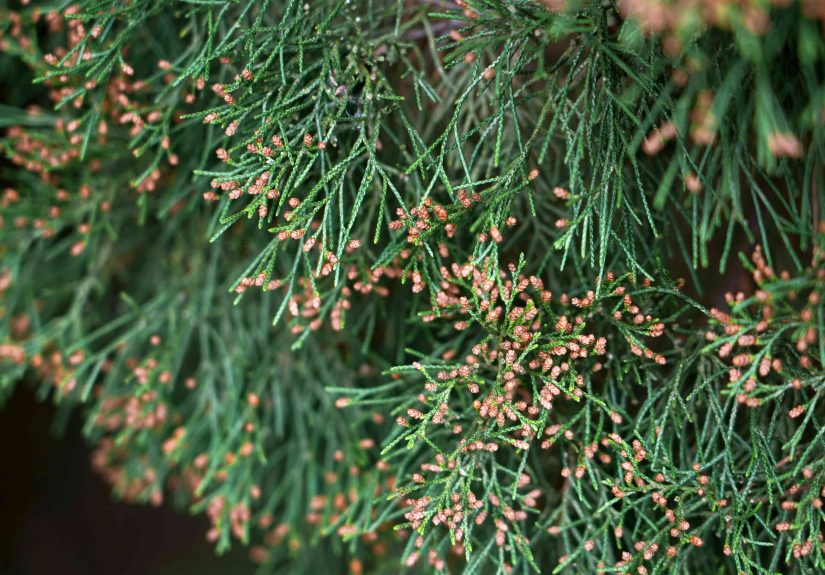
The tree’s natural shape is columnar to pyramidal when young, becoming fuller and rounder with age. Branches often extend close to the ground, creating a dense wall of foliage that’s perfect for windbreaks and privacy screens. The foliage is scale-like and aromatic; it’s typically deep green but may take on bronzy or purplish tones in winter. Female trees produce blue, berry-like cones that birds devour in winter, while male trees form pollen cones that are less showy but equally important.
Hardiness-wise, Eastern red cedar is a champ. It thrives in USDA zones 2 or 3 through 9, depending on the seed source, and tolerates everything from hot summers to frigid winters. It laughs at drought, shrugs off poor soils, and even tolerates a fair bit of road salt and air pollution, making it a solid choice for tough urban and rural sites alike.
Where Eastern Red Cedar Grows Best
Light Requirements
Eastern red cedar loves the sun. Aim for at least six hours of direct sunlight daily. Young trees can survive in part shade, but they’ll be looser and more shrub-like instead of forming a strong central leader and dense crown. In crowded or shady conditionslike the edge of a forestEastern red cedar will often spread horizontally and look more scraggly over time.
Climate and Exposure
This tree naturally occurs from rocky outcrops and prairies to moist bottomlands. It handles drought, wind, and heat better than many other evergreens and is surprisingly tolerant of saline conditions near roads or coastal areas. That’s why it’s a favorite for windbreaks, shelterbelts, and exposed sites where more delicate ornamentals fail.
Soil Preferences and Site Selection
If you’re looking for a tree that refuses to be picky, you’ve found it. Eastern red cedar grows in a wide range of soils: clay, loam, sand, rocky slopes, and even thin, seemingly “worthless” ground. As long as the soil drains reasonably well, the tree will usually adapt.
That said, you’ll get the best growth in:
- Well-drained soil – It tolerates moist soil but not continuous waterlogging.
- Neutral to slightly acidic pH – It can tolerate alkaline soils but often performs better from slightly acidic to neutral conditions.
- Deep soil – Deeper soil allows a stronger root system, which supports faster growth and better drought tolerance.
Before planting, think about space. A full-sized tree can be 10–20 feet wide, so don’t tuck it three feet from your foundation and hope for the best. For a single specimen, give it a generous radius of open ground. For hedges and windbreaks, spacing is crucialmore on that next.
How to Plant Eastern Red Cedar
Spacing Recommendations
How far apart you plant your trees depends on your goal:
- Specimen tree or loose row: Space 15–20 feet apart.
- Windbreak or privacy screen: Space 8–10 feet apart in a single row for mature trees.
- Dense hedge: For small starter trees, you can go as close as 4–6 feet apart to speed up coverage.
Remember that these trees will be around for decades. It’s better to start with slightly wider spacing than to prune aggressively forever.
Planting Step-by-Step
- Soak the root ball (for bare-root trees). If you’ve bought bare-root plants, soak the roots in water for 6–12 hours before planting to rehydrate them.
- Dig a wide, shallow hole. Make the hole about twice as wide as the root ball and just as deep. Eastern red cedar doesn’t want to be planted too deep.
- Position the tree. Place the tree so that the top of the root ball is level with or slightly above the surrounding soil. Straighten the trunk before backfilling.
- Backfill with native soil. Resist the urge to “baby” it with lots of amendments. Using mostly native soil encourages roots to spread outward instead of staying in a cushy pocket.
- Water deeply. Water slowly and thoroughly to eliminate air pockets around the roots.
- Mulch. Apply a 2–3 inch layer of mulch around (but not touching) the trunk to conserve moisture and moderate soil temperature.
Everyday Care: Water, Fertilizer, and Pruning
Watering Eastern Red Cedar
Once established, Eastern red cedar is notably drought-tolerant. The trick is helping it get established in the first place.
- First year: Water deeply once a week during dry spells, aiming for a slow soak that reaches the root zone rather than frequent light sprinkles.
- Years 2–3: Gradually reduce watering to every 10–14 days in dry weather.
- Mature trees: In most climates, they rarely need supplemental water except in extreme drought.
Overwatering is more dangerous than underwatering. If the soil feels soggy several inches down, ease up on the hose.
Mulching and Weed Control
Mulch is your friendespecially in those first few years. A 2–3 inch layer of shredded bark or wood chips, kept a couple of inches away from the trunk, helps retain moisture and keeps weeds from stealing water and nutrients. Replenish the mulch as it breaks down.
Fertilizing Eastern Red Cedar
In decent soil, Eastern red cedar rarely needs fertilizer. However, if your tree looks pale, growth is noticeably slow, or you’re working with very poor soil, you can:
- Apply a balanced, slow-release tree fertilizer once in early spring.
- Follow label ratesmore isn’t better, and overfertilizing can stress the tree.
- Consider a soil test before fertilizing so you’re not guessing.
Often, simple practices like mulching and proper watering do more for tree health than any fertilizer application.
Pruning and Shaping
Eastern red cedar naturally forms a tidy shape, so heavy pruning is rarely needed. That’s good news for anyone whose pruning style is “eyeball it and hope.”
- Best time to prune: Late winter to early spring, before new growth starts.
- What to remove: Dead, damaged, rubbing, or diseased branches. You can also lightly thin branches to improve airflow.
- What not to do: Don’t shear into old, bare woodthis tree doesn’t backbud well, and you may end up with permanent bald spots.
If you’re growing a hedge or windbreak, you can do light shaping once a year, keeping the base a little wider than the top so lower branches get enough sun.
Pests, Diseases, and Other Issues
Cedar-Apple Rust and Other Rust Diseases
The most famous problem associated with Eastern red cedar isn’t so much a threat to the tree as it is to your apple trees. Eastern red cedar is an alternate host for a group of fungi called cedar rusts, including cedar-apple rust. These fungi spend part of their life cycle on junipers and the other part on apples and crabapples.
If you grow apples, crabapples, or certain ornamental pears and you live in an area where cedar-apple rust is common, planting Eastern red cedar close by may not be ideal. You might see bright orange, gelatinous “galls” on cedar branches in wet spring weatherthese are the rust fruiting bodies. Removing affected twigs can reduce spore production, but in heavily infested areas, you may want to choose a different evergreen or rust-resistant apple varieties instead.
Other Diseases and Pests
Overall, Eastern red cedar is a tough tree with relatively few serious problems. Still, you may occasionally encounter:
- Blights and cankers in unusually wet conditions.
- Bagworms, webworms, and scale insects on stressed trees.
- Aphids or spider mites in hot, dry spells.
Healthy trees usually tolerate minor pest activity. When problems appear widespreadlarge browning sections, heavy webbing, or significant diebackprune out affected branches, improve watering practices, and consult a local arborist or extension office for targeted treatment options.
Invasiveness Concerns
In some regions, especially overgrazed pastures and prairies, Eastern red cedar can spread aggressively into open land. Birds carry the seeds in their droppings, and young seedlings pop up wherever conditions allow. On large properties, management practices like controlled burning, periodic cutting, or targeted grazing may be needed to keep the species from taking over. For an average suburban yard, this is rarely a major issue, but it’s worth knowing your local context.
Benefits of Eastern Red Cedar
Now for the fun part: why you might want this tree in the first place.
- Wildlife magnet: The blue “berries” provide winter food for songbirds, while dense branches offer shelter and nesting sites.
- Wind and privacy: Its dense, ground-hugging foliage makes it a superb windbreak or privacy screen.
- Year-round interest: Evergreen foliage, textured bark, and persistent fruit keep it visually appealing even in the dead of winter.
- Durability: Drought tolerance, salt tolerance, and pollution resistance make it ideal for difficult sites.
- Timber and fragrance: The reddish, aromatic wood has long been used for fence posts, chests, and closets thanks to its rot resistance and pleasant scent.
Design Ideas and Smart Uses in the Landscape
Eastern red cedar is more versatile than its “windbreak tree” reputation suggests. Here are a few ways to use it creatively in your landscape:
- Naturalized windbreak: Mix Eastern red cedar with other native evergreens and deciduous trees for a layered, wildlife-friendly shelterbelt.
- Corner anchor: Use a single tree to visually anchor the corner of a property, paired with ornamental grasses or flowering shrubs at its base.
- Wildlife hedgerow: Combine it with berry-producing shrubs like viburnum, serviceberry, or native roses to create a living buffet for birds.
- Coastal or roadside planting: Its salt tolerance makes it ideal along driveways, rural roads, or exposed lots where more sensitive trees struggle.
Is Eastern Red Cedar Right for Your Yard?
Before you fall completely in love, it’s worth weighing the pros and cons for your specific site.
Pros
- Extremely tough and low-maintenance once established.
- Excellent for privacy, windbreaks, and wildlife habitat.
- Tolerates drought, poor soils, salt, and urban conditions.
- Provides four-season interest and a classic, evergreen look.
Cons
- Can become invasive in some regions if not managed.
- Acts as an alternate host for cedar-apple rust, which can harm nearby apple and crabapple trees.
- Eventually grows quite large, so it’s not ideal for very small yards or tight spaces.
If you have a sunny site with room to grow, don’t mind a big tree, and aren’t trying to grow apples next door, Eastern red cedar can be a durable and beautiful workhorse in your landscape.
Real-World Experiences: Practical Tips for Growing Eastern Red Cedar
Books and plant tags are helpful, but living with Eastern red cedar day-to-day teaches you a few extra tricks. Here are some practical, boots-on-the-ground lessons gardeners often discover after planting this tree.
1. Start small if you’re on a budget (or don’t own a crane).
Large balled-and-burlapped cedars look impressive at the nursery, but they’re heavy, pricey, and slower to bounce back from transplant shock. Smaller container or bare-root trees are easier to plant, cheaper, and often catch up in size after a few years because they establish faster. If patience is one of your superpowers, a row of 2–4 foot trees can turn into a respectable windbreak surprisingly quickly.
2. Don’t skimp on the first two summers.
You’ll hear that Eastern red cedar is drought-tolerantand it is, once its roots are well established. The biggest mistake many people make is assuming “drought tolerant” equals “never needs water.” In reality, consistent deep watering in the first couple of summers is what builds that future resilience. Think of it as training your tree, not spoiling it.
3. Mulch beats fertilizer most of the time.
Gardeners love buying products, but Eastern red cedar is more impressed by a simple mulch ring than by fancy fertilizer blends. A wide ring of wood chips protects the trunk from mower damage, reduces competition from turfgrass, and builds better soil over time as it breaks down. If your tree is planted in anything close to decent soil, that may be all the “feeding” it ever needs.
4. Give it room to be itself.
Eastern red cedar is happiest when it can keep its natural shape. Planting it four feet from your fence and then trying to prune it flat for the next 40 years is a recipe for frustration. Instead, treat it like a living piece of architecture: place it where its eventual mature height and spread will frame a view, block an ugly one, or form the backbone of a natural screen. Future you will be grateful.
5. Pay attention to what the birds are telling you.
You’ll know your tree is thriving when birds start treating it like a hotel. Cedar waxwings, robins, bluebirds, and other visitors will snack on the blue “berries” and duck into the dense branches for shelter. If you notice fewer birds and more brown, thinning foliage, it’s time to investigate: check for bagworm bags, look for signs of drought stress, and inspect the trunk and roots for damage. The birds are often the first to vote with their wings when something’s off.
6. Think ahead if you’re in ranch or prairie country.
In large open landscapes, especially where fire has been suppressed, Eastern red cedar can spread into pastures and grasslands. Land managers sometimes joke that “one cedar leads to a thousand.” If you own acreage, consider where the prevailing winds will carry seeds and whether your local conservation agencies consider this species a management challenge. Strategic planting and occasional seedling removal can keep your cedars working for you instead of taking over.
7. Respect the apple trees.
If you’re a home orchard fan, be intentional about where you plant Eastern red cedar. Place it as far as practical from apples and crabapples, and choose rust-resistant fruit tree varieties if cedar-apple rust is common in your region. It doesn’t mean you can never grow both; it just means they shouldn’t be next-door neighbors.
8. Embrace its character.
Eastern red cedar is not a manicured, formal conifer like a clipped yew hedge or a perfectly cone-shaped spruce. It’s a bit wild, a bit rustic, and very much itself. Lean into that personalitypair it with native grasses, wildflowers, and informal plantings, and it will look like it’s always belonged on your property. Once you see how resilient and low-fuss it is, you may find yourself planning “just one more row” along that back field.
Get the site right, give it a good start, and Eastern red cedar will pay you back for decades with shade, shelter, privacy, and the satisfaction of watching a tough native tree thrive with minimal pampering.