Table of Contents >> Show >> Hide
- Why a Hairpin Leg Desk Works So Well
- Step 0: Plan the Desk (So It Fits You, Not Just Your Room)
- Materials and Tools
- How to Make a Hairpin Leg Desk: A Few Easy Steps
- Step 1: Choose the Desktop (Fastest Wins vs. Custom Pride)
- Step 2: Cut the Top to Size (Measure Twice, Sip Coffee Once)
- Step 3: Prep the Edges (So Your Forearms Don’t Hate You)
- Step 4: Sand Like You Mean It (This Is the Glow-Up Phase)
- Step 5: Finish the Top (Durability Meets “Ooooh, Nice”)
- Step 6: Lay Out the Hairpin Legs (Symmetry Is Your Friend)
- Step 7: Pre-Drill Pilot Holes (The Step That Prevents Regret)
- Step 8: Attach the Legs (Secure, Not Stripped)
- Step 9: Level, Stabilize, and Stop the Wobble
- Step 10: Add the “Nice Desk” Extras (Optional, but You’ll Love Them)
- Quick Example Build (A Solid, Realistic “First Desk” Plan)
- Troubleshooting (Because DIY Always Has Plot Twists)
- Conclusion
- Experience Notes: What DIYers Commonly Learn the Hard Way (So You Don’t Have To)
If you want a desk that looks like it belongs in a mid-century modern catalog (but costs more like “I still have money for coffee”), a hairpin leg desk is the move. You get clean lines, a surprisingly sturdy setup, and a build that’s beginner-friendly because the “base” is basically four stylish metal noodles you screw into a top.
This guide synthesizes practical, real-world tips commonly recommended by reputable DIY and home-improvement sources in the U.S. (think: This Old House-style step-by-step habits, Family Handyman-level shortcuts, Bob Vila inspiration, and finishing guidance you’d see from major retailers and finish manufacturers). Let’s build the desk.
Why a Hairpin Leg Desk Works So Well
- Fast build: No complicated joinery required. The legs bolt on, and you’re basically done.
- Flexible style: Works with rustic wood slabs, sleek plywood, butcher block, or even painted tops.
- Space-friendly: Hairpin legs visually “disappear,” which makes small rooms feel bigger.
- Easy to customize: Size, height, finish, and cable management can all be tailored to your space.
Step 0: Plan the Desk (So It Fits You, Not Just Your Room)
Pick a desk size that matches how you actually work
Most DIY hairpin desks are simple rectangles, and that’s greatrectangles are friendly. A few reliable starting points:
- Small space / laptop-only: 42–48″ wide × 20–24″ deep
- Everyday home office: 48–60″ wide × 24–30″ deep
- Dual monitors / lots of gear: 60–72″ wide × 30″ deep
Tip: If you tend to spread out, prioritize depth. A deeper desk keeps your keyboard, notebook, and monitor from fighting like siblings in the back seat.
Choose a comfortable height
Standard desk height is commonly around 28–30 inches. Hairpin legs are sold in lots of heights, but for a typical seated desk you’ll often see 28″ legs. Your final height depends on the leg height plus your top thickness.
Easy height math:
Desk height ≈ Leg height + Desktop thickness
Example: A 28″ hairpin leg + a 1.5″ butcher block top = 29.5″ tall (right in the comfy zone for many people).
Materials and Tools
Materials
- Desktop material (choose one):
- Pre-made butcher block (common thickness: 1″ to 1.5″)
- Plywood (3/4″ recommended) with edge banding or solid-wood edging
- Glued-up boards (pine, poplar, oak, etc.)
- Reclaimed wood (only if it’s flat-ish and dry)
- Hairpin legs (4 legs, typically 28″ for desk height; choose 2-rod or 3-rod for extra stiffness)
- Screws for mounting legs (often included; if not, buy pan-head or washer-head wood screws)
- Finish (pick your adventure): stain + polyurethane, wipe-on poly, hardwax oil, or paint + clear topcoat
- Sandpaper (80, 120, 180, 220 grits; optional 320 for between coats)
- Wood filler (optional, for knots/voids)
- Tack cloth or microfiber cloth (for dust removal)
- Felt pads or leg feet (to protect floors)
Tools
- Measuring tape + pencil
- Straightedge or square
- Saw (circular saw with guide, track saw, or miter saw for boards)
- Sander (random orbit is ideal) or sanding block
- Drill/driver + bits (pilot-hole bit, and optional countersink)
- Clamps (helpful if you’re gluing boards or edging)
- Brush/foam brush/cloth applicator (depending on finish)
How to Make a Hairpin Leg Desk: A Few Easy Steps
- Choose (or build) a flat desktop
- Cut to size and prep the edges
- Sand properly (this is where “nice” happens)
- Finish the top for durability
- Lay out the legs and pre-drill
- Attach legs, level, and wobble-proof
Step 1: Choose the Desktop (Fastest Wins vs. Custom Pride)
Option A: Buy a ready-made top (fastest, cleanest)
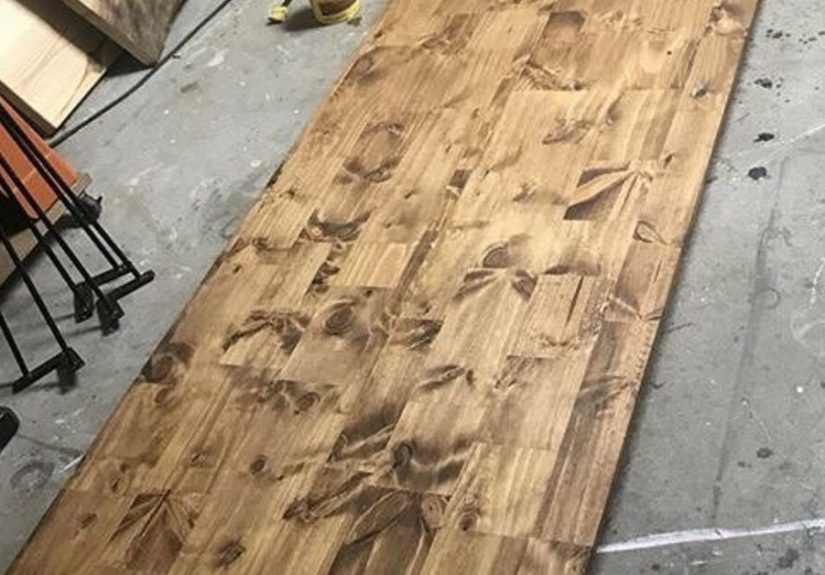
Butcher block or pre-laminated panels are perfect if you want results quickly. They’re typically flat, thick, and heavy enough to feel solid. You’ll still sand lightly and finish (or refresh the existing finish), but you skip the “make wood become a tabletop” part.
Option B: Use plywood (best stability for beginners)
Go with 3/4″ plywood so it doesn’t feel flimsy. The only downside is the exposed edgesolve that with iron-on edge banding or glue on thin hardwood strips for a thicker, furniture-style edge.
Option C: Glue up boards (most custom, most work)
If you want a “real wood” top with personality, you can glue boards together. The key is keeping the panel flat: pick straight boards, clamp evenly, and don’t rush the cure time.
Beginner-friendly pro move: If you’re new to glue-ups, consider a pre-made top first. Save the “I am now a wood whisperer” project for later.
Step 2: Cut the Top to Size (Measure Twice, Sip Coffee Once)
Mark your dimensions carefully. If using a circular saw, use a straightedge guide so your cut is clean and square. A slightly wonky cut can make your finished desk look like it’s leaning into a strong opinion.
Common sizes that feel “right”
- 48″ × 24″ (compact and versatile)
- 60″ × 30″ (classic home office)
- 72″ × 30″ (big workspace, big dreams)
Step 3: Prep the Edges (So Your Forearms Don’t Hate You)
Sharp edges look crisp, but they feel like a mild betrayal after a few hours typing. Lightly round the top edges with:
- a sanding block (quick and simple), or
- a router with a small round-over bit (clean, consistent).
Also sand the underside edges a bitbecause you’ll grab the desk during flips and moves, and splinters are a terrible accessory.
Step 4: Sand Like You Mean It (This Is the Glow-Up Phase)
Sanding isn’t glamorous, but it’s the difference between “nice desk” and “why does it feel like a wicker basket?” A common sanding progression:
- 80 grit: Only if the surface is rough or uneven
- 120 grit: Smooths milling marks
- 180 grit: Great pre-finish step for many woods
- 220 grit: Ideal for many clear finishes and between-coat sanding
Don’t skip grits unless you enjoy mysterious scratch marks showing up like they pay rent.
Clean the dust
Vacuum, then wipe with a microfiber cloth or tack cloth. Dust left on the surface becomes “texture,” and not the fun kind.
Step 5: Finish the Top (Durability Meets “Ooooh, Nice”)
A desk takes abuse: mugs, sweaty wrists, sliding keyboards, and the occasional dramatic pen drop. A protective topcoat matters.
Finish options (pick what matches your vibe)
- Wipe-on polyurethane: Very beginner-friendly, thin coats, easy control.
- Brush-on polyurethane (water-based or oil-based): Tough protection; water-based stays clearer, oil-based adds warmth/amber tone.
- Hardwax oil: Natural look, easy spot repairs, but follow cure instructions carefully.
- Paint + clear topcoat: Great for a modern look; still add protection for durability.
A simple, reliable finish schedule
- If staining, apply stain evenly and let it dry per the product directions.
- Apply thin coats of your topcoat (thin beats drippy every time).
- Lightly sand between coats with 220–320 grit once dry.
- Wipe off dust, then apply the next coat.
- Do at least 2–3 coats for desks (more if your product recommends it).
Important reality check: “Dry to the touch” is not “fully cured.” Many finishes need days to reach full hardness. If you put a heavy monitor on a soft finish too early, it may leave marksyour desk will remember. Forever.
Step 6: Lay Out the Hairpin Legs (Symmetry Is Your Friend)
Once the finish is dry enough to handle, flip the top upside down onto a soft blanket or cardboard to prevent scratches. Place the legs near the corners, but not flush to the edges.
A good rule of thumb for leg placement
- Set each leg in from the edges by about 1.5″ to 3″.
- Keep the front legs slightly farther back if you want more knee room.
- If your desk is long (60″+), consider 3-rod hairpin legs for extra stiffness.
Use a measuring tape to make sure the leg plates are equally spaced from the edges. If you eyeball it, you might end up with a desk that looks like it’s trying to walk away.
Step 7: Pre-Drill Pilot Holes (The Step That Prevents Regret)
Pre-drilling helps prevent wood splitting and makes screws go in straight. Use a bit that’s appropriate for your screw sizeoften in the neighborhood of 1/8″ for many common wood screws, but adjust based on your specific hardware and wood hardness.
How deep to drill
Drill slightly shorter than your screw length. You want strong bite without punching through the top (unless you’re trying to invent a “spike desk” trend, which… please don’t).
Optional but helpful: Use a countersink bit so screw heads sit neatly and the leg plate pulls tight.
Step 8: Attach the Legs (Secure, Not Stripped)
With pilot holes drilled, attach the legs using a drill/driver on a low clutch setting. Tighten until snugavoid overdriving, which can strip the hole and reduce holding power.
Choosing the right screw length
- For a 3/4″ thick top, many builders use screws in the 5/8″ to 3/4″ range (depending on the mounting plate thickness).
- For thicker tops (like 1.5″ butcher block), you can use longer screwsjust measure carefully so you don’t poke through.
Best practice: Measure your top thickness, subtract a little safety margin, and pick a screw that stays comfortably inside the wood.
Step 9: Level, Stabilize, and Stop the Wobble
If your desk is going on a slightly uneven floor (aka most floors), plan for leveling.
Easy wobble fixes
- Add adjustable feet (many hairpin legs include them, or you can add screw-in levelers).
- Use felt pads to protect floors and reduce micro-wobbles.
- Upgrade to 3-rod legs if you haven’t bought legs yet and stability is a priority.
- Add a stretcher/apron under the desk if you’re building a very wide top or using thinner material. A simple wood brace can massively increase rigidity.
Step 10: Add the “Nice Desk” Extras (Optional, but You’ll Love Them)
Cable management
- Install an under-desk cable tray.
- Add adhesive clips along the underside for tidy routing.
- If you’re comfortable, drill a grommet hole near the back corner (measure twiceholes are permanent).
Surface protection
- Let the finish cure before heavy use.
- Use a desk mat if you’re doing lots of writing (pen pressure can dent softer woods).
- Use coasters unless you enjoy “mug rings: the sequel.”
Quick Example Build (A Solid, Realistic “First Desk” Plan)
Goal: A clean, modern home office desk for a monitor + laptop.
- Top: 60″ × 30″ butcher block (about 1.5″ thick)
- Legs: 28″ hairpin legs (4)
- Final height: About 29.5″
- Finish: Wipe-on polyurethane (3 coats), lightly sanded between coats
- Extras: Felt pads + under-desk cable tray
This setup looks polished, feels sturdy, and doesn’t require advanced tools. It’s the “wins on a Tuesday night” kind of project.
Troubleshooting (Because DIY Always Has Plot Twists)
The desk wobbles
- Check floor level; add adjustable feet or shims.
- Ensure screws are snug and evenly tightened.
- Consider 3-rod legs or a simple under-desk brace for wide tops.
The finish feels rough
- Dust nibs happen. Lightly sand with 320 grit, wipe clean, and add a thin final coat.
- Apply thinner coats and maintain a clean, low-dust finishing area.
Screws strip out
- Use a lower clutch setting and don’t overdrive.
- If a hole strips, you can often fix it by inserting a wood sliver/toothpick with glue, letting it dry, then re-drilling a pilot hole.
Conclusion
A hairpin leg desk is one of the most satisfying DIY builds because the effort-to-wow ratio is ridiculously high. Start with a flat top, sand it well, protect it with a durable finish, then attach your legs with careful layout and pilot holes. Add leveling feet and simple cable management, and you’ll have a desk that looks store-boughtbut feels better because you made it.
Experience Notes: What DIYers Commonly Learn the Hard Way (So You Don’t Have To)
Here’s the part nobody puts on the product listing: the “easy steps” are easy, but the details are where most first-time builders either feel like geniuses or start bargaining with the laws of physics. These are practical experiences and patterns DIYers commonly report when building hairpin leg desksespecially their first one.
1) Most wobble isn’t “bad legs”it’s floors and leverage.
People blame hairpin legs when the desk does a tiny dance, but the culprit is usually an uneven floor or a long top acting like a diving board. If your desk is 60–72″ wide and you’re using thinner material, the ends can flex a bit when you lean. Leveling feet fix the floor problem; a slightly thicker top (or a simple under-desk stretcher) reduces the leverage problem. Many builders also notice that 3-rod hairpin legs feel noticeably stiffer than 2-rod versions on wider desks.
2) Screw selection is a “measure three times” moment.
The most common anxiety: “Will this screw poke through the top?” The second most common: “Why did I strip the hole?” The sweet spot is choosing screws that are long enough to bite but short enough to stay safely inside the desktop. DIYers often succeed by measuring the desktop thickness, subtracting a safety margin, then picking a screw length accordingly. They also use a drill clutch setting that prevents overdriving. The legs don’t need to be torqued like a car wheelsnug and secure is the goal.
3) Finishing is where patience pays rent.
A surprising number of first-time desk builders discover that their finish looked great… until they set a monitor on it too soon. Many protective finishes feel dry quickly but continue curing and hardening over time. DIYers often learn to treat “dry” and “ready for full use” as different milestones. A smart habit is finishing both the top and underside (at least a sealing coat underneath) to help balance moisture changes and reduce warping riskespecially with solid wood tops.
4) Dust is a stealthy villain.
The minute you apply a topcoat, dust becomes strangely motivated. Builders often get a smoother result by vacuuming the area, wiping the surface thoroughly, and applying thin coats rather than trying to “build it up” in one pass. If the finish dries with a slightly gritty feel, DIYers commonly do a very light sand with fine grit and add one last thin coat. The desk still looks professional, and you don’t have to pretend the texture was “intentional.”
5) The flip is the most dramatic part of the whole project.
Attaching legs is easy. Flipping the desk upright without scratching the top or bending a leg is the moment everyone suddenly becomes very careful and very quiet. Many people lay down a blanket, recruit a helper, and lift from the underside rather than dragging. If you’re solo, flipping in stages (tilting onto an edge, then rotating) helps prevent the “oops” that creates brand-new dents in your brand-new desk.
6) Tiny upgrades make the desk feel “finished.”
DIYers often report that felt pads, a cable tray, and a single grommet hole (optional) are what push the desk from “nice table” to “real workstation.” Those extras don’t take long, but they improve daily use a lot. And daily use is the whole pointthis isn’t just a desk, it’s where emails go to multiply.