Table of Contents >> Show >> Hide
- Why Build Your Own Hockey Puck Display?
- Step 1: Plan Your Handmade Hockey Puck Display
- Step 2: Gather Materials and Tools
- Step 3: Build a Simple Wall-Mounted Puck Rail
- Step 4: Turn It into a Shadow Box-Style Display
- Styling Ideas for Your Hockey Puck Display
- Safety, Durability, and Long-Term Care
- Common DIY Hockey Puck Display Mistakes (and How to Avoid Them)
- Real-Life Lessons from Building Puck Displays
- Conclusion: Your Own Mini Hockey Hall of Fame
Hockey fans tend to collect pucks the way kids collect candy. One game leads to a souvenir, one tournament leads to a championship puck, and before you know it, you’ve got a shoebox full of memories buried in the closet. That’s tragic. Those pucks deserve a spot on the wall, not next to your old phone chargers.
Store-bought hockey puck display cases and acrylic shadow boxes look great, but they can add up quickly, especially if you’re displaying more than a few pucks. Many ready-made units run from the mid-$20 range to over $100 depending on capacity and materials. A simple handmade display can cost far less, match your décor, and feel a lot more personal.
In true Hometalk spirit, this guide walks you through how to make a handmade hockey puck display using basic tools and big creativity. We’ll cover a simple open rail design for everyday collections and a shadow box-inspired version for your MVP pucks. No fancy workshop requiredif you can use a drill and a tape measure, you’re in the game.
Why Build Your Own Hockey Puck Display?
1. You’ll Save Serious Money
Mass-produced acrylic puck cases and custom wood frames look sharp, but they’re priced like luxury box seats. High-quality acrylic displays for 10–12 pucks aren’t cheap, and custom rustic wood frames on craft marketplaces cost even more thanks to the labor involved. When you build your own, you mainly pay for lumber, a few hardware pieces, and finishoften under the cost of a single commercial case.
2. You Control the Look
DIY lets you match your display to your style: farmhouse, industrial, modern, or “kid’s room chaos chic.” Sports décor ideas from TV how-to segments, DIY medal racks, and sports award displays all lean on this same principleuse the colors, finishes, and shapes that already exist in your home. For hockey fans, that might mean staining your wood to match a stick, painting it in team colors, or adding a logo stencil for extra flair.
3. It Fits Your Space and Your Collection
Ready-made racks and shadow boxes are built to standard sizes. Your wall? Not standard. Your collection? Definitely not standard. By building your own display, you decide how many pucks it holds, how wide it runs along the wall, and whether it sits above a desk, in a hallway, or in a kids’ bedroom. Creative DIYers even repurpose things like angle iron, old boards, and IKEA pieces to display hundreds of pucks efficiently and cheaply.
Step 1: Plan Your Handmade Hockey Puck Display
Choose Your Display Style
There are two main styles that work beautifully for most homes:
- Open rail display: A wall-mounted wooden rail or shelf with small ledges, dowels, or grooves to hold each puck. Think of a simple version of a professional puck stand.
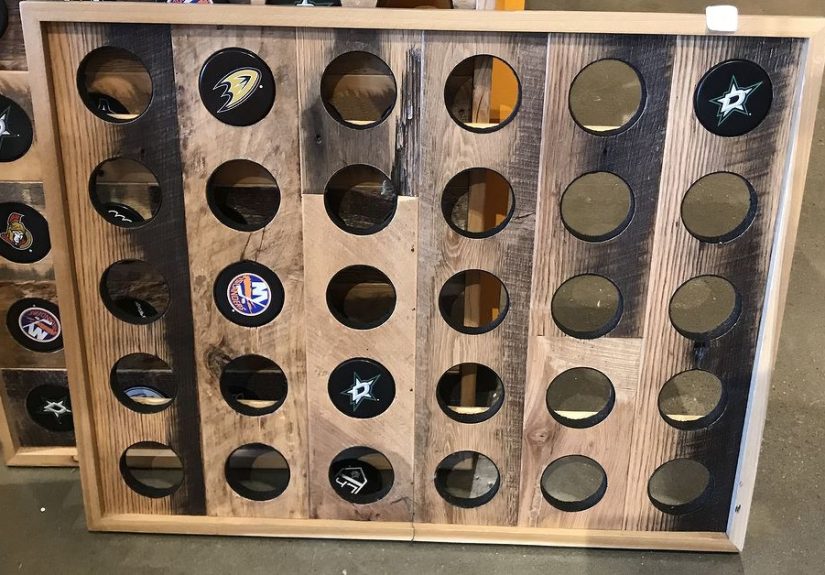
- Shadow box display: A deeper frame or box with a backing board where pucks sit in rows, often behind a front frame or glass to protect autographs. Shadow box guides for sports memorabilia use this approach for everything from jerseys to medals.
For this Hometalk-style tutorial, we’ll focus first on a simple open rail display you can complete in a weekend, then outline how to adapt the same idea into a shadow box.
Measure Your Pucks and Your Wall
A standard hockey puck is about 3 inches in diameter and about 1 inch thick. Leave at least 3.25–3.5 inches of horizontal space per puck so they’re not jammed together, and about 3 inches of vertical space between rows if you plan a multi-tier display.
Grab a tape measure and answer these quick questions:
- How many pucks do you want to display now?
- How many do you expect to add in the next season or two?
- How much wall width do you have available?
Multiply your planned number of pucks by 3.25 inches to find the minimum width you’ll need. Add a few inches of margin on each side so the rail doesn’t look crowded.
Step 2: Gather Materials and Tools
Most DIY puck display builds use basic materials similar to other small woodworking projects and sports award shelves. Here’s a solid starter list for an open rail design:
Materials
- 1 board, straight and knot-free, such as:
- 1×4 or 1×6 pine, poplar, or oak (length based on your measurements)
- 1/4″ wooden dowel rod (for individual puck “pegs”) or a shallow routed groove along the front edge
- Wall anchors and screws rated for the weight of the loaded display
- Wood glue (if assembling multiple pieces)
- Sandpaper (120-220 grit)
- Stain or paint, plus clear topcoat (polyurethane or water-based poly)
- Painter’s tape and drop cloths
Tools
- Tape measure and pencil
- Miter saw or hand saw
- Drill and drill bits (1/4″ bit for dowels, plus pilot bits)
- Level and stud finder
- Optional: router with round-over bit or small groove bit
- Clamps (nice but not mandatory for a simple rail)
Step 3: Build a Simple Wall-Mounted Puck Rail
Step 3.1: Cut and Prep the Board
- Cut to length. Using your earlier measurements, cut the board to your desired length. Add an inch or two if you’re guessingyou’ll almost always want more space later.
- Ease the edges. Lightly sand all edges to soften sharp corners. If you have a router, a small round-over bit along the front and sides gives a more polished look like you see in professional display stands.
- Mark your mounting points. On the back of the board, mark where your screws or keyhole hangers will go, ideally over wall studs.
Step 3.2: Lay Out Puck Positions
- Draw a center line. On the top surface or face that will hold the pucks, lightly draw a straight line where your dowels or groove will go.
- Mark each puck spot. Start 1.5–2 inches in from one end and mark a small tick every 3.25 inches. These marks are where your pucks will sit, ensuring even spacing.
Step 3.3: Create the Supports (Dowels or Groove)
You’ve got two good options here:
- Dowels: Drill 1/4″ holes about 1/2″ deep at each mark, keeping the drill as straight as possible. You can mimic the dowel-based stands often used for pucks and baseballs. Cut short pieces of dowel, glue them in, and wipe away excess glue.
- Shallow groove: If you have a router, run a shallow (about 1/8″) groove along the line to create a small lip the pucks can lean against. This is a good choice if you want a cleaner, more minimal look.
Step 3.4: Sand, Stain, and Seal
- Final sand: Go over the board with 180–220 grit sandpaper. Make sure any glue squeeze-out around dowels is removed so your finish goes on evenly.
- Add stain or paint: Many sports fans match their rack to their team’s colors or to the rest of their furniture. DIY medal and sports display guides often recommend neutral stains (walnut, ebony) for a classic look or bold paint for kids’ rooms.
- Seal the wood: Add one or two coats of clear finish for protection. Let each coat dry fully and lightly sand between coats for a smooth surface.
Step 3.5: Mount the Display Safely
- Find studs where possible. Pucks are deceptively heavy. Use a stud finder and aim to hit at least one stud, preferably two.
- Use appropriate anchors. For any mounting points not over studs, use heavy-duty wall anchors rated for more than the total expected weight of your loaded display.
- Check for level twice. Before tightening all screws, double-check the rail with a level. A crooked puck display will drive you bananas every time you walk past it.
Once mounted, drop your pucks into place. The dowels or groove should keep them from sliding forward, while the flat board backs them up securely.
Step 4: Turn It into a Shadow Box-Style Display
If you want something closer to a professional casewith a frame and optional front coveryou can adapt the same basic rail concept into a shallow shadow box for your extra-special pucks.
Build or Buy the Frame
Shadow box frames are widely used to display jerseys, medals, and keepsakes because their depth makes room for 3D items and their enclosed design protects them. You can:
- Buy a ready-made shadow box sized for your number of pucks and add a custom interior; or
- Build your own by adding mitered frame pieces around a backer board, similar to many DIY instructions for custom sports shadow boxes.
Create the Interior Puck Layout
- Add interior rails or shelves. Inside the box, mount thin rails (like the open design above) or narrow shelves to hold each row of pucks.
- Use a themed backer board. Cover the back with fabric or paper in team colors, or mount photos, tickets, or nameplates behind the pucks for a museum-style display.
- Test fit everything. Before attaching the front, place your pucks on the rails and close the frame to confirm nothing rubs or bumps.
Add a Protective Front (Optional)
For signed or rare pucks, a protective front is a smart upgrade. Commercial displays often use UV-protective glass or acrylic to prevent fading from sunlight. For a DIY version, use:
- A piece of acrylic cut to size
- Small hinges or turn buttons to keep it removable
- Foam tape or weatherstripping around the inside edge to keep dust out
Styling Ideas for Your Hockey Puck Display
Once the display is up, you can have fun styling it the way sports décor experts style full walls of memorabilia and award shelves.
- Create a mini “hall of fame” wall. Hang your puck display above or beside framed photos, ticket stubs, or small shadow boxes with other items like lanyards and patches.
- Use team colors. Paint or stain the frame, add vinyl decals, or stencil team logos on the sides or backing.
- Coordinate with other sports gear. If you’ve built custom brackets for hockey sticks or shelves for helmets, keep the finish and mounting height consistent so the wall feels intentional.
- Add accent lighting. Small puck lights or LED strips under a shelf can highlight your collection in a dim basement or man cave.
Safety, Durability, and Long-Term Care
Sports shadow box and memorabilia guides all echo the same advice: protect your items and your walls. Here are a few quick best practices:
- Avoid direct sunlight. Autographs and printed logos can fade over time if they’re sitting in strong sun every day.
- Use sturdy anchors. A fully loaded rail or box of pucks is heavy. Oversize the strength of your anchors instead of guessing.
- Dust regularly. Wipe down the display and pucks with a soft cloth to keep everything looking sharp.
- Leave room to grow. If your collection grows quickly, plan wall space for a second rail or a larger shadow box later.
Common DIY Hockey Puck Display Mistakes (and How to Avoid Them)
Crooked Pucks
If your pucks lean or wobble, your dowels might be too short or spaced unevenly. Use a scrap board to test hole depth and spacing before drilling your real display, and use a simple jig or spacer block to keep distances consistent.
Display Pulling Out of the Wall
If you’ve ever seen a heavy shelf tear out of drywall, you know why anchors matter. Use quality toggle or self-drilling anchors where studs aren’t available, and don’t rely solely on tiny keyhole hangers for a fully loaded display.
Pucks Falling When the Door Slams
In busy homes, slamming doors or kids running by can vibrate shelves. Adding a shallow front lip, slightly angling the board back, or using clear removable putty for special pucks keeps them secure without gluing anything permanently.
Real-Life Lessons from Building Puck Displays
If you scroll through DIY forums, décor blogs, and community groups, you’ll see a theme: nobody builds just one sports display. Once you realize how easy it is, you start thinking, “Maybe I need a rack for medals, another for baseballs, and what about those mini helmets?” Here are a few experience-based tips that come up again and again in real projectsexactly the kind of stories you see on Hometalk and similar platforms.
The “Starter Rail” That Turned into a Whole Wall
Plenty of collectors start with a “simple” rail for 8–10 pucks. A few months later, they’ve added a second row, then a third, then a matching stick rack. One clever builder modeled their puck rail after a minimalist medal hanger, using a long board with a recurring pattern of dowels. Once they realized how easy it was to reproduce, they cut two more boards, stained everything to match, and suddenly had a full-width display wall that looked professionally designed.
The takeaway: if you think your collection will grow, design your first rail so you can clone it later. Use the same board width, spacing, and finish so you can stack or line up new rails without re-measuring every detail.
Designing for Kids vs. Adults
Parents who build hockey puck displays for kids often learn fast that “cute and low” is a short-term decision. A rail installed at kid eye-level is also at “flying ball” and “wrestling match” level. Some DIYers found that mounting the main display a bit higher and creating a lower, more rugged “rotate-and-play” shelf kept signed pucks safe while still letting kids interact with their everyday collection.
For a kid’s room, think durable: thicker boards, rounded corners, and paint that can handle the occasional scuff. For an adult fan space or office, you might lean toward stained hardwood, slimmer lines, and more delicate shadow box fronts.
Learning from Budget Hacks
Budget-friendly solutions are also a huge inspiration. One popular hack uses pre-slotted angle iron as a ready-made puck rail: you mount it like a shelf, then slide pucks in plastic holders into the slots. The metal gives an industrial, locker-room feel and can hold dozens of pucks for very little money. Other makers have turned inexpensive IKEA tables into glass-topped puck display cases by adding a shallow box below the tabletop surface.
Even if you stick with a wood design, these ideas highlight two useful principles:
- Let hardware stores and flat-pack furniture do some of the engineering for you.
- Think verticallywalls and table surfaces are both fair game for displays.
Showcasing the Story, Not Just the Puck
The most memorable displays tell a story. DIY shadow box guides often recommend pairing 3D items with paper ephemeraphotos, tickets, programsto make the display more meaningful. In the hockey world, that might mean placing the puck next to a small label noting the date, opponent, and final score, or tucking a folded ticket stub behind it.
One enthusiast created a “season at a glance” shadow box with a row of pucks, each paired with a tiny printed card noting the game and a favorite moment (“OT winner,” “first hat trick,” “snowstorm game”). The pucks were cool on their own, but the labels transformed the display into a story wall that guests lingered over.
Living with Your Display (and Tweaking Over Time)
Finally, almost everyone who builds a handmade puck display ends up tweaking it after a few weeks. Maybe the top row feels too high, or the spacing between racks looks off, or you decide you want a second color accent. That’s the beauty of DIY: you can repaint, add another rail, swap out the backing, or even move the entire piece to a different room as your collection and home change.
If you treat your first build as a prototype rather than a final, you’ll have more fun experimenting. Take notes on what workedanchor types, heights, spacingand what you’d change. The next rack, shadow box, or full-wall hockey display you build will be even better.
Conclusion: Your Own Mini Hockey Hall of Fame
Making a handmade hockey puck display is less about perfection and more about honoring the memories behind each puck. With a simple rail or shadow box, a few basic tools, and a free afternoon, you can turn a dusty shoebox or cluttered shelf into a clean, custom display that looks right at home in a bedroom, hallway, office, or fan cave.
Instead of paying premium prices for off-the-shelf cases, you’re creating something that reflects your style, tells your hockey story, and can grow as your collection does. Whether you copy the simple rail approach, go full shadow box, or mash up ideas from Hometalk, Pinterest, and sports décor blogs, you’ll end up with something far better than another plastic bin in the closet.