Table of Contents >> Show >> Hide
- What “Perfect Cupcakes” Actually Means
- Before You Start: Cupcake Essentials
- How to Make Cupcakes Step-by-Step
- Step 1: Preheat the Oven and Prep the Pan
- Step 2: Bring Cold Ingredients to Room Temperature
- Step 3: Measure Dry Ingredients Correctly
- Step 4: Cream Butter and Sugar Properly
- Step 5: Add Eggs and Flavoring
- Step 6: Alternate Dry and Wet Ingredients
- Step 7: Fill the Liners the Right Amount
- Step 8: Bake Until Just Done
- Step 9: Cool the Cupcakes Correctly
- Step 10: Frost and Decorate
- Pro Tips for Moist, Fluffy Cupcakes Every Time
- Common Cupcake Problems and Easy Fixes
- Storage and Make-Ahead Tips
- Quick Safety Note (Because Raw Batter Is Sneaky)
- Extra Real-World Cupcake Experiences (What Home Bakers Commonly Learn the Hard Way)
- Conclusion
If cupcakes had a personality, they would be the friend who shows up overdressed and still somehow makes everyone feel comfortable. They look fancy, they taste like celebration, and they are surprisingly easy to master once you know the small details that matter.
This guide walks you through exactly how to make cupcakes step-by-step, with practical tips for moist crumb, even rise, and frosting that doesn’t slide off like it’s late for another party. Whether you are baking classic vanilla cupcakes, chocolate cupcakes, or experimenting with your own flavor combos, the method stays mostly the same. Nail the method, and your cupcakes stop being “pretty good” and start being “who made these?!”
What “Perfect Cupcakes” Actually Means
Perfect cupcakes are not about bakery-level piping skills (though those are fun). They are about consistency. A great cupcake should have a tender, fluffy crumb, a domed top (not a volcano), balanced sweetness, and a texture that stays moist for more than three bites. It should also release cleanly from the liner and hold frosting without collapsing.
The best results come from a few fundamentals: accurate measuring, room temperature ingredients, gentle mixing, correct pan filling, and proper baking time. Miss one of these, and the cupcakes may still be edible, but they may also turn out dense, dry, or oddly lopsided. Cupcakes are tiny cakes, which means small mistakes get magnified fast.
Before You Start: Cupcake Essentials
Ingredients That Matter Most
For a reliable batch of homemade cupcakes, you usually need flour, sugar, butter (or oil, depending on the recipe), eggs, milk, baking powder (sometimes baking soda too), salt, and vanilla. Some recipes add sour cream for extra moisture and softness, and many bakers prefer cake flour for a lighter crumb. If you want ultra-soft vanilla cupcakes, cake flour plus sour cream is a strong combo.
Use fresh leavening (baking powder/baking soda), and don’t underestimate good vanilla. Cupcakes are simple, so the flavor of each ingredient shows up. This is one of those “you can taste the difference” moments.
Tools You’ll Actually Use
- 12-cup muffin/cupcake pan
- Paper cupcake liners (grease-proof liners are even better)
- Mixing bowls
- Whisk and spatula
- Hand mixer or stand mixer
- Ice cream scoop or large spoon (for even batter portions)
- Wire cooling rack
- Oven thermometer (small tool, big hero)
- Piping bag and tip (optional, but fun)
If you only have one pan and your recipe makes more than 12 cupcakes, no problem. Just bake in batches and keep the remaining batter chilled while the first tray bakes.
How to Make Cupcakes Step-by-Step
Step 1: Preheat the Oven and Prep the Pan
Turn the oven on before you start mixing. This sounds obvious, but it is one of the most common “why did these turn out weird?” mistakes. Cupcake batter should go into a fully preheated oven so the rise starts properly.
Most cupcake recipes bake at 350°F, especially standard vanilla or chocolate cupcakes. Some recipes (including certain King Arthur formulas) run hotter, around 375°F, so always follow the recipe you are using. Line your pan with paper liners before mixing so you are not scrambling while the batter sits on the counter.
Step 2: Bring Cold Ingredients to Room Temperature
This step is boring. It is also magical.
Room temperature butter creams better with sugar, and room temperature eggs mix in more smoothly. Cold eggs can make batter look curdled, and cold dairy can cause the mixture to separate. Set butter, eggs, milk, and sour cream out in advance. This one habit makes cupcake batter smoother and the final crumb more even.
Step 3: Measure Dry Ingredients Correctly
In baking, “close enough” is how you end up with cupcake-shaped regrets.
Measure flour carefully. If your recipe says sifted flour, pay attention to whether it means sift before measuring or sift after measuring. Those are not the same thing. If the recipe recommends spooning and leveling flour, do it. Scooping flour directly with the measuring cup can pack in too much, which leads to dry, heavy cupcakes.
Whisk (or sift) your dry ingredients together so the leavening and salt are evenly distributed. That helps every cupcake rise the same way instead of one looking perfect and another looking like it gave up halfway.
Step 4: Cream Butter and Sugar Properly
If you are making butter-based cupcakes, this is your structure-building stage.
Beat butter and sugar until the mixture looks lighter in color and fluffy. You are not just combining ingredientsyou are creating tiny air pockets that help the cupcakes rise and stay soft. Scrape the bowl as needed so everything mixes evenly. Overdoing it can cause separation, but under-creaming usually leads to a dense texture.
Step 5: Add Eggs and Flavoring
Add eggs one at a time, mixing well after each addition. This helps the batter emulsify and keeps the texture smooth. Then add vanilla extract (and any other flavoring, like almond extract or citrus zest).
If you want a super-light vanilla cupcake, some recipes use egg whites instead of whole eggs. Egg whites can create a fluffier, lighter crumb, especially when paired with cake flour and sour cream.
Step 6: Alternate Dry and Wet Ingredients
Now add the dry ingredients and milk (or other liquid) in alternating additions, usually beginning and ending with the dry ingredients. Mix on low speed and stop as soon as the batter looks combined.
This is the part where many bakers accidentally “mix the life” out of the batter. Overmixing develops too much gluten, which makes cupcakes tough. Gentle mixing keeps the crumb tender and gives you that soft, bakery-style bite.
Step 7: Fill the Liners the Right Amount
This is the difference between beautiful cupcakes and a pan full of lava spills.
For standard cupcakes, fill liners about 2/3 to 3/4 full. A common guide is around 1/4 cup of batter per cupcake (or roughly 4 tablespoons depending on the recipe and scoop). If you underfill, the cupcakes may turn out flat. If you overfill, they overflow and bake into muffin-top mushrooms.
An ice cream scoop is incredibly useful here because it portions evenly and makes all cupcakes bake at the same rate.
Step 8: Bake Until Just Done
Bake in the center of the oven when possible, especially if you are doing one batch. If you bake multiple trays at once, rotate pans during baking to avoid uneven browning.
Typical standard cupcakes bake in about 15 to 20 minutes at 350°F, but timing varies by recipe. Start checking early. A cupcake is usually done when:
- The top springs back lightly when pressed
- A toothpick comes out clean or with a few dry crumbs
- The tops look set, not shiny or wet
Do not overbake. Dry cupcakes often happen because “just two more minutes” turned into five. Cupcakes continue to set slightly as they cool.
Step 9: Cool the Cupcakes Correctly
Let cupcakes cool in the pan for about 5 minutes, then move them to a wire rack to cool completely. Leaving them in the hot pan too long can cause overcooking from residual heat.
And yes, you really need to let them cool fully before frosting. Warm cupcakes will melt buttercream into a sweet puddle. Tasty puddle, but still a puddle.
Step 10: Frost and Decorate
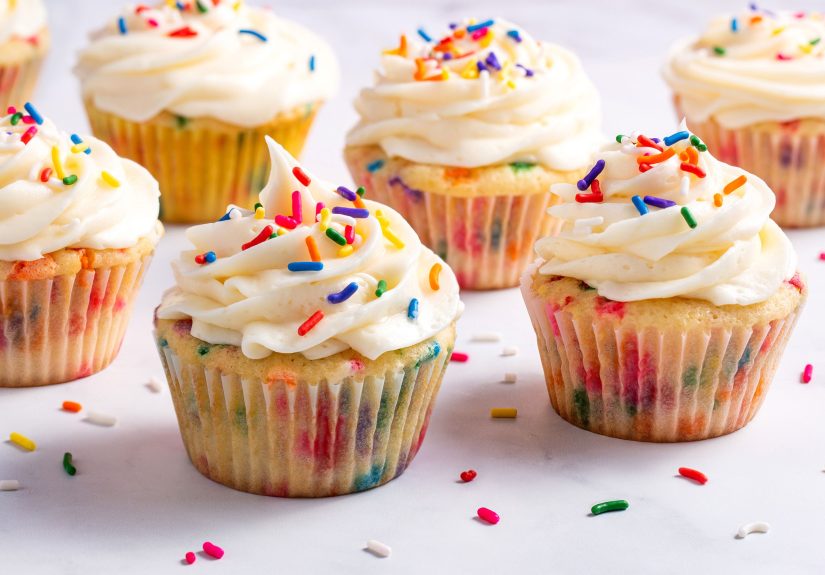
Once cooled, frost however you like: offset spatula, spoon swirl, or piping bag. If you want bakery-style tops, use a piping bag with a star tip and pipe from the outer edge inward, building height as you go. Sprinkles are optional in theory, mandatory in spirit.
If you are making cupcakes ahead of time, you can also bake first, cool completely, and frost the next day for better workflow and less kitchen chaos.
Pro Tips for Moist, Fluffy Cupcakes Every Time
1) Use an Oven Thermometer
Home ovens are notorious for being a little dramatic. If your oven runs hot, cupcakes dry out fast. If it runs cool, they may rise poorly and bake unevenly. A cheap oven thermometer gives you the truth and saves you from blaming your recipe when the problem is actually your oven.
2) Don’t Overmix the Batter
Mixing until “just combined” is not a suggestionit is a cupcake survival rule. Once flour goes in, mix gently and stop early. A few tiny streaks are better than a rubbery cupcake.
3) Use Quality Liners
Cheap liners can stick or turn greasy. Good grease-proof liners hold their shape better and peel cleanly, which means your cupcakes look better and your guests do not take half the cake with the wrapper.
4) Choose Better Flavor Builders
Want cupcakes that taste like they came from a bakery instead of a school fundraiser? Upgrade the basics: better vanilla, good butter, and fresh cocoa (for chocolate cupcakes). If you are making vanilla cupcakes, a little sour cream often improves texture and moisture without making the cupcakes heavy.
5) Don’t Be Afraid to Freeze
Unfrosted cupcakes freeze beautifully. Wrap well and store airtight. This is a great trick for parties, birthdays, and “I need cupcakes tomorrow but also need sleep tonight” situations. Thaw, then frost.
Common Cupcake Problems and Easy Fixes
Problem: Cupcakes are dry
Usually caused by: too much flour, overbaking, or an oven that runs hot.
Fix: measure flour more carefully, check doneness earlier, and use an oven thermometer.
Problem: Cupcakes sink in the middle
Usually caused by: overfilling liners, opening the oven too early, or underbaking.
Fix: fill liners about 2/3 full and wait until the tops are set before checking.
Problem: Cupcakes are dense or tough
Usually caused by: overmixing after adding flour, or cold ingredients that didn’t blend well.
Fix: bring ingredients to room temp and mix just until combined.
Problem: Frosting melts or slides off
Usually caused by: cupcakes not fully cooled.
Fix: cool 5 minutes in pan, then on a rack until completely cool before decorating.
Problem: Cupcakes stick to liners
Usually caused by: low-quality liners, underbaking, or very moist recipes.
Fix: use grease-proof liners and ensure the cupcakes are fully baked and cooled.
Storage and Make-Ahead Tips
Unfrosted cupcakes can usually stay at room temperature for a couple of days if covered tightly. Frosted cupcakes can sit at room temperature briefly (depending on the frosting), but many buttercream or dairy-based frostings hold best when refrigerated after a day or so. For the best texture, bring refrigerated cupcakes back to room temperature before serving.
For longer storage, freeze unfrosted cupcakes in an airtight container. You can also freeze frosted cupcakes if needed, but the decoration may not look as polished after thawing. If presentation matters, freeze the cakes and frost fresh later.
Quick Safety Note (Because Raw Batter Is Sneaky)
It is tempting to taste cupcake batter. We all know it. The spoon knows it. The spatula definitely knows it. But raw flour and raw eggs can carry bacteria, so skip the batter tasting unless you are using ingredients specifically made for no-bake eating (like heat-treated flour and pasteurized egg products made for edible dough).
Also wash bowls, spatulas, and countertops after handling raw batter. Cupcake day should end with frosting on your face, not food poisoning.
Extra Real-World Cupcake Experiences (What Home Bakers Commonly Learn the Hard Way)
One of the most common experiences people have when learning how to make cupcakes is discovering that cupcake baking feels easy right up until the moment the timer goes off. The batter looks smooth, the liners are filled, and confidence is sky-highthen the cupcakes come out uneven, one tray is darker on the right side, and two cupcakes have giant mushroom tops like they were trying to escape the pan. This is normal. It does not mean you are bad at baking. It usually means your oven has hot spots, your liners were filled a little unevenly, or the batter was mixed a bit too long. The good news is that all of those are fixable on the very next batch.
Another very real cupcake experience is the “I thought I measured correctly” moment. A lot of bakers pack too much flour into the measuring cup without realizing it. The cupcakes still look fine, but the crumb is tighter and drier than expected. Then they try again using the spoon-and-level method, and suddenly the texture is softer and fluffier. That tiny measuring change feels almost unfair the first time you see how much it matters. Cupcakes are basically the friendliest way to learn that baking is science.
Then there is the frosting drama. Almost every baker has frosted cupcakes too soon at least once. You pipe a beautiful swirl, step back to admire your work, and watch it slowly slump sideways like a sleepy snowman. Warm cupcakes and buttercream do not negotiate. The fix is simplecool completelybut the experience sticks with you forever. After that, you become the person who pokes a cupcake top, squints, and says, “Nope, still warm,” with serious professional energy.
People also underestimate how much easier cupcake baking becomes once they use better tools. A simple scoop for batter portioning can make a batch look instantly more consistent. A wire rack improves cooling. An oven thermometer solves mysteries that used to feel personal. Suddenly, the cupcakes rise evenly, bake in the same amount of time, and come out looking like they belong in a bakery window. It is not that your recipe changedit is that your process got tighter.
And finally, there is the confidence shift that happens after a few batches. The first time you make cupcakes, you are just trying to avoid disaster. By the third or fourth batch, you are adjusting flavors, trying fillings, testing piping tips, and casually saying things like, “I added sour cream for a softer crumb.” That is the fun part. Cupcakes are one of the best baking projects for building skill because the feedback is immediate. You can compare one batch to the next, improve quickly, and still end up with dessert every single time. Even the “ugly” batch usually disappears fast, which is honestly one of cupcakes’ greatest strengths.
Conclusion
If you want perfect cupcakes, focus less on fancy decoration and more on the baking fundamentals: room temperature ingredients, careful measuring, gentle mixing, correct liner fill, and baking just until done. Once your cupcake base is consistently soft and flavorful, frosting and decorations become the fun bonusnot the rescue mission.
Start with a simple vanilla cupcake recipe, follow the steps in this guide, and keep notes on what works in your kitchen. Cupcakes are small, but they teach big baking lessons. And once you nail them, birthdays, bake sales, holidays, and random Tuesdays get a lot more delicious.