Table of Contents >> Show >> Hide
- Why Make Fake Blood Without Food Coloring?
- Before You Start: Pick the Right Type of Fake Blood
- Method 1: Chocolate Berry Fake Blood
- Method 2: Fruit Punch or Juice Fake Blood
- Method 3: Red Velvet Cake Mix Fake Blood
- How to Make Fake Blood Look More Realistic
- Where to Use DIY Fake Blood
- How to Clean Fake Blood Without Panic
- Common Mistakes to Avoid
- Frequently Asked Questions
- Real-World Experiences With DIY Fake Blood
- Conclusion
- SEO Tags
If you need fake blood for Halloween, a costume party, a haunted-house prop, or a batch of cupcakes that look like they belong in a vampire rom-com, you do not need a bottle of red food coloring to get there. In fact, some of the best DIY fake blood recipes rely on pantry staples you probably already have lurking in the kitchen like corn syrup, fruit punch, cocoa powder, strawberry syrup, or even red velvet cake mix. Your baking shelf is basically one dramatic thunderclap away from a special-effects department.
The trick to making realistic fake blood without food coloring is understanding three simple things: color, texture, and purpose. A brighter red mixture works well for fresh-drip effects. A darker, browner red looks more convincing for dried or dramatic blood. And thicker blends are better for smears, scabs, or gross-out props, while runnier blends work best for drips and splatter.
In this guide, you’ll learn three easy DIY methods for making fake blood without food coloring, plus tips for customizing the shade, adjusting the consistency, using it safely, and cleaning up afterward without sacrificing your favorite shirt to the Halloween gods.
Why Make Fake Blood Without Food Coloring?
There are a few very good reasons to skip the little red bottle. First, food coloring stains like it has a personal vendetta. Second, some people simply do not have any on hand when inspiration strikes at 9:47 p.m. the night before a costume party. Third, natural or food-based substitutes often create richer, murkier tones that can look more realistic than a bright candy-apple red.
That matters because realistic fake blood usually isn’t pure red. It tends to look deeper, slightly brownish, and a little less “birthday frosting,” a little more “movie prop with commitment issues.” Ingredients like cocoa powder, chocolate syrup, dark berry syrup, ketchup, and fruit punch can help create that more believable look.
Before You Start: Pick the Right Type of Fake Blood
Before you mix anything, decide how you want to use your fake blood. This saves time, ingredients, and at least one preventable kitchen tragedy.
Use a runny recipe if you want:
- drips from the mouth or fangs
- splatter on props
- bloody dessert decoration
- fresh-looking streaks on a costume
Use a thick recipe if you want:
- smeared blood on clothing
- fake wounds or scab-like texture
- gross party props
- blood that stays where you put it
Important safety note:
If a recipe includes anything non-edible or irritating, keep it off skin, lips, eyes, and pets. Even food-based recipes can irritate sensitive skin, so patch-testing a tiny amount first is the smart move. Also, if you care about a fabric, a couch, or your grandmother’s tablecloth, test the mixture on a hidden area first. Fake blood is fun. Regret is not.
Method 1: Chocolate Berry Fake Blood
This is the easiest fake blood recipe without food coloring, and it’s one of the best-looking options for edible use. It works especially well for Halloween treats, vampire costumes, and “someone definitely bit into a haunted donut” aesthetics.
What you need
- 1/2 cup strawberry syrup
- 1 tablespoon chocolate syrup
- More chocolate syrup, if needed for a darker tone
How to make it
- Pour the strawberry syrup into a bowl.
- Add 1 tablespoon of chocolate syrup.
- Stir well and check the color.
- Add more chocolate syrup in small amounts if you want it darker.
Why this method works
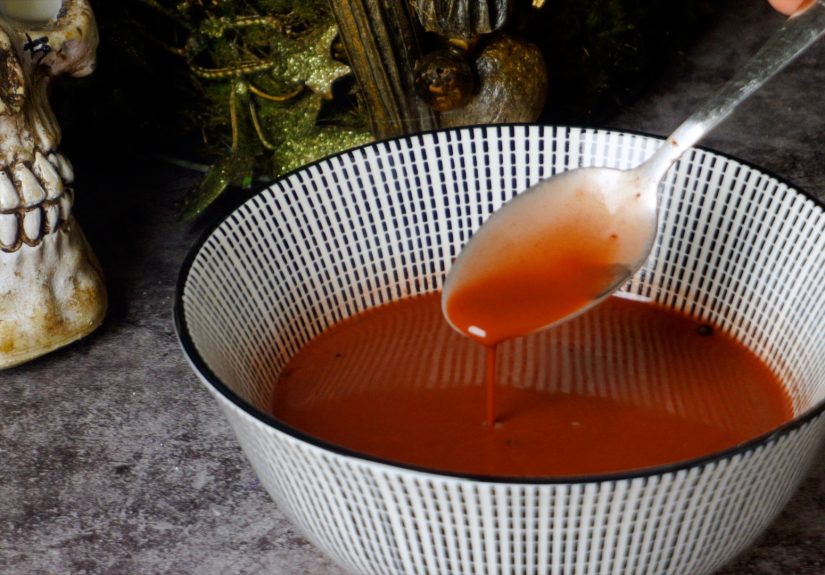
Strawberry syrup gives you the bright red base, while chocolate syrup tones it down and adds that deeper, more realistic blood color. The result is glossy, smooth, and slightly dramatic in the best possible way.
Best uses
- drizzling over cupcakes, cookies, or pancakes
- adding to vampire fangs for costume photos
- making fresh-looking mouth drips
- creating edible party effects
Pros
- fast and beginner-friendly
- food-safe
- great glossy finish
- easy to darken gradually
Cons
- can be sticky
- may run if applied too heavily
- can still stain clothes and upholstery
If you want a slightly thicker version, stir in a small pinch of cornstarch and let it sit for a few minutes. Go slowly. You want fake blood, not haunted pudding.
Method 2: Fruit Punch or Juice Fake Blood
If you want fake blood without food coloring that still has that bright, fresh-red effect, fruit punch is a solid choice. Beet juice or pomegranate juice also work well if you want a more natural-looking red base. Add corn syrup for shine and body, then darken it with cocoa powder or chocolate syrup so it looks less like a sports drink emergency.
What you need
- 1 part fruit punch, beet juice, or pomegranate juice
- 2 parts corn syrup
- 1 pinch cocoa powder or 1 small splash chocolate syrup
How to make it
- Combine the juice or fruit punch with the corn syrup in a bowl.
- Stir until smooth.
- Add a pinch of cocoa powder or a tiny splash of chocolate syrup.
- Mix again and adjust the shade until it looks more realistic.
Why this method works
The juice gives you the red pigment. The corn syrup adds thickness, shine, and that classic fake-blood drip. The cocoa or chocolate knocks back the brightness so the mixture reads as blood instead of “mystery slushie from a gas station.”
Best uses
- fresh drips on costumes
- splatter on props
- zombie makeup looks
- edible garnish for creepy snacks
Pros
- easy to customize
- works with several red liquids
- good balance of brightness and realism
- can be edible if you use all edible ingredients
Cons
- can thin out if you use too much liquid
- needs careful color adjustment
- sticky on fabric and skin
Want it thicker? Add a little cornstarch. Want it stickier and denser? Honey can stand in for some of the syrup, though it will make the mixture clingier. Great for gore. Less great for your sleeve cuffs.
Method 3: Red Velvet Cake Mix Fake Blood
This is the “wow, that’s disgusting” option, which is exactly what makes it useful. Red velvet cake mix creates a chunkier, heavier fake blood that works well for fake guts, gross props, scab-like texture, and dramatic costume splatter. It is not elegant. It is not subtle. It is here to win Halloween.
What you need
- 1 box red velvet cake mix
- Up to 4 cups water
- A splash of corn syrup, optional
How to make it
- Pour the cake mix into a large bowl.
- Add water 1 cup at a time.
- Stir just enough to combine, but do not overmix.
- Leave some uneven texture for a chunkier, more realistic effect.
- Add a splash of corn syrup if you want more stickiness and shine.
Why this method works
Red velvet cake mix already has the deep reddish tone built in, and the powdery mix creates body and texture that smoother syrups can’t. It looks especially effective when you want clotted, messy, or splattered fake blood that stays visible from a distance.
Best uses
- haunted house decorations
- zombie costume splatter
- gross fake wounds or props
- party decor where “subtle” is not invited
Pros
- great thick texture
- dramatic visual effect
- easy to scale up for parties
- excellent for splatter and chunky gore
Cons
- messier than other methods
- less ideal for neat drips
- can dry oddly if overwatered
How to Make Fake Blood Look More Realistic
If your mixture looks too bright, add a little cocoa powder or chocolate syrup. If it looks too dark, thin it with fruit punch, juice, or a bit more syrup. If it looks too watery, thicken it with cornstarch or more corn syrup. If it looks too smooth, add texture with cake mix or tiny clumps.
Here’s the simplest way to think about it:
- Brighter red = fresher-looking blood
- Darker red-brown = more realistic or older-looking blood
- Glossy and runny = drips and mouth effects
- Thick and sticky = smears, wounds, and props
You can also layer effects. For example, use a thicker recipe underneath and a runnier one on top so the blood looks clotted in some places and freshly dripping in others. Congratulations, you are now thinking like a low-budget special-effects artist.
Where to Use DIY Fake Blood
On costumes
Use thicker mixtures for smears and concentrated splatter. Apply lightly at first. It is easier to add more than to explain why your shirt now looks like a crime-scene theater production.
On desserts
Stick to fully edible ingredients only. The chocolate berry method is especially good for cakes, donuts, cupcakes, cookies, and Halloween snack boards.
On props and decorations
The red velvet cake mix version works well for plastic tools, fake body parts, signs, and creepy tabletop displays. Let it dry partially if you want a more crusty finish.
On skin
If you’re using a food-based recipe, test a tiny amount first. Avoid sensitive areas and remove it gently afterward. If you want maximum realism for skin effects, less is often more. A few strategic drips usually look better than full-face tomato-syrup chaos.
How to Clean Fake Blood Without Panic
Even homemade fake blood can leave a mark, especially if it contains syrup, chocolate, berry ingredients, or strong pigments. The golden rule is simple: use cold water first. Hot water can make blood-like stains harder to remove, and heat from a dryer can set them even more.
Quick cleanup tips
- Blot fresh stains right away. Do not aggressively scrub.
- Rinse with cold water first.
- For washable fabrics, use soap or a stain remover after rinsing.
- Do not machine-dry until the stain is gone.
- Test peroxide or stronger stain methods on hidden fabric first.
If the fake blood is on a hard surface, wipe it up quickly with cool water and mild cleaner. On carpets or upholstery, blot gently and avoid turning a small spooky smudge into a large emotional event.
Common Mistakes to Avoid
Using too much darkener
Cocoa powder and chocolate syrup are helpful, but a heavy hand can turn fake blood into barbecue sauce with theatrical ambitions.
Making it too thin
Too much liquid can make the mixture look watery and pink. Add thickness gradually until it drips slowly instead of sprinting off your prop.
Skipping a test batch
Always test on a spoon, plate, scrap fabric, or hidden area first. This is the difference between “nailed it” and “why is my beige couch now a horror franchise?”
Using the wrong recipe for the job
A runny edible blood is perfect for cupcakes but not ideal for fake scabs. A chunky cake-mix blood looks great on props but less great when you want a neat vampire lip drip. Match the recipe to the effect.
Frequently Asked Questions
Can you make fake blood without corn syrup?
Yes. Honey can work as a thicker substitute in some recipes, and syrup-based methods using strawberry syrup or cake mix can reduce your dependence on corn syrup. Just know that texture and stickiness may change.
What ingredient makes fake blood darker?
Cocoa powder and chocolate syrup are two of the easiest ways to darken fake blood without using food coloring.
What’s the best fake blood for desserts?
The chocolate berry method is usually the easiest and prettiest for edible Halloween treats because it is glossy, sweet, and easy to drizzle.
What’s the best fake blood for props?
The red velvet cake mix method is excellent for props, fake wounds, and chunky gore effects because it has more body and texture.
Real-World Experiences With DIY Fake Blood
One thing that becomes obvious the moment you actually start making fake blood at home is that recipes behave very differently in real life than they do in your imagination. On paper, it sounds simple: mix red thing with dark thing, become a spooky genius. In practice, your first batch may look like melted candy, your second may resemble chocolate cough syrup, and your third is the one that finally earns a dramatic nod of approval.
People who try the chocolate berry version often notice how surprisingly convincing it looks under indoor lighting. It catches light well, drips nicely, and photographs better than expected. The downside is that it can be a little too pretty. In some situations, it looks more like a glossy dessert sauce than fake blood, especially if you stop before adding enough darkener. That’s why small adjustments matter so much. A little extra chocolate syrup can turn “strawberry sundae accident” into “respectably spooky.”
The fruit punch or juice method tends to be the one that surprises people most. At first, it can look way too bright, which is mildly alarming if your goal is realism and not “possessed sports drink mascot.” But once you add corn syrup for body and a little cocoa for depth, it changes quickly. Many DIYers like this version because it feels flexible. You can make it runnier for drips, thicker for smears, and brighter or darker depending on the setting. It’s the multitool of fake blood recipes.
The red velvet cake mix method usually produces the biggest reaction. Not because it is elegant, but because it is gloriously gross. It has texture. It has heft. It has the sort of chunky, slightly unsettling look that makes haunted-house props instantly more believable. The first time people mix it, they often think they have ruined it because it looks lumpy. Then they realize the lumps are exactly what make it effective. Sometimes the “mistake” is the special effect.
Another common experience is underestimating cleanup. Almost everyone assumes that because the ingredients are kitchen-friendly, the mess will be easy. Sometimes that is true. Sometimes your fake blood leaves behind a pinkish memory on a shirt sleeve and a valuable life lesson on your countertop. The smartest DIYers test on scrap fabric, use old clothes, and keep paper towels and cold water nearby before the spooky fun begins.
There is also the trial-and-error factor. Very few people make their perfect batch on the first attempt, and that is normal. Fake blood is less about precision baking and more about visual tuning. You look at it, stir it, adjust it, mutter something artistic, and keep going. That process is part of the fun. By the time you get the color and texture right, you have not just a Halloween prop, but a tiny practical education in how texture, shine, and shade change what the eye believes.
Conclusion
If you’ve been wondering how to make fake blood without food coloring, the good news is that it’s easier than it sounds and much more forgiving than it looks. A chocolate berry blend gives you an easy edible option, fruit punch or juice with syrup creates flexible bright-red blood, and red velvet cake mix delivers thick, dramatic gore for props and costumes. The best recipe depends on whether you want drips, smears, splatter, or chunky horror-movie chaos.
Start simple, tweak slowly, and remember that realism usually comes from balance, not perfection. Add depth with cocoa or chocolate, adjust thickness with syrup or cornstarch, and always think about where the fake blood is going before you mix it. That way, your Halloween masterpiece can look wildly convincing without requiring food coloring, a special-effects budget, or a long apology to your laundry basket.