Table of Contents >> Show >> Hide
- Why Proper Plate Packing Matters
- Supplies You Need to Pack Plates for Moving
- How to Pack Plates for Moving: Step by Step
- Best Materials for Packing Plates
- How to Pack Different Types of Plates
- Common Mistakes to Avoid
- Smart Packing Tips for Easier Unpacking
- Experience-Based Lessons from Real Moves
- Conclusion
- SEO Tags
Moving is already a circus. Then the kitchen shows up with its fragile little cast of dinner plates, salad plates, pasta bowls, and that one oversized platter you forgot you owned until now. If you are wondering how to pack plates for moving without turning your next unpacking session into an archaeological dig, the good news is that it is absolutely doable. The trick is not luck. It is using the right materials, wrapping with intention, and packing plates the way movers do instead of the way tired humans do at 11:47 p.m.
Plates usually break for three reasons: they are packed in weak boxes, they are allowed to shift inside the carton, or they are stacked the wrong way. Many people assume flat dishes should be packed flat. That sounds logical, but it often leads to cracks because pressure hits the broad surface. A better method is to wrap each plate and pack it vertically, like records in a crate. It feels slightly rebellious the first time you do it, but it works.
This guide walks you through the full process step by step, including the best materials to use, common mistakes to avoid, and practical examples for everyday dishes, fine china, and oversized serving pieces. By the end, your plates should arrive at your new place in one piece, which is the kind of happy ending every moving story deserves.
Why Proper Plate Packing Matters
Plates are deceptively tricky. They look sturdy sitting in a cabinet, but once they are in a moving truck, they face vibration, pressure, shifting weight, and sudden stops. Even a short local move can knock loosely packed dishware against itself. On a long-distance move, the risk only grows.
That is why proper plate packing is not just about bubble wrap. It is about creating layers of protection. You need a strong box, a cushioned base, individually wrapped pieces, support around the sides, and enough filler on top so nothing rattles. Think of it as building a tiny safety bunker for your dinnerware. Dramatic? Yes. Effective? Also yes.
Supplies You Need to Pack Plates for Moving
Before you start, gather everything in one spot. Running around the house looking for tape with one half-wrapped plate in your hand is how chaos wins.
- Small sturdy moving boxes or dish-pack boxes
- Packing paper or unprinted newsprint
- Foam pouches or foam sheets for extra protection
- Bubble wrap for delicate or expensive plates
- Strong packing tape
- Cardboard dividers or cell kits if you have them
- Markers for labeling
- Dish towels, paper towels, or soft linens for extra cushioning
If you are packing everyday plates, packing paper and a good box may be enough. If you are packing porcelain, heirloom china, or anything that would make you cry into a takeout container if it broke, add foam pouches and bubble wrap.
How to Pack Plates for Moving: Step by Step
1. Choose the Right Box
Start with a small, sturdy box or a dish-pack box made for fragile kitchen items. Avoid oversized cartons. Plates are heavy, especially stoneware and ceramic sets, and a large box becomes dangerously heavy fast. A smaller box is easier to carry, easier to control, and less likely to burst at the bottom when someone lifts it with false confidence.
If you have specialty dish boxes with thicker walls, even better. They are designed to handle the weight of breakables and offer more protection during loading and unloading.
2. Reinforce the Bottom Like You Mean It
Before a single plate goes in, tape the bottom seams thoroughly. Then tape them again. Use strong packing tape, not flimsy office tape, not mystery drawer tape, and definitely not wishful thinking. A reinforced base matters because dish boxes carry concentrated weight. If the bottom fails, your packing technique becomes an interesting but tragic footnote.
3. Create a Thick Cushion on the Bottom
Crumple several sheets of packing paper and line the bottom of the box. Do not flatten the paper. Crumpled paper absorbs shock better and creates a springy buffer. You want a generous layer that protects plates from impact if the box is set down too hard. A few folded sheets are not enough. Build a real cushion.
4. Wrap Each Plate Individually
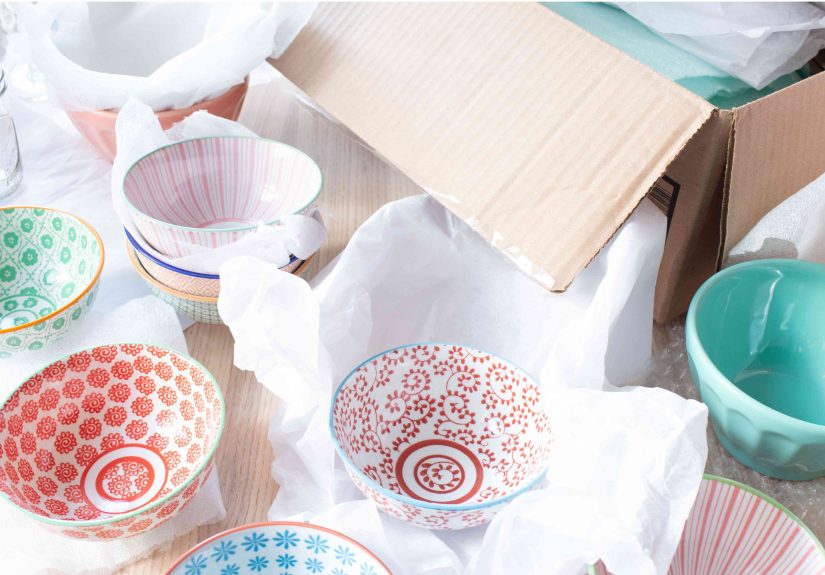
Lay out a stack of packing paper on a table or counter. Place one plate in the center, fold one corner over it, then the next, continuing until the plate is fully covered. For added security, place a second sheet around it. For delicate or sentimental pieces, slide the wrapped plate into a foam pouch or add a final layer of bubble wrap.
Wrap every plate on its own. Yes, every single one. This is not the time for shortcuts. The point is to keep hard surfaces from knocking together in transit.
5. Pack Plates Vertically, Not Flat
Here is the golden rule: stand plates on their edges in the box instead of stacking them flat. Plates packed vertically generally handle pressure better because the force is distributed differently. It is the same reason records are stored upright instead of lying in a giant pancake pile of regret.
Place the heaviest and largest plates first. Arrange them in snug rows. If you have cardboard dividers or corrugated inserts, use them to separate groups. If not, add crumpled paper or dish towels between sections to keep everything stable.
6. Fill Every Empty Gap
Any open space inside the box is an invitation for movement, and movement is the enemy. Tuck crumpled paper into the corners, sides, and between items until the contents feel snug. You do not want the plates packed so tightly that they are under pressure, but you do want them supported from all angles.
Gently shake the box. If you hear shifting, add more filler. This is one of the simplest moving tips for fragile items, and it makes a huge difference.
7. Add a Top Cushion and Seal the Box
Once the box is full, add another thick layer of crumpled paper or soft linens on top before closing the flaps. This top layer prevents movement from above and protects against downward pressure if another box is placed on top by an overly optimistic helper.
Seal the box securely with packing tape across the center seam and along the edges. If the box is particularly heavy, reinforce it with additional strips.
8. Label Clearly and Load Smart
Write FRAGILE, DISHES, and THIS SIDE UP on multiple sides of the box. Also label the destination room. That way, the box lands in the kitchen instead of wandering into a bedroom and confusing everyone.
When loading the moving truck, keep dish boxes upright and place them on a stable surface. Do not put heavy furniture or bulky boxes on top. Your plates survived the wrapping stage. They deserve a dignified ride to the new house.
Best Materials for Packing Plates
If you want the short version, here it is: clean packing paper is your best friend, foam is excellent for extra insurance, and bubble wrap is useful for delicate pieces. Dish towels and soft linens can help as supplemental padding, especially if you want to save on supplies and pack efficiently at the same time.
What should you skip? Weak boxes, thin grocery bags, and anything dirty or abrasive. Printed newspaper can work in a pinch, but it may transfer ink onto light-colored dishes. If you care about keeping plates clean, unprinted paper is the safer choice.
How to Pack Different Types of Plates
Everyday Ceramic or Stoneware Plates
These are often heavier than they look, so keep box size modest. Wrap individually, pack vertically, and make sure the bottom of the box is heavily cushioned. Because stoneware has more weight, it can crack itself if packed carelessly in a large carton.
Fine China and Porcelain
For fragile china, use an extra layer of care. Wrap each piece in packing paper, then add foam or bubble wrap. Avoid overfilling the box. China is often lighter than stoneware but more delicate, so the priority is shock absorption and separation. If a plate has decorative edges, raised details, or sentimental value, give it extra padding and keep it away from heavier pieces.
Large Platters and Serving Plates
Oversized plates and platters should be wrapped individually and packed in boxes that fit them closely. Too much unused space is a problem. Slide cardboard sheets between large flat pieces for added support. If a platter is especially valuable, consider packing it alone or with only a few similarly sized pieces.
Common Mistakes to Avoid
- Stacking plates flat: It seems natural, but vertical packing is usually safer.
- Using boxes that are too large: Heavy dishes in giant boxes are harder to carry and easier to damage.
- Skipping individual wrapping: Plates rubbing against each other is a recipe for chips and cracks.
- Leaving empty space: Gaps let items shift during transit.
- Under-taping the box: The bottom seam is not the place to be casual.
- Mixing very heavy and very delicate items: Keep the bullies away from the ballerinas.
- Forgetting labels: If it is not marked fragile, someone may treat it like books or sweaters.
Smart Packing Tips for Easier Unpacking
Packing plates well is only half the story. Unpacking goes faster when you organize as you box things up. Group plates by size and purpose. Keep dinner plates together, salad plates together, and special-occasion dishes in their own clearly marked box. Add a short note on the outside, such as “Everyday dinner plates” or “Holiday china.” Future you will be deeply grateful.
It is also smart to pack an open-first kitchen box with a few plates, cups, utensils, paper towels, and dish soap. After moving day, nobody wants to dig through six fragile boxes just to eat a slice of pizza while sitting on the floor pretending this is all fun.
Experience-Based Lessons from Real Moves
One of the most common moving experiences is discovering that the kitchen takes longer than expected. People pack clothes and think, “I am crushing this move.” Then they open the cabinets and realize they own seventeen mugs, three mixing bowls, a gravy boat no one remembers buying, and enough plates to host a medieval banquet. Plates become the moment when moving shifts from simple box-filling to actual strategy.
In small apartment moves, the biggest issue is usually rushing. Someone grabs an old online-delivery box, tosses in a stack of plates with a towel, and assumes the short drive will be fine. Then the box gets set in the trunk beside a toolbox or under grocery bins, and suddenly those plates are learning about consequences. The lesson from quick local moves is surprisingly simple: short distance does not mean low risk. Fragile items still need real protection.
For family moves, the challenge is usually volume. A full kitchen can include everyday dishes, kids’ plates, holiday china, serving platters, baking dishes, and random pieces that somehow survived three previous houses. In those situations, people who stay organized win. Labeling by category, keeping plate sizes together, and packing one cabinet at a time prevents the unpacking stage from turning into a scavenger hunt. It also reduces the temptation to overstuff boxes just to finish faster.
Cross-country moves bring a different experience: vibration over time. Even when nothing dramatic happens, hours on the road can cause small shifts inside a poorly packed box. That is why experienced movers obsess over filler paper and snug packing. A box that sounds fine when taped shut can slowly become a maraca after a long trip. If you have ever opened a box and found one chipped plate in the middle of what looked like perfectly wrapped dishes, empty space was probably the villain.
Sentimental dishware adds another layer. Many people have one set they can replace and another they absolutely cannot. Grandma’s china, wedding plates, hand-painted ceramics from a trip, or the platter that comes out every Thanksgiving all deserve special treatment. The best real-world advice here is emotional honesty: if breaking an item would truly upset you, do not pack it like a casual Tuesday salad plate. Give it more wrap, more cushioning, more labeling, and more room.
Another common experience involves unpacking fatigue. After a move, people are tired, hungry, and surrounded by boxes. The kitchen often becomes a priority because everyone wants to feel normal again. Boxes that are clearly labeled, reasonably weighted, and packed by type are easier to unpack without creating a sea of paper and confusion. In practice, the best packing method is the one that protects your items and makes your next day easier.
And finally, there is the classic lesson almost everyone learns once: plates packed “well enough” are usually the ones that break. Plates packed carefully are the ones that survive. It is not glamorous work. It will not make your move feel magical. But when you open a box at the new house and every plate is intact, it feels suspiciously close.
Conclusion
If you want to know how to pack plates for moving the right way, the formula is straightforward: use a strong box, cushion the bottom, wrap each plate individually, pack plates vertically, fill empty space, and label the box clearly. That is the method that gives fragile kitchen items the best shot at arriving safely.
Moving day has enough surprises already. Your dinner plates do not need to contribute. Pack them with care, keep the box manageable, and treat your dishware like it matters. Because whether it is a cheap everyday set or your favorite holiday plates, replacing broken pieces is expensive, annoying, and a terrible way to meet your new kitchen.