Table of Contents >> Show >> Hide
- Start With the Basics: Confirm the Trip Before You Pack
- Make Sure Your Travel Documents Are Ready
- Pack Like Someone Who Has Been Burned Before
- Dress for the Airport, Not a Fashion Jury
- Time Your Airport Arrival Like an Adult
- Prepare for Security Screening Without Becoming the Main Character
- Think Beyond the Airport: Prepare for the Flight Itself
- International Flight Prep Needs a Bigger Checklist
- Prepare for Delays, Cancellations, and Other Plot Twists
- A Simple Pre-Flight Checklist You Can Actually Use
- Real-World Experiences: What Flight Preparation Looks Like in Practice
- Conclusion
Getting ready for a flight sounds simple until you are standing in your kitchen at 5:12 a.m. asking life’s hardest question: “Did I pack my charger, or did I just emotionally support it?” Flight preparation is one of those things that seems easy right up until it is not. A smooth trip rarely happens by accident. It happens because you checked the details, packed with a little strategy, and avoided the classic mistakes that turn travel day into a speed-run of regret.
If you want to know how to prepare for a flight without spiraling into airport chaos, this guide covers the full game plan. We will walk through travel documents, airline timing, carry-on rules, comfort tips, international travel prep, and the smart little habits that make you look suspiciously organized. Whether you are flying for the first time, heading out on a business trip, or taking a long-awaited vacation, good flight preparation can save you time, money, and a surprising amount of emotional damage.
Start With the Basics: Confirm the Trip Before You Pack
The first step in flight preparation is not folding clothes into tiny squares like a packing influencer. It is checking the actual trip details. Pull up your airline confirmation and verify your full name, airport, terminal information if available, flight time, and baggage allowance. Even experienced travelers sometimes book the right city and the wrong airport. New York, for example, likes to offer options. So does Chicago. So does your future stress level.
At least a few days before departure, confirm these essentials:
Review your itinerary carefully
Check your departure time, arrival time, layovers, seat assignment, and whether the ticket includes checked baggage or only a carry-on. Budget fares can be sneaky. That “great deal” sometimes means your bag, your seat choice, and possibly your dignity are all sold separately.
Check in as early as you can
Most airlines open online check-in 24 hours before departure. Do it as soon as it becomes available. Early check-in helps you confirm your seat, get your boarding pass, and spot problems before you are already at the airport. If something is wrong, it is much easier to fix from your couch than while standing under fluorescent lighting with a coffee you regret buying.
Watch for airline messages
Download the airline app or enable text and email alerts. Gate changes, schedule shifts, and delays happen. The sooner you know, the more options you have.
Make Sure Your Travel Documents Are Ready
If you do everything else right but forget the right identification, the trip ends before the snacks begin. For domestic and international flights alike, documents should be the first thing you verify and the last thing you re-check before leaving home.
For domestic flights
Make sure you have an acceptable form of identification. For U.S. travelers, that may mean a REAL ID-compliant driver’s license or another accepted ID such as a passport. Do not assume the license sitting in your wallet automatically qualifies. Check it before travel day, not while panicking in the rideshare.
For international flights
Your passport should be valid, in good condition, and checked well in advance. Many countries require at least six months of passport validity beyond your travel dates. Some destinations also require visas, electronic travel authorizations, proof of onward travel, or vaccination documentation depending on the trip. If you are crossing borders, treat paperwork like it is the opening act and the headliner.
Create a document backup plan
Keep digital copies of your passport, ID, itinerary, hotel bookings, insurance information, and emergency contacts. Store them in secure cloud storage or an encrypted phone folder. Paper copies can also help if your phone dies at the worst possible moment, which is the preferred hobby of many phone batteries while traveling.
Pack Like Someone Who Has Been Burned Before
Smart packing is not about bringing less just to brag about it. It is about bringing the right things in the right bag. Good packing for a flight reduces security hassles, prevents lost-item drama, and makes delays more survivable.
Build a carry-on that works for real life
Your carry-on should hold the items you absolutely cannot afford to lose or check. That includes medications, chargers, travel documents, valuables, glasses, a change of clothes, and anything you would desperately want if your checked bag decides to vacation without you.
A reliable carry-on checklist includes:
- ID or passport
- Boarding pass
- Phone and charger
- Wallet and payment cards
- Prescription medications
- Power bank
- Headphones
- Travel-size toiletries
- Reusable water bottle
- One extra shirt, underwear, and basic essentials
Know the liquids rule before security teaches it to you
If you are packing liquids in your carry-on, keep them travel-size and organized. Standard security rules limit most liquids, gels, creams, and aerosols in carry-on bags, so pack them in a clear bag and keep it easy to access. The airport is not the place to discover that your giant shampoo bottle has dreams of becoming landfill.
Handle medications the smart way
Always keep medication in your carry-on, never in checked luggage. If you use liquid medication, medical devices, or special supplies, pack them separately and allow extra time at security. Labeling helps, but the real goal is easy access and zero confusion.
Be careful with batteries and electronics
Power banks, spare lithium batteries, and many rechargeable devices belong in your carry-on, not your checked bag. This is one of the most important flight packing rules and one of the most commonly ignored. In other words, do not let your suitcase become an accidental science experiment.
Dress for the Airport, Not a Fashion Jury
Comfort wins on travel day. Wear layers so you can adjust to temperature swings between the car, the terminal, the gate, and the cabin, which is often either “mild office” or “windy refrigerator.” Choose shoes you can walk in comfortably and remove easily if needed.
Compression socks can be useful on longer flights. A light hoodie, scarf, or jacket can double as a blanket. And yes, the glamorous travel outfit can wait if it includes anything itchy, stiff, or aggressively unbreathable.
Time Your Airport Arrival Like an Adult
One of the most useful flight preparation tips is painfully simple: do not cut it close. Airlines have different check-in and bag-drop deadlines, and those deadlines matter more than your personal belief that you are “basically there.” Missing the cutoff by a few minutes can still mean missing the flight.
How early should you arrive?
For domestic travel, arriving around two hours before departure is a solid general rule. For international flights, aim for three hours. Add extra time if you are checking bags, traveling during holidays, parking at the airport, flying with children, or using a busy terminal.
Remember the hidden time traps
Airport arrival is not just security time. It is parking, shuttle rides, ticket counters, bag drop, bathroom stops, food lines, and the mysterious way gates always seem farther away than expected. You do not need to arrive at sunrise for an evening flight, but you do need a buffer.
Prepare for Security Screening Without Becoming the Main Character
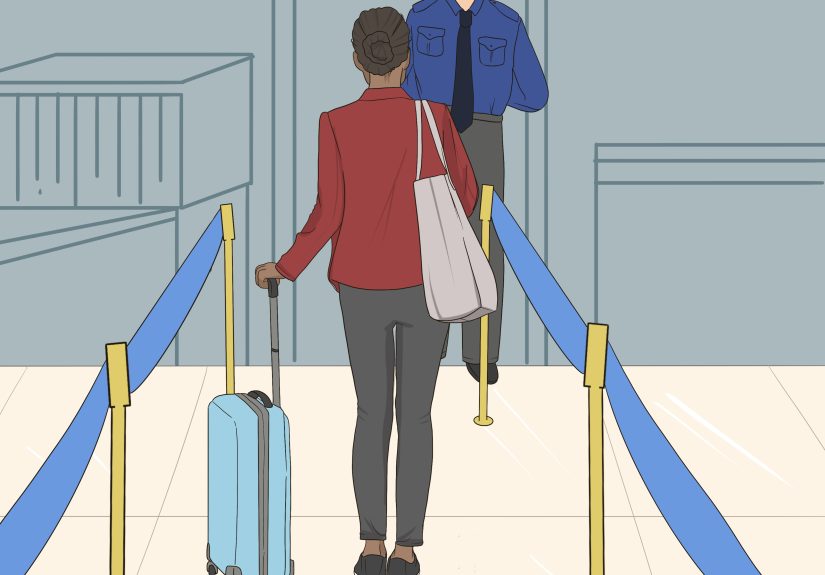
Security goes much faster when you prepare before you get to the front of the line. Have your ID ready, empty your pockets, and keep prohibited items out of your bags. Laptops, liquids, and shoes may need to be handled differently depending on the airport and screening lane, so pay attention to the instructions posted there.
If you travel often, expedited screening programs can be worth considering. If you do not, you can still move through security efficiently by organizing your bag well and avoiding last-minute rummaging that looks like you packed during an earthquake.
Think Beyond the Airport: Prepare for the Flight Itself
Good flight preparation does not stop once you clear security. The cabin is its own ecosystem, and a few smart choices can make the difference between a decent trip and seven hours of dry lips, dead batteries, and deep personal reflection.
Hydrate before and during the flight
Airplane cabins are dry, and long flights can leave you feeling wrung out like a dish towel. Drink water before boarding and refill a bottle after security. Go easy on alcohol if you want to arrive feeling human.
Pack for comfort and boredom prevention
Download movies, playlists, podcasts, books, maps, and any needed work files before you leave home. In-flight Wi-Fi is helpful when it works and a character-building exercise when it does not. Bring a neck pillow if you know you will use it, along with lip balm, tissues, and headphones that actually fit your ears.
Plan for jet lag and motion sickness
If you are crossing time zones, start adjusting your sleep and meal timing in advance when possible. If you are prone to motion sickness, choose a seat that works for you, eat lightly, stay hydrated, and bring whatever remedies you already know are helpful. Travel day is not the ideal time for experimental wellness heroics.
International Flight Prep Needs a Bigger Checklist
Preparing for an international flight adds several layers to the process. You are not just catching a plane. You are navigating entry rules, customs requirements, local expectations, and the possibility that your body clock may file a formal complaint.
Check entry requirements for your destination
Look up visa rules, passport validity requirements, customs rules, and destination-specific travel advisories. Requirements vary by country and sometimes change, so verify them directly before you go. Do not rely on something your cousin’s roommate “heard once.” That is not a recognized immigration category.
Prepare money and connectivity
Notify your bank if needed, check foreign transaction fees, and decide whether you will use an eSIM, a local SIM, or your home carrier’s international plan. Download offline maps and hotel details before departure so you can function even if your signal disappears on arrival.
Think through arrival logistics
Know how you are getting from the airport to your hotel or final destination. If returning to the United States, tools like Mobile Passport Control may speed up the arrival process at participating locations. The less thinking you need to do after a long-haul flight, the better.
Prepare for Delays, Cancellations, and Other Plot Twists
Even a perfectly prepared traveler cannot control weather, airline disruptions, or mechanical issues. What you can control is how well you are set up to handle them. This is where smart travel preparation starts feeling a lot like strategy.
Keep essentials close
Pack chargers, snacks, medications, and one change of clothes in your carry-on. If a delay turns into an overnight problem, you will be grateful you planned for chaos instead of assuming the universe had your back.
Know your rights and options
For major disruptions, check the airline app first, then the customer service desk, then phone support if needed. Understanding basic airline policies for rebooking, refunds, and baggage issues makes it easier to act quickly instead of wandering around the terminal like a confused extra in a disaster movie.
A Simple Pre-Flight Checklist You Can Actually Use
If you want one fast routine for how to prepare for a flight, use this the night before:
- Confirm flight time and terminal
- Check in online
- Save boarding pass to phone and wallet app
- Verify ID or passport is packed
- Review baggage limits
- Pack chargers, medications, and valuables in carry-on
- Place liquids in a travel-size bag
- Charge phone, earbuds, and power bank
- Set alarms and transportation plans
- Lay out comfortable clothes for the morning
And on the way out the door, do the classic three-tap check: phone, wallet, documents. It is simple, effective, and dramatically cheaper than missing a flight.
Real-World Experiences: What Flight Preparation Looks Like in Practice
One of the clearest examples of good flight preparation comes from early-morning domestic travel. People often assume fewer cars on the road means an easier trip, but morning flights can be surprisingly chaotic. Parking shuttles run slower than expected, coffee lines are longer than morality allows, and sleepy travelers move through security like they are buffering. The travelers who do best are the ones who packed the night before, checked in online, and kept documents easy to grab. They are not calmer because they were born calm. They are calmer because they removed decision-making from the worst possible hour.
Long-haul international flights tell a different story. On those trips, the biggest mistakes usually happen before anyone reaches the airport. Someone forgets to check passport validity. Someone else assumes a visa is not required. Another traveler packs all medications in checked baggage because the suitcase seemed “safer,” which is a bold theory right up until the suitcase disappears in another country. Experienced international flyers tend to work backward: entry rules first, passport second, airport timing third, packing last. That order matters because clothes are easy to replace. Boarding permission is not.
Business travelers often have their own style of flight prep. They usually care less about vacation outfits and more about avoiding small failures that wreck a workday. They download presentations before leaving, bring backup chargers, carry one clean shirt in their carry-on, and keep receipts organized. It sounds boring, but boring is underrated when your meeting starts an hour after landing. The goal is not to look glamorous rolling through Terminal B. The goal is to avoid walking into a client meeting wearing yesterday’s travel wrinkles while your laptop battery begs for mercy.
Families preparing for a flight operate in a completely different universe. Their version of travel success may simply be everyone arriving with shoes still on. Smart parents pack by category: snacks, wipes, medications, entertainment, backup clothing, and comfort items. They allow more time than they think they need, then add more. The best family travel routines are not fancy. They are repetitive, practical, and built around preventing meltdowns from both children and adults who swore they were “fine” ten minutes earlier.
Then there are nervous flyers, who often benefit the most from preparation. Anxiety tends to grow in the spaces where information is missing. Knowing the check-in time, understanding what happens at security, packing comfort items, choosing a preferred seat, and planning airport transportation all reduce uncertainty. Preparation does not remove every fear, but it gives the mind fewer wild things to invent. In that sense, preparing for a flight is not just logistics. It is a way to buy back a little peace.
Across all these experiences, one truth keeps showing up: the best travel days are rarely luck. They are the result of small decisions made early. Check the rules. Pack the right bag. Leave enough time. Keep your essentials close. And respect the possibility that airports are perfectly capable of humbling anyone who tries to wing it. Ironically, the best way to wing it is not to wing it at all.
Conclusion
Learning how to prepare for a flight is really about reducing friction before it starts. The right documents, a realistic airport timeline, a well-packed carry-on, and a little planning for comfort can turn a stressful travel day into a manageable one. Whether you are taking a short domestic hop or a long international journey, flight preparation gives you more control, fewer surprises, and a much better chance of arriving ready to enjoy the trip instead of recovering from it. Travel may never be perfectly smooth, but it can absolutely be smoother than showing up late with a giant shampoo bottle and misplaced optimism.