Table of Contents >> Show >> Hide
- What a Sprinkler Valve Does (And Why It Fails)
- Signs Your Sprinkler Valve Needs to Be Replaced
- Before You Start: Safety, Codes, and When to Call a Pro
- Tools and Materials You’ll Need
- Step-by-Step: How to Replace a Lawn Irrigation Sprinkler Valve
- Common Mistakes to Avoid
- Maintaining Your New Sprinkler Valve
- Real-World Experiences: What It’s Actually Like to Replace a Valve
- Conclusion
One day your sprinklers are happily misting the lawn like a tiny water park.
The next day, one zone won’t turn on, another never turns off, and there’s a mysterious puddle forming by the valve box.
Congratulations: you’ve got a bad sprinkler valve.
The good news? Replacing a lawn irrigation sprinkler valve is totally doable for a handy homeowner with basic tools,
a little patience, and clothes you don’t mind getting muddy. In this guide, we’ll walk through how these valves work,
how to tell when yours is shot, and the step-by-step process to replace it safely and correctlyplus real-world tips from
the “I did it myself” trenches.
What a Sprinkler Valve Does (And Why It Fails)
A lawn irrigation sprinkler valve (often called a zone valve) is the traffic cop of your sprinkler system.
Your timer sends an electrical signal to the valve’s solenoid; the solenoid lifts a small plunger, the diaphragm opens,
and water flows to the sprinklers for that zone. When the timer shuts the signal off, the valve closes and the water stops.
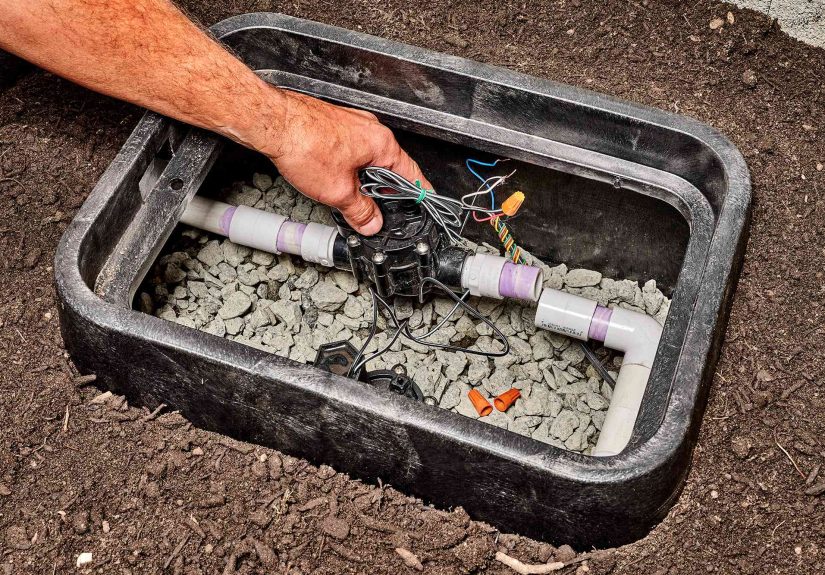
Most residential valves are plastic bodies buried in a valve box, with:
- Valve body – the main housing that stays glued into the piping.
- Diaphragm – a flexible rubber disc that actually opens and closes the flow.
- Solenoid – an electric coil that moves a plunger when the timer sends 24V power.
- Flow control / manual bleed – used for fine-tuning flow or turning the valve on manually.
Valves wear out for a few common reasons:
- Debris or sand stuck in the diaphragm
- A torn or stiff diaphragm that won’t seal
- A burned-out solenoid or corroded wiring
- Cracked valve body (often from freezing or shovel impacts)
Sometimes you can just replace the “guts” (diaphragm and solenoid) and keep the existing valve body.
Other timesespecially with older, cracked, or obsolete valvesit’s smarter to replace the entire valve assembly.
Signs Your Sprinkler Valve Needs to Be Replaced
Before you start cutting pipe, make sure the valve is actually the problem. Common symptoms of a failing sprinkler valve include:
- Zone won’t turn on from the timer, but does come on if you use the manual bleed screw or turn the solenoid by hand.
- Zone won’t shut off and keeps running until you turn off the main water supplyoften a diaphragm issue.
- Leaking around the valve or persistent puddling in the valve box even when the system is off.
- Weak water pressure or sprinklers barely popping up on that one zone.
- Constant seepage from sprinkler heads on that zone, even when the system is off.
It’s smart to do a bit of troubleshooting firstverify the controller is sending power, check that the water supply is fully on,
and inspect wiring connections. If everything else checks out and the valve still misbehaves, replacement is usually the most
efficient fix.
Before You Start: Safety, Codes, and When to Call a Pro
A sprinkler valve replacement is a medium-skill DIY project. If you’re comfortable with basic plumbing, PVC cement, and a
wire connector or two, you’re in good shape. Just keep a few safety and code items in mind:
- Shut off water at the irrigation shutoff (or main house shutoff if there isn’t a dedicated valve).
- Turn off power to the controller or unplug it to avoid any live 24V surprises at the valve.
- Know your backflow device – in many U.S. areas, backflow preventers and irrigation work fall under local plumbing codes.
- If you’re unsure about electrical troubleshooting, call a pro for the diagnosis, then do the physical replacement if you want.
Tools and Materials You’ll Need
Exact tools depend on your setup, but most homeowners will need:
- New irrigation valve (ideally same brand and size as existing)
- PVC pipe cutter or hacksaw
- PVC primer and PVC cement
- Teflon (plumber’s) tape for threaded adapters
- PVC male adapters if your new valve doesn’t match the old fittings
- Wire cutters/strippers and waterproof wire connectors (gel-filled “wire nuts”)
- Small shovel or trowel to expose the valve box
- Rag or paper towels, bucket, and maybe knee pads for comfort
Optional but handy: a multimeter for checking voltage at the valve, and a smartphone to take photos of the wiring before you disconnect anything.
Step-by-Step: How to Replace a Lawn Irrigation Sprinkler Valve
1. Locate and Expose the Valve
Most valves sit inside a green plastic or concrete valve box, slightly buried at or below grade. Some systems have multiple boxes
with several valves grouped on a manifold. If you’re not sure which valve controls which zone, run that zone manually from the timer
and listen for the “whoosh” of water or feel the pipe vibration near the box.
Use a hand shovel to carefully remove soil from around the box and hardware. Avoid stabbing the pipesPVC doesn’t like surprise
encounters with shovels.
2. Shut Off Water and Power
Turn off the irrigation shutoff valve (usually near the backflow device or where the system taps off from the house supply).
The handle should be perpendicular to the pipe when closed. If you don’t have a dedicated shutoff, use the home’s main valve.
Unplug the sprinkler controller or switch it to “off.” This prevents it from sending any voltage to the valve while you’re working.
3. Label and Disconnect the Wiring
Open the valve box and locate the bundle of low-voltage wires:
- A common wire (often white) that daisy-chains to all valves
- One colored wire for each zone
Take a clear photo of the connections. Then, unscrew or cut the waterproof connectors from the suspect valve’s wires.
Label the wires with tape if you’re dealing with a lot of zones; future you will be very grateful.
4. Remove the Old Valve
Your existing valve is usually threaded onto PVC adapters that are glued into the supply and outlet pipes. To remove it:
- Use a pipe cutter or hacksaw to cut the PVC pipe just below the threaded adapters on both sides of the valve.
- Cut as close to the old fittings as possible to preserve pipe length; you’ll be gluing new fittings in place.
- Remove the old valve and fittings.
- Use a utility knife or sandpaper to remove burrs from the cut pipe ends so they’re smooth and clean.
Note: If you’re replacing only the diaphragm and solenoid on a matching valve model, you may simply remove the bonnet (top)
screws, lift off the top, swap parts, and reassemble instead of cutting out the body.
5. Prepare the New Valve
Dry-fit your new valve before gluing anything to be sure everything lines up:
- Apply Teflon tape to the male threads of your PVC adapters, wrapping in the direction of the threads.
- Thread the adapters into the inlet and outlet of the new valve and snug them with pliers (don’t overtightenplastic threads can crack).
- Check the arrow on the valve body so you know which side is the inlet and which is the outlet.
- Dry-fit the assembly between the cut pipes to confirm length and alignment.
6. Glue the New Valve in Place
Once everything lines up, it’s glue time:
- Apply PVC primer to both the pipe ends and the insides of the adapter sockets.
- Apply PVC cement while the primer is still wet.
- Push the valve assembly onto the pipes with a firm twisting motion until fully seated.
- Hold each joint for 20–30 seconds so it doesn’t push back out.
Most PVC cements recommend waiting at least 15 minutes for handling and up to 2 hours (or per label instructions) before
fully pressurizing the line. Use that time to tidy up the wiring.
7. Reconnect the Wiring
Strip about 1/2 inch of insulation off the valve leads and the zone/common wires if needed. Then:
- Connect one valve lead to the common wire.
- Connect the other valve lead to the zone’s control wire.
- Use waterproof connectors and twist them on firmly.
Polarity doesn’t matter on typical 24V solenoids, so either lead can go to either wirejust make sure the same zone wire that used
to be on that valve gets connected again.
8. Turn the Water Back On and Test
Slowly open the irrigation shutoff valve. Watch the new valve and glued joints closely for leaks. If one weeps a little, give it a few
minutesif it continues, you may need to redo that joint.
Once everything looks dry:
- Turn the controller back on.
- Run the repaired zone manually from the timer.
- Verify the zone turns on, runs with good pressure, and shuts off properly.
If the valve still doesn’t open, double-check wiring and controller settings. If it opens manually but not electrically, you may
need to revisit your electrical troubleshooting or verify the controller is outputting power to that station.
Common Mistakes to Avoid
- Skipping the shutoff – trying to cut pipe with live water pressure is a wet comedy routine you don’t want to star in.
- Not matching valve type/size – mixing 1-inch valves with 3/4-inch manifolds creates a PVC puzzle that’s harder than it needs to be.
- Rushing the glue – not holding joints long enough or moving them too soon can create tiny leaks that show up later.
- Forgetting to photograph wiring – you’ll swear you’ll remember which wire went where. You won’t. Take the photo.
- Burying the valve box too deep – keep the lid just at or slightly above grade so you can find it again without a treasure map.
Maintaining Your New Sprinkler Valve
Once your shiny new valve is installed, a little preventative care can help it last for many seasons:
- Open the valve box once or twice a year to check for leaks, ants, roots, or standing water.
- Flush zones after repairs to blow out any debris that might lodge in the diaphragm.
- Winterize properly in cold climates to prevent freezing and cracking.
- Keep mulch, sod, and heavy rocks off the valve box lid to make future access easy.
Real-World Experiences: What It’s Actually Like to Replace a Valve
On paper, sprinkler valve replacement is just a tidy checklist. In real life, it’s you on your knees in a muddy hole,
negotiating with roots, ants, and that one mystery wire whose color faded back in 2006. Here’s what the process really
feels like, and what experienced DIYers learn after doing it a few times.
First, assume the job will take longer than you thinkespecially the first time. Many homeowners expect a 30-minute fix and
discover the valve box packed with wet soil, tangled wires, and fittings that were glued just a little too close together.
Give yourself a generous time window and, if possible, do the work on a day when you don’t absolutely need the system that night.
One common “aha” moment is how valuable photos are. Take a wide shot of the valve box before you touch anything, then closer shots
of the wiring and fittings. If you end up cutting out more pipe than planned or accidentally pull a wire loose, those photos become
your roadmap. Many pros do the same thing on complex manifoldsyour camera is one of your best tools.
Another real-world lesson: dry-fitting is worth the extra few minutes. Try the valve and fittings in place without glue first.
Check that the valve lid will still fit in the box, that the solenoid isn’t jammed against the wall, and that you can actually
reach the manual bleed screw in the future. Nothing is more frustrating than gluing everything perfectly, only to realize the lid
won’t close or the valve is rotated the wrong way.
Expect to run into at least one surprise. Maybe the old pipe cracks further down when you cut it. Maybe the previous installer
used a different schedule of PVC, or you discover a second, hidden valve tee’d off nearby. Take a breath and treat it as part of
the project, not a failure. Having a few extra couplings, short sections of pipe, and an extra can of cement on hand can save you
a mid-project hardware-store run.
DIYers also quickly learn that comfort matters. Kneeling on sharp rocks or leaning over the box for an hour will wear you out.
A foam pad, garden kneeler, or even a folded towel makes a big difference. Gloves help when you’re working around rough PVC and
sticky cement, and safety glasses keep splashes out of your eyes when you’re priming and gluing.
Perhaps the biggest experience-based tip: test in stages. After gluing the valve but before backfilling, test the system once.
After you’ve confirmed there are no leaks and the wiring works, test it again later that day or the next morning. Watching the
zone start, run, and shut off cleanlywith no puddles forming around the boxis incredibly satisfying. Only then should you
carefully backfill around the valve box and tidy up the lawn.
Once you’ve done one valve, the rest get easier. You understand how the piping is laid out, how your controller is wired, and
what kind of valves your system uses. Many homeowners go from intimidated to confident over the course of a single project.
And the next time a zone misbehaves, you’ll know exactly where to look and what to do instead of feeling at the mercy of a
mystery leak and a big repair bill.
Conclusion
Replacing a lawn irrigation sprinkler valve isn’t the cleanest job in the world, but it’s one of the most empowering.
By understanding how the valve works, recognizing the signs of failure, and following a careful step-by-step process,
you can restore proper water flow, prevent waste, and keep your lawn healthywithout paying for an emergency service call.
Take your time, dry-fit everything, label your wires, and test before you bury the box. Do that, and your new valve will quietly
do its job for years while your sprinklers put on a show across the yard.