Table of Contents >> Show >> Hide
- Quick Navigation
- Before You Shut Down: A 20-Second Reality Check
- Method 1: Shut Down from the Charms Bar (Mouse/Touch)
- Method 2: Win + I (Fastest Built-In Shortcut)
- Method 3: Win + C (Keyboard Charms, Then Power)
- Method 4: Alt + F4 on the Desktop
- Method 5: Ctrl + Alt + Delete Screen (Power Icon)
- Method 6: Shut Down from the Sign-In Screen
- Method 7: Win + X Power User Menu (Windows 8.1)
- Method 8: Command Prompt / PowerShell (shutdown Command)
- Method 9: One-Click Shutdown Shortcut (Desktop/Taskbar/Start)
- Which Method Should You Use?
- Troubleshooting: When Windows 8 Won’t Shut Down Nicely
- Extra: of Real-World Experience (So You Don’t Learn the Hard Way)
- Conclusion
Windows 8 did a lot of things boldlylike hiding the shut down button the way a cat hides a toy it absolutely wants you
to find, but only on its schedule. If you’ve ever waved your mouse around the screen corners like you’re conducting an
orchestra and still couldn’t turn the computer off, you’re not alone.
The good news: shutting down Windows 8 is easy once you know where Microsoft tucked the power options. Below are
9 different methodsfrom the “official” on-screen route to fast keyboard shortcuts and one-click tricks.
I’ll also share practical tips (and a few real-world “why did my PC do that?” moments) so you can pick the best method
for your setup.
Quick Navigation
- Method 1: Shut Down from the Charms Bar (Mouse/Touch)
- Method 2: Win + I (Fastest Built-In Shortcut)
- Method 3: Win + C (Keyboard Charms, Then Power)
- Method 4: Alt + F4 on the Desktop
- Method 5: Ctrl + Alt + Delete Screen (Power Icon)
- Method 6: Shut Down from the Sign-In Screen
- Method 7: Win + X Power User Menu (Windows 8.1)
- Method 8: Command Prompt / PowerShell (shutdown command)
- Method 9: One-Click Shutdown Shortcut (Desktop/Taskbar/Start)
Before You Shut Down: A 20-Second Reality Check
In Windows 8, the words Shut down, Restart, and Sleep are not interchangeable, even if you’re
in a hurry and your laptop fan sounds like it’s trying to achieve flight.
-
Shut down turns the PC off. On many Windows 8 systems, this may use a “hybrid” style shutdown that
helps boot faster next time. - Restart fully reloads Windows and is often better after updates or when things feel glitchy.
- Sleep saves your session in memory and wakes quickly (great for short breaks).
If your goal is “I installed something and now my Wi-Fi is acting possessed,” try Restart. If your goal
is “I’m done for the day,” go with Shut down.
Method 1: Shut Down from the Charms Bar (Mouse/Touch)
This is the classic Windows 8 routethe one Microsoft clearly expected everyone to use forever, even though it requires
a tiny scavenger hunt.
Steps (Mouse)
- Move your mouse to the top-right or bottom-right corner to open the Charms bar.
- Click Settings (the gear icon).
- Click Power.
- Select Shut down.
Steps (Touchscreen)
- Swipe in from the right edge of the screen.
- Tap Settings → Power → Shut down.
When to use it: You’re already using the mouse/touch and want the “official” method that works on most
Windows 8 machines.
Method 2: Win + I (Fastest Built-In Shortcut)
If you memorize only one thing from this article, make it this: Win + I. It jumps straight into the
Settings charm without making you aim for the “hot corner.”
- Press Windows key + I.
- Click Power.
- Click Shut down.
Why it’s great: It’s quick, consistent, and doesn’t care whether you’re in an app, on the Start screen,
or on the desktop. It’s the closest thing Windows 8 has to a secret handshake.
Method 3: Win + C (Keyboard Charms, Then Power)
Want the Charms bar, but with keyboard flair? Win + C opens Charms. From there, you can head to
Settings and power off.
- Press Windows key + C to open the Charms bar.
- Click Settings.
- Click Power → Shut down.
When this beats Method 2: If you want Charms for something else first (like Search or Devices) and then
decide to shut down.
Method 4: Alt + F4 on the Desktop
This one feels like a throwback because it is. On the desktop, Alt + F4 can bring up the “Shut Down
Windows” dialogthe same vibe as older Windows versions, just with less nostalgia and more tiles.
- Go to the desktop: press Windows key + D.
- Make sure the desktop is “active” (click an empty area of the desktop if needed).
- Press Alt + F4.
- Choose Shut down from the dropdown (if it isn’t selected already), then press Enter.
Pro tip: If Alt + F4 closes a window instead of showing the shut down dialog, you weren’t focused on the
desktop. Windows is very literal like that.
Method 5: Ctrl + Alt + Delete Screen (Power Icon)
If your system is acting weird, or a full-screen app is being clingy, the Ctrl + Alt + Delete screen is a reliable
escape hatch. And yes, it includes a power button.
- Press Ctrl + Alt + Delete.
- Look for the Power icon (usually bottom-right).
- Click it, then select Shut down.
When it shines: When the desktop is messy, apps are frozen, or you need a more “system-level” path that
still isn’t the “hold the power button” emergency move.
Method 6: Shut Down from the Sign-In Screen
If you’re already signed outor you locked your PC and now just want it offWindows 8 lets you shut down from the sign-in screen.
It’s like ordering takeout from the lobby instead of going upstairs.
- Get to the sign-in screen (lock it with Windows key + L, or sign out).
- Click the Power icon.
- Select Shut down.
Best for: Shared PCs, workplaces, or anytime you’re done but don’t want to sign back in just to shut down.
Method 7: Win + X Power User Menu (Windows 8.1)
If you’re on Windows 8.1, Microsoft added a more convenient “power” path to the Power User menu. This is
the menu you get by right-clicking the bottom-left corner or pressing Win + X.
- Press Windows key + X.
- Choose Shut down or sign out.
- Click Shut down.
Note: If you’re on the original Windows 8 (not 8.1), your Win + X menu may look different. In that case,
use Method 2 (Win + I) or Method 4 (Alt + F4) and you’re still golden.
Method 8: Command Prompt / PowerShell (shutdown Command)
If you like your computing experience with a side of “I know what I’m doing,” the built-in shutdown
command is fast and flexible. It’s also great for remote sessions, troubleshooting, and feeling like you’re in a movie.
Instant shut down
- Open Command Prompt (or PowerShell).
- Type: shutdown /s /t 0
- Press Enter.
Helpful variations
- Restart immediately: shutdown /r /t 0
- Shut down in 5 minutes: shutdown /s /t 300
- Cancel a scheduled shutdown: shutdown /a
When to use it: You want speed, you’re automating a routine, or your UI is misbehaving. Also, it’s a neat
party trick if your parties involve computers (no judgment).
Method 9: One-Click Shutdown Shortcut (Desktop/Taskbar/Start)
If you’re tired of navigating menus, make your own power button. A shutdown shortcut is basically Windows 8’s version of
“fine, I’ll do it myself.”
Create a desktop shortcut
- Right-click an empty spot on the desktop.
- Select New → Shortcut.
- In the location field, enter: shutdown /s /t 0
- Click Next, name it something obvious like Shut Down, then click Finish.
Make it look nice (optional, but satisfying)
- Right-click your new shortcut → Properties.
- Click Change Icon.
- Pick a power-looking icon so it doesn’t resemble a mystery file from 2006.
Pin it for faster access
- Pin to taskbar: Right-click the shortcut → Pin to Taskbar.
- Pin to Start: Right-click the shortcut → Pin to Start (if available on your edition).
Best for: People who shut down daily and don’t want Windows 8 to make it a mini-quest every time.
Which Method Should You Use?
Here’s a quick “matchmaking” guide for your mood and situation:
- You want the standard Windows 8 way: Method 1 (Charms bar).
- You want the fastest keyboard option: Method 2 (Win + I).
- You’re already on the desktop: Method 4 (Alt + F4).
- Your screen feels glitchy or an app is stuck: Method 5 (Ctrl + Alt + Delete).
- You’re on Windows 8.1 and like menus: Method 7 (Win + X).
- You want automation or speed with control: Method 8 (shutdown command).
- You want a permanent easy button: Method 9 (shortcut).
Troubleshooting: When Windows 8 Won’t Shut Down Nicely
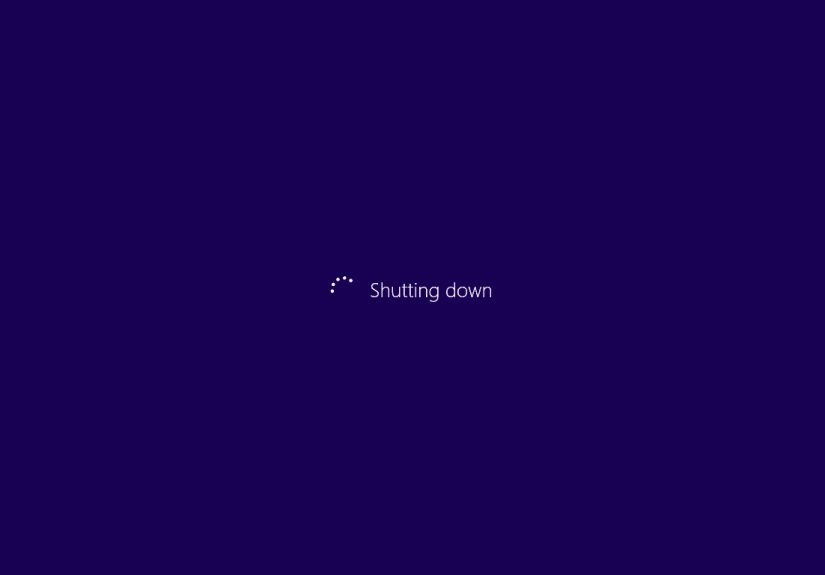
Sometimes you click Shut down and Windows responds with the digital equivalent of “no ❤️”spinning dots, endless
“Closing apps,” or a screen that just won’t commit. Before you go full “hold the power button,” try these:
1) Close stubborn apps first
If Windows is waiting on an app, you’ll often see a message asking you to close programs. Save your work, close what you can,
then try shutting down again.
2) Try Restart instead of Shut down
If you installed updates or drivers, a restart can resolve hanging shutdowns. It’s less dramatic and often more effective.
3) Use Ctrl + Alt + Delete power menu
If the desktop UI isn’t cooperating, Method 5 can bypass some of the fuss.
4) Last resort: power button (the physical one)
Holding the physical power button forces a shutdown. Use this only when the system is frozen and you’ve tried the safer options,
because it can cause data loss if something was saving in the background.
Extra: of Real-World Experience (So You Don’t Learn the Hard Way)
The first time I used Windows 8, I spent an embarrassingly long time searching for a shut down option that wasn’t where my brain
expected it to be. That’s the “Windows 7 muscle memory” problem: your hands keep moving toward a Start menu power button that’s
simply not there. In real life, this usually happens at the end of a workday when you’re tired, your coffee has clocked out
emotionally, and Windows 8 decides it’s a perfect time to teach you new choreography.
What I learned fast is that Windows 8 shutdown is less about “finding the button” and more about picking a habit.
Once you choose a habit, the whole experience gets calmer. For keyboard people, Win + I became the go-to
because it feels like a secret tunnel: you press two keys, click Power, and you’re done. No corner-hunting, no accidental
app switching, no “oops, I opened Search again.” For mouse users, the Charms bar method works fineuntil you’re on a laptop
touchpad and you graze the corner and the Charms bar pops up like it’s trying to jumpscare you.
The most “human” shutdown method in Windows 8 is honestly the old-school Alt + F4 on the desktop. It feels
like Windows is briefly remembering who it used to be. But it also taught me a funny lesson: context matters. If you press
Alt + F4 in the wrong place, you’ll close the wrong thingsometimes the exact window you were trying to keep open for “one
more minute.” So I built the habit of Win + D first, then Alt + F4. Two quick shortcuts, and the shutdown
dialog appears reliably.
Another real-world moment: shared computers. If you’ve ever helped a family member or coworker sign out and then realized the
machine still needs to shut down, the sign-in screen power icon is surprisingly useful. It avoids the whole
“log back in just to shut down” ritual. It’s one of those small details that saves timeand saves you from explaining why you
“need their password” (which, for the record, you don’t).
Finally, the biggest quality-of-life upgrade is the shutdown shortcut. When you pin a one-click “Shut Down”
button to the taskbar or Start screen, Windows 8 stops feeling like it’s testing you. I’ve seen people do this for grandparents,
school lab PCs, and office machines where “please shut down properly” is a daily reminder. It also reduces errors: fewer clicks
means fewer chances to hit Sleep when you meant Shut down, or restart when you meant “I’m leaving now, do not update for 45 minutes.”
Bottom line: Windows 8 isn’t impossibleit’s just different. Choose the method that matches your routine, and suddenly shutting down
goes from “where is it?” to “done.” And if you want a truly peaceful life? Make the shortcut. Future-you will be delighted.
Conclusion
Windows 8 may have hidden its power options behind the Charms bar, but you’ve now got nine easy shutdown methods
to fit any situationmouse, keyboard, touchscreen, troubleshooting mode, or “I want a big obvious button” mode.
Pick one method as your daily default (Win + I is a popular choice), and keep a backup method in mind for those rare moments
when Windows decides to be moody.