Table of Contents >> Show >> Hide
- What the crankshaft position sensor actually does
- Can you start a car with a bad crankshaft sensor?
- Signs your no-start problem may be the crankshaft sensor
- Safe things to try before giving up on the driveway
- What not to do
- How a mechanic usually diagnoses the problem
- If the car starts, should you drive it?
- Repair options and what usually fixes it
- Specific examples of how this problem shows up
- The best practical answer to the question
- Driver experiences: what people commonly notice in the real world
- Conclusion
If your car suddenly cranks forever, starts only when it feels emotionally available, or stalls and then refuses to wake back up, the crankshaft position sensor may be the culprit. This tiny sensor has a big job: it tells the engine computer where the crankshaft is and how fast it is spinning so the computer can time fuel injection and spark correctly. When that signal goes bad, your engine can act like it forgot how to be an engine.
Here is the honest answer up front: there is no magic, reliable, or truly safe trick that “forces” a car to start with a bad crankshaft sensor. If the sensor has completely failed, the engine may crank and never fire. If the sensor is only failing intermittently, the car may still start sometimes, especially when the engine is cool. That is why the smartest approach is not to look for a cowboy workaround, but to understand what is happening, try a few safe checks, and avoid turning a small sensor problem into a bigger repair bill.
This guide explains what a bad crankshaft sensor does, why your car may still start occasionally, what safe troubleshooting steps are worth trying, and when to stop cranking and call for help. We will also cover the real-world experiences drivers often report, because nothing says “automotive drama” like an engine that behaves perfectly in the driveway and then turns into a brick at the gas station.
What the crankshaft position sensor actually does
The crankshaft position sensor, often called the CKP sensor, tracks the position and rotational speed of the crankshaft. The engine control module uses that information to coordinate ignition timing and fuel delivery. In plain English, the sensor helps the computer decide when to fire the spark plugs and when to inject fuel.
If that signal disappears or becomes erratic, the computer may not know when to trigger spark or fuel. The result can be hard starting, no starting, stalling, misfires, rough running, poor acceleration, or a check engine light. In some vehicles, the problem shows up more when the engine is hot. In others, it appears randomly, which is extra annoying because intermittent problems are the automotive version of a disappearing sock.
Can you start a car with a bad crankshaft sensor?
Sometimes, yes. Reliably, no.
If the sensor is weak rather than completely dead, the engine may still start under certain conditions. For example, some drivers notice that the car starts normally when cold but refuses to start after a quick stop at the store. Others report that the engine cranks for a long time, then finally catches and runs rough. That is not because the car has forgiven you. It is because the sensor may still be sending a partial or temperature-sensitive signal.
If the CKP sensor has failed completely, the car may crank but not start at all. In that case, repeated start attempts are usually not helpful. They can drain the battery, overheat the starter, and waste time you could be using to get the real issue diagnosed.
Signs your no-start problem may be the crankshaft sensor
1. The engine cranks but does not fire
The starter spins the engine, but the engine never catches and runs. This is one of the classic symptoms of a CKP signal problem.
2. Hard starting or intermittent starting
The car starts eventually, but only after an unusually long crank. Or it starts fine one day and refuses the next. Intermittent sensor failure is common enough to confuse even experienced DIYers.
3. The engine stalls while driving or idling
If the computer suddenly loses the crankshaft signal, the engine may shut off because spark and fuel timing are disrupted.
4. The check engine light is on
Codes such as P0335 or related crankshaft/camshaft correlation codes may appear. A code does not automatically prove the sensor itself is bad, but it is a strong clue.
5. The tachometer behaves oddly
On some vehicles, the tach needle may stay dead while cranking or bounce in a strange way if the computer is not receiving a clean engine-speed signal.
6. The problem is worse when the engine is warm
This pattern shows up often with failing sensors. Heat can affect an aging sensor or wiring, causing a warm no-start condition.
Safe things to try before giving up on the driveway
These steps are not bypass methods. They are safe, sensible checks that may help you confirm whether the issue is related to the crankshaft sensor or something else.
Check battery condition first
A weak battery can mimic or complicate a sensor problem. If the engine cranks slowly, your first suspect should be battery voltage, cable condition, or a starter issue. Clean obvious corrosion from battery terminals, confirm the connections are tight, and make sure the battery is not obviously weak.
Listen to the type of no-start
If the engine cranks strongly but does not fire, a CKP sensor becomes more plausible. If you hear only clicking, dim lights, or very slow cranking, battery or starter problems should move higher on the suspect list.
Scan for trouble codes
An inexpensive OBD-II scanner can save a lot of guessing. Codes such as P0335, P0336, P0339, or crank/cam correlation codes may point you in the right direction. Remember, a wiring fault, damaged reluctor ring, or connector issue can trigger similar symptoms.
Inspect the sensor connector and nearby wiring
Look for a loose plug, oil contamination, damaged insulation, heat damage, or wires rubbing on metal. On older vehicles, the sensor itself may be fine while the connector is the real villain.
Let the engine cool down and try one normal restart
If the problem tends to happen hot, let the engine cool for a while and then make one or two normal start attempts. If it starts cold but not warm, that pattern is useful diagnostic information for the technician.
Check for related symptoms, not just one clue
A crankshaft sensor problem rarely arrives alone. Pairing hard starting with stalling, rough running, misfires, or a check engine light creates a much stronger case than one symptom by itself.
What not to do
Do not keep cranking the engine over and over
If the engine is not starting after a couple of normal attempts, repeated cranking is more punishment than progress. It can drain the battery and stress the starter.
Do not assume it is definitely the sensor without testing
A no-start can also come from a bad battery, faulty starter, ignition problem, fuel issue, blown fuse, wiring damage, or even a camshaft sensor problem. Guessing and replacing parts at random gets expensive fast.
Do not keep driving a car that stalls unpredictably
If the engine cuts out in traffic or at intersections, the problem has moved from inconvenient to unsafe. That is your cue to stop treating it like a quirky personality trait and start treating it like a repair issue.
How a mechanic usually diagnoses the problem
Professional diagnosis typically involves scanning the computer for codes, checking live data while cranking, inspecting the CKP signal, verifying power and ground at the sensor, and checking related wiring or timing components. Depending on the vehicle, the mechanic may also inspect the camshaft sensor, reluctor ring, and timing components.
This matters because not every crank sensor code means the sensor itself is bad. A broken connector, damaged harness, weak reference voltage, timing issue, or failed reluctor wheel can send you chasing the wrong part. In other words, the sensor may be guilty, but it still deserves due process.
If the car starts, should you drive it?
Only far enough to move it to a safe place or get it repaired. A failing crankshaft sensor can worsen without warning. Today it starts after a long crank. Tomorrow it stalls in a parking lot. The day after that it may quit in traffic and leave you explaining to everyone behind you that your car is “working through some stuff.”
If you must move the vehicle a short distance, do it only if it is running smoothly and you are headed somewhere safe. For anything beyond that, towing is usually the better decision.
Repair options and what usually fixes it
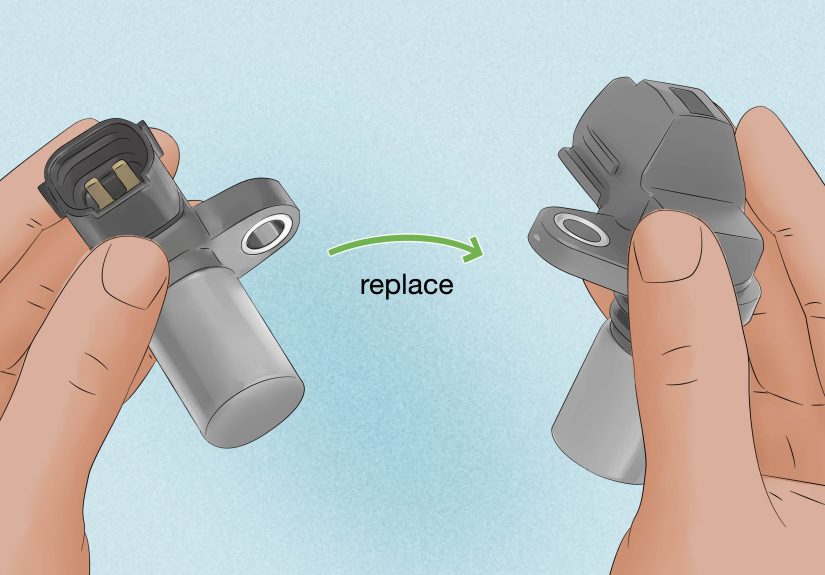
Replace the crankshaft position sensor
If testing confirms the sensor is faulty, replacement is the standard fix. On some vehicles, this is a relatively simple repair. On others, access is awkward enough to inspire fresh vocabulary.
Repair the connector or wiring
Corroded terminals, broken wires, or oil-soaked connectors can interrupt the signal just as effectively as a bad sensor.
Address related timing or reluctor issues
If the tone ring or reluctor wheel is damaged, or if timing components are worn and causing correlation problems, replacing the sensor alone may not solve the issue.
Clear codes and verify the repair
After repair, the vehicle should start consistently, idle normally, and show a stable RPM signal. A proper road test and code recheck help confirm the fix.
Specific examples of how this problem shows up
Example 1: The warm no-start commuter car
A sedan starts perfectly in the morning, drives to work, then refuses to restart after a short lunch stop. After cooling for 30 minutes, it starts again. That heat-related pattern is common with a failing crankshaft sensor.
Example 2: The crank-but-no-start SUV
The battery is healthy, the starter spins strong, but the engine never catches. A scanner shows a crankshaft sensor circuit code. The final repair turns out to be a damaged CKP connector near the engine block.
Example 3: The intermittent stall mystery
A crossover stalls once at a stoplight, then restarts. A week later, it stalls again and will not restart for ten minutes. Intermittent stalling plus hard restarts often points technicians toward crank or cam signal problems.
The best practical answer to the question
If you are searching for how to start a car with a bad crankshaft sensor, the most accurate answer is this: you do not safely “override” the problem. You confirm whether the sensor is actually the issue, check the basics, avoid repeated cranking, and repair the fault. If the sensor is failing intermittently, the engine may still start occasionally, especially after cooling down, but that is a symptom pattern, not a solution.
The goal is not to outsmart the engine computer. The goal is to avoid being stranded twice.
Driver experiences: what people commonly notice in the real world
Many drivers do not realize a crankshaft position sensor is failing at first because the symptoms can feel random. The car may start like a champ for a week and then suddenly act stubborn on a hot afternoon. One of the most common experiences is the warm no-start: the driver runs errands, parks for ten minutes, comes back, turns the key, and the engine cranks normally but will not fire. After sitting long enough to cool down, the engine starts as if nothing happened. That pattern often sends people on a wild goose chase through the battery, alternator, and starter before the real problem is found.
Another common experience is intermittent stalling. A driver may be idling at a red light, waiting in a drive-thru, or creeping through traffic when the engine suddenly dies. Sometimes it restarts immediately. Sometimes it takes several attempts. Sometimes it refuses and earns itself a tow truck ride. Drivers often describe this as “the car just shut off for no reason,” which is technically accurate but emotionally unsatisfying.
Some people notice that the tachometer gives odd clues before the no-start gets serious. While cranking, the RPM needle may not move the way it normally does. Others report rough running, misfires, hesitation, or jerky acceleration in the days leading up to a complete no-start. In those cases, the car is practically sending a memo. Unfortunately, the memo is written in dashboard drama.
There are also stories where the sensor itself is not the whole problem. A driver replaces the crankshaft sensor, expects instant victory, and the car still refuses to start. Later, the real cause turns out to be a damaged connector, an oil-soaked harness, a wiring fault, or even a related camshaft sensor issue. That is why experienced technicians prefer testing over guessing. Replacing one part without confirming the signal path can solve nothing except your desire to spend money quickly.
One more real-world pattern is the “it only happens sometimes” complaint. These are the cases that drive people up the wall because the car behaves perfectly once it reaches the shop. Intermittent electrical failures are notorious for that. A sensor may fail only when hot, only after vibration, or only when a connector shifts slightly. Good diagnostic notes can make a huge difference. If you can tell the shop, “It cranks but will not start after a short stop, especially when the engine is hot, and the check engine light came on last week,” you have already helped narrow the search.
The biggest lesson from these experiences is simple: inconsistent starting is still a real warning sign. Just because the car eventually starts does not mean the problem is minor. In many cases, the vehicle is giving you a preview before it graduates to a full no-start at the worst possible place and time. Fixing the issue early is almost always cheaper, easier, and less stressful than waiting until the sensor quits for good.
Conclusion
A bad crankshaft position sensor can absolutely keep a car from starting, but it is not a problem you safely solve with a clever workaround. The practical path is to recognize the symptoms, check the basics, scan for codes, inspect wiring, and repair the root cause. If the vehicle starts only intermittently, especially when cold but not hot, take that pattern seriously. It is not your car being moody. It is your car asking for help in the least convenient dialect possible.