Table of Contents >> Show >> Hide
- Why Garlic Can Help with Garden Pests
- The Pro Mindset: Start with Scouting, Not Spraying
- Three Smart Ways to Use Garlic in the Garden
- Which Pests Garlic May Help Control
- How to Apply Garlic Without Hurting Your Plants
- When Garlic Is Not Enough
- Practical Examples of Garlic Pest Control in Real Gardens
- The Biggest Mistakes Gardeners Make with Garlic
- Final Takeaway: Use Garlic Like a Pro, Not Like a Myth
- Extra Experience Section: What It’s Actually Like to Use Garlic for Pest Control in a Real Garden
If your garden has turned into an all-you-can-eat buffet for aphids, whiteflies, and every tiny leaf-munching freeloader in the zip code, garlic can absolutely help. No, it is not a magic wand. It is not a superhero cape for your tomatoes. And it will not make every pest pack a tiny suitcase and move out by Tuesday. But used the right way, garlic can be a smart, low-drama part of a natural garden pest control plan.
That “used the right way” part matters. The professional approach is not to treat garlic like a miracle cure. It is to use it as one tool in a bigger system: scouting your plants, catching pests early, protecting beneficial insects, and stepping up to stronger measures only when you actually need them. In other words, garlic is less “garden flamethrower” and more “firm but polite bouncer at the door.”
In this guide, you will learn how to use garlic to control pests in your garden through companion planting, garlic spray, and smarter application habits. You will also learn when garlic helps, when it falls flat, and how to avoid turning your cucumber leaves into crispy little regrets.
Why Garlic Can Help with Garden Pests
Garlic works mainly because of its strong sulfur-rich smell. That scent can confuse, repel, or discourage certain pests from settling in and feeding on your plants. This is why gardeners often use garlic around vegetables, herbs, flowers, and even ornamental beds when they want a more natural pest control option.
Here is the important catch: garlic is usually more of a repellent than a guaranteed killer. That means it often works best when pest pressure is still light. If you have a few aphids hanging out on new growth, garlic may help push them along. If your kale looks like it hosted an insect music festival for three weeks straight, garlic alone is probably not enough.
That is why pros tend to use garlic early, use it consistently, and combine it with other sensible tactics like hand-picking, water sprays, row covers, pruning, and beneficial insect protection. Garlic earns its keep when it is part of a team.
The Pro Mindset: Start with Scouting, Not Spraying
Before you grab a blender and sacrifice a perfectly good bulb of garlic, inspect your plants. Look under leaves, along stems, and around tender new growth. A lot of gardeners miss the actual party because they only look at the top of the plant. Meanwhile, the real troublemakers are having brunch on the undersides of the leaves.
Ask yourself a few simple questions:
- What pest am I actually dealing with?
- How severe is the infestation?
- Is the plant still healthy enough to recover?
- Are beneficial insects already helping?
This matters because garlic is far more useful for light-to-moderate pressure than for a full-scale infestation. If the population is still small, you have time to repel and disrupt. If the pests have already multiplied, you may need faster, more direct control.
Three Smart Ways to Use Garlic in the Garden
1. Plant Garlic as a Companion Crop
One of the easiest ways to use garlic for pest control is to grow it near vulnerable plants. Garlic is commonly used in companion planting because its strong scent may help discourage certain pests from moving in. Many gardeners tuck garlic near brassicas, lettuce, tomatoes, peppers, and roses for this reason.
This method is simple, tidy, and wonderfully low maintenance. There is no mixing, no straining, and no mystery liquid in a reused spray bottle labeled “Definitely Not Lemonade.” You just plant garlic where its aroma can do some background work.
Good places to try companion planting with garlic include:
- Brassicas like cabbage, kale, broccoli, and cauliflower
- Tomatoes and peppers, which often attract aphids and whiteflies
- Lettuce and leafy greens, where tender growth draws sap-sucking pests
- Roses, if you want a classic ornamental pairing with a practical twist
There is one caution here: garlic is not a universally friendly neighbor. It can be a poor companion for beans and peas, so do not scatter it everywhere and assume your whole garden will applaud. Companion planting works best when you think of garlic as strategic, not decorative confetti.
2. Make a Mild Garlic Spray for Light Pest Pressure
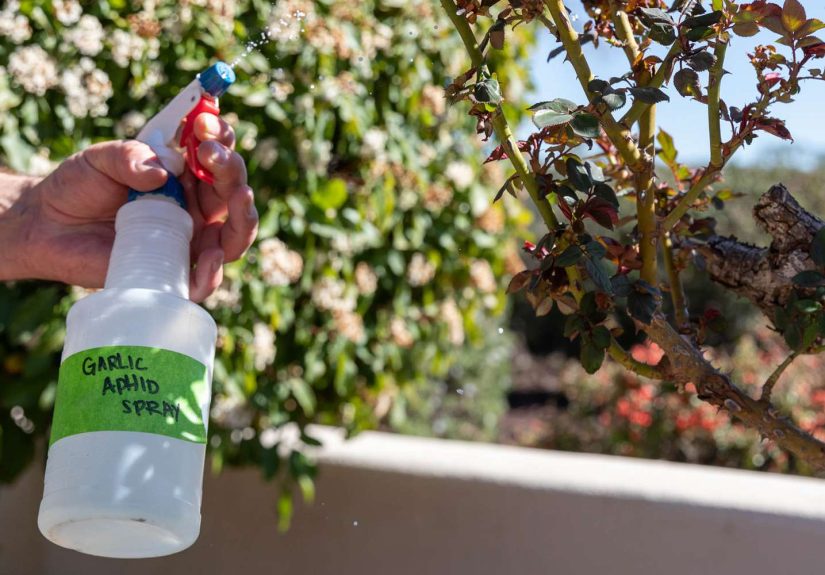
If you want more direct action, a mild garlic spray is the classic move. This works best on light infestations and as a repellent treatment on plants that are starting to attract soft-bodied pests.
A simple, gardener-friendly version looks like this:
- Peel and crush 1 whole bulb of garlic.
- Blend or mash it with about 2 cups of water.
- Let the mixture sit overnight so the garlic infuses.
- Strain it very well through cheesecloth or a fine strainer.
- Dilute the concentrate into more water before spraying. Keep it mild, especially the first time.
Some DIY recipes add soap or oil, but this is where the professional advice gets a little stricter. Harsh homemade soap mixes can burn foliage, especially in heat or direct sun. If you want the insect-control benefits of soap, use a product labeled as insecticidal soap rather than winging it with a strong dish detergent from under the sink.
When using garlic spray, always:
- Test it on a small section of the plant first
- Wait 24 hours to check for leaf burn
- Spray in the evening or early morning, not midday
- Coat both the tops and undersides of leaves
- Reapply after rain or overhead watering
That last point matters more than people think. Garlic spray does not stick around forever. Rain washes it off, irrigation dilutes it, and strong sun breaks it down. Think of it like sunscreen for pest control: one quick swipe and done is not the plan.
3. Use Garlic as Part of a Layered Pest Strategy
The most effective way to use garlic is not by itself. It is by layering it with other smart methods. A pro gardener might use garlic spray to discourage pests, a sharp blast of water to knock aphids off, sticky traps for whiteflies, and row covers for young brassicas. That combination is far more reliable than hoping one ingredient will save the season.
This layered approach is especially helpful because different pests behave differently. Aphids cluster. Spider mites hide. Whiteflies scatter at the slightest disturbance like tiny panicked confetti. Garlic can help in all of those situations, but it does its best work when it is not asked to do literally everything.
Which Pests Garlic May Help Control
Garlic is most often used against pests that are sensitive to smell, disruption, or direct spray contact. In real gardens, it is commonly tried against:
- Aphids on kale, peppers, lettuce, and roses
- Whiteflies on tomatoes and ornamentals
- Spider mites, especially in hot, dry weather
- Flea beetles and other light-feeding nuisance pests
- Some caterpillar traffic when used as a deterrent, though stronger controls are often needed
The pattern is pretty consistent: garlic is most helpful when the pest population is still manageable and you are trying to prevent a bigger blowup. It is less dependable when you are facing heavy chewing damage, severe mite pressure, or pests that are already well established.
How to Apply Garlic Without Hurting Your Plants
This is where many DIY garden pest control attempts go sideways. The idea sounds great. The execution smells like confidence. Then the leaves curl, spot, or scorch. To avoid that, follow a few non-negotiable rules.
Keep the mixture mild
More garlic is not always better. Stronger is not always smarter. Highly concentrated homemade sprays can irritate plant tissue, especially on tender seedlings, thin leaves, and plants already stressed by drought or heat.
Never spray in intense sun
Midday heat plus wet foliage is a recipe for plant stress. Apply garlic spray early in the morning or in the evening when temperatures are lower and pollinators are less active.
Target the pest, not the entire universe
Do not drench every plant just because one leaf looks suspicious. Spot-treat affected plants and vulnerable zones first. This protects helpful insects and keeps you from creating unnecessary stress in the garden.
Protect pollinators and beneficial insects
Garlic-based sprays and other homemade remedies are not automatically harmless to bees, lady beetles, lacewings, or tiny parasitic wasps. Avoid spraying open flowers, and do not spray when pollinators are active. Your garden’s natural allies are doing free labor. Let them keep their jobs.
Watch the weather
If rain is coming in a few hours, save your garlic for the pasta and spray another day. You want enough dry time for the treatment to do its job.
When Garlic Is Not Enough
Sometimes garlic helps. Sometimes garlic helps a little. And sometimes garlic arrives at the scene like a polite intern while the pest problem is already on fire.
When that happens, move up the ladder.
For aphids, start with a strong spray of water to knock them off. For spider mites, improve humidity around the plant and use labeled horticultural oil or insecticidal soap if needed. For whiteflies, combine sanitation, sticky traps, and direct-contact products. For cabbage worms or hornworms, hand-picking and targeted biological controls are often far more reliable than garlic alone.
The goal is not to stay loyal to one method. The goal is to protect the plant with the least disruptive option that actually works.
Practical Examples of Garlic Pest Control in Real Gardens
Example 1: Aphids on kale
You spot a cluster of aphids crowding the tender new leaves of kale. The plant is still healthy, and the infestation is early. This is a good garlic moment. Spray the undersides of the leaves with a mild garlic solution, rinse the plant with water a day or two later, and keep checking new growth. If lady beetles are present, let them help.
Example 2: Whiteflies on tomatoes
Garlic may help repel some new whitefly activity, but it usually works best alongside pruning crowded foliage, reducing dust, and using sticky traps. If whiteflies keep multiplying, move to a labeled soap or oil spray for better contact control.
Example 3: Spider mites on cucumbers in hot weather
Garlic is not useless here, but spider mites are stubborn little specialists. A mild garlic spray may discourage them, but real progress usually comes from better coverage, repeat applications, and stronger contact tools like horticultural oils or insecticidal soaps used correctly.
The Biggest Mistakes Gardeners Make with Garlic
- Using garlic as the only pest control plan
- Spraying too strong a mixture
- Applying in hot afternoon sun
- Skipping a patch test
- Ignoring the undersides of leaves
- Spraying flowers and harming beneficial insects
- Waiting too long, then expecting garlic to rescue a major infestation
If you avoid those mistakes, garlic becomes much more useful. It may not be glamorous, but it is practical, affordable, and easy to fit into an organic-minded routine.
Final Takeaway: Use Garlic Like a Pro, Not Like a Myth
If you want the professional version of garlic pest control, here it is in one sentence: use garlic early, use it lightly, use it strategically, and do not expect it to do the work of a full pest-management program by itself.
Plant garlic near vulnerable crops. Use a mild, tested garlic spray when pest pressure is still low. Protect your pollinators. Reapply when needed. And stay flexible enough to switch to stronger, labeled solutions when the situation calls for it.
That is how pros think. Not “What is the most magical natural remedy?” but “What is the smartest next move for this plant, this pest, and this stage of the problem?” Garlic just happens to be one of the smartest first moves you can make.
Extra Experience Section: What It’s Actually Like to Use Garlic for Pest Control in a Real Garden
One of the most useful things to know about garlic in the garden is that the experience is usually subtle before it is dramatic. Gardeners often expect a big movie moment: spray the garlic, wake up tomorrow, pests are gone, birds sing, tomatoes applaud. Real life is less theatrical and more gradual.
What usually happens first is that you feel like you are finally doing something proactive. That alone is helpful, because pest problems often get worse while people hesitate, overthink, or pretend the aphids are “probably not that many.” Once garlic enters the picture, you start paying closer attention. You scout more often. You notice which plants attract trouble first. You begin seeing patterns instead of chaos.
In a lightly infested garden, garlic can make a real difference. New aphid clusters may stop growing so quickly. Whiteflies may be less eager to settle on your tomatoes. Plants that looked slightly stressed can recover once the pressure is reduced. This is the sweet spot for garlic: early intervention, repeated observation, and modest expectations.
In a heavier infestation, the experience is different. Garlic may still help, but it feels more like slowing traffic than closing the highway. You spray, the smell is intense, the leaves look shiny for a while, and some pests back off. Then three days later, you realize the problem is still there, just slightly less smug. That is the moment many gardeners learn an important lesson: garlic is often a support player, not the entire cast.
Another common experience is discovering how much application technique matters. The first time people use garlic spray, they often hit the top of the plant and move on. Then nothing much changes. The second time, they lift the leaves, coat the undersides, spray in cooler hours, and actually check back after a day or two. Suddenly the results are noticeably better. Same ingredient. Better method.
There is also the trial-and-error side. Some plants handle garlic spray just fine. Others act personally offended. A patch test saves a lot of heartbreak. So does restraint. Gardeners who keep the spray mild and stay patient usually have a better experience than gardeners who decide that if one clove is good, an entire vampire crisis must be better.
Over time, many gardeners end up appreciating garlic less as a miracle cure and more as a habit-builder. It nudges you toward better garden management: regular scouting, faster response, gentler interventions, and more respect for beneficial insects. And honestly, that is probably the most professional result of all. Garlic may not solve every pest problem in your garden, but it often teaches you how to become the kind of gardener who solves them sooner.