Table of Contents >> Show >> Hide
- First: a quick reality check (your eye is not a science fair)
- What happens when hydrogen peroxide hits your eye?
- The hydrogen peroxide contact lens mistake (aka “I used the wrong bottle”)
- What to do immediately (treatment at home)
- When to get urgent help (don’t tough it out)
- What a clinician may do (so you know what to expect)
- Recovery timeline: how long will this last?
- What not to do (please don’t freestyle this)
- Prevention: how to keep this from happening again
- FAQ
- Experiences people commonly report (and what they learned)
- 1) “I thought it was contact solution… and my eye immediately disagreed.”
- 2) “I did the neutralization… but I rushed the timing.”
- 3) “I was cleaning, turned my head, and caught a splash.”
- 4) “I flushed for a minute… and assumed that was enough.”
- 5) “My vision was blurry and it freaked me out.”
- 6) “I felt fine later… but the next day it still hurt in bright light.”
- Bottom line
Hydrogen peroxide is great at one thing: bubbling up when it meets grime. Unfortunately, your eye is not grime. If you’ve gotten hydrogen peroxide in your eyewhether from household peroxide, a contact lens “one-step” system, or a workplace splashyou’re dealing with a chemical eye exposure. That sounds dramatic because it is… but with fast, correct first aid, many cases turn out okay.
This guide covers what hydrogen peroxide does to the eye, common side effects, what to do immediately, when to seek urgent help, what treatment might look like at a clinic, and how to prevent a repeat performance.
First: a quick reality check (your eye is not a science fair)
Hydrogen peroxide (H2O2) is an oxidizer. That’s why it’s used in disinfecting and some contact lens cleaning systemsit reacts with organic material and breaks it down. Your eye, being made of delicate living tissue, is also “organic material,” which is exactly why peroxide in the eye burns and irritates.
But waitaren’t some contact lens solutions made with hydrogen peroxide?
Yes. Many contact lens disinfecting systems use hydrogen peroxide on purposebut they require a neutralization step that converts peroxide into water and oxygen before the lenses ever touch your eye. If you skip neutralization, use the wrong case, or confuse bottles, you can end up putting active peroxide directly onto the cornea. That’s when people discover a brand-new meaning of the word “sting.”
What happens when hydrogen peroxide hits your eye?
The surface of the eye (especially the cornea) is packed with nerve endings, which is why even small irritations feel loud. Peroxide exposure can inflame and damage the superficial layer of the cornea (the epithelium). In mild cases, the irritation is temporary. In more significant exposuresespecially higher concentrations or prolonged contactthere can be chemical injury with corneal epithelial defects (basically, the surface layer gets disrupted), intense pain, and blurred vision.
Common side effects and symptoms
- Immediate burning or stinging (often intense)
- Redness and irritation
- Excess tearing
- Blurred vision (usually temporary, but take it seriously)
- Light sensitivity
- Gritty or “something’s in my eye” feeling
- Eyelid swelling or difficulty keeping the eye open
How severe can it get?
Severity depends on concentration, how long it stayed in the eye, and how quickly you irrigated (flushed) it out. Household 3% peroxide exposures often cause sharp discomfort and watering; severe injury is less common, but it’s still possible to irritate or damage the corneal surfaceespecially if exposure is prolonged or if a contact lens traps the chemical against the eye.
Higher-concentration products (industrial solutions, some hair/beauty products, specialty cleaners) raise the risk of more serious chemical burns. If you’re not sure what concentration it was, treat it as potentially serious and act fast.
The hydrogen peroxide contact lens mistake (aka “I used the wrong bottle”)
If you wear contacts, there’s a classic scenario: you grab a hydrogen peroxide-based disinfecting solution and use it like regular multipurpose solutionor you rinse a lens and pop it straight into your eye. The result is usually immediate, severe burning and tearing.
Why it happens
Hydrogen peroxide lens systems are designed to disinfect lenses outside the eye. The special case (often with a catalytic disk) helps neutralize the peroxide over several hours. Without that step, active peroxide meets your cornea directlyno buffering, no mercy.
A very specific example
You’re traveling. The bathroom lighting is suspicious. Your contact lens supplies are scattered like a tiny pharmacy. You “top off” a case, rinse a lens, insert it… and your eye immediately feels like it’s trying to file a complaint with management. That’s a peroxide exposure until proven otherwise.
The takeaway: hydrogen peroxide lens solution is not interchangeable with regular saline or multipurpose solution, and it’s not meant to touch your eye until neutralized.
What to do immediately (treatment at home)
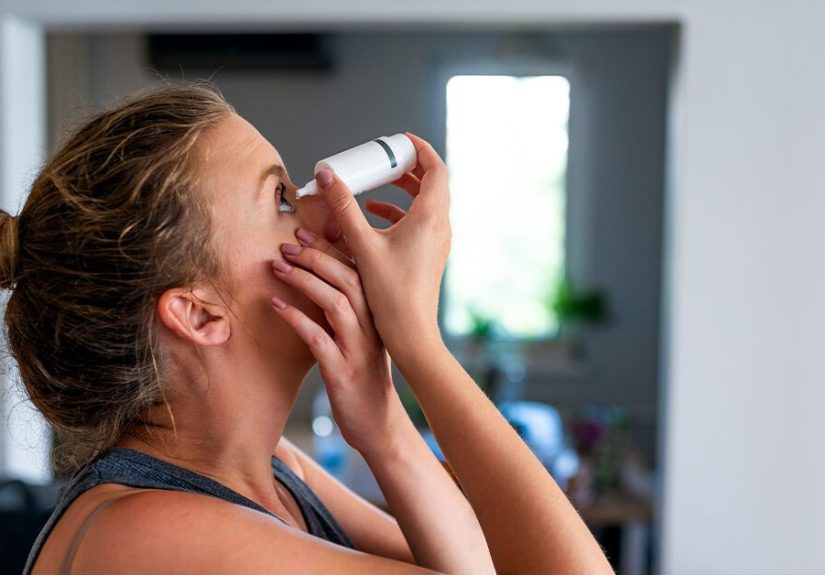
With chemical eye exposures, the #1 goal is simple: dilute and remove the chemical as quickly as possible. Translation: flush your eye. Right away. Not after you finish Googling. Not after you text your group chat. Now.
Step-by-step: flushing hydrogen peroxide out of the eye
- Start rinsing immediately. Use clean, running water (lukewarm is usually more tolerable). A sink faucet, shower stream, or eyewash station works.
- Hold your eyelids open. This is annoying, but it helps water reach the entire surface of the eye.
- Flush for a full 15–20 minutes. If symptoms are severe or you’re unsure what chemical/concentration it was, longer flushing is reasonable.
- Remove contact lenses if you can. If a lens is stuck, keep flushingdon’t turn this into a wrestling match with your eyeball.
- Don’t rub your eye. Rubbing can worsen surface injury, especially if the cornea is irritated.
- Don’t “neutralize” it with other liquids. Skip vinegar, baking soda solutions, or anything that sounds like a middle-school volcano project.
- Call Poison Control for guidance. In the U.S., you can call 1-800-222-1222 for free, confidential advice.
What if you don’t have “perfect” water?
Use what you’ve got. In an emergency, the best irrigation fluid is the one that’s immediately available and safe enough to flush withbecause time matters more than perfection. The priority is rapid dilution and removal.
When to get urgent help (don’t tough it out)
After flushing, it’s smart to get medical adviceespecially because eye injuries can be sneaky. Seek urgent care or emergency evaluation right away if any of the following apply:
- Vision changes that persist after flushing (blurred, hazy, double vision, or reduced vision)
- Severe pain or you can’t keep the eye open
- Significant swelling of the eyelids or eye surface
- Persistent redness, tearing, or light sensitivity hours after flushing
- You suspect a high-concentration product (industrial peroxide, strong beauty chemicals, unknown concentration)
- A child was exposed (kids can’t always describe symptoms well, and they deserve extra caution)
- Contact lens peroxide solution was inserted directly (especially if the lens stayed in place for a bit)
If you have the container, bring it with you. Clinicians love helpful clues almost as much as they love not having to guess what you splashed into your eye.
What a clinician may do (so you know what to expect)
In a clinic or emergency setting, evaluation focuses on how much injury occurred and whether more irrigation is needed. Depending on the situation, treatment may include:
- Continued irrigation (yes, sometimes more flushingbecause chemistry doesn’t care that you’re tired)
- Checking the eye surface with a slit lamp exam
- Fluorescein staining to look for corneal epithelial defects (tiny surface injuries show up under special light)
- Eyelid eversion to check for trapped particles or residual chemical
- Lubricating drops/ointments to support healing and comfort
- Antibiotic drops/ointment if there’s concern about surface damage that could invite infection
- Pain management and sometimes specific drops to reduce spasm-related discomfort
- Ophthalmology follow-up if there are signs of significant corneal injury
For more severe chemical burns (not typical for brief, mild household exposures), ophthalmology may use additional prescription therapies and close monitoring to prevent complications like scarring.
Recovery timeline: how long will this last?
Recovery varies, but here’s a realistic guide:
Mild exposure (quickly flushed)
Burning often improves noticeably after irrigation, though redness and irritation can linger. Vision may be blurry briefly from tearing and surface irritation. Many people feel better within hours, but if symptoms persist, get checked.
Moderate exposure (strong symptoms, contact lens involvement, or delayed flushing)
You may have ongoing pain, light sensitivity, and blurred vision for a day or more. Corneal surface injury can take time to re-epithelialize (heal). Follow-up is important to ensure healing is on track.
When can you wear contacts again?
Not until a clinician says it’s safe. Wearing contacts too soon can slow healing, increase irritation, and raise infection risk. If you used peroxide solution incorrectly, assume your eyes need a breakeven if you’re emotionally attached to your lenses.
What not to do (please don’t freestyle this)
- Don’t rub your eye.
- Don’t put hydrogen peroxide in your eye intentionally. It’s not a safe “home remedy.”
- Don’t use random liquids to “cancel it out.” Water irrigation is the right move.
- Don’t patch the eye tightly. If an eye is injured, it needs proper evaluationnot a DIY cover-up.
- Don’t reuse contaminated contact lenses or cases. If a lens was exposed to peroxide incorrectly, discard it unless your eye care professional advises otherwise.
Prevention: how to keep this from happening again
Most peroxide eye exposures are preventable. A few habits go a long way:
- Store peroxide products separately from eye drops and contact lens solutions.
- Keep hydrogen peroxide lens systems in their original box and always use the correct case.
- Never transfer solutions into “travel bottles” unless they’re clearly labeled and designed for that product.
- Turn on the lights when handling lenses. Your eyeballs deserve visibility.
- Wear protective eyewear when using chemicals, mixing cleaners, or working with pressurized sprays.
- Teach kids chemical safety and keep household chemicals out of reach.
FAQ
Is 3% hydrogen peroxide in the eye dangerous?
It can cause immediate stinging, tearing, redness, and blurred vision. Serious injury is less common with brief exposures, but it’s still important to irrigate promptly and get medical advice if symptoms persist or vision changes occur.
How long should I flush my eye?
Aim for 15–20 minutes minimum of continuous flushing. Some first-aid guidance recommends at least 20 minutes, and longer irrigation may be appropriate when symptoms are severe or the chemical is unknown. When in doubt, keep flushing while you arrange help.
Can I use saline instead of water?
Yessterile saline is commonly used in medical settings and is fine if you have it. But tap water is absolutely appropriate for immediate first aid because speed matters most.
Should I call Poison Control or an eye doctor?
Start with flushing. Then you can call Poison Control for immediate guidance. If symptoms are significant, persistent, or you have vision changes, seek urgent medical evaluation (and an eye doctor may be involved).
What if my contact lens was in when it happened?
Begin flushing immediately. Remove the lens if possible without forcing it. A contact lens can trap chemicals against the cornea, so this situation deserves extra caution and medical advice.
Experiences people commonly report (and what they learned)
Note: The “experiences” below reflect common real-world scenarios and what people often describe after accidental hydrogen peroxide eye exposure. They’re not a substitute for medical care, but they can help you recognize patternsand avoid repeating them.
1) “I thought it was contact solution… and my eye immediately disagreed.”
This is the most common story among contact lens wearers using hydrogen peroxide systems. People describe inserting a lens and feeling an instant, powerful burning that triggers nonstop tearing and an urge to clamp the eye shut. The lesson almost always sounds like: “I didn’t realize this bottle was different.” Many later switch to storing peroxide systems separately, using a brightly colored label, or committing to a rule: peroxide systems never sit next to regular multipurpose solution.
2) “I did the neutralization… but I rushed the timing.”
Some people follow the steps correctlyexcept for one detail: they don’t wait long enough. They’ll say they soaked lenses “for a bit” and assumed it was fine. With peroxide systems, “a bit” can be the difference between safe and scorching. The common takeaway is to treat the soak time like a real requirement, not a suggestion, and to avoid shortcuts when your cornea is the one paying the price.
3) “I was cleaning, turned my head, and caught a splash.”
Household cleaning is full of surprise physics: a spray nozzle that shoots sideways, a sponge that flicks droplets, a bottle that burps a little chemical mist. People often report burning, tearing, and redness within secondsfollowed by the realization that they weren’t wearing eye protection for something they do all the time. Afterward, many keep protective glasses under the sink or switch to cleaning methods that reduce splatter (wipes instead of sprays, slower pouring, better ventilation and lighting).
4) “I flushed for a minute… and assumed that was enough.”
A lot of people stop flushing too early because the first rinse is uncomfortable or because symptoms briefly fadethen come roaring back. Many later say the best advice they received was: keep flushing for the full recommended time, even if it’s annoying. Several people also mention that holding the eyelids open (gently) and letting water flow across the eye surface made a difference compared with quick splashes.
5) “My vision was blurry and it freaked me out.”
Blurred vision is a common, scary symptomsometimes from tearing and irritation, sometimes from a temporarily disrupted corneal surface. People often describe relief after being evaluated and learning whether there was a corneal abrasion or epithelial damage. The biggest lesson here is a good one: if vision changes persist after flushing, don’t guessget checked.
6) “I felt fine later… but the next day it still hurt in bright light.”
Light sensitivity can linger even when the eye looks “less red.” People who sought follow-up care often learned that mild surface injury can take time to heal and that lubrication, rest from contacts, and avoiding irritants helped. The repeat theme is simple: improvement is great, but persistent symptoms deserve professional attention.
If you recognize your situation in any of these stories, take the most useful part: flush thoroughly, don’t rub, and get help if symptoms persist or vision changes. Your eye does not give bonus points for bravery.
Bottom line
Getting hydrogen peroxide in your eye is painful and alarming, but the best response is straightforward: flush immediately and thoroughly, remove contacts if possible, and seek guidance or urgent care based on symptoms and product concentration. Most importantly: don’t treat hydrogen peroxide like an eye rinse or a home remedy. Your eyes are for seeing sunsets, not for running chemistry experiments.