Table of Contents >> Show >> Hide
- What Was the Ice Record, Exactly?
- How the Frozen Single Actually Worked
- Why Making a Record Out of Ice Is So Ridiculously Difficult
- Why the Idea Worked So Well as Marketing
- What the Ice Record Says About Vinyl Culture
- Could Ice Ever Become a Real Music Format?
- The Experience of Making and Playing an Ice Record
- Final Thoughts
Most songs ask for a play button. This one asked for a freezer.
That is what made the story behind the ice record single so deliciously weird. Instead of dropping a normal 7-inch record on a turntable, listeners had to pour water into a specially designed mold, wait about six hours for it to freeze solid, and then rush that frozen disc to a record player before physics ruined the party. It sounds like something invented during a late-night brainstorming session fueled by coffee, bad ideas, and one person saying, “Hear me out…” But it was real, playable, and brilliant.
The project centered on Blue Ice, a single by indie band Shout Out Louds. To launch the track, the team behind the campaign created a record made from actual ice rather than standard vinyl. That alone made it a novelty. The fact that it could really produce music made it art, engineering, and marketing all rolled into one chilly little miracle.
For music fans, the frozen single was a reminder that physical media can still surprise us. For marketers, it was proof that a memorable format can become part of the story. And for anyone who has ever complained that vinyl is “high maintenance,” this project politely replied, “That is cute. Try scheduling your listening session around freezer space.”
What Was the Ice Record, Exactly?
The headline refers to a special release of Shout Out Louds’ song Blue Ice, which was distributed as a kit rather than as a traditional pressed record. Instead of receiving a ready-to-play disc, selected fans and media recipients got the ingredients needed to make one. The kit included a mold with the groove pattern for the song and water meant to be frozen into a playable shape.
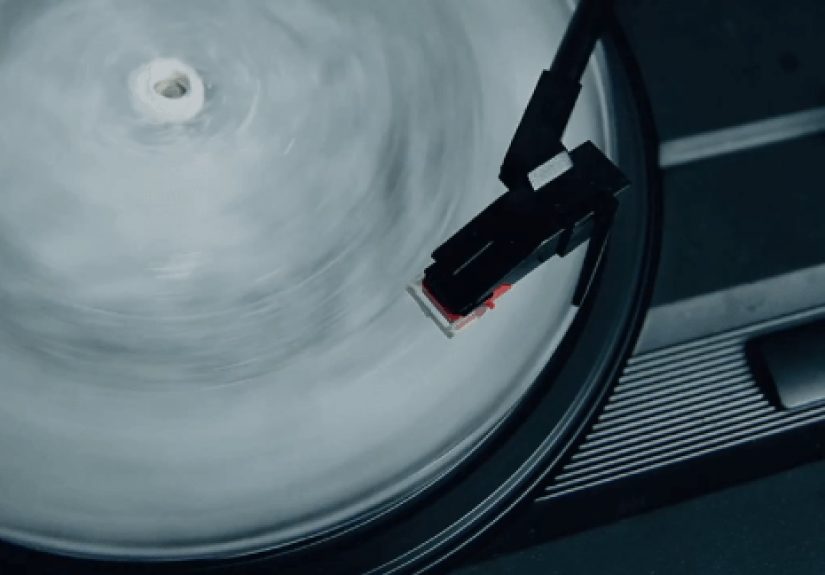
Once the mold was filled and left in the freezer for roughly six hours, the result was a translucent disc carrying the song in physical grooves, just like a conventional record. A stylus could trace those grooves and convert the vibrations into sound. That is the same basic principle behind traditional records: the needle follows a groove, the groove carries audio information, and the player turns that motion into music. The difference here was the material. Vinyl is durable enough to survive repeated play. Ice is, well, committed to a much shorter career.
Only a tiny number of these kits were made, which gave the release instant scarcity. But scarcity was only half the appeal. The real charm was the absurd seriousness of the whole thing. This was not a fake prop, not a concept sketch, and not a piece of digital marketing pretending to be tactile. It was a functioning, frozen record that demanded patience, care, and a little bit of courage from anyone brave enough to lower a needle onto something that belonged in a drink.
How the Frozen Single Actually Worked
The mold did the heavy lifting
A normal vinyl record is made by pressing heated material into a stamper that contains the negative of the grooves. The ice record used a different path to reach a similar outcome. Instead of hot vinyl being pressed into shape, water was poured into a specially prepared mold and frozen until it took on the groove pattern. Same destination, much stranger road.
This detail matters because records are not just flat circles with music vibes sprinkled on top. They depend on extremely precise groove geometry. If the groove is too rough, too shallow, too bubbly, or too uneven, the stylus cannot track it properly. That is why the frozen record was both a design stunt and a genuine fabrication challenge.
Why six hours in the freezer?
The six-hour freeze time was not there for dramatic effect, though it certainly added some. Water needed enough time to solidify all the way through so the disc would keep its shape when removed from the mold and placed on a turntable. Freeze it too little, and you do not get an avant-garde listening experience. You get slush with ambition.
That waiting period also became part of the campaign’s magic. Modern music is built around instant access. Tap a screen, stream the song, move on. The ice record single forced the listener to do the exact opposite. It required anticipation. It built a tiny ritual. You did not just hear the song; you prepared for it. In a culture of immediate playback, the freezer became a pre-listening lounge.
Then came the race against melting
Once the disc left the freezer, the clock started ticking. Playback was possible, but permanence was not. Reports and demonstrations from the time described the sound as recognizable but imperfect, with a warbly, fragile quality and occasional skips. That was not a bug in the concept. It was the concept. The record was literally disappearing while it performed.
That made the single feel almost poetic. Most records are built to preserve a performance. This one staged a vanishing act. The medium was temporary, unstable, and a little dramatic, which, to be fair, is a very on-brand quality for a song called Blue Ice.
Why Making a Record Out of Ice Is So Ridiculously Difficult
Grooves demand precision
Analog audio is physical information. A record player does not “interpret the vibe” of a song. It reads tiny variations in a groove. That is why traditional record manufacturing relies on carefully cut masters, metal stampers, and durable materials designed to hold fine detail.
Ice is not ideal for that job. It can trap bubbles, chip at the edges, soften quickly, and vary in density across the disc. Any one of those issues can affect playback. Even a small inconsistency can cause the stylus to jump or the audio to wobble. In other words, the frozen format was impressive precisely because it flirted with failure.
Air bubbles are the tiny villains
One of the technical problems reported in coverage of the project was the need to reduce air bubbles. Bubbles are bad news for a playable record because they interrupt the groove surface. That means the stylus does not glide smoothly; it stutters, skips, or loses the signal. Using distilled water helped improve clarity and consistency, which made the disc more likely to work.
That may sound like a small technical footnote, but it is actually the whole ballgame. A record is a precision object pretending to be a casual one. It looks simple. It is not. The ice version took that reality and turned it into a science experiment with a soundtrack.
Material stability is everything
Vinyl became the standard record material for a reason. It is durable, moldable, and good at preserving groove detail. The long-playing record format that became standard in the late 1940s depended on that stability. Ice, by comparison, is chaos in a disc shape. It changes as room temperature changes. It weakens during use. It is not just fragile; it is actively trying to return to its liquid origin story.
That instability made the release memorable. It also guaranteed that the format would remain a stunt, not a serious rival to vinyl, CD, or streaming. Nobody wants their record collection to depend on freezer inventory and weather conditions, unless they are trying very hard to impress exactly three people.
Why the Idea Worked So Well as Marketing
This is where the project gets really smart. The band was not simply releasing a song. They were creating a story around the song. The title Blue Ice gave the campaign a built-in concept. The song’s themes reportedly tied into fading love, and the disappearing format echoed that mood in a way a standard digital release never could.
That is the difference between promotion and good promotion. Good promotion does not just announce a track. It extends the meaning of the track into a format, image, ritual, or object people want to talk about. The frozen record did exactly that. It turned a single into an experience, and the experience into a headline.
It also benefited from something every marketer dreams about: built-in shareability. A record made from ice is instantly visual, instantly explainable, and just strange enough to travel. You do not need a long pitch for that. You need one sentence and maybe a raised eyebrow. “There is a song you can only play after freezing it.” Done. The conversation starts itself.
What the Ice Record Says About Vinyl Culture
The project also landed during a period when vinyl culture had reasserted itself as more than nostalgia. Records were no longer just old technology. They were becoming ritual objects againthings people collected, displayed, cleaned, debated, and loved for their physical presence.
The playable ice record pushed that logic to a delightful extreme. It asked: if listeners love tactile formats, how tactile are we willing to get? Turns out, pretty tactile. Fill the mold. Freeze the water. Handle the disc carefully. Drop the needle. Listen while it lasts. It was vinyl culture with the safety rails removed.
At the same time, the stunt highlighted why traditional records still matter. Durable media win because they balance ritual with practicality. A normal record offers touch, artwork, collectibility, and analog playback without demanding that you sprint from kitchen appliance to turntable like you are defusing a bomb. The ice version was a tribute to physical media, but it was also a backhanded compliment to boring old reliability.
Could Ice Ever Become a Real Music Format?
In any practical sense, no. Ice is too fragile, too temporary, and too dependent on environmental conditions. Even if you solved some of the bubble and shape issues, you would still be left with the small inconvenience that the format melts. That is not a flaw you can patch with better branding.
But that does not make the idea trivial. Experimental formats matter because they remind us what a medium really does. By replacing vinyl with ice, the project exposed the mechanics that listeners usually ignore: grooves, tracking, material quality, stability, and the physical act of playback. The frozen single was part publicity, part design object, and part educational tool wearing a very stylish winter coat.
It also belonged to a broader tradition of musicians and labels experimenting with physical releases to make a point. Some special editions rely on unusual packaging, odd materials, or interactive assembly. Most are gimmicks in the neutral sense: clever, memorable devices designed to create attention. The best ones, however, deepen the meaning of the music. The ice record did that. It was weird, yes, but it was weird with purpose.
The Experience of Making and Playing an Ice Record
What makes this story linger is not just the engineering. It is the experience. Even without holding one in your own hands, it is easy to understand why the process fascinated people. Everything about it slows the listener down and makes the act of hearing the song feel ceremonial.
Imagine opening the kit. Instead of tearing plastic from a factory-made single and dropping it on the platter, you are handed responsibility. There is a mold, a bottle of water, and the knowledge that your listening session now depends on whether you can follow instructions like a competent adult. Already, the relationship to the music feels different. You are not just consuming a track. You are preparing a temporary object that has to be made correctly before the first note can exist.
Then comes the wait. Six hours is not forever, but it is long enough to create suspense. The song stops being background noise and starts acting like an appointment. During that freezing window, anticipation does what anticipation always does: it makes the result feel larger. By the time the record is ready, it is no longer just a single. It is an event. The freezer has become part workshop, part chapel, part very cold dressing room.
The best part is the moment of transfer from freezer to turntable. That is where the whole project turns into theater. A normal record asks for basic care. An ice record asks for urgency, delicacy, and maybe a whispered “please do not crack.” It is a performance before the performance. Hands move more carefully. Every second seems louder. You are suddenly aware of temperature, surface texture, and the ridiculous fact that the success of your music playback now depends on frozen water behaving itself for a few precious minutes.
And then the stylus drops.
The sound, by all accounts, is not pristine in the audiophile sense. It wobbles. It crackles. It can skip. But those imperfections are exactly what make the experience memorable. On a streaming app, a glitch feels like failure. On a melting record, a wobble feels like honesty. You can hear the format struggling to exist. The song is not merely played; it is happening in real time, under pressure, with the room itself acting like a silent opponent.
That gives the listening session an emotional texture that polished formats usually hide. There is tension in it. There is humor in it. There is also something oddly tender about watching a fragile object do its best to carry a song before disappearing. It turns playback into a brief collaboration between music, material, machine, and environment.
Afterward, the experience probably stays with the listener longer than the sound quality does. Nobody walks away saying the ice disc outperformed a well-mastered vinyl pressing. That is not the point. The point is that it transformed listening from a passive habit into a memorable act. It made the medium visible again. It made the mechanics audible again. And it gave people a story they could retell with the kind of grin reserved for ideas that should not have worked but somehow did.
Final Thoughts
The phrase “Ice Record Single Needs Six Hours In The Deep Freeze Before You Can Listen” sounds like clickbait from an alternate universe where refrigerators run record labels. But the underlying story is real, and it remains a fantastic example of what happens when music promotion, product design, and analog audio mechanics collide.
The frozen release of Blue Ice worked because it did more than attract attention. It linked the song’s identity to its format, made listeners participate in playback, and turned a simple single into a piece of performance art. It was impractical, unstable, and absolutely not the future of music distribution. Which is exactly why people still remember it.
Some formats are built to last forever. Others are built to make a point before puddling slightly near your turntable. The ice record did the second job beautifully.