Table of Contents >> Show >> Hide
- Quick Franchise Snapshot (So We’re Ranking the Same Thing)
- How This Article Ranks Things (No Fake “Objective” Energy)
- Overall Opinion: Why This Series Keeps a Fanbase
- Ranking #1: Best “What Kind of Isekai Is This?” Category
- Ranking #2: Smartphone Gimmick Execution (Best Uses of the Phone)
- Ranking #3: Touya’s “Overpowered Protagonist” Scorecard
- Ranking #4: Season 1 vs Season 2 (Anime-Only Take)
- Ranking #5: Top Character Contributions (Not a “Best Girl” Contest)
- So… Is It “Good”? Here’s the Honest Recommendation
- Fan Experiences (500+ Words): What It Feels Like to Live With This Series
“In Another World with My Smartphone” (a.k.a. Isekai wa Smartphone to Tomo ni.) is one of those anime franchises that shows up, politely asks for
a comfy chair, and then refuses to leavemostly because it knows exactly what it is: low-stress, high-escapism, power-fantasy comfort food with a side of
fantasy slice-of-life and a “yes, the smartphone is still here” gimmick.
If you’re looking for gritty stakes, constant losses, and the emotional stability of a soap opera cliffhanger, this isn’t your station. But if you want an
easygoing isekai where the lead is absurdly capable, the world is friendly (or quickly becomes friendly), and the vibe says “relax, I’ve got this,” then
welcome to the coziest magical LTE plan imaginable.
Quick Franchise Snapshot (So We’re Ranking the Same Thing)
The story follows Touya Mochizuki, a teen who dies due to a divine oopsie and gets reincarnated into a fantasy world. As part of the apology package, he
keeps his smartphonenow magically poweredand receives boosted abilities that make him wildly overqualified for basically every problem he meets.
The series started as a web novel, later became a light novel series, spawned a manga adaptation, and received two anime seasons (Season 1 in 2017 and
Season 2 in 2023). It’s widely available for streaming, and it has an established English release pipeline for readers who prefer print/digital novels.
How This Article Ranks Things (No Fake “Objective” Energy)
Rankings and opinions are always a little messylike trying to rank pizzas when one of them is “breakfast pizza.” So here’s the method:
- Entertainment value: Do you keep hitting “next episode”?
- Premise payoff: Does the smartphone angle actually matter?
- Character utility: Do characters influence the plot, or just decorate it?
- Rewatch/comfort factor: Can it be your “background anime” without causing chaos?
- Genre honesty: Does it deliver what it promises?
Overall Opinion: Why This Series Keeps a Fanbase
The simplest explanation: it’s a gentle isekai. A lot of viewers use it as a palate cleanser between heavier showssomething to watch when you’re
tired, stressed, or just not in the mood for emotional damage. The main character’s overpowered status removes most tension, but it also removes anxiety.
That trade-off is the whole point.
Critics often point out that the stakes feel low, the wish-fulfillment is loud, and the premise sometimes forgets its own headline feature (the smartphone)
while focusing on the expanding cast and world-hopping. Fans respond with a shrug and a grin: “Yeah. And?” When you order comfort food, you don’t complain
that it didn’t challenge you to a duel.
Ranking #1: Best “What Kind of Isekai Is This?” Category
-
Comfort-Fantasy Isekai (Rank: #1 for Cozy Escapism)
The world generally rewards kindness, competence, and calm leadership. Touya is less “tragic hero” and more “friendly neighborhood problem-solver with
magic Wi-Fi.” If you want a laid-back fantasy road trip with light politics and light adventuring, this show lives here. -
Power-Fantasy Isekai (Rank: #2 for Low-Stress “I Win” Energy)
Touya’s abilities make conflicts feel like speed bumps. For some viewers, that’s the funwatching a protagonist solve problems smoothly instead of
suffering for twelve episodes before learning teamwork. -
Harem-Romcom Isekai (Rank: #3 for “This Is Definitely Part of the Brand”)
Romantic comedy elements and a large ensemble of female characters are core to the franchise’s identity. Whether you find that charming, awkward, or
exhausting depends on your personal taste. The key is that the tone stays relatively light rather than explicit.
Ranking #2: Smartphone Gimmick Execution (Best Uses of the Phone)
The phone isn’t just a propat least, not when the story remembers the assignment. Here are the best “smartphone moments” as a concept ranking (not a spoiler
list of specific scenes).
-
GPS and Navigation (Rank: #1)
This is the most consistently practical “other world” feature. A fantasy map is great until you’re lost. Magical GPS turns travel into a manageable
problem instead of a multi-episode detour into “Oops, bandits again.” -
Knowledge-on-Demand (Rank: #2)
Even without modern infrastructure, the smartphone functions as a bridge to informationuseful for identifying items, improving craft solutions, or
introducing basic concepts that help with problem-solving. It’s one of the cleanest ways the series reinforces “Touya is prepared.” -
Camera Utility (Rank: #3)
The camera is a sneaky world-building tool: documentation, reference images, and quick evidence-gathering all become possible in a medieval-ish setting.
It’s also a simple way to remind viewers: yes, the title wasn’t clickbait. -
“Flashlight Level” Convenience (Rank: #4)
Sometimes the phone is useful in the most basic wayslight, timekeeping, and simple utility features. Not glamorous, but surprisingly believable.
Ranking #3: Touya’s “Overpowered Protagonist” Scorecard
Overpowered leads can be boring if they erase story tension. They can also be satisfying if the story shifts its focus from “Can he win?” to “What kind of
world does he build when he always can?”
-
Best Trait: Calm, Cooperative Problem-Solving
Touya’s vibe is less “edgelord domination” and more “helpful competence.” The series leans into diplomacy, favors, and community-building rather than
constant revenge arcs. -
Biggest Risk: Low Stakes Can Flatten Momentum
If conflicts resolve too easily, episodes can feel like a checklist of new characters, new locations, and new perksfun for some, repetitive for others.
-
Most Interesting Angle: Leadership and “Accidental Nation-Building”
The franchise is at its best when it uses Touya’s competence to explore relationships, governance, alliances, and the “everyone relies on the guy who
always has the answer” dynamic.
Ranking #4: Season 1 vs Season 2 (Anime-Only Take)
The two seasons are separated by years, and Season 2 arrives with a refreshed production setup and a clear goal: continue expanding the cast and world while
keeping the cozy vibe intact.
-
Season 1 (2017) Rank: #2 (Classic Comfort Setup)
Season 1 is the “welcome packet.” It establishes Touya’s reincarnation, the smartphone rules, the early companions, and the franchise’s signature tone.
It’s also where you’ll decide if this style of isekai works for youbecause the series is very honest about what it’s doing. -
Season 2 (2023) Rank: #1 (More of What Fans Came For)
Season 2 leans into the established formula: more characters, more fantasy-life vignettes, and continued escalation in “Touya is somehow the solution to
everything.” If you liked Season 1, Season 2 is basically the upgraded plan with extra data.
Ranking #5: Top Character Contributions (Not a “Best Girl” Contest)
This franchise has a big ensemble. Rather than ranking characters by vibes alone, here’s a more useful lens: who contributes most to story movement, tone,
and world texture?
-
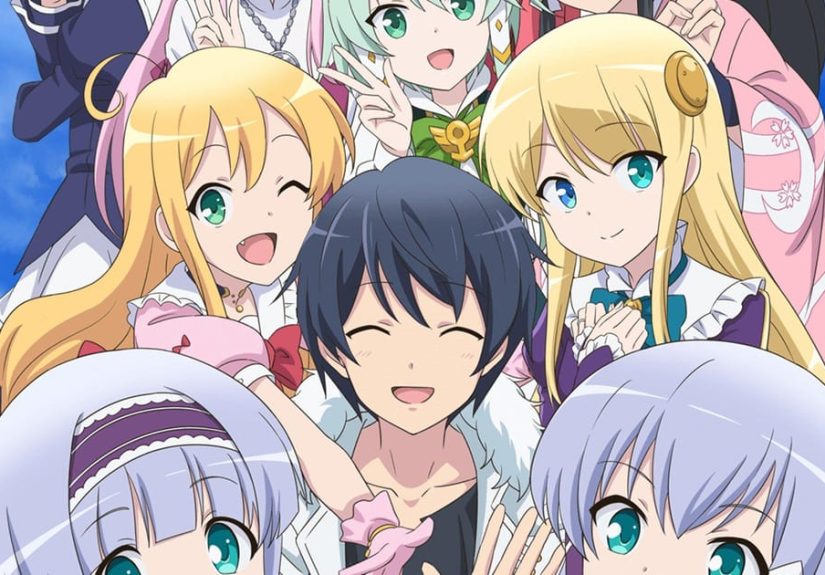
Yumina Rank: #1 for Political/World-Link Utility
Characters tied to leadership and diplomacy matter in a series that keeps drifting into “friendly kingdom management.” Yumina often represents that bridge
between adventuring and broader society. -
Elze & Linze Rank: #2 for Party Dynamics
A duo with contrasting energy is an easy way to keep scenes moving. They help provide rhythm: banter, reaction shots, and “someone has to say what the
viewer is thinking.” -
Yae Rank: #3 for Genre Flavor
Characters who introduce distinct cultural or combat flavors help prevent the fantasy world from feeling like one endless beige tavern. Yae’s presence is
part of that variety. -
Leen Rank: #4 for “Adult in the Room” Energy
When a story is very light, characters who can ground sceneswithout killing the funare valuable. Leen often plays that stabilizer role.
So… Is It “Good”? Here’s the Honest Recommendation
“In Another World with My Smartphone” is good at being what it is. The more accurate question is: do you want what it’s selling?
You’ll probably enjoy it if you like:
- Low-stress fantasy with an overpowered lead
- Cozy, episodic adventures and friendly world-hopping
- Light romance/ensemble comedy elements (kept relatively tame in tone)
- “Competence fantasy” where problems get solved efficiently
You may bounce off it if you prefer:
- High-stakes plotting and hard-won victories
- Deep character flaws that take seasons to resolve
- Minimal wish-fulfillment and tighter storytelling focus
- A premise that constantly spotlights its headline gimmick
Fan Experiences (500+ Words): What It Feels Like to Live With This Series
One of the most interesting things about “In Another World with My Smartphone” isn’t a single plot twist or a legendary battleit’s how people
use the series. For a lot of viewers and readers, this franchise becomes a kind of media comfort object: something you pick up when you don’t want a
story to fight you.
The most common “experience pattern” is the binge test. You watch a few episodes expecting either instant love or instant cringe, and then you realize it’s
oddly easy to keep going. The pacing is designed for forward motion: new place, new problem, quick solution, friendly conversation, repeat. It’s almost like
a travel vlog, but the traveler can cast magic, invent convenience, and befriend half the continent before dinner.
Another popular experience is the “background anime” approach. Some shows demand full attention because every line is foreshadowing, every glance is a
betrayal, and every sandwich is secretly cursed. “Smartphone” rarely requires that level of vigilance. People put it on while doing homework, cleaning,
gaming, or winding downbecause the tone is steady. When you look away for a minute, you don’t come back to twenty plot threads on fire. You come back to a
fantasy world that is still, generally speaking, polite.
Readers often report a slightly different experience. The light novels can feel like the “extended cut,” where Touya’s thought process and the world’s
mechanics are more present. That matters for a series built on competence fantasy: if the protagonist is always prepared, the fun is sometimes in the
explanation of how he navigates decisions. For people who enjoy world-building and gradual accumulationnew allies, new responsibilities, new
regionsthe novel format can feel smoother than the anime’s compressed pace.
Then there’s the community experience: discussions that are half meme, half genuine comfort recommendation. You’ll see comments like “It’s not peak, but it’s
my nap-time isekai,” which is basically the franchise’s unofficial slogan. Debates usually don’t revolve around “Is it masterpiece?” but rather “What mood
is this for?” Fans trade notes on which parts feel most cozy, which arcs feel most like classic adventuring, and which episodes are best when you want
something light. Even criticism often comes with a winkbecause the show never pretends to be a grimdark epic.
Finally, one of the most relatable experiences is the “isekai reset.” People cycle through heavier animethrillers, tragedies, intense long-runnersthen
jump into “Smartphone” as a reset button. It’s the storytelling equivalent of putting on sweatpants: not glamorous, not trying to impress anyone, but deeply
practical. If you let it be what it is, it can be surprisingly soothing.
In other words, the franchise’s best “experience” isn’t the shock of noveltyit’s the reliability. In a media world that constantly asks you to keep up,
“In Another World with My Smartphone” quietly offers a different deal: you can relax, the protagonist has a plan, and yes, the phone is charged.