Table of Contents >> Show >> Hide
- The viral stunt that made the internet clutch its pearls
- So, was the tattoo real?
- Why this story blew up so fast
- The bigger issue behind the prank: tattoo regret is real
- Relationship tattoos are still the internet’s favorite cautionary tale
- Was her explanation convincing?
- What this says about social media in 2026 and beyond
- Experiences related to the topic: what stories like this feel like in real life
- Final thoughts
Updated: what looked like one of the wildest relationship tattoos on the internet turned out to be a fake. The outrage was real, though. Very real.
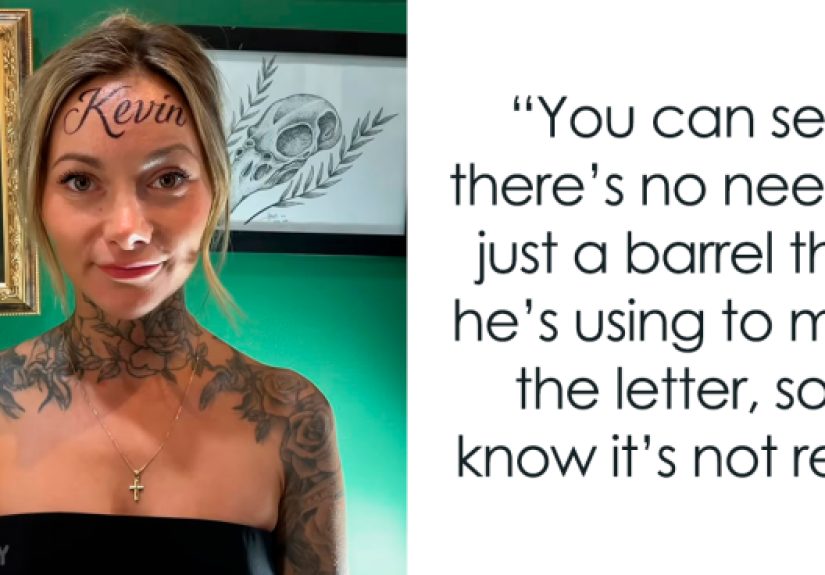
Social media has a special talent for turning a single eyebrow-raising post into a full-blown cultural event. Add romance, a forehead tattoo, and the word “Kevin” written where good judgment usually lives, and you have the kind of viral chaos people simply cannot scroll past. That is exactly what happened when influencer Ana Stanskovsky appeared to get her boyfriend’s name tattooed across her forehead, only to later admit the whole thing was fake.
Once the reveal landed, the story shifted from “Did she really do that?” to “Why did we all care so much?” And that is where this tale gets more interesting than the ink itself. The fake forehead tattoo was not just internet bait. It became a case study in how shock content works, why people are obsessed with permanent romantic gestures, and how quickly online audiences can swing from horror to humor to “called it.”
This updated look at the viral moment breaks down what happened, why it exploded, what it says about tattoo regret, and why the internet remains undefeated at turning one eyebrow-raising stunt into a weeklong public debate.
The viral stunt that made the internet clutch its pearls
At first glance, the video had everything required for maximum online combustion. There was a tattoo chair. There was a tattoo artist. There was visible “ink.” And there, front and center, was the boyfriend’s name stretched across the influencer’s forehead like a lifetime subscription to future explanations.
Viewers reacted exactly as you would expect. Some were stunned. Some were amused. Some were convinced they were watching one of the worst tattoo decisions ever uploaded. Others immediately smelled a prank. In the comments, disbelief and popcorn emojis practically formed a union.
The fascination came from the location as much as the content. A small wrist tattoo? The internet would have shrugged. A shoulder tattoo? Mild concern at most. But a bold name tattoo on the forehead lives in a totally different zip code. It feels dramatic, irreversible, and intentionally provocative. In other words, it was engineered for virality, whether that was the original goal or not.
So, was the tattoo real?
No. After leaning into the uproar and allowing the debate to keep cooking, Stanskovsky eventually admitted the tattoo was fake. She wiped it off in a follow-up reveal and said the stunt was designed to send a message about tattoo regret and impulsive decisions.
That explanation gave the story a second life. Suddenly, this was no longer just a viral tattoo post. It became a morality play with a social media twist: create something outrageous, let the internet lose its collective mind, then return with a lesson attached. It was half prank, half PSA, with a dash of “please keep discussing me in the algorithm.”
Why people were skeptical from the beginning
To be fair, many viewers were not fooled. Critics pointed to details in the video that did not look convincing to experienced tattoo watchers. The process appeared too neat. The skin did not seem irritated enough. The setup looked more theatrical than clinical. Tattoo professionals and skeptical commenters quickly argued that the whole thing looked more like performance than permanent body art.
And that early doubt is part of what made the stunt work so well. The internet loves a mystery almost as much as it loves a bad idea. Was it real? Was it fake? Was it both fake and somehow emotionally exhausting? The debate fueled more engagement than a straightforward reveal ever could.
Why this story blew up so fast
Shock value always has a head start
There are some topics social media users can never resist: breakups, money, public meltdowns, and tattoos that seem impossible to defend at Thanksgiving dinner. A forehead tattoo with a romantic angle checks multiple boxes at once. It is visually dramatic, emotionally loaded, and easy to react to in one sentence.
That matters because the modern attention economy rewards immediate emotional responses. People do not need deep context to engage with a post like this. They only need half a second to think, “Oh no,” and then share it with three friends.
It played into the internet’s favorite debate: romance or recklessness?
Relationship tattoos have always divided people. One camp sees them as a sweet, all-in declaration of love. The other sees them as future cover-up fuel. Put that argument on a forehead, and the volume goes from “spirited discussion” to “digital town hall meeting.”
The story touched a nerve because it turned a familiar question into an extreme image: how far should anyone go to prove love? Matching playlists are charming. Matching hoodies are harmless. Matching foreheads? That is where the conversation tends to get a little louder.
The reveal gave the stunt a second act
Many viral stories burn bright and die quickly. This one lasted because it came with a twist. First, people debated whether the tattoo was real. Then they debated whether the explanation for faking it was sincere. That two-stage structure gave the content extra mileage.
In internet terms, this was efficient storytelling: outrage, suspicion, confirmation, then commentary. It is the online equivalent of a magician making the audience gasp, then showing them the trick, then selling a TED Talk about why the trick mattered.
The bigger issue behind the prank: tattoo regret is real
The fake tattoo landed because it tapped into something genuine. Tattoos may be more mainstream than ever, but regret has never completely left the chat. Americans are widely tattooed, and while most people do not regret their ink, a meaningful minority say they do. That makes the stunt oddly effective: ridiculous on the surface, but connected to a real anxiety underneath.
And regret is not always about the tattoo being “bad.” Sometimes it is about timing, age, relationships, career changes, identity shifts, or simply evolving taste. The dragon that felt profound at 19 can feel like an uninvited roommate at 34. The partner’s name that once looked romantic can become an accidental tribute to terrible judgment.
That is why tattoo removal has become a bigger conversation in recent years. Removal technology has improved, but it is still not magic. The process can take multiple sessions, cost a lot of money, and produce imperfect results depending on the ink, skin, and location. In other words, “I’ll just remove it later” is not the comforting plan people imagine in the heat of a bold decision.
Face tattoos raise the stakes
A tattoo on the arm can hide under a sleeve. A tattoo on the back can remain a personal secret with great posture. A tattoo on the forehead announces itself before you say hello. That visibility is what made this stunt feel so dramatic.
Face tattoos carry heavier social baggage because they are impossible to ignore. They become part of your first impression, your personal branding, and your everyday interactions. Even in a world that is much more accepting of tattoos than it used to be, facial ink still reads as unusually bold. So when viewers saw “Kevin” stretched across a forehead, they were not just reacting to a name. They were reacting to the idea of choosing maximum permanence in maximum public view.
Relationship tattoos are still the internet’s favorite cautionary tale
There is a reason stories about name tattoos keep traveling so well online: they combine romance, risk, and potential future chaos. They are the body-art version of sending a text you cannot unsend. Even people who love tattoos often approach partner names with the caution usually reserved for financial paperwork and suspiciously cheerful sales reps.
That does not mean every name tattoo is doomed. Some relationships last. Some tattoos remain meaningful even after a breakup. Some people wear old chapters without shame. But as a genre of decision-making, name tattoos remain wildly high-risk because they attach a permanent symbol to something deeply human and potentially temporary.
That is why many tattoo artists recommend alternatives. Shared symbols, meaningful dates, inside references, or custom art can preserve the emotional significance without turning one person’s legal first name into a future headache. Romance may be eternal in poetry; in real life, it sometimes leaves forwarding addresses.
Was her explanation convincing?
That depends on how generous you feel about influencer logic.
On one hand, the message is not absurd. Plenty of people do regret tattoos, and younger audiences can benefit from hearing that permanence is not a joke. If the stunt made some viewers pause before making a rushed decision, then it did more than just farm reactions.
On the other hand, critics saw the explanation as classic post-viral cleanup: create a spectacle, collect engagement, then package the reveal as a life lesson. The problem is not that the message was wrong. The problem is that the method looked suspiciously like attention-seeking with a thoughtful caption taped onto the end.
Both readings can be true at once. The stunt may have been calculated for views and still landed on a valid point. Welcome to influencer culture, where sincerity and strategy often share the same ring light.
What this says about social media in 2026 and beyond
The fake forehead tattoo story still feels relevant because it captures a larger pattern in online culture: outrageous content gets attention faster than reasonable content, and the reveal often matters less than the reaction. Social media rewards spectacle first and context later. Sometimes much later. Possibly after dinner.
Creators know this. Audiences know this. Platforms definitely know this. Yet people still click because emotional surprise is one of the strongest currencies on the internet. A shocking image, a romantic twist, and a moral reveal create a nearly perfect engagement machine.
But there is a tradeoff. Every fake stunt teaches viewers to become a little more suspicious. That can be healthy when it encourages skepticism. It can also be exhausting when every dramatic post begins to feel like bait wearing a human face.
Experiences related to the topic: what stories like this feel like in real life
What makes the fake forehead tattoo saga so sticky is that it mirrors several very real experiences people have around love, identity, and impulsive self-expression. Even if this particular stunt was staged, the emotional patterns around it are familiar.
First, there is the thrill of making a grand gesture. People in love often want proof that their feelings are bigger, louder, and more cinematic than ordinary life. That urge is not new. What is new is the ability to broadcast it instantly to millions of strangers. A romantic impulse that once would have lived in a diary, a Polaroid, or a very dramatic voicemail now becomes public content. The feeling behind it can be sincere, but the performance aspect changes everything. Once the internet is watching, a personal moment becomes a referendum.
Second, there is the experience of public judgment arriving at warp speed. Anyone who has posted something bold online knows the strange emotional whiplash that follows: excitement, panic, defensiveness, then overthinking. Even harmless posts can attract criticism. A forehead tattoo with a boyfriend’s name? That is practically an engraved invitation for chaos. People project their own regrets, fears, values, and relationship trauma onto the content. Suddenly, one image is carrying the emotional baggage of thousands of strangers.
Then there is the experience of realizing that permanence feels different once the adrenaline wears off. This is true with tattoos, but also with many life decisions. A bold haircut can grow out. A questionable caption can be deleted. Ink, however, is a much more stubborn roommate. That is why the topic resonates even with people who never plan to get tattooed. It taps into a universal fear: making a public choice that Future You would love to file an appeal against.
There is also the relationship side of it. Names feel meaningful because they are intimate and specific. But that same specificity can become awkward when life shifts. A symbol might age into a memory. A name tends to stand there like a witness. That is why people often tell stories about covering up initials, turning exes’ names into flowers, arrows, clouds, abstract shapes, or anything else that does not require a backstory at brunch.
Finally, there is the cleanup phase, which is an experience in itself. Whether the original act was real, exaggerated, or completely fake, the aftermath always asks the same question: what happens when the attention fades? Sometimes people double down. Sometimes they explain. Sometimes they laugh at themselves. Sometimes they quietly book a consultation and begin the long process of undoing a decision that once felt thrilling. The internet moves on fast, but the individual usually has to live with the emotional residue much longer.
That is why this viral story stuck. It was not just about a fake tattoo. It was about how modern identity gets performed, tested, doubted, and revised in public. And honestly, that might be the most believable part of the whole thing.
Final thoughts
In the end, the influencer with her boyfriend’s name “inked” on her forehead did not actually make one of the internet’s most extreme tattoo choices. She made one of its most recognizable content choices: say something shocking, let people argue, then return with a reveal and a lesson.
Still, the stunt worked because it tapped into something real. People are fascinated by permanent gestures, skeptical of online performance, and deeply aware that impulsive decisions can age badly. The fake tattoo was absurd, yes, but it also reflected a genuine cultural tension between self-expression and future regret.
So no, “Kevin” was not forever. But the conversation it sparked says a lot about romance, tattoos, virality, and the kind of internet that can turn one forehead into a week’s worth of discourse. In that sense, the stunt may have washed off, but the lesson stuck around longer than the ink ever did.