Table of Contents >> Show >> Hide
- Why “rude celebrity” stories spread like wildfire
- What “rude” usually means in these stories
- The 30 stories people shared (and the patterns behind them)
- 1) Jennifer Lopez
- 2) Julia Roberts
- 3) Nicolas Cage
- 4) Scarlett Johansson
- 5) Mila Kunis
- 6) Jim Jarmusch and Adam Driver
- 7) Paris Hilton
- 8) Alec Baldwin
- 9) will.i.am
- 10) Emma Roberts
- 11) David Lee Roth
- 12) Bob Geldof
- 13) William Shatner
- 14) Gwen Stefani
- 15) Jimmy Buffett
- 16) Robert Redford
- 17) Michael Stipe
- 18) Bryan Greenberg
- 19) Mindy Cohn
- 20) Cameron Diaz
- 21) Bill Murray
- 22) Jamie Foxx
- 23) Simone Biles
- 24) Michael Phelps
- 25) Keisha Cole
- 26) Anthony Mackie
- 27) Ann Burrell
- 28) Tyrese
- 29) Alyssa Milano
- 30) George Clooney
- So… should you ever meet your heroes?
- Extra : what these experiences feel like up close (and why “gross” is the right word)
- Conclusion
There are two kinds of celebrity encounters. The first is the dreamy one: a quick smile, a “Hey, thanks,” and you float home like you just got personally
knighted by Hollywood. The second is… well… the kind that makes strangers in line lock eyes like, Did you just see that?
This article is about the second kindthe stories people tell when the vibe went from “OMG!” to “Oof.” Specifically, it’s inspired by a viral prompt where
everyday folks swapped “rudest celebrity” run-ins: retail counters, hotel lobbies, restaurants, elevators, gyms, and other normal-human habitats where fame
occasionally wanders in and forgets its manners at the door.
A big (important) note before the tea starts pouring: these are personal accountsone side of a moment, usually told after the fact, often with missing context.
That doesn’t make the hurt feelings fake. It just means we should read them like we read any story from a stranger online: with curiosity, not a courtroom gavel.
Why “rude celebrity” stories spread like wildfire
“Never meet your heroes” isn’t a rule; it’s a warning label. When we follow someone’s work for years, our brains build a cozy version of themfunny, kind,
grateful, always available, never sweaty, never late, never having a terrible day. Then real life shows up with fluorescent lighting and a short-staffed barista.
Add the weird social math of famewhere one person wants a normal interaction, and the other person is trying to get through a Tuesday without being treated
like a walking photo boothand misunderstandings are basically guaranteed. Sometimes “rude” is truly rude. Other times, it’s boundaries with bad packaging.
What “rude” usually means in these stories
In the accounts below, “rude” tends to fall into a few familiar buckets:
- Invisibility: ignoring staff, refusing eye contact, acting like the person helping you is part of the furniture.
- Entitlement: expecting special treatment, skipping lines, or acting offended when the world doesn’t bend.
- Public belittling: mocking someone who can’t clap back (a cashier, assistant, server, or random bystander).
- Mean humor: “jokes” that land as insultsespecially about someone’s body or intelligence.
- Boundary whiplash: saying “no” in a way that feels designed to punish the person asking.
And with that, let’s get into the 30 names people brought upalong with the kinds of moments that made witnesses describe it as “gross to see.”
The 30 stories people shared (and the patterns behind them)
1) Jennifer Lopez
One account described a work setting where staff felt brushed off and treated as background noise. The sting wasn’t “She didn’t want to chat,” but the sense
that basic courtesy never showed up.
2) Julia Roberts
A story set in a convenience store: a struggling new cashier, and a celebrity allegedly making the situation worse by belittling her instead of letting her
finish the job. The “gross” part is the power imbalancesomeone learning, publicly humiliated.
3) Nicolas Cage
An old friend reportedly said hello years later in a restaurant, only to be met with cold indifference. The complaint wasn’t “He owed me friendship forever,”
but “I expected basic human recognition.”
4) Scarlett Johansson
A hospitality worker described serving afternoon tea and feeling completely unseenno eye contact, no thanks, plus alleged mocking of a manager.
Even if someone wants privacy, service staff aren’t punching bags.
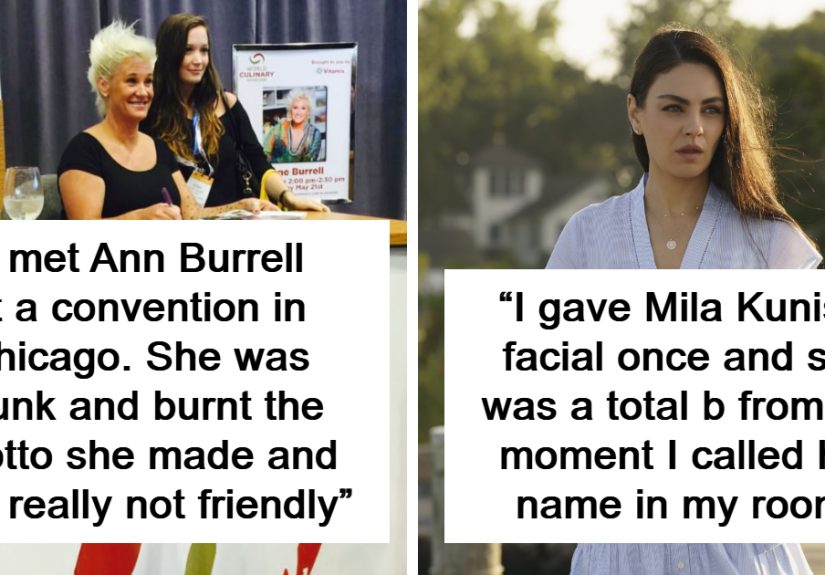
5) Mila Kunis
One person in a spa/beauty-service context described a client who arrived with an attitude and stayed there. The unspoken rule in any service exchange:
you can be quiet without being cruel.
6) Jim Jarmusch and Adam Driver
A film fan described meeting them at a premiere and feeling talked down tolike admiration was an inconvenience. The common thread in stories like this is
disappointment: people can handle “no,” but not contempt.
7) Paris Hilton
A fashion shoot assistant described holding out a hand for a garment and the item being dropped on the floor instead. Maybe it was carelessness; maybe it was a
message. Either way, it read as “You pick that up. Not my problem.”
8) Alec Baldwin
A gym story: someone claimed they were asked to leave simply because a celebrity didn’t want them present, followed by dirty looks. What makes these moments
memorable isn’t the boundaryit’s the assumption of ownership over a shared space.
9) will.i.am
A behind-the-scenes account described a celebrity refusing to collaborate with a creator, allegedly upset about not being paired with a different kind of on-camera
partner. The “gross” part, if true, is watching professionals get dismissed like props.
10) Emma Roberts
A retail worker described a customer who expected “royalty treatment” and seemed irritated when staff didn’t react with fanfare. The irony: most employees are
just trying to fold shirts and survive the shift.
11) David Lee Roth
An elevator story where a young server was reportedly put in an uncomfortable situation almost immediately. Even without graphic details, the issue is simple:
turning a chance encounter into a pressure-filled, inappropriate proposition.
12) Bob Geldof
One person claimed they were called an obscene insult during a temper moment. In any workplace or public setting, explosive name-calling is the fastest way to
turn “celebrity sighting” into “I need a shower.”
13) William Shatner
A fan described being young and excited and feeling shut down hard. Many “rude” stories aren’t about refusalthey’re about the tone that makes someone feel
foolish for existing.
14) Gwen Stefani
An account described being in the audience at a show and being snapped at for trying to hand something upfollowed by a thrown item. Whether it was a security
concern or a bad moment, the optics are rough when it’s public and sharp.
15) Jimmy Buffett
A storyteller described a brief, blunt interaction in a business setting that left a sour taste. Some celebrity encounters are less “scandal” and more
“Wow, that was unnecessarily icy.”
16) Robert Redford
A person described being physically jostled in a crowded space, then yelled at as if the crowd were personally conspiring against him. Sometimes the rude part
isn’t the bumpit’s the belief that everyone else is at fault by default.
17) Michael Stipe
A restaurant worker described being publicly corrected in a humiliating way over a minor service issue. When someone has status, even small scolding can feel
like a spotlight you didn’t ask for.
18) Bryan Greenberg
A fan/industry-adjacent account described a person being curt and dismissive in a social setting. These are the stories where the complaint is basically:
“I wasn’t asking for anything. I just didn’t want to be treated like lint.”
19) Mindy Cohn
Someone described a meet-and-greet scenario where the energy reportedly felt cold and unpleasant. Fans often save up time and money for these moments,
which makes a dismissive vibe feel extra sharp.
20) Cameron Diaz
A person described seeing her in public and experiencing a strong negative reaction when they tried to engage. It’s fair to want privacy; it’s also possible to
set boundaries without turning the temperature to absolute zero.
21) Bill Murray
A story described a child being mocked in a way that read as body-shaming. Even as a “joke,” targeting someone’s bodyespecially a kid’sis the kind of behavior
that sticks with people for decades.
22) Jamie Foxx
A person described a brief exchange where the celebrity’s reaction felt hostile and dismissive. Many stories in this category share one theme:
you can decline interaction without making the other person feel small.
23) Simone Biles
A workplace account described an athlete appearing distant and uninterested during an interaction. In high-pressure careers, people can run on emptybut the
takeaway for the storyteller was still: “That felt unnecessarily cold.”
24) Michael Phelps
Another public-setting story: a request for a quick interaction was met with what the storyteller experienced as disrespect. The recurring tension is the same:
the fan wants a moment; the celebrity wants a boundary; tone decides whether it becomes a scar.
25) Keisha Cole
A fan described being emotionally attached to the music during a difficult time and feeling dismissed when trying to express that gratitude. This is where
parasocial expectations collide with real life: heartfelt doesn’t always land gently, but compassion costs nothing.
26) Anthony Mackie
A person described an encounter at an event where the celebrity allegedly acted irritated and short with fans. Crowds can be overwhelming, but fans remember the
five seconds that felt like contempt.
27) Ann Burrell
Someone described a food-world run-in that turned snappy and unpleasant. When people meet TV personalities from cozy, feel-good shows, the contrast can feel
especially jarring.
28) Tyrese
A restaurant account described staff being treated poorlysnapping, impatience, and a vibe that left people nearby uncomfortable. Service-industry stories are
often the most vivid because so many witnesses are present.
29) Alyssa Milano
Another service-setting story described a tense interaction with staff and a refusal to engage in basic courtesy. Whether the day was bad or not, people tend to
judge character by how someone treats workers.
30) George Clooney
This one comes with a twist: the “grocery store” rude-celebrity story is widely recognized online as a recycled joke/copypasta that pops up with different famous
names. Its presence in rude-celebrity threads is still tellingbecause sometimes the internet can’t resist turning celebrity gossip into performance art.
So… should you ever meet your heroes?
Sure. Just meet them like you’d meet any stranger who’s on a tight schedule and has a face that’s been on a billboard. Here are some rules that keep the moment
respectful for everyone:
- Read the setting: If they’re eating, working, wrangling kids, or clearly in a hurry, let them exist.
- Lead with kindness, not ownership: “Love your work” beats “You owe me a photo.”
- Accept “no” gracefully: The classiest move is a smile and a “No worrieshave a great day.”
- Don’t trap them: No blocking exits, no hovering, no forcing a conversation while they’re cornered.
- Be the story they tell later: The goal isn’t a souvenir. It’s a normal, decent interaction.
Extra : what these experiences feel like up close (and why “gross” is the right word)
The most interesting thing about rude-celebrity stories is that they’re rarely about a single sentence. They’re about the air in the room changing. You know
the moment: a worker is mid-task, polite voice on, hands moving fast, and the famous person acts like the worker’s humanity is optional. Nobody screams.
Nobody throws a punch. But the whole scene still feels… sticky. That’s the “gross to witness” sensation people describe: watching someone with power casually
remove dignity from someone who can’t safely respond.
In service-industry stories, the cruelty is often quiet. It’s the refusal to look at the server. It’s snapping fingers instead of speaking. It’s treating a
minor mistake like a personal betrayal. And because restaurants, stores, and hotels are public, there are usually witnessesother staff, other guests,
other customerswho all feel the same awkward discomfort. Even if you’re not the target, your body reacts like you are. Your shoulders rise. Your brain starts
writing apology emails on behalf of a stranger.
In meet-and-greet or fan settings, the “gross” factor comes from the mismatch between effort and outcome. Fans don’t just show up; they plan. They buy tickets.
They stand in lines. They rehearse what to say so they don’t sound weird. Then the moment arrives, and the celebrity’s energy can feel like a door closing in
your face. Sometimes the celebrity is exhausted or overwhelmedtotally human reasons. But when the dismissal is sharp, fans walk away feeling embarrassed, like
their admiration was a mistake. That’s why these stories get told and retold: people are trying to convert embarrassment into meaning.
The industry-adjacent storieson sets, shoots, events, and premiereshave a different flavor. They aren’t about parasocial dreams; they’re about professionalism.
Assistants, crew members, stylists, and content workers expect stress. What they don’t expect is disrespect packaged as “That’s just how stars are.” When someone
drops clothing on the floor next to an outstretched hand, or refuses to engage with a colleague doing their job, the message isn’t merely “I’m busy.” The message
is “I’m above you.” That’s the part people can’t unsee.
And then there are the “mean jokes,” especially the ones aimed at bodies or awkwardness. Those stories hit harder because they feel unnecessary. If you’re famous,
you already have the spotlight. Using it to embarrass someoneparticularly a kid, a junior employee, or a stranger who can’t clap backreads as punching down,
and the room knows it. People may laugh politely (survival instinct!), but inside they’re filing the memory under: Yikes.
If there’s a lesson in all of this, it’s not “Celebrities are bad.” Plenty are lovely. The lesson is simpler: courtesy is a choice, and it’s most visible when
someone has the power to skip it. Whether you’re famous or not, the best legacy you can leave in a five-second encounter is not a selfieit’s making someone feel
like a person.
Conclusion
Rude-celebrity stories go viral because they’re about more than fame. They’re about respect in everyday spacesrestaurants, stores, elevators, and workplaces
where one person is vulnerable and the other person holds the social leverage. If you’ve ever witnessed a “gross” moment like this, you know the real issue
isn’t celebrity status. It’s basic decencyand how loud its absence can be.