Table of Contents >> Show >> Hide
- What Really Happened at the Venice Film Festival
- Why the “Unrecognizable” Headline Missed the Point
- Kim Novak Was Never Just a Hitchcock Blonde
- Why Venice Honored More Than Nostalgia
- The Lasting Power of Vertigo and Novak’s Screen Legacy
- The Experience of Watching Kim Novak Return to Venice
- Conclusion
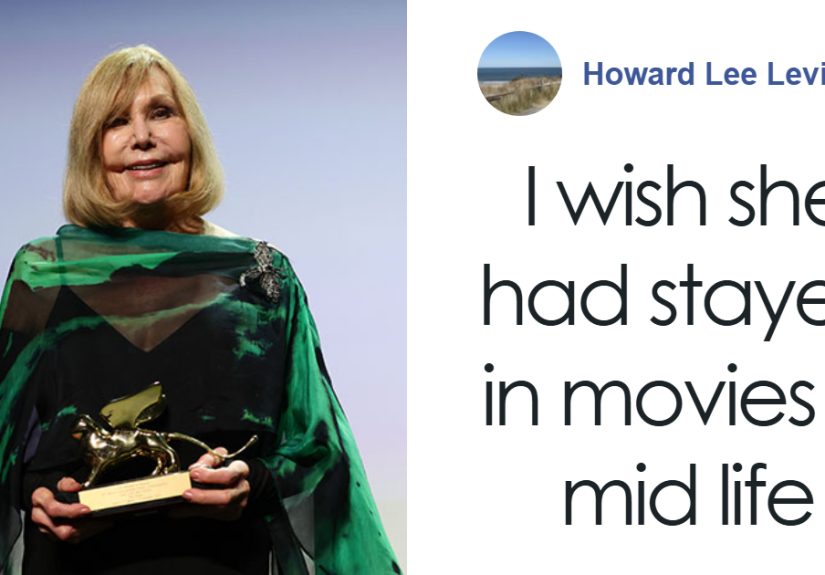
When headlines declared that Kim Novak looked “unrecognizable” as she received a lifetime achievement award at the Venice Film Festival, the internet did what the internet does best: it stared at the surface and missed the story. Again. The real headline was not that Novak, one of classic Hollywood’s most fascinating stars, had aged. Of course she had. That is how calendars work. The real headline was that a woman who once walked away from the studio machine on her own terms returned to one of the world’s most prestigious film festivals and was honored not as a relic, but as an artist, a rebel, and a screen legend.
That distinction matters. Kim Novak’s appearance at the Venice Film Festival was not just a celebrity sighting. It was a cultural moment. It brought together old Hollywood glamour, modern conversations about fame and female autonomy, and a deserved reappraisal of a performer whose work has only grown richer with time. If some corners of the internet were busy doing side-by-side comparisons like they were conducting a forensic investigation into cheekbones, Venice was doing something much smarter: celebrating a career that changed film history.
So let’s talk about what really happened when Kim Novak received the Golden Lion for Lifetime Achievement at Venice, why the “unrecognizable” framing says more about media habits than about Novak herself, and why this rare public appearance reminded audiences that her legacy is far bigger than one lazy headline.
What Really Happened at the Venice Film Festival
At the 82nd Venice International Film Festival, Kim Novak was honored with the Golden Lion for Lifetime Achievement, one of the festival’s highest honors. The award recognized both her extraordinary body of film work and her singular place in Hollywood history. This was not a random nostalgia trophy handed out because a classic movie title still gets people misty-eyed on social media. It was a serious acknowledgment from a major international festival that Novak’s contributions to cinema remain vital.
The moment carried extra emotional weight because it coincided with the world premiere of Kim Novak’s Vertigo, a documentary created in collaboration with the actress. That pairing was perfect. The award looked back on the career; the documentary added context, complexity, and humanity to the woman behind the image. And if there is one thing Novak’s life story absolutely does not need, it is more flattening into a single image.
Filmmaker Guillermo del Toro presented the honor, which felt especially fitting. He is a director deeply interested in beauty, fragility, mystery, and the emotional life hiding beneath spectacle. Those qualities also describe Novak’s screen presence. Her performances were never merely decorative, even when Hollywood tried very hard to package her that way. Venice understood that. The ceremony made it clear that Novak was being celebrated not only for iconic roles, but for the emotional intelligence and quiet defiance that shaped her career.
And yes, the public noticed her appearance because she had not been a regular on red carpets for years. But a rare public appearance by a 92-year-old star should have inspired awe, not tabloid shorthand. Novak did not arrive at Venice to audition for the role of “frozen in 1958.” She arrived to accept recognition for a lifetime of work. Big difference.
Why the “Unrecognizable” Headline Missed the Point
The phrase “looks unrecognizable” has become one of the internet’s laziest celebrity clichés. It usually means one of three things: the person got older, the person changed their hairstyle, or the writer needed rent money. In Novak’s case, the phrase was especially shallow because it reduced a meaningful professional honor to a reaction shot about aging.
There is also a deeper irony here. Novak’s most famous film, Vertigo, is itself obsessed with image, transformation, and the pressure placed on women to become someone else’s fantasy. Watching the media fixate on whether Kim Novak still resembled the exact woman audiences saw in 1958 was like missing the point of Vertigo so hard that Alfred Hitchcock probably rolled over in cinematic perfectionism.
For decades, actresses have been held to a bizarre cultural standard: remain forever recognizable as the version of yourself that the public first loved, but also age gracefully, but also do not look too changed, but also do not look too preserved. It is an unwinnable game. Novak has spent much of her life resisting that kind of control, which is one reason her Venice appearance felt quietly radical. She showed up as herself. Not as a wax figure of her younger image. Not as a PR-approved illusion. Just Kim Novak.
That honesty is part of what made the moment powerful. The audience in Venice was responding to presence, history, and artistic stature. The lower-rent corners of celebrity coverage were responding to the fact that time exists. One of those reactions is interesting. The other belongs in the recycling bin.
Kim Novak Was Never Just a Hitchcock Blonde
Any discussion of Kim Novak inevitably circles back to Vertigo, and for good reason. Her dual performance as Madeleine Elster and Judy Barton remains one of the most haunting in American film. She gives the movie its mystery, its ache, and its emotional wound. Without Novak, Vertigo is still a clever thriller. With Novak, it becomes something more unsettling and enduring: a film about desire, control, reinvention, and the cost of being remade.
But reducing Novak to only Vertigo would undersell her range. She also left a strong mark in films like Picnic, where she brought tenderness and restlessness to the role of Madge; The Man with the Golden Arm, where she held her own opposite Frank Sinatra; Pal Joey, where she balanced glamour with vulnerability; and Bell, Book and Candle, where her cool allure turned playful and sly. These were not interchangeable “pretty girl” roles. They were performances shaped by a performer who understood how to make stillness speak.
During the late 1950s, Novak became one of the biggest box-office stars in the world. That kind of popularity can sometimes work against critical appreciation, especially for women. Movie stars are often loved first, then dismissed, then rediscovered later by critics who finally notice what was there all along. Novak fits that pattern. In her case, modern audiences and critics have increasingly recognized that her style was ahead of its time. She often played women whose inner life did not sit neatly on the surface, and that complexity reads especially well today.
In other words, Kim Novak was never merely a face in soft lighting. She was an actress with a distinct emotional register, one that modern viewers are perhaps better equipped to appreciate than some critics were in her heyday.
Why Venice Honored More Than Nostalgia
The Venice tribute mattered because it celebrated more than movie-star glow. It also acknowledged Novak’s independence. From early in her career, she resisted being treated like a studio-owned product. She fought to keep her surname. She pushed back against the machinery trying to mold her into a more convenient version of herself. She challenged salary inequities. She even formed her own production company at a time when that was highly unusual for a woman in Hollywood.
That streak of independence is a huge part of why her story still resonates. Novak did not simply fade away because the camera moved on. She chose distance. She chose privacy. She chose painting, animals, nature, and a life outside the performance of celebrity. For someone who spent years being photographed, marketed, styled, and interpreted by others, that choice was not retreat in the weak sense of the word. It was authorship.
That is why the Golden Lion for Lifetime Achievement felt so appropriate. Venice was not merely rewarding a classic star for surviving long enough to become an institution. It was honoring a woman who refused to stay trapped inside the institution’s expectations. There is something refreshingly modern about that. In an era obsessed with branding, Novak’s greatest long-term brand move was basically saying, “No thanks, I’d rather be a person.”
It is also worth noting that public appreciation hit differently after the ugliness that followed her 2014 Oscars appearance, when online commentary about her face became cruel and ridiculous. Her return to a major festival years later carried a sense of vindication. Not revenge. Not comeback-vehicle drama. Just vindication. The applause in Venice felt like the grown-up response that should have been there all along.
The Lasting Power of Vertigo and Novak’s Screen Legacy
If you want to understand why Kim Novak remains such a magnetic figure, look at what happened to Vertigo over time. When it first arrived, it was admired but not universally crowned as the towering masterpiece it is now. Over the years, it kept growing in critical stature until it became one of the most discussed and revered films ever made. That kind of afterlife does not happen by accident.
Novak sits at the center of that afterlife. Her performance carries the film’s duality: surface and soul, idealization and reality, fantasy and damage. Madeleine is an image. Judy is a woman asked to disappear inside the image. Novak makes both parts feel connected and torn apart at once. That tension is the engine of the film. It is also why the movie still feels startlingly modern in its treatment of identity and male projection.
Beyond Vertigo, Novak’s legacy also includes the way she challenged expectations of what a studio-era actress was supposed to be. She was glamorous, yes, but never entirely obedient to the fantasy. There was always something more private in her, something resistant. That is part of what audiences respond to. You sense the star quality, but you also sense the person trying not to be swallowed by it.
That duality makes her especially compelling in the current media landscape, where celebrity has become both more accessible and more manufactured. Novak’s life reads almost like a warning label attached to fame: handle carefully, identity may crack under pressure. Yet she also offers a hopeful counterpoint. It is possible to step away. It is possible to redefine yourself. It is possible to outlive the version of you that the public thought it owned.
The Experience of Watching Kim Novak Return to Venice
There is something unusually moving about seeing a figure from Hollywood’s golden age walk back into the spotlight decades later, especially when that return is not driven by scandal, nostalgia bait, or a desperate attempt to stay relevant. Kim Novak’s appearance at Venice felt different. It felt calm, dignified, and deeply human. The moment carried the weight of history, but it also felt intimate, almost like watching someone reopen a room in their life that had been closed for years.
For film lovers, the experience was layered. On one level, there was the immediate visual shock of seeing someone so strongly associated with black-and-white publicity stills and Technicolor-era glamour standing in the present tense. Old Hollywood often feels embalmed by photography. Stars from that era can seem less like people than like permanent icons pinned to a wall. Seeing Novak in Venice interrupted that illusion. She was not a still image. She was a living artist with a voice, a history, a body that had lived, and emotions that still moved close to the surface.
That is partly why some people reached for clumsy words like “unrecognizable.” What they were really reacting to was the discomfort of time becoming visible. The fantasy version of stardom asks us to believe great stars remain fixed in cultural amber. The reality is more interesting. Novak’s presence in Venice reminded audiences that aging does not erase meaning; it adds to it. Her face was not a betrayal of her legacy. It was evidence of a life.
There was also something beautiful in the contrast between Novak’s long privacy and the size of the occasion. Venice is one of cinema’s grand stages, a place of cameras, international press, red carpets, and carefully choreographed prestige. Novak has spent years away from that machine, building a life centered on painting and personal truth rather than publicity. To see her step into that environment again, on her own terms, made the event feel less like a performance and more like a gift.
For longtime admirers, the return likely felt emotional for another reason: it offered closure without finality. Novak was not there to rewrite her story into something shinier. She was there to be appreciated, to speak from experience, and to let people see the distance she had traveled from studio-era invention to self-defined artist. That kind of public moment is rare. It asks the audience to grow up a little too. Instead of demanding eternal youth, it invites respect. Instead of gawking, it asks us to listen.
And maybe that is the most memorable part of the Venice experience. It reframed fame as something gentler and wiser. Here was a star once marketed for her beauty being honored for endurance, artistry, and independence. Here was a woman associated forever with illusion standing before an audience in unmistakable reality. Here was proof that the most powerful thing a legend can do is not remain unchanged, but remain fully herself.
Conclusion
Kim Novak’s lifetime achievement award at the Venice Film Festival should have been a straightforward story about cinematic legacy, rare public appearance, and overdue recognition. Instead, some coverage tried to squeeze it through the tired keyhole of celebrity appearance commentary. Fortunately, the larger story is stronger than the shallow one.
Novak’s return to Venice was memorable because it honored everything that made her matter in the first place: her unforgettable performances, her role in shaping one of cinema’s greatest films, her resistance to Hollywood control, and her ability to step away from the spotlight without losing her mystique. Far from looking “unrecognizable,” Kim Novak looked exactly like what she has always been: a singular artist who refuses to be reduced to somebody else’s fantasy.
And honestly, that is a much better headline.