Table of Contents >> Show >> Hide
- What “Cabinet Refacing” Means (and What Wallpaper Can and Can’t Do)
- Why Wallpaper Works on Cabinets (When It Works)
- Pick Your Material: Wallpaper vs. Contact Paper vs. Vinyl Wrap
- Prep Like a Pro: The Part Everyone Wants to Skip (Don’t)
- Tools You’ll Actually Use (No, You Don’t Need a Workshop)
- Step-by-Step: How to Apply Wallpaper to Cabinet Doors
- How to Wallpaper Cabinet Frames (Face Frames) Without Losing Your Mind
- Don’t Forget the Inside: Drawer Liners and Shelf Liners
- Durability Reality Check: How Long Will It Last?
- Cost Breakdown: Wallpaper Refacing vs. Paint vs. Professional Refacing
- Troubleshooting: Fixes for the Most Common Cabinet Wallpaper Problems
- Design Ideas That Look Expensive (Without Being Expensive)
- Conclusion: A Cabinet Makeover That Doesn’t Require a Demolition Crew
- Real-World DIY Experiences: What People Learn When Refacing Cabinets with Wallpaper
Want your kitchen to look “new kitchen who dis?” without the “new kitchen, new mortgage” part?
Kitchen cabinet refacing using wallpaper (yes, really) is one of the quickest, most budget-friendly ways
to change the vibe of your kitchenespecially if your cabinet boxes are in good shape but the doors look dated,
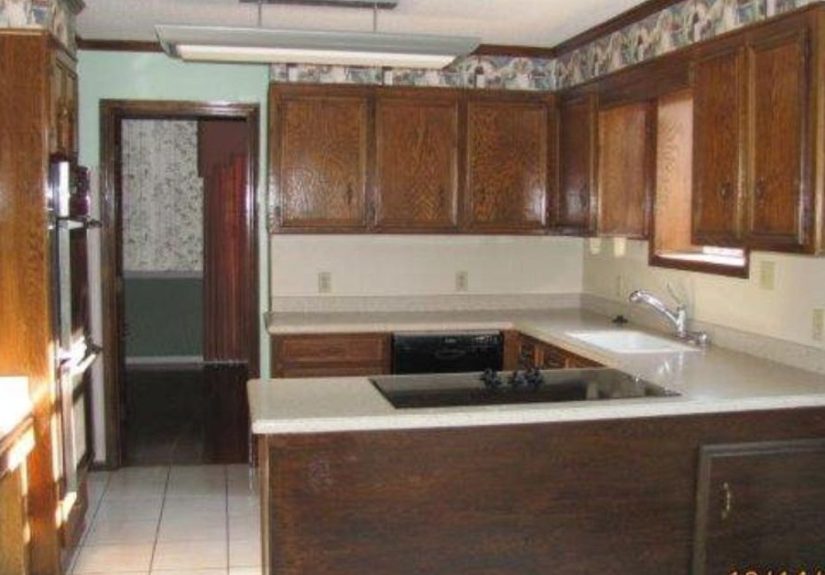
dingy, or stuck in the early-2000s honey-oak era.
But let’s be honest: cabinets are not walls. Cabinets get touched a thousand times a day. They get splashed,
steamed, smudged, and occasionally head-butted when you forget the door is open. So the magic here isn’t just
“stick pretty paper on wood.” The magic is in prep, product choice, and edge strategy.
Do those well, and you can get a cabinet makeover that looks shockingly legit.
What “Cabinet Refacing” Means (and What Wallpaper Can and Can’t Do)
Traditional cabinet refacing usually means keeping the cabinet boxes but replacing doors and drawer fronts,
then covering exposed frames with veneer and upgrading hardware. Wallpaper-based refacing is more like a
surface makeover: you’re wrapping or covering visible surfaces (often doors/drawer fronts and/or
the cabinet frames) to refresh the look without changing the layout.
Translation: wallpaper is great for style. It is not a cure for broken hinges, sagging boxes, or doors that have
been through five toddlers and a golden retriever.
Why Wallpaper Works on Cabinets (When It Works)
- It’s fast: You can get dramatic change in a weekend, not a month.
- It’s flexible: From modern solids to vintage florals to faux woodgrain, patterns do the heavy lifting.
- It’s renter-friendly (sometimes): Many peel-and-stick options remove more cleanly than paint.
- It’s budget-friendly: Compared with professional refacing or replacing cabinets, wallpaper is a tiny bite.
Best candidates for wallpaper cabinet refacing
- Smooth, flat cabinet doors (Shaker-style is basically a wallpaper’s dream job).
- Cabinets that are structurally sound but visually tired.
- Low-to-moderate traffic kitchens (or households where people open cabinets like civilized humans).
- Projects where you can remove doors and work flat.
When wallpaper is a bad idea
- Heavy texture: Deep wood grain, bumpy laminate, or distressed surfaces can weaken adhesion.
- High moisture zones: Cabinets right next to a dishwasher vent, sink splash zone, or constantly-steamy area.
- Grease central: If your kitchen air is 30% sautéed onions, you’ll need extra commitment to cleaning and maintenance.
- Damaged finishes: Peeling veneer, swelling MDF, or water damage needs repair first.
Pick Your Material: Wallpaper vs. Contact Paper vs. Vinyl Wrap
“Wallpaper” is now a whole family of products. For cabinets, you’ll usually choose one of these:
1) Peel-and-stick wallpaper
This is the most popular option for cabinet makeovers because it’s repositionable, DIY-friendly, and available
in a million styles. Look for thicker, higher-quality rolls that feel more like a durable film than tissue paper.
Bonus points if the manufacturer explicitly says it works on furniture.
2) Adhesive shelf liner / contact paper
Contact paper is basically the scrappy cousin who shows up in sweatpants and still looks amazing.
It’s often more affordable and comes in cabinet-friendly finishes (like faux marble, woodgrain, or solid colors).
Some versions are designed for drawers and shelves, but they can also work on door fronts if the surface is smooth
and the edges are handled well.
3) Architectural vinyl / “interior film”
This is the tougher, more professional categoryoften used to wrap counters, doors, appliances, and commercial interiors.
It can be more forgiving around edges and more resistant to wear, but it also demands better technique (and sometimes heat).
If you want the most durable “wrap” look, this is worth considering.
How to choose the right finish
- Glossy or wipeable: Easier to clean; better for kitchens.
- Matte: Pretty, but can show greasy fingerprints faster.
- Small pattern: Hides seams and tiny mistakes better than a giant geometric that must align perfectly.
- Medium-dark colors: Often the sweet spot: hides smudges without making the room feel heavy.
Prep Like a Pro: The Part Everyone Wants to Skip (Don’t)
Adhesives don’t bond to “mystery kitchen film” (a scientific term meaning: grease + dust + old cleaner residue).
Prep is what makes your project look professional instead of “Pinterest fail with confidence.”
Step 1: Remove doors, drawers, and hardware
Label each door and drawer front with painter’s tape (a simple “UL” for upper-left is enough). Put screws in baggies.
You’ll thank yourself later when your kitchen isn’t a giant jigsaw puzzle.
Step 2: Degrease thoroughly
Use warm water and a grease-cutting dish soap, or a cleaner/degreaser suitable for finished wood or painted surfaces.
Avoid oily cleaners that can leave residue behind. Rinse with clean water and let everything dry completely.
Step 3: Lightly sand or degloss (when needed)
If your cabinet surface is glossy, slick, or super smooth, lightly scuff-sanding helps the adhesive grip.
You’re not trying to sand the cabinet into a new personalityjust knocking down shine.
Wipe away dust afterward.
Step 4: Patch, flatten, and clean again
Fill chips or dents, let dry, then sand smooth. Finish with a final wipe-down using a clean cloth and
(when appropriate) rubbing alcohol to remove remaining residue. Let dry.
Important: If your cabinets were freshly painted, give the paint time to fully cure before applying
peel-and-stick products. “Dry to the touch” isn’t the same as “cured.”
Tools You’ll Actually Use (No, You Don’t Need a Workshop)
- Tape measure + pencil
- Scissors (rough cuts) + sharp utility knife (clean edges)
- Metal straightedge / ruler
- Squeegee or smoothing tool (even a plastic card works in a pinch)
- Painter’s tape (alignment and hinges)
- Microfiber cloths
- Optional: hair dryer on low (helps around edges and corners)
Step-by-Step: How to Apply Wallpaper to Cabinet Doors
The easiest way to get a smooth finish is to work with doors laid flat on a clean surface.
(Gravity is greatuntil it’s not.)
Step 1: Measure each door (yes, each one)
Cabinets are like eyebrows: they’re supposed to match, but they often don’t.
Measure door height and width, then cut wallpaper with a 1–2 inch overhang on all sides.
Step 2: Dry-fit and plan the pattern
If you’re using a repeating pattern, decide where you want the design to land (centered motif, aligned stripes, etc.).
For a high-end look, align patterns across adjacent doorsespecially on uppers where the eye naturally scans the line.
Step 3: Start smallpeel a little backing at a time
Peel back a few inches of the backing at the top, stick it down, then continue peeling and smoothing gradually.
Don’t remove the entire backing at once unless you enjoy adrenaline and regret.
Step 4: Smooth from the center outward
Use your squeegee/smoother to press from the center to the edges as you go. This pushes air out and helps prevent bubbles.
Work slowly. If you get a wrinkle, gently lift and re-lay (most peel-and-stick products allow repositioning during install).
Step 5: Trim and wrap edges (the “looks custom” secret)
You have two main edge strategies:
- Wrap-and-fold: Wrap the overhang around to the back side (about 1/4 to 1/2 inch), then trim cleanly at corners.
- Trim-flush: Trim exactly at the edge for a crisp face, but be extra careful about peeling in high-touch areas.
If you wrap edges, a little warmth from a hair dryer can help the material conform smoothlyespecially at corners.
Step 6: Cut holes for knobs/pulls
Locate the hardware hole from the back and poke a small “X” cut. Reinstall hardware once everything is fully adhered.
Hardware covers tiny imperfections (a rare moment when laziness and design align beautifully).
How to Wallpaper Cabinet Frames (Face Frames) Without Losing Your Mind
Cabinet frames are trickier because there are more edges, corners, and interruptions. Use smaller pieces, go panel by panel,
and treat it like trim work:
- Measure each frame section separately.
- Cut strips slightly oversized.
- Apply slowly and trim in place with a straightedge.
- Use consistent seam placement (inside corners are easier to hide).
If your frames have lots of grooves or detail, consider wallpapering only the doors and painting the frames in a matching color.
This “two-material” approach can look intentional and designer-y.
Don’t Forget the Inside: Drawer Liners and Shelf Liners
If you want maximum impact with minimal risk, line the interiors instead: shelves, drawer bottoms, and cabinet backs.
It’s a low-stakes way to try wallpaper without committing to exterior wear and tear.
Quick method for shelves
- Measure shelf depth and width.
- Cut liner/wallpaper to size (a hair smaller than the full shelf can prevent edge catch).
- Apply starting from the back, smoothing forward.
- Trim edges cleanly with a sharp blade.
Durability Reality Check: How Long Will It Last?
With good prep and a quality product, peel-and-stick wallpaper on cabinet doors can look great for a meaningful stretch of time.
But longevity depends on your kitchen life:
- High-touch zones: Trash pull-out cabinet, snack cabinet, and the “everything drawer” area get the most wear.
- Heat + steam: Near stoves and dishwashers can loosen edges over time.
- Cleaning style: Gentle wiping = happy finish. Abrasive scrubbing = sad finish.
Want to help it last? Run your range hood when cooking, wipe grease regularly, and clean gently with mild soap and water.
Patch-test any cleaner first.
Cost Breakdown: Wallpaper Refacing vs. Paint vs. Professional Refacing
One reason this trend is everywhere: it’s wildly affordable compared with traditional cabinet upgrades.
Here’s a practical comparison:
- Wallpaper/contact paper DIY: Often a few rolls plus toolscommonly in the low hundreds, depending on kitchen size and product quality.
- Painting cabinets: Can be cost-effective, but labor and prep time add up (especially if hiring a pro).
- Professional cabinet refacing: Often priced per linear foot and can land in the thousands, but it’s more durable and “real remodel” level.
- Full replacement: The highest cost, but also the most transformative (new layout options, new boxes, etc.).
If you’re trying to stretch a kitchen renovation timelinesay, you plan to remodel in 2–5 yearswallpaper refacing can be a
surprisingly smart “bridge” upgrade.
Troubleshooting: Fixes for the Most Common Cabinet Wallpaper Problems
Bubbles
Small bubbles often smooth out with firm pressure. For stubborn ones, lift and reapply if possible.
If it’s tiny and trapped, a pinprick can release airthen smooth flat.
Wrinkles
Wrinkles happen when the material stretches or grabs too fast. Lift gently, realign, and re-squeegee.
Go slower with backing removal next time.
Peeling edges
Usually a prep issue (grease) or an edge issue (not enough wrap/pressure). Clean the area, press firmly, and consider redoing
that panel with a wrap-around edge. Warmth can help the adhesive bond, but use gentle heat.
Seams that scream “DIY!”
Hide seams on the least-visible edge (often the hinge side) and keep alignment consistent. Smaller patterns disguise seams best.
For stripes and geometrics, measure and guide carefully so the pattern stays square.
Design Ideas That Look Expensive (Without Being Expensive)
- Modern two-tone: Solid neutral wallpaper on uppers + deeper color paint on lowers.
- Faux wood refresh: Woodgrain vinyl on flat fronts to update dated cabinets without sanding down a forest.
- “Hidden wow” lining: Wallpaper inside glass-front uppers or open shelves for a boutique look.
- Accent island: Wallpaper only the island cabinets so it becomes the kitchen’s statement piece.
Conclusion: A Cabinet Makeover That Doesn’t Require a Demolition Crew
Kitchen cabinet refacing using wallpaper is the ultimate “big results, small budget” projectwhen you treat it like a real finish,
not a temporary sticker. Choose the right product, prep like you mean it, apply slowly, and respect the edges.
Do that, and your cabinets can go from “meh” to “whoa” faster than you can say “Where did I put the smoothing tool?”
(Answer: it’s always under the paper. Always.)
Real-World DIY Experiences: What People Learn When Refacing Cabinets with Wallpaper
If you search DIY communities long enough, you’ll notice a pattern: the projects that look magazine-worthy aren’t the ones with
the fanciest wallpaper. They’re the ones where the person learned (sometimes the hard way) that cabinets are basically
fingerprints-with-hinges.
One common experience is the “I thought they were clean” moment. A lot of DIYers wipe cabinets, feel proud, and
start sticking. Then the edges slowly lift like the wallpaper is trying to escape the kitchen. The culprit is almost always
invisible grease residueespecially around knobs and pulls, where hands naturally leave oils. The fix most people land on:
degrease more thoroughly than seems reasonable, rinse, dry, and do a final wipe in high-touch zones before applying.
Many also discover that cleaning is not a one-step task; it’s more like a mini workout routine: wash, rinse, dry, repeat, then
wipe again where the cabinet gets grabbed constantly.
Another classic: pattern confidence versus pattern reality. On the roll, bold stripes look crisp and modern.
On twelve cabinet doors, bold stripes can look like a funhouse if you’re even a little off. DIYers who end up happiest either
(1) choose smaller-scale patterns that forgive slight alignment differences, or (2) commit to careful measuring and make
a guide line so the design stays square. A surprisingly helpful trick people mention is planning where seams and pattern starts
will land before cutting everythingespecially if you want doors to look coordinated when they’re side-by-side.
Then there’s the “edges are everything” lesson. Many first-time cabinet-wrappers trim the paper perfectly flush to
the front edge because it looks neat. For a few days, it’s perfect. Then a fingernail catches the edge, or a dish towel brushes it,
and a corner starts lifting. The real-world upgrade is wrapping the material around the edge onto the back side, even just a quarter
inch. It’s not glamorous, but it’s the difference between a finish that lasts and a finish that needs “touch-ups” every time someone
opens the snack cabinet like a raccoon.
People also learn to work in smaller sections. The first door goes slowly and carefully. The second door gets cocky.
The third door gets a wrinkle that looks like a tiny mountain range. The DIYers who stay sane peel the backing a little at a time,
smooth as they go, and don’t rush. Many describe it as “wrapping a present,” except the present is your kitchen and the stakes feel
oddly emotional.
Finally, there’s the maintenance mindset. Wallpaper-refaced cabinets usually hold up best when treated like a finish,
not like a countertop. Gentle wiping, quick grease cleanup, and using the range hood more often all help. DIYers who love the result
long-term often keep a small leftover piece tucked away for repairsbecause the moment you don’t save a scrap is the moment you
discover a mysterious scratch that absolutely wasn’t you.
The takeaway from these shared experiences is simple: wallpaper cabinet refacing can look incredible, but the best projects aren’t
“perfect.” They’re well-prepped, patiently applied, and intelligently finished at the edges. Do that, and your cabinets
can look like a curated design choice instead of a temporary experiment. And if it is a temporary experiment? Congratulations
you just discovered the most fun kind of kitchen upgrade: the one you can change when your style changes.