Table of Contents >> Show >> Hide
- Why Modern Kitchens Still Love Marble (and What’s Changed)
- Marble 101: What You’re Really Buying
- Finish Matters: Polished vs. Honed (and Why Modern Kitchens Choose Both)
- Design Playbook: 8 Modern Ways to Use Marble in a Kitchen
- 1) The waterfall island (aka “the marble tuxedo”)
- 2) Full-height slab backsplash
- 3) Bookmatched drama behind the range
- 4) The “marble but make it practical” layout
- 5) Pair marble with warm woods
- 6) Mix metals for balance
- 7) Go moody with a “small but mighty” marble moment
- 8) Combine marble with look-alikes where life gets messy
- Reality Check: Maintenance, Etching, and the “Patina Plan”
- Cost & Planning: What Marble Actually Costs (and Where Budgets Go Sideways)
- Modern Alternatives That Still Read “Marble”
- Conclusion: Your Modern Marble Rules of Thumb
- of Real-World Experience: Living With Marble (Without Losing Your Mind)
Marble in the kitchen is like a white button-down shirt: classic, a little high-maintenance, and somehow always invited back.
The difference in 2026 is how we use it. Today’s marble kitchens are less “fancy showroom” and more “softly dramatic, quietly confident,
and totally okay with a life well-lived.”
This roundup breaks down what modern marble really looks like right nowfinishes, colors, layouts, care, cost, and the smart ways designers
keep marble gorgeous without turning you into a full-time countertop babysitter.
Why Modern Kitchens Still Love Marble (and What’s Changed)
1) Marble is the “art piece” that also happens to be a countertop
Modern kitchens are leaning into stone that looks like it has a personality. Instead of tiny, busy patterns,
people are choosing slabs with confident veiningbig movement, high contrast, and layouts that treat stone like a mural.
Think waterfall islands, bookmatched backsplashes, and statement perimeter counters that do the most… without screaming.
2) Matte is having a moment
Polished marble is still around (and still stunning), but honed finishes have become the “cool quiet luxury” choice.
A honed surface reads softer, less shiny, and more modernespecially paired with flat-panel cabinetry and warm metals.
Bonus: it can make everyday marks feel less like a crisis and more like… Tuesday.
3) Marble is being used more strategically
Not every kitchen needs wall-to-wall marble to feel premium. Designers often concentrate it where it counts:
an island, a baking station, a backsplash “moment,” or a bar zonethen pair it with more forgiving materials elsewhere.
The result feels curated, not precious.
Marble 101: What You’re Really Buying
Marble is a natural stone with a “living surface”
Marble is porous and calcium-based, which means it can react with acids (hello lemon juice, vinegar, tomato sauce).
That reaction often causes etchinga dull spot or light mark where the surface finish changes.
Etching is different from staining, which is pigment or oil soaking into the stone.
Translation: marble can look flawless, but it can also look real. Modern marble kitchens don’t always chase perfection;
they build a plan for care and accept a little patina like it’s part of the aesthetic (because it is).
A quick “marble personality” cheat sheet
- Carrara: Usually softer gray veining on a white-to-light-gray background. The “everyday icon” and often more budget-friendly.
- Calacatta: Bolder, thicker veining with more contrast; often reads warmer and more dramatic. The “statement jacket.”
- Statuario: Often crisp white background with striking gray veining; prized and typically pricier. The “runway model.”
- Danby (American marble): A Vermont favorite that can be a beautiful option if you want a domestic stone story.
- Moody marbles (black, green, richly veined): Great for islands, bars, and backsplash dramaespecially with brass or walnut.
The big takeaway: two slabs with the same name can still look different. Always pick your exact slab when possible.
Marble is not a “stock photo” material.
Finish Matters: Polished vs. Honed (and Why Modern Kitchens Choose Both)
Polished marble
Polished finishes are glossy and light-reflective. They can make a kitchen feel brighter and show off veining with extra clarity.
The trade-off: etching can be more visible because a shiny surface highlights any dull spot.
Honed marble
Honed finishes are matte or satin. They read softer and more contemporary, and they tend to disguise minor etching and scratches better.
The trade-off: honed stone can show darkening from moisture more easily (until it dries), and it may need a thoughtful sealing routine.
Modern edge and thickness choices
If you want marble to feel “now,” pay attention to the details:
- Eased or slim beveled edges feel clean and modern.
- Mitered edges create a thicker, sculptural look (great for islands).
- Simple profiles pair better with modern cabinetry than ornate edges.
Design Playbook: 8 Modern Ways to Use Marble in a Kitchen
1) The waterfall island (aka “the marble tuxedo”)
A waterfall edgewhere the countertop continues down the sidesturns the island into a solid block of stone.
It’s architectural and clean, especially in open-concept spaces. Keep surrounding finishes quieter so the island can be the headline.
2) Full-height slab backsplash
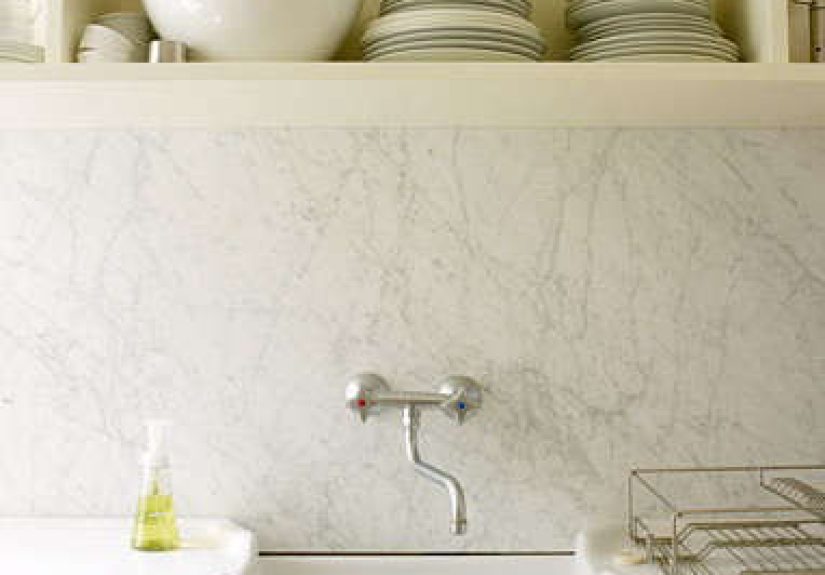
A slab backsplash is the modern alternative to tiny tile grids. It’s seamless, easier to wipe down, and looks tailored.
Matching (or intentionally contrasting) it to the countertop creates that high-end “custom” feeling.
3) Bookmatched drama behind the range
Bookmatching is when two slabs are mirrored like butterfly wings. Done behind a range, it becomes kitchen art.
If you want one “wow” zone without marbling everything, this is the move.
4) The “marble but make it practical” layout
Use marble where it shines: a baking station (marble stays naturally cool), a bar area, or an island where you’re not constantly chopping,
splashing citrus, and staging spaghetti sauce emergencies.
5) Pair marble with warm woods
Marble + white cabinets can be crisp, but marble + oak/walnut feels especially modern and inviting.
The wood softens the stone, and the stone elevates the wood. It’s a relationship built on mutual improvement.
6) Mix metals for balance
Brushed brass warms up cool gray veining. Matte black hardware sharpens it. Polished nickel keeps it classic.
The modern trick: pick one dominant finish and let the others act like accessories, not competing main characters.
7) Go moody with a “small but mighty” marble moment
Deep marbles (black, green, or richly veined varieties) are stunning in smaller doses:
a pantry counter, a coffee station, a bar sink zone, or a built-in banquette table.
8) Combine marble with look-alikes where life gets messy
Marble-look quartz, porcelain, and other engineered surfaces can mimic marble’s veining while resisting stains and etching more effectively.
A modern kitchen can mix real marble with tougher surfaces and still look cohesiveespecially if you match undertones
(warm whites with warm whites, cool whites with cool whites).
Reality Check: Maintenance, Etching, and the “Patina Plan”
Etching is normalacid + marble = chemistry
If you love cooking with citrus, vinegar, wine, or tomato, marble will eventually show it. That’s not failure; it’s physics.
The modern approach is to decide what kind of marble life you want:
- Perfection mode: coasters, cutting boards, quick wipe-downs, frequent sealing, and occasional professional refinishing.
- Patina mode: choose honed, seal it, clean it correctly, and let the surface develop character.
Sealer helpsbut it’s not a force field
A penetrating (impregnating) sealer can slow down staining, buying you time to wipe spills before they sink in.
But sealers don’t prevent etching from acids, because etching is a surface reactionnot a soak-in stain problem.
Daily cleaning: keep it simple (and not acidic)
Most marble survives beautifully with boring care: warm water, mild dish soap, a soft microfiber cloth, and a dry buff.
Avoid acidic or abrasive cleanersespecially vinegar, lemon-based products, and rough scrubbing pads.
- Do: wipe spills quickly, use trivets, use cutting boards, blot (don’t smear) colorful liquids.
- Don’t: “natural clean” with vinegar, spray random multipurpose cleaners without checking labels, or scrub like it’s a cast-iron pan.
How to know when it’s time to reseal
The easiest test is the water test: place a few drops of water on the surface and wait.
If it beads, you’re good. If it darkens the stone quickly, it’s time to reseal (or talk to your fabricator about your current sealer).
What about stains and etch marks?
Light etching can sometimes be improved with marble polishing powders or gentle buffing methods, but deeper damage may need professional help.
For stains, a poultice may be recommended depending on what caused the stain (oil, wine, rust, etc.).
When in doubt, treat marble like skin care: patch test first and avoid doing anything that sounds like it belongs in a chemistry lab.
Cost & Planning: What Marble Actually Costs (and Where Budgets Go Sideways)
Marble pricing varies widely by type, thickness, availability, region, and fabrication complexity.
As a broad ballpark, many homeowners see material-and-installation numbers land in “premium countertop” territory,
with significant swings depending on the stone you choose and how complicated the job gets.
Where marble costs sneak up on you
- Edge details: fancy profiles and mitered edges add fabrication time.
- Seams: fewer seams usually requires larger slabs, which can cost more and increase waste.
- Cutouts: sink, cooktop, and faucet cutouts add labor.
- Waterfall panels: extra stone + extra fabrication.
- Matching veining: beautiful, but may require more slab selection and planning.
Smart ways to save without losing the marble magic
- Use marble on the island and a tougher surface on the perimeter.
- Pick a more available marble (often Carrara) and spend on the layout (waterfall, slab backsplash) for impact.
- Ask fabricators about remnants for smaller zones like a baking station or coffee bar.
- Consider marble tile for a backsplash if slab isn’t in the budgetthen keep grout lines minimal and tidy.
Buying tips so you don’t regret anything at 2 a.m.
- Choose the slab in person when possible. Photos lie. Lighting lies. Your eyes don’t.
- Check for fissures vs. cracks: natural fissures can be normal; your fabricator can explain what’s acceptable.
- Plan the “money view” (island face, backsplash center) and place the prettiest veining there.
- Ask how seams will look and where they’ll land. A gorgeous slab can be ruined by a bad seam plan.
Modern Alternatives That Still Read “Marble”
Marble-look quartz
Quartz is engineered and generally lower maintenance than marble. It can resist staining and etching better in daily life,
and it comes in plenty of marble-inspired designs. The catch: quartz can be less forgiving with high heat,
so trivets remain your friend.
Porcelain or sintered stone
These surfaces can deliver dramatic marble visuals with strong durability for busy kitchens.
They’re popular for full-height backsplashes and sleek, modern installations where you want thin profiles and big impact.
Quartzite (the frequent “marble alternative”)
Quartzite is a natural stone that can resemble marble, often with strong durability.
It still needs care, but many homeowners like it when they want organic veining with a tougher day-to-day feel.
Conclusion: Your Modern Marble Rules of Thumb
- Pick the right finish: honed for modern softness and easier-to-hide etching; polished for high shine and maximum veining pop.
- Use marble strategically: statement island, slab backsplash, or baking station can deliver the look without constant stress.
- Learn the difference: etching is chemistry; staining is absorption. Sealers help with stains, not etching.
- Clean correctly: pH-neutral or mild dish soap, microfiber, and no acids (your lemon belongs in pasta, not on stone).
- Plan for real life: either maintain perfection… or choose a patina-friendly approach and enjoy a kitchen that looks lived-in and loved.
of Real-World Experience: Living With Marble (Without Losing Your Mind)
If you’ve never lived with marble, the first week is basically a relationship timeline in fast-forward.
Day one: you’re in love. You walk into the kitchen and the stone looks like it should have its own agent.
You text a photo to someone who doesn’t care about countertops, and they politely respond, “Nice!”
(They are wrong. It is more than nice.)
Day two: you start negotiating boundaries. You buy cute coasters. You develop a cutting-board habit.
You learn that placing a sweaty iced coffee directly on the counter creates a little dark ring that disappears later,
but still makes your heart briefly consider leaving your body.
Day three: you cook. Not even recklesslyjust normal human cooking. You slice a lemon near the sink.
You wipe up, you feel responsible, you feel grown. Then you catch the light at the wrong angle and see a faint dull spot.
Congratulations, you have met your first etch mark. It is tiny. It is harmless. It is somehow enormous.
This is the point where marble owners split into two camps. Camp A becomes countertop vigilant.
Camp B chooses peace. Camp B remembers why marble is beloved: it ages like a good leather jacket.
It picks up stories. It becomes yours.
Over time, you develop a rhythm. You stop using random sprays. You keep a microfiber cloth in a drawer like it’s a tiny spa towel.
You wipe spills sooner, but you don’t panic. You learn the “hot pan rule” is less about marble exploding into dust
and more about being generally kind to surfaces (and sealers). You also learn that marble is weirdly forgiving
when you’re consistent: gentle cleaning, quick blotting, and the occasional reseal check.
Hosting with marble is its own comedy. Someone will set down a wine glass without a coaster.
You will notice instantly. You will decide if you want to be the person who says something.
(Pro tip: hand them a coaster like it’s a gift. Smile. Keep the vibe.)
And here’s the funny part: a few months in, that first etch mark won’t scare you anymore.
You’ll realize marble kitchens don’t look luxurious because they never change.
They look luxurious because even after life happenscoffee, birthdays, weeknight chaosthe stone still looks special.
The veining still moves. The surface still feels cool under your hands when you roll dough.
Marble doesn’t demand perfection; it rewards intention.
If you want the modern marble look without stress, choose a finish that fits your lifestyle,
put marble where it won’t take daily acid attacks, and treat it like a premium materialnot a fragile artifact.
Your kitchen should be a place you live in, not a museum you apologize to.