Table of Contents >> Show >> Hide
- What Is Le Corbusier Le Grand: Midi Edition?
- Why Le Corbusier Still Matters
- Inside the Book: A Visual Biography with Serious Range
- Jean-Louis Cohen and Tim Benton: Why the Scholarship Matters
- Major Themes in Le Corbusier Le Grand: Midi Edition
- Who Should Read Le Corbusier Le Grand: Midi Edition?
- How the Midi Edition Compares to Other Le Corbusier Books
- Strengths of Le Corbusier Le Grand: Midi Edition
- Limitations to Consider
- Why This Book Works for Modern SEO and Design Audiences
- Experience Notes: Living With Le Corbusier Le Grand: Midi Edition
- Conclusion
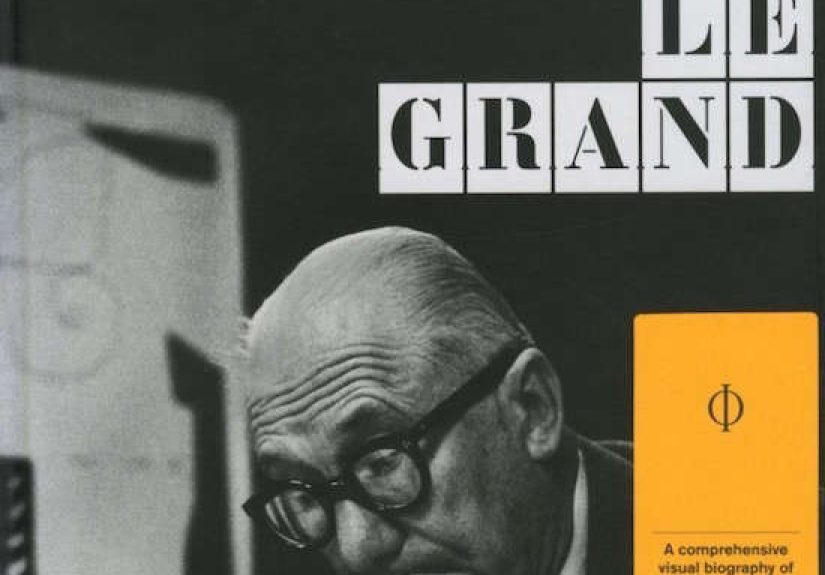
Le Corbusier Le Grand: Midi Edition is not the sort of architecture book you casually toss into a tote bag next to a banana and a half-charged phone. This is a serious, image-packed, table-commanding volume about one of the most influential figures in modern architecture: Le Corbusier, born Charles-Édouard Jeanneret. It is beautiful, heavy, ambitious, and just a little intimidatingin other words, very on-brand for the man who helped reshape the way the 20th century imagined buildings, cities, furniture, and modern life itself.
Published by Phaidon Press, the Midi Edition brought the monumental visual biography Le Corbusier Le Grand into a more approachable format while preserving the book’s central promise: to document the life, work, arguments, experiments, failures, friendships, and obsessions of Le Corbusier through a rich archive of images and documents. The edition is especially appealing to readers who want a deep encounter with modernist architecture without needing a forklift, a studio assistant, or a reinforced coffee table.
At its best, Le Corbusier Le Grand: Midi Edition feels less like a standard biography and more like opening the cabinet drawers of a very busy genius. Inside are sketches, photographs, letters, plans, paintings, furniture studies, urban proposals, and glimpses of the people and places that shaped his career. It is an architectural archive with the pacing of a life storyand occasionally the dramatic energy of a person who absolutely believed the city could be redesigned before lunch.
What Is Le Corbusier Le Grand: Midi Edition?
Le Corbusier Le Grand: Midi Edition is a hardcover visual biography published by Phaidon Press in 2014. It is associated with the work of Jean-Louis Cohen and Tim Benton, two major scholars of Le Corbusier and modern architecture. The book presents Le Corbusier’s career in roughly chronological order, covering not only his famous buildings but also his writing, painting, furniture design, urban planning, travel, correspondence, and personal networks.
The Midi Edition is often discussed as a more manageable version of the earlier large-format Le Corbusier Le Grand. The word “midi” matters here. It does not mean “tiny.” It means “less likely to require its own mortgage.” The book still runs to hundreds of pages and remains a substantial object, but it offers the archive-like experience of the original in a format that more readers, students, collectors, and design lovers can actually handle.
Key Book Details
The Midi Edition is an English-language hardcover published by Phaidon Press. It is commonly listed with ISBN-13: 978-0714868691 and ISBN-10: 0714868698. It contains approximately 864 pages and includes a broad collection of visual and textual materials related to Le Corbusier’s life and work. That page count alone should tell you something: this is not a quick “ten fun facts about modernism” situation. This is the full architectural buffet.
The book’s scope is one of its greatest strengths. Rather than treating Le Corbusier only as the designer of Villa Savoye, Unité d’Habitation, Ronchamp, or Chandigarh, it shows him as a multi-disciplinary creator: architect, theorist, painter, planner, furniture designer, publisher, traveler, and relentless self-mythologizer. He did not merely design buildings. He designed arguments about buildings.
Why Le Corbusier Still Matters
To understand why Le Corbusier Le Grand: Midi Edition matters, you first have to understand why Le Corbusier himself remains such a giantand such a debate magnet. He was one of the leading figures of modern architecture, a Swiss-born French architect whose career stretched from early 20th-century villas to postwar urban visions and monumental civic projects.
His influence appears in clean geometric forms, open plans, pilotis, ribbon windows, roof gardens, concrete forms, modular proportion systems, and the idea that buildings should respond to modern life rather than imitate historical decoration. He helped push architecture away from applied ornament and toward function, structure, light, air, and industrial materials. In plain English: he looked at old architectural habits and said, “Cute, but what if we used reinforced concrete and completely reorganized society?”
Le Corbusier is famous for works such as Villa Savoye near Paris, the Unité d’Habitation in Marseille, the chapel of Notre-Dame du Haut at Ronchamp, the master plan for Chandigarh in India, and his influential 1923 book Toward a New Architecture. His phrase “a machine for living in” remains one of the most quotedand most misunderstoodideas in architectural history. It did not mean homes should feel cold or mechanical. It meant buildings should be designed with clarity, purpose, efficiency, and modern life in mind.
Inside the Book: A Visual Biography with Serious Range
The phrase “visual biography” is important. Le Corbusier Le Grand: Midi Edition does not simply narrate Le Corbusier’s life in blocks of text. It shows the life unfolding through documents. Readers encounter the young Charles-Édouard Jeanneret, the development of the Le Corbusier persona, the Purist period, early villas, urban schemes, wartime complications, postwar commissions, Indian projects, sacred architecture, and late reflections.
The book’s structure helps readers see the evolution of a mind. Early travels through Europe and the Mediterranean shaped his sense of proportion, landscape, classical order, and vernacular form. His partnership with Pierre Jeanneret helped define his early architectural practice. His collaboration with Charlotte Perriand contributed to furniture designs that remain icons of modern design. His involvement with journals and publications helped spread his ideas far beyond the clients who could hire him.
One of the pleasures of the Midi Edition is that it allows readers to move between grand concepts and small details. A city plan may sit near a letter. A furniture sketch may sit beside a photograph. A finished building may be followed by evidence of the messy process that produced it. The result is a portrait of creativity as accumulation: not one lightning strike, but thousands of decisions, revisions, observations, ambitions, and arguments.
Jean-Louis Cohen and Tim Benton: Why the Scholarship Matters
Architecture books live or die by their editorial intelligence. A big archive without guidance can feel like being locked overnight in a filing cabinet. Thankfully, Le Corbusier Le Grand: Midi Edition benefits from serious scholarly framing. Jean-Louis Cohen, widely recognized as a leading historian of 20th-century architecture and urbanism, provides the kind of expertise needed to place Le Corbusier in context rather than simply polish the legend.
Tim Benton’s chapter introductions also help guide readers through the major phases of Le Corbusier’s career. This matters because Le Corbusier is easy to oversimplify. Some people treat him as a heroic modernist prophet. Others treat him as the villain of every unfriendly concrete plaza ever built. The better reading is more complicated. He was brilliant, contradictory, visionary, problematic, productive, persuasive, and sometimes wrong in ways that shaped generations of architectural debate.
The book does not need to turn him into a saint. It is more interesting because it shows the scale of his ambition and the complexity of his output. He was not simply making pretty buildings. He was trying to formulate a complete modern language for architecture, furniture, cities, and everyday life. That is inspiring, exhausting, and occasionally a little alarmingwhich is why he remains so fascinating.
Major Themes in Le Corbusier Le Grand: Midi Edition
1. Architecture as a Complete Way of Thinking
For Le Corbusier, architecture was never just walls and roofs. It was a system of thought. A house, a chair, a city, a painting, and a book could all be part of the same project: the search for order in modern life. Le Corbusier Le Grand: Midi Edition captures this unusually broad ambition by showing his work across media.
This is one reason the book appeals to readers beyond professional architects. Designers, artists, historians, students, urbanists, and visual culture enthusiasts can all find entry points. You may arrive for Villa Savoye and stay for the sketches. You may arrive for Chandigarh and get distracted by furniture. You may arrive because the cover looks impressive on a table and leave with opinions about CIAM, Purism, and roof gardens. That is how architecture books get you.
2. The Relationship Between Image and Idea
Le Corbusier was a master of visual persuasion. He understood that drawings, diagrams, photographs, publications, and exhibitions could make ideas travel. His buildings were influential, but so were his images of buildings. The Midi Edition makes this clear by presenting not just finished projects but the visual ecosystem around them.
This is especially useful for modern readers. In today’s world, architecture often circulates through images before anyone visits the building. Le Corbusier understood that early. He was not only designing; he was broadcasting. He used media to shape public understanding of modern architecture, and this book shows how carefully that public image was built.
3. The Human Scale and the Urban Dream
Le Corbusier’s career contains a recurring tension between the individual body and the enormous city. On one hand, he cared about proportion, furniture, light, and the experience of living space. On the other hand, he proposed vast urban plans that reorganized streets, towers, traffic, and public life. The Midi Edition makes this tension visible.
His work in Chandigarh is one of the clearest examples. Here, Le Corbusier’s urban and civic ambitions expanded beyond theory into a major post-independence project in India. The city’s Capitol Complex and related works remain among the most important examples of modernist planning and architecture. They also continue to provoke debate about climate, culture, scale, symbolism, and the relationship between modern design and local life.
4. Furniture as Architecture in Miniature
Le Corbusier’s furniture collaborations with Pierre Jeanneret and Charlotte Perriand are another crucial part of his story. Pieces such as the chaise longue and tubular steel seating show how modernist principles could be translated into objects for the body. These designs were not decorative afterthoughts. They were part of a larger argument about modern living.
The famous chaise longue, associated with Le Corbusier, Jeanneret, and Perriand, demonstrates how industrial materials, adjustability, and bodily posture could become design questions. It is also a reminder that collaboration matters. For many years, the public reputation of these objects leaned heavily on Le Corbusier’s name, but modern design history increasingly recognizes the essential role of Charlotte Perriand in shaping their intelligence and elegance.
Who Should Read Le Corbusier Le Grand: Midi Edition?
This book is ideal for architecture students, design professionals, collectors, modernism enthusiasts, art historians, and anyone who enjoys deep visual reference books. It is also useful for readers who want a serious introduction to Le Corbusier but prefer images and documents over a traditional biography. If you learn by seeing connections, this book is your kind of classroom.
Students can use it to understand the chronology of Le Corbusier’s career. Designers can study how ideas move from sketch to object to building. Writers can observe how a public persona is constructed. Collectors can appreciate the book as a handsome Phaidon object. Casual readers can browse it slowly and still come away with a stronger sense of why modern architecture looks the way it does.
However, it may not be the best first book for someone who wants a light, simple introduction. The scale can be overwhelming. The density is part of the appeal, but it also asks for patience. Think of it as a museum visit in book form: rewarding, visual, layered, and best enjoyed without trying to absorb everything in one heroic sitting.
How the Midi Edition Compares to Other Le Corbusier Books
There are many books about Le Corbusier, from compact introductions to academic studies and exhibition catalogues. What sets Le Corbusier Le Grand: Midi Edition apart is its documentary richness. It is less about making one narrow argument and more about building a panoramic portrait.
Compared with a standard biography, it gives more space to images and archival materials. Compared with a technical monograph, it feels broader and more biographical. Compared with a coffee-table book, it has more intellectual weight. It is beautiful, yes, but not merely decorative. It earns its shelf space by being useful.
The book is particularly strong for readers who want to understand Le Corbusier as a cultural figure, not just as the author of famous buildings. It shows the man behind the manifesto, the artist behind the architect, and the promoter behind the public reputation. That combination makes the Midi Edition valuable for both study and browsing.
Strengths of Le Corbusier Le Grand: Midi Edition
It Makes the Archive Feel Alive
The greatest strength of the book is its ability to make archival material feel immediate. Sketches and letters are not treated as dusty leftovers. They become evidence of thought in motion. Readers can see how ideas were tested, refined, abandoned, revived, and transformed.
It Balances Breadth and Detail
Le Corbusier’s career was enormous. A lesser book might drown in that scale. The Midi Edition succeeds because it offers both overview and texture. It moves through the major phases of his life while giving readers enough detail to understand why each phase matters.
It Rewards Repeated Reading
This is not a one-and-done book. It rewards return visits. The first pass might be visual. The second might focus on chronology. The third might follow a theme such as furniture, travel, urbanism, or sacred architecture. Like a good building, it changes depending on where you stand.
Limitations to Consider
The book’s richness can also be its challenge. Readers looking for a short, highly interpretive critique may find it too expansive. Its visual density requires time, and its size still makes it a substantial physical object. Despite being more manageable than the original large-format edition, it is not exactly bedtime reading unless your wrists have been training.
Another limitation is that Le Corbusier scholarship continues to evolve. Contemporary discussions often examine his politics, social ideas, colonial contexts, gendered collaborations, and the real-world consequences of modernist planning with more critical attention. The Midi Edition is a powerful resource, but readers should also pair it with newer critical writing if they want a fully updated debate.
Why This Book Works for Modern SEO and Design Audiences
For web readers searching for Le Corbusier Le Grand: Midi Edition, the intent is usually specific. They may want to know what the book is, whether it is worth buying, how it differs from other editions, or why it remains important. A strong article on this topic should therefore do more than repeat the ISBN and page count. It should explain the book’s value.
The value is clear: this edition offers a deep, visual, and scholarly encounter with one of modern architecture’s most influential figures. It helps readers connect famous projects to the broader creative life behind them. It also gives designers and students a way to study process, not only results.
In an online world full of quick summaries, Le Corbusier Le Grand: Midi Edition is refreshingly slow. It asks you to look carefully. It reminds you that architecture is not only the finished photograph but also the argument, the sketch, the failed proposal, the collaboration, the city, the client, the material, and the historical moment. Basically, it is the opposite of scrolling past a building in 1.5 seconds while eating cereal.
Experience Notes: Living With Le Corbusier Le Grand: Midi Edition
Experiencing Le Corbusier Le Grand: Midi Edition is different from simply reading a normal architecture book. A normal book says, “Here is chapter one.” This book says, “Here is the 20th century; please clear your afternoon.” The first impression is physical. The volume has presence. It belongs on a table, not hidden in a cramped shelf where only the dust bunnies can admire it.
The best way to approach it is slowly. Start by browsing the images without worrying about mastering every date or project. Let the rhythm of Le Corbusier’s career appear visually: early studies, clean villas, radical plans, concrete forms, sacred curves, Indian civic spaces, furniture, paintings, and late reflections. After that first visual pass, return to the chapter introductions and captions. The book becomes much easier when you stop trying to “finish” it and start using it as a visual archive.
For students, the experience can be surprisingly practical. It shows how an architect’s ideas do not arrive fully dressed in a tuxedo. They stumble in through sketches, travel notes, conversations, competitions, manifestos, and revisions. Seeing that process is encouraging. Even Le Corbusier, the high priest of modernist confidence, had to work through fragments. The lesson is simple: great design is not magic. It is disciplined obsession with better stationery.
For designers, the book is valuable because it reveals patterns of thinking. You begin to notice how Le Corbusier returned again and again to proportion, light, circulation, furniture, landscape, and the relationship between individual living and collective urban form. Whether or not you agree with his conclusions, the consistency of the inquiry is impressive. He asked big questions and then kept asking them in buildings, books, chairs, paintings, and city plans.
For casual readers, the experience may begin with admiration and end with questions. That is healthy. Le Corbusier’s work is not meant to be swallowed whole without chewing. Some ideas feel visionary; others feel severe. Some buildings are luminous; some urban proposals remain controversial. The Midi Edition gives enough material to appreciate the brilliance without ignoring the complications. It lets readers see why Le Corbusier inspires devotion, criticism, imitation, and eye-rolling in almost equal measure.
As an object, the book also changes a room. Leave it on a coffee table and it quietly announces that someone nearby has opinions about pilotis. Open it during a conversation and people tend to gather around. Architecture books can be social objects, and this one is especially good at starting discussions. Someone will admire the drawings. Someone will question the city plans. Someone will say concrete is beautiful. Someone else will mention parking garages. Suddenly, congratulations: you are hosting an architectural salon.
The most rewarding experience comes from using the book as a bridge. Pair it with visits to modernist buildings, documentaries, museum collections, or essays on urban planning. Compare its archival richness with contemporary debates about housing, sustainability, preservation, and human-centered design. Le Corbusier’s work may belong to the 20th century, but the questions around it remain current: How should cities grow? What should housing provide? Can design improve daily life? When does order become control? And how many dramatic chairs does one civilization require?
Ultimately, Le Corbusier Le Grand: Midi Edition is more than a book about one architect. It is an invitation to study modernism as a living argument. It encourages readers to admire, question, compare, and rethink. That is why the edition remains useful: not because it offers a tidy final verdict, but because it gives readers enough evidence to form their own.
Conclusion
Le Corbusier Le Grand: Midi Edition is a substantial, visually rich, and intellectually rewarding book for anyone interested in modern architecture, design history, urban planning, or the creative life of Le Corbusier. It captures the scale of his influence while preserving the details that make his career feel human: sketches, letters, photographs, collaborations, experiments, and contradictions.
The book works because it does not reduce Le Corbusier to a slogan. It shows him as a maker of buildings, images, objects, theories, and controversies. For architecture students, it is a study resource. For design lovers, it is a visual feast. For collectors, it is a handsome Phaidon volume. For curious readers, it is a doorway into the world of modernismjust watch your step; the doorway is probably made of concrete and aligned to a strict proportional system.