Table of Contents >> Show >> Hide
- What the Makita Cordless Coffee Machine Actually Is
- What Popular Mechanics Noticed in Testing
- Features That Make the Makita Stand Out
- How the Coffee Tastes
- Who Should Actually Buy It?
- The Downsides You Should Know Before Buying
- Why This Machine Still Works So Well as a Product
- Longer Field Notes: on the Experience of Living With One
- Final Verdict
- SEO Tags
If you have ever looked at a tool battery and thought, “You know what this needs? A caffeine side quest,” Makita beat you to it. The Makita Cordless Coffee Machine is one of those gloriously strange products that sounds like a joke until you imagine a cold jobsite morning, a campsite before sunrise, or a tailgate where someone forgot the extension cord. Then it starts making a suspicious amount of sense.
That tension is exactly what makes this machine interesting. It is practical, but also a little ridiculous. It is undeniably handy, but it will never fool anyone into thinking it belongs in a boutique coffee bar with reclaimed wood shelves and a barista named Oliver. And that is okay. In fact, it is the whole point.
Popular Mechanics’ hands-on take frames the machine the right way: as a compact, fun, genuinely useful niche gadget that makes more sense the farther you are from a kitchen. Pair that with Makita’s official specs, tool-retailer breakdowns, and broader portable-coffee reviews from outdoor and food publications, and a clear picture emerges. The Makita Cordless Coffee Machine is not trying to win the “best coffee maker on earth” trophy. It is trying to solve a much more specific problem: how to get a hot, fresh cup when there is no outlet, no breakroom, and no patience for bad gas-station sludge.
What the Makita Cordless Coffee Machine Actually Is
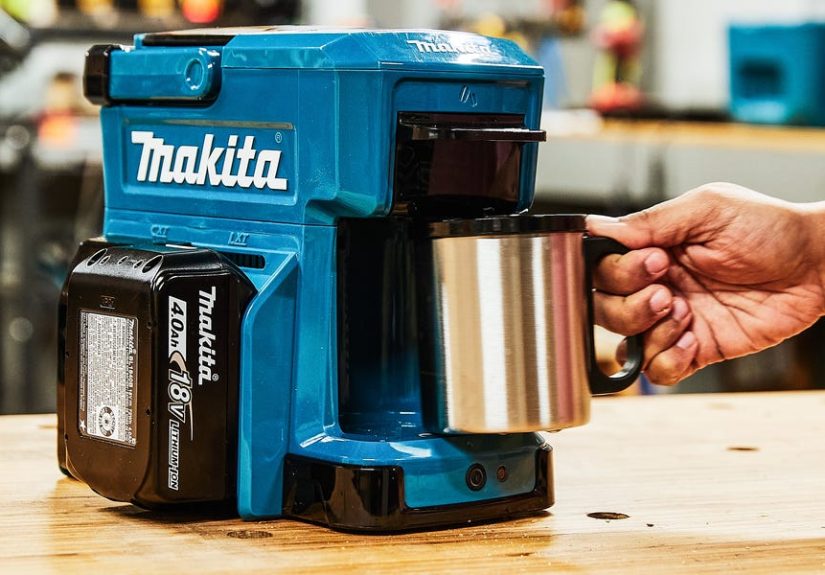
The current U.S. model most people mean is the Makita DCM501Z, a compact drip-style brewer that runs on the same battery platforms many Makita users already own. That is the headline feature, and it is not a small one. Instead of asking you to buy into a whole new ecosystem, this machine borrows juice from batteries that may already be powering your drill, driver, saw, or work light.
That creates a very different buying proposition from a normal coffee maker. For the average kitchen shopper, the Makita looks eccentric. For someone already knee-deep in Makita batteries, it looks convenient. In other words, this is not just a coffee appliance. It is a coffee appliance with tool-brand logic.
The machine is designed to brew a small, single-serving cup, roughly 5 ounces at a time, with a water tank just over 8 ounces. It works with ground coffee or 60 mm coffee pods, uses a permanent drip filter instead of paper filters, and includes features that sound very Makita-like, such as boil-dry protection and a compact, easy-carry form factor. Think less “lazy Sunday brunch machine,” more “survival gear for people who own impact drivers.”
What Popular Mechanics Noticed in Testing
The reason the Makita Cordless Coffee Machine, tested by Popular Mechanics, became such a fun conversation piece is simple: the review did not treat it like a gimmick and move on. Instead, the magazine took it seriously enough to confirm what it does well and where it comes up short.
The big wins were portability, compact design, and ease of use. That checks out. This machine is small enough to stash in a truck, workshop, or camp kit without demanding its own royal suite. It is also simple to set up, simple to clean, and straightforward in a way that suits people who do not want a pre-dawn relationship with a 27-step brewing ritual.
Popular Mechanics also landed on the key truth of the product: the coffee is surprisingly decent, and the machine’s flaws feel smaller when the alternative is no hot coffee at all. That distinction matters. At home, where a countertop drip machine, French press, AeroPress, or pour-over setup is within arm’s reach, the Makita has stiff competition. On a workbench, in a parking lot, or beside a tent? The equation changes fast.
That is the lens through which this product should be judged. Not against your favorite café. Against reality.
Features That Make the Makita Stand Out
1. Battery-powered brewing
This is the headline act. The DCM501Z is compatible with both 18V LXT and 12V max CXT Makita batteries. For users already inside the Makita ecosystem, that means the machine slips naturally into existing gear. No separate power brick. No hunting for an outlet. No muttering at a generator before sunrise.
2. Fast enough for the real world
Makita and tool retailers consistently peg the brew time at roughly five minutes for one 5-ounce cup on an 18V battery. That is not espresso-fast, but it is absolutely reasonable when you are brewing off a power-tool battery in the middle of nowhere. On 12V, it is slower, which makes the 18V platform the better fit for people who want the least waiting and the most cups per charge.
3. Grounds or pods
Flexibility helps. The machine can use ground coffee or small pods, which means you can lean toward convenience or better flavor depending on the day. Grounds usually give you more control and often a better cup. Pods are the answer for mornings when your only real life goal is “become conscious again.”
4. No paper filters needed
The permanent drip filter is one of the smartest parts of the design. It cuts waste, reduces the number of little things you have to remember to pack, and keeps cleanup relatively painless. For camping, tailgating, and worksites, that matters more than it might in a home kitchen.
5. Small footprint, light carry
Reviewers and product listings agree on the overall shape of the story: the Makita is compact, lightweight, and easy to haul. That portability is not a side benefit. It is the whole game. If a cordless coffee maker is too big or annoying to bring along, it has already lost.
How the Coffee Tastes
Now for the question that separates coffee romantics from caffeine realists: does it make great coffee?
The honest answer is that it makes a perfectly respectable, serviceable cup, especially when judged in context. That context is crucial. Portable coffee experts from OutdoorGearLab, Serious Eats, Food & Wine, GearJunkie, and other testing-focused outlets tend to reward brewers that either maximize flavor, minimize gear, or strike a smart balance between both. By those standards, the Makita is a little unusual. It is not the lightest. It is not the most flavor-obsessed. It is not the cheapest path to good camp coffee. What it is is self-heating, rugged, and independent of a wall outlet.
That gives it a niche none of the usual suspects quite occupy. An AeroPress may produce a more satisfying cup for coffee nerds. A compact manual brewer may be lighter in a backpack. A dedicated travel espresso maker may deliver more drama in the cup. But those alternatives usually assume you already have hot water, or time, or patience, or all three.
The Makita skips that dance. Add water, add coffee, attach battery, press button, regain humanity.
Flavor-wise, it helps to adjust expectations. This is not going to give you layered tasting notes of cherry, cacao, and enlightenment. It is going to give you hot coffee that tastes better than instant, more satisfying than stale thermos leftovers, and far more civilized than pretending an energy drink is breakfast.
Who Should Actually Buy It?
The Makita Cordless Coffee Machine is not for everyone, and that is part of its charm. The target audience is wonderfully specific.
It makes sense for:
Makita battery owners. This is the biggest one. If you already own compatible batteries and chargers, the machine becomes much easier to justify.
Jobsite workers. If your day starts in a place where outlets are scarce and decent coffee is scarcer, this machine starts looking less like a novelty and more like a morale device.
Campers and tailgaters. Especially the kind who want a hot cup without a camp stove coffee ritual that feels like a chemistry lab before sunrise.
People who love quirky, useful gear. Some products earn a place in your life partly because they are practical and partly because they make you smile every time you use them. This is one of those.
It makes less sense for:
Home users with easy outlet access. At home, there are cheaper and tastier ways to make coffee.
People who want a large mug. The cup size is small by American standards. This is more “focused little boost” than “gigantic commuter tumbler of destiny.”
Coffee purists. If grind size, bloom timing, and extraction curves are your love language, you will probably prefer a manual travel brewer.
The Downsides You Should Know Before Buying
No honest review of the Makita Cordless Coffee Machine, tested by Popular Mechanics, should skip the compromises. There are a few, and they are not trivial.
First, the serving size is small. Five ounces is not a monster American mug. It is more like a compact, get-back-to-work cup. If your normal morning coffee resembles a bucket with a handle, you will either brew multiple rounds or feel mildly betrayed.
Second, the value depends heavily on whether you already own Makita batteries. As a bare tool, the math is much friendlier for existing Makita users than for someone starting from scratch. This is a classic ecosystem product.
Third, the Makita wins on convenience more than pure cup quality. That is not an insult. It is just the category. Portable coffee reviews across outdoor and food media repeatedly show that better-tasting travel coffee often comes from manual systems that are simpler, lighter, and more brew-focused. The Makita answers a different question: “Can I make decent hot coffee anywhere using the batteries already in my truck?”
Finally, it occupies a funny middle ground. It is more substantial than ultralight camp gear, but less versatile than a full home coffee setup. That makes it a specialist. Specialists are great when you need exactly what they do. Less great when you expect them to be everything.
Why This Machine Still Works So Well as a Product
Because it understands something many coffee makers do not: context matters.
At home, coffee is often judged by ritual, flavor complexity, batch size, and countertop aesthetics. Away from home, coffee is judged by whether it exists, whether it is hot, and whether it can be made without creating a tiny logistical crisis.
That is where Makita’s machine earns its keep. It borrows trust from the company’s tool identity: durable, portable, uncomplicated, built around battery systems people already use. It also avoids a common trap in novelty appliances by being genuinely functional. Yes, the premise is funny. Yes, it sounds like a gift-guide fever dream. But once you accept its mission, the design is surprisingly coherent.
This is not a coffee maker pretending to be a power tool. It is a power-tool-brand coffee maker that understands exactly where it belongs.
Longer Field Notes: on the Experience of Living With One
The experience of owning a Makita Cordless Coffee Machine is weirdly delightful because it changes how coffee fits into the day. A normal coffee maker waits for you in a kitchen. The Makita follows you into the parts of life where coffee usually gets worse. That alone makes it memorable.
Imagine the first use on a chilly morning at a jobsite. Everyone is still half asleep, the truck doors are slamming, someone is looking for a tape measure they absolutely had five minutes ago, and the nearest decent coffee is a drive in the wrong direction. Pulling a little teal coffee maker out of the back of the truck sounds ridiculous right up until it starts working. Then the jokes stop and the curiosity begins. Suddenly everyone wants to know how long it takes, what battery it uses, and whether it actually tastes good or just looks funny.
That social factor is real. This machine is a conversation starter in a way almost no normal coffee maker could ever be. A drip machine on a kitchen counter is invisible. A battery-powered Makita brewer on a tailgate at 6:45 a.m. is theater. It has the same energy as showing up with a gadget nobody expected to be useful and watching it quietly prove itself.
The camping experience is even better. Traditional camp coffee can be romantic in theory and annoying in practice. There is always a little more setup, a little more cleanup, and usually one person trying to act cheerful while clearly not yet capable of language. The Makita cuts through all that. It is not elegant, but it is efficient. You do not need a stove just to get started. You do not need to turn breakfast into an operations meeting. You just make a cup and move on with the day.
There is also something satisfying about the machine’s total lack of pretension. It does not ask to be admired for its brewing philosophy. It does not come with a speech about flavor notes or extraction science. It is a practical, slightly odd machine that knows its assignment. That makes it refreshingly easy to live with. Fill the tank, add grounds, snap in a battery, press the button, and let the tiny miracle of portable hot coffee do its thing.
Of course, the experience is not perfect. The cup size is still small enough to make many Americans laugh nervously. If you are used to a giant insulated mug that doubles as upper-body training, five ounces feels more like a warm-up than a complete beverage. And if you are chasing café-level flavor, you may end up treating the Makita as a convenience machine rather than your favorite brewer.
Still, that misses the emotional appeal. The best thing about this machine is not that it makes the world’s greatest coffee. It is that it makes inconvenient places feel a little more civilized. A workshop feels less harsh. A campsite feels more comfortable. A long day starts with something hot, fresh, and familiar. That is the kind of experience people remember, and it is exactly why this oddball machine has lasted longer in the conversation than anyone expected.
Final Verdict
The Makita Cordless Coffee Machine, tested by Popular Mechanics, succeeds because it knows what it is. It is not trying to replace a premium home brewer, impress specialty-coffee snobs, or become the universal answer to every caffeine problem. It is trying to make fresh hot coffee where normal coffee makers become useless. On that mission, it is surprisingly effective.
If you already own Makita batteries and want a compact, portable, rugged way to brew on the job, at camp, or on the go, this machine is not just a novelty. It is a clever ecosystem add-on that can genuinely improve your day. If you are buying from scratch and care mostly about flavor per dollar, you can absolutely do better elsewhere.
But not everywhere.
And that is the whole point.