Table of Contents >> Show >> Hide
- What Are McKenzie Exercises (And Why Do People Use Them)?
- Before You Start: Safety First (Yes, Even for “Just Exercises”)
- How to Use McKenzie Exercises the Smart Way
- McKenzie Exercises for Low Back Pain and Sciatica
- 1) Prone Lying (Baseline Reset)
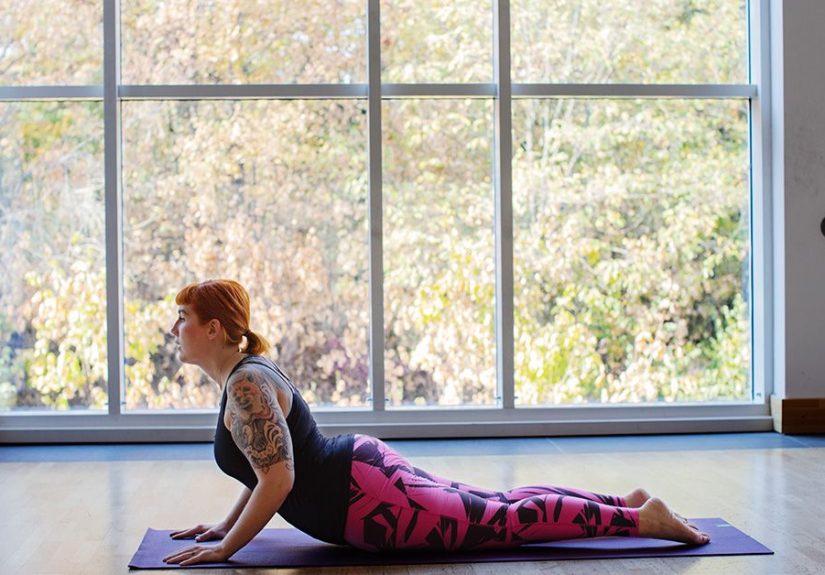
- 2) Prone on Elbows (Gentle Extension)
- 3) Prone Press-Up (Extension Press-Up)
- 4) Standing Back Extension (When You’re Not at Home)
- 5) Flexion in Lying (Knees-to-Chest Progression)
- 6) Flexion in Sitting (A Gentle “Unloading” Option)
- 7) Side Glide in Standing (For a “Shift” or One-Sided Pattern)
- How to Build a Simple McKenzie-Style Routine
- Common Mistakes That Make McKenzie Exercises Less Helpful
- When McKenzie Exercises Help Most (And When They May Not)
- Practical Examples: Matching the Exercise to the “Feel”
- Real-World Experiences With McKenzie Exercises (The Extra )
- Conclusion
- SEO Tags
Low back pain has a special talent: it shows up uninvited, steals your ability to tie your shoes, and then makes you
negotiate with a sock like it’s a hostage situation. If your pain also shoots into the buttock, thigh, or leg (hello,
sciatica), you may be searching for something that’s simple, structured, and doesn’t require a home gym or a
PhD in anatomy.
Enter McKenzie exercisesoften taught as part of the McKenzie Method (also called
Mechanical Diagnosis and Therapy, or MDT). The big idea is surprisingly practical: certain
repeated movements (done the right way) can reduce pain, improve motion, and help you learn what your back responds
to best. It’s not “one magical stretch for everyone.” It’s more like a choose-your-own-adventure where your symptoms
provide the plot twists.
This guide explains how McKenzie exercises work, which moves people commonly try for low back pain and sciatica, and
how to use symptom “rules” (like centralization) so you’re not just guessing. It’s educationalnot a diagnosis. If
you have severe symptoms, red flags, or you’re unsure, loop in a qualified clinician (especially a physical therapist
trained in MDT).
What Are McKenzie Exercises (And Why Do People Use Them)?
McKenzie exercises are a set of repeated movements and sustained positions designed to test and treat mechanical
painpain influenced by posture, movement, and loading. In MDT, a clinician looks for patterns like:
which direction (extension, flexion, side-glide) improves symptoms, and which makes them worse.
The method is widely known for lumbar extension-based moves like prone press-ups, but McKenzie is not
“extension forever.” Some people respond better to flexion (bending forward) or side-gliding (shifting the pelvis).
The correct direction depends on the pattern you haveand that’s why symptom response matters.
The “Centralization” Clue
One of the most useful concepts in MDT is centralization: when pain that travels down the leg moves
back toward the spine during or after a movement session. If leg pain retreats closer to your back (even if
your low back feels a bit more noticeable), that can be a good sign that you’re pushing the right buttons.
The oppositepain spreading farther down the leg, increasing numbness/tingling, or a new “electric” zingcan be a sign
you’re using the wrong direction or doing too much too soon.
Before You Start: Safety First (Yes, Even for “Just Exercises”)
Stop and get urgent medical care if you have:
- New loss of bowel or bladder control
- Severe or progressive weakness in the leg/foot
- Numbness in the groin/saddle area
- Major trauma, fever, unexplained weight loss, or pain that’s relentless at night
Check in with a clinician soon if:
- Sciatica pain is severe, worsening, or not improving with self-care
- Symptoms persist beyond a couple of weeks or keep returning
- You’re pregnant, have osteoporosis, or have a history of spinal surgery and you’re unsure what’s safe
If you’ve been cleared to try gentle movement, the goal is not to “stretch the pain away.” The goal is to
find a direction your symptoms prefer, then use that direction to calm things down and gradually
restore function.
How to Use McKenzie Exercises the Smart Way
Rule 1: Your symptoms are data
During and after each exercise, notice:
(1) Where is the pain now? (2) Is it moving up or down the leg? (3) Is intensity changing? (4) How do you feel
10–30 minutes later?
Rule 2: Centralization beats intensity
A mild, tolerable increase in low back ache is often less concerning than leg pain spreading farther down. If leg
symptoms centralize, that’s usually a better sign than “everything feels quiet for two minutes then explodes later.”
Rule 3: Don’t mix five new things at once
Try one movement direction for a short session, then re-check. If you jump between extension, flexion, twisting, and
aggressive hamstring stretches like you’re sampling at a buffet, you won’t know what helped (or what poked the bear).
Rule 4: Reps are small, frequent, and boring (in a good way)
Many McKenzie-style sessions use 8–10 reps, repeated a few times per day. “Boring consistency” often beats the
weekend-warrior approach.
McKenzie Exercises for Low Back Pain and Sciatica
Below are common McKenzie movements used for low back pain and sciatica. Not everyone needs all of them. In fact,
doing the wrong category (extension vs. flexion) can make symptoms worse. Start gently and stop if symptoms
peripheralize (travel farther down the leg) or if you feel sharp, alarming pain.
1) Prone Lying (Baseline Reset)
Best for: Very sensitive backs; testing if extension is tolerated.
- Lie on your stomach on a firm, comfortable surface (a yoga mat works).
- Turn your head to one side; relax your shoulders and legs.
- Stay 1–3 minutes while breathing slowly.
What to watch: Does leg pain calm down or move upward? Or does it creep farther down the leg?
If this position alone makes symptoms worse, stop and consider professional guidance.
2) Prone on Elbows (Gentle Extension)
Best for: Progressing from prone lying if tolerated.
- From prone lying, prop up on your elbows like you’re casually reading a book you didn’t pay for.
- Keep hips and pelvis heavy on the floor; avoid squeezing your glutes hard.
- Hold 10–30 seconds, repeat 5–10 times.
Tip: Your goal is a smooth curve in the low back, not a dramatic “cobra pose” performance.
3) Prone Press-Up (Extension Press-Up)
Best for: Many people with disc-related low back pain patterns; often used for sciatica that centralizes with extension.
- Lie on your stomach, hands under shoulders (like you’re about to do a push-up).
- Press your upper body up by straightening your elbows, letting your low back arch.
- Keep your pelvis down if possible; go only as high as comfortable.
- Pause 1–2 seconds at the top, then lower. Repeat 8–10 reps.
What to watch: If leg pain moves closer to your back during the set (centralizes), that’s often a
positive response. If leg symptoms spread farther down or intensify sharply, stop.
4) Standing Back Extension (When You’re Not at Home)
Best for: Office days, long drives, or anytime you feel “compressed.”
- Stand with feet hip-width apart.
- Place hands on the small of your back.
- Gently lean backward, keeping knees mostly straight.
- Return to neutral. Repeat 8–10 reps.
Pro move: Pair this with “movement breaks” during prolonged sittingyour spine generally prefers
variety over marinating in one position.
5) Flexion in Lying (Knees-to-Chest Progression)
Best for: Some people whose symptoms prefer flexion (for example, certain stenosis-like patterns or
when extension clearly worsens symptoms). This is not automatically “good for sciatica.”
- Lie on your back with knees bent.
- Bring one knee toward your chest, then the other (as tolerated).
- Hold 1–2 seconds, then return. Repeat 8–10 reps.
What to watch: Flexion should not send pain farther down the leg. If it does, stop and reassess.
6) Flexion in Sitting (A Gentle “Unloading” Option)
Best for: Testing flexion preference when lying is uncomfortable.
- Sit toward the front of a chair with feet flat.
- Slowly bend forward, letting hands slide down your legs.
- Return to upright. Repeat 8–10 reps.
Reminder: If your pain pattern clearly prefers extension, repeated flexion may aggravate it. This is
why the “directional preference” concept matters.
7) Side Glide in Standing (For a “Shift” or One-Sided Pattern)
Best for: Some people who stand “shifted” (hips off to one side) or have strongly one-sided symptoms.
This is a classic MDT tool when a lateral component is suspected.
- Stand next to a wall with your shoulder close to it.
- Keep shoulders relatively level while gently shifting hips toward the wall.
- Move in and out smoothly for 8–10 reps.
Important: Side glides are highly pattern-dependent. If you’re unsure, this is one of the best
exercises to learn from a PT.
How to Build a Simple McKenzie-Style Routine
Step 1: Pick one direction to test (extension or flexion)
If sitting and bending forward makes you worse and standing/walking feels better, extension moves may be the first
test. If standing/walking worsens symptoms and sitting or leaning forward helps, flexion may be worth testing.
When in doubt, start with the gentlest option (prone lying or short, easy movements).
Step 2: Do a small set, then reassess
Try 8–10 reps of one exercise. Walk around for a minute. Re-check symptoms. If leg pain centralizes or overall pain
reduces over the next 30 minutes, that’s useful feedback.
Step 3: Repeat during the day
Many people do short sessions 2–5 times daily. Think: “snacks, not feasts.” Consistency and symptom tracking matter
more than heroic intensity.
Step 4: Add basics that make the exercises work better
- Micro-breaks: Stand up every 30–60 minutes if you sit a lot.
- Walking: Gentle walking can keep you moving without heavy spinal loading.
- Sleep positions: Many people do well with a pillow between knees (side-lying) or under knees (back-lying).
- Calm the system: Slow breathing helps reduce muscle guarding that makes everything feel worse.
Common Mistakes That Make McKenzie Exercises Less Helpful
Going too big, too fast
If you crank into maximum extension on day one, your back may respond with a dramatic protest. Start with low effort,
small range, and build as tolerated.
Chasing a stretch instead of a response
McKenzie isn’t about “feeling the stretch.” It’s about how your symptoms behave afterward. A big stretch that causes
leg symptoms to travel farther is not a win.
Ignoring the “later” reaction
Some movements feel fine in the moment but irritate symptoms hours later. If your pain spikes every evening after
doing a new exercise, that’s your body leaving a strongly worded review.
When McKenzie Exercises Help Most (And When They May Not)
McKenzie-style care is often used for mechanical low back pain and for some sciatica patternsespecially when symptoms
change predictably with posture and repeated movement. Research has found MDT can be effective in certain groups,
particularly when the approach is applied according to its core principles and when patients are matched to the right
directional preference.
But not all sciatica is the same. Sciatica can come from disc irritation, spinal stenosis, piriformis-related
irritation, or other causes. If your symptoms do not respond to repeated movement testing, or if you have progressive
neurologic deficits, MDT exercises alone may not be the right toolor may be one piece of a bigger plan.
Practical Examples: Matching the Exercise to the “Feel”
Example 1: The Desk-Sitter With Leg Pain That Improves When Standing
You sit for two hours, then feel pain in the buttock and calf. Standing up helps within minutes. In many cases, this
pattern is a good reason to test gentle extension (standing back extensions, then prone on elbows/press-ups if
tolerated). If leg pain centralizes over a few sessions, you’ve learned something valuable.
Example 2: The Walker Who Gets Worse the Longer They Stand
You’re okay sitting, but standing/walking longer than 5–10 minutes brings on leg pain and heaviness. Some people with
stenosis-like patterns find forward bending (flexion preference) gives relief. In that case, flexion in sitting/lying
might be a better test than press-ups.
Example 3: The “Shifted” Stance After a Bad Bend-and-Twist
You can’t stand straight; your hips drift to one side. This is where side-glide strategies may be usefulbut the
direction matters. A PT trained in MDT can help you choose the correct side-glide and progress safely.
Real-World Experiences With McKenzie Exercises (The Extra )
If you ask a room full of people who’ve tried McKenzie exercises what it felt like, you’ll hear a familiar theme:
the first “win” often isn’t a pain-free miracleit’s a small, weirdly satisfying shift in the pain map.
The “My Pain Moved… Is That Good?” Moment
A lot of folks notice that after a few gentle press-ups, the sharp calf pain becomes more of a buttock ache, and the
low back feels “present,” like it’s reminding you it exists. That can be unsettling at first (nobody wants more
back pain), but centralization is often the sign people hang their hope on: the pain is retreating closer to the
source. One common experience is realizing the leg pain is the real bullyonce it backs off, you feel like you can
move again, even if your low back still feels cranky.
The “I Overdid It Because It Felt Better” Trap
Another very human storyline: someone feels better after one session, then celebrates by doing 50 press-ups like they’re
training for the World Cobra Championships. Later that day, symptoms flare and confidence takes a hit. The lesson most
people learn the hard way is that McKenzie is about dose as much as direction. Small, frequent sets
often beat big, heroic sessions. Many people report that the most effective routine is the least dramatic:
8–10 reps, several times a day, with walking and movement breaks.
How It Fits Into Real Life (Not Just a Yoga Mat)
Practical success stories often involve “anchoring” the exercises to real-world triggers:
a standing extension set after every long meeting, or prone on elbows for 2 minutes before bed, or press-ups after a
car commute. People who sit for work frequently describe the first major improvement as “I can sit longer before the
symptoms start,” followed by “I can get up without feeling like my spine is made of rusty hinges.”
The “PT Tweaked One Detail and Everything Changed” Experience
Many people also share that the exercises didn’t click until a clinician fixed one small thing:
keeping the pelvis down during press-ups, relaxing the glutes, not holding their breath, or stopping just short of the
painful range instead of pushing through. In MDT terms, that’s the difference between doing a movement and doing the
movement correctly. It’s also why a single session with a trained PT can be worth ityour body gets the right
message instead of a confusing group text.
What Progress Often Looks Like
People commonly describe progress as “more good hours,” not instant perfection. First, leg symptoms centralize. Then,
walking feels easier. Then, the fear of bending returns to normal caution. Over time, they begin adding strength work
and general conditioning, because a calmer back is usually more willing to build resilience. And yesmany folks report
they still do a few extensions occasionally, like brushing teeth: not because disaster is guaranteed, but because it’s
a simple habit that helps them feel in control.
Conclusion
McKenzie exercises can be a practical, empowering way to manage low back pain and some forms of sciaticaespecially
when you use symptom feedback to guide the direction and dosage. Start gently, watch for centralization, avoid
peripheralization, and don’t hesitate to involve a professional if symptoms are severe, persistent, or confusing.
Your back doesn’t need a pep talk; it needs the right movement message delivered consistently.