Table of Contents >> Show >> Hide
- Why the science sprinted ahead
- Why the art fell behind
- The cost of a stalled art of medicine
- Can technology help revive the art, or will it flatten it further?
- What restoring the art of medicine actually looks like
- The future of medicine needs both microscope and metaphor
- Experiences that reveal the gap between medicine’s science and medicine’s art
- Conclusion
Modern medicine can do things that would have looked like wizardry a century ago. We can sequence tumors, replace joints, map the brain in astonishing detail, and use artificial intelligence to draft patient messages before the coffee gets cold. The science is dazzling. The machinery is smarter. The data is deeper. The diagnostics are faster. On paper, this should feel like medicine’s golden age.
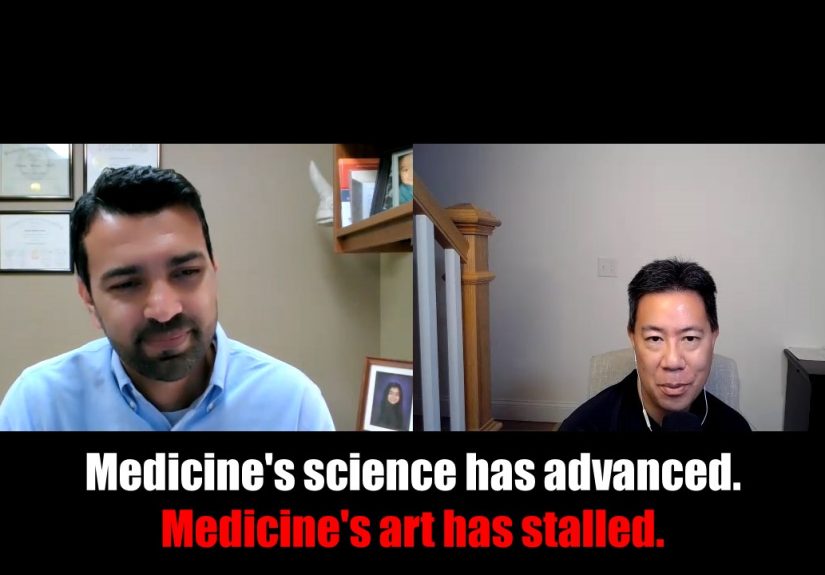
And yet many patients still leave a visit feeling unseen, unheard, or hurried out the door like the final customer in a store that closed 10 minutes ago. That is the paradox at the center of modern health care: medicine’s science has advanced, but medicine’s art has not kept pace. In some ways, it has stalled.
By the art of medicine, we mean the part that does not fit neatly into a lab value or scan report: listening with patience, noticing what is not said, explaining risk in plain English, reading the room, earning trust, and treating a human being rather than a diagnosis with shoes on. This is not fluff. It is not decorative bedside ribbon tied around serious science. It is part of serious science, because communication, empathy, continuity, and trust shape adherence, satisfaction, decision-making, and sometimes outcomes themselves.
The problem is not that doctors do not care. Many care deeply. The problem is that the structure of modern care often rewards throughput more than presence, documentation more than dialogue, and efficiency more than human understanding. Science got faster. The exam room got noisier.
Why the science sprinted ahead
The reasons medicine’s scientific side has leaped forward are easy to see. Biomedical research has enjoyed decades of momentum. Evidence-based guidelines are stronger. Precision medicine is no longer science fiction. Clinicians have better drugs, better imaging, better monitoring, and better algorithms than ever before. Many diseases that once killed quickly can now be managed for years. Conditions that once required exploratory surgery can now be evaluated through blood work, imaging, and minimally invasive tools.
Health care also became more measurable. That brought major benefits. Hospitals and clinics can track complications, readmissions, outcomes, and utilization with far more precision than in the past. Researchers can compare treatments across populations and identify what works. Standardization reduced variation in care and improved safety in many settings. When medicine behaves more like science, fewer decisions depend on guesswork, habit, or hierarchy. That part is worth celebrating.
But success came with a side effect: what can be measured tends to dominate what cannot. If the lab result is visible, the conversation may become invisible. If systems are built around clicks, codes, and compliance, the human exchange can end up treated like a nice extra instead of core clinical work.
Why the art fell behind
The visit got crowded
Today’s clinical encounter is packed with tasks. A clinician may need to review prior records, address multiple chronic conditions, reconcile medications, counsel on prevention, document thoroughly, respond to inbox messages, satisfy billing requirements, and meet quality metrics, all while making the patient feel calm, respected, and cared for. That is a heroic ask for a 15- or 20-minute slot. Even in longer appointments, the digital paperwork often keeps humming in the background like an annoying refrigerator you can never unplug.
The result is a strange scene familiar to millions of patients: the doctor is present, but also slightly elsewhere. Eyes flick toward the screen. Hands hover over the keyboard. Silence appears not because the patient is being thoughtfully heard, but because the note needs finishing. Technology, which promised to streamline care, often inserts itself between patient and physician like an overeager third wheel.
Burnout drains empathy
Burnout is not just a workforce issue. It is a relationship issue. Exhausted clinicians may still be competent, ethical, and hardworking, but emotional depletion changes the texture of care. It is harder to be curious when you are overloaded. Harder to be patient when your inbox is a monster. Harder to offer warm, clear explanations when you are running late before lunch and after lunch.
Empathy is often described as a personal virtue, but in real life it is also a system-dependent capacity. Put a clinician in a humane environment with enough time, support, and continuity, and empathy has room to breathe. Put that same clinician in a maze of alerts, staffing shortages, and administrative drag, and empathy starts to feel like emotional labor performed on a sprint.
Training still overvalues detachment
Medical education has changed, but old habits linger. Students are still rewarded for mastering the differential diagnosis, identifying the enzyme, recalling the trial, and presenting efficiently. Those skills matter. But the hidden curriculum often teaches something else: that emotion should be managed quietly, that vulnerability is risky, and that efficiency signals competence. A trainee can become very sophisticated at discussing disease while remaining undertrained in discussing suffering.
That is how medicine produces people who can explain the mechanism of a drug in exquisite detail but struggle to tell a scared patient, “I can see why this is overwhelming.” Science trains the mind brilliantly. Art trains the encounter. The first has formal systems behind it. The second is too often left to chance, personality, or luck.
The cost of a stalled art of medicine
Patients may get information without understanding
One of the most common failures in medicine is not incorrect information. It is correct information delivered in a way the patient cannot absorb, use, or trust. A technically accurate explanation can still fail if it is rushed, jargon-heavy, or emotionally tone-deaf. Patients may nod politely while understanding almost nothing. Then everyone acts surprised when the plan falls apart at home.
This is where the art of medicine matters. It is the difference between “Your imaging is reassuring” and “I know the pain is real, and here is what we do know.” It is the difference between handing out instructions and building agreement. Between talking at people and caring for them.
Trust becomes fragile
Trust is not created by credentials alone. It grows through continuity, attention, and credibility over time. When patients feel rushed, dismissed, or stereotyped, trust erodes quickly. In a fragmented system where many people struggle to build a long-term relationship with a primary care clinician, that erosion becomes easier. A person who never feels known by the system will not naturally trust the system.
And once trust weakens, everything gets harder: diagnosis, adherence, preventive care, shared decision-making, and even public health messaging. Medicine then spends more money trying to solve problems that might have been softened earlier by stronger relationships.
Clinicians lose meaning too
Here is the cruel irony: the same system that shortchanges patients also shortchanges clinicians. Many people enter medicine because they want to help, heal, and form meaningful human connections during vulnerable moments. When the job becomes dominated by clerical burden and fragmented workflows, the profession can feel less like healing and more like an endless obstacle course with decent lighting.
That loss of meaning matters. Professional fulfillment is not a luxury item. It is part of what helps clinicians stay present, thoughtful, and resilient. When medicine’s art stalls, both sides of the stethoscope pay for it.
Can technology help revive the art, or will it flatten it further?
The answer is: yes, both are possible. Technology can absolutely improve the human side of care if it removes friction rather than adding it. Ambient documentation tools, smarter inbox systems, and simpler interfaces could give clinicians more face time and less screen time. Used wisely, AI may reduce routine writing and administrative clutter, freeing physicians to do more of what only humans can do well: notice nuance, interpret emotion, and navigate uncertainty with compassion.
But technology can also become another layer of distance. A beautifully automated system is not the same thing as a healing relationship. If health care organizations use AI mainly to increase throughput without restoring time, continuity, and attention, then digital tools will not rescue the art of medicine. They will merely make the assembly line shinier.
There is also a peculiar warning sign in the current moment: some studies have found that AI-generated draft responses can be rated as more empathetic than messages written by busy clinicians. That should not lead to applause for machines and boos for doctors. It should be a giant blinking sign that human professionals are being asked to communicate under conditions that make humane communication harder than it should be.
What restoring the art of medicine actually looks like
Give clinicians time that counts
If organizations want better listening, they must stop pretending listening is free. Time is not a soft issue. It is infrastructure. Better scheduling, reduced inbox overload, protected nonclinical time, and lower documentation burden are not perks. They are practical ways to make the exam room feel human again.
Teach communication like it is clinical skill, because it is
Medical communication should be trained, observed, coached, and improved with the same seriousness applied to procedural skill. That includes listening, naming emotion, discussing uncertainty, handling disagreement, and explaining risks in plain language. Communication is not a personality contest. It is a professional competency.
Bring back the humanities without apology
Arts and humanities in medical education are not a sentimental side dish. They help build observation, reflection, empathy, narrative skill, and tolerance for ambiguity. Literature, ethics, storytelling, visual art, and patient narratives train clinicians to notice the human context around disease. Science answers many questions. Humanities help clinicians ask better ones.
Reward continuity and relationships
Health systems often say they value patient-centered care, but their structures sometimes reward volume more than relationships. Restoring medicine’s art means designing care around continuity where possible, especially in primary care and chronic disease management. Patients are more than episodes. Treating them that way should not be radical.
Redefine excellence
Too often, excellence in medicine is imagined as a blend of intellect, speed, and technical mastery. Those matter. But genuine excellence also includes the ability to make a frightened patient feel safe, to explain without condescension, to notice when grief is hiding behind irritation, and to respect values that differ from one’s own. The best clinician is not just the one with the right answer. It is the one who can carry that answer across the bridge of trust.
The future of medicine needs both microscope and metaphor
Medicine should never choose between science and art. That is a false fight. Patients need both. They want the best evidence, the best diagnostics, the best treatments, and the best-trained specialists available. They also want a clinician who sees them as a person with a life, a fear, a family, a budget, a history, and a threshold for uncertainty. They want medicine to be accurate and humane. Frankly, that is not greedy.
The good news is that the art of medicine is not lost. It appears every day in small acts that rarely make headlines: the doctor who turns away from the computer during bad news, the nurse who notices confusion before discharge, the resident who says, “Tell me what worries you most,” the primary care physician who remembers the spouse’s name, the oncologist who explains treatment tradeoffs without performing optimism like a stage show.
Those moments are not extras. They are the work. If the next era of health care wants to be truly advanced, it cannot settle for smarter systems alone. It must create conditions where human skill can catch up to scientific skill.
Medicine’s science has advanced. That much is obvious. The harder question is whether medicine’s culture, incentives, and daily practice will advance enough to match it. Because in the end, a health system can be technologically brilliant and still feel emotionally primitive. And nobody should have to receive cutting-edge care in a setting that forgets the oldest part of healing: being treated like a human being.
Experiences that reveal the gap between medicine’s science and medicine’s art
A patient can walk into a clinic and be impressed within seconds. The building is sleek. The portal works. The MRI images look like something from a spaceship. The doctor has access to years of records, specialist notes, medication history, and predictive risk scores. Objectively, this is progress. Yet that same patient can leave feeling oddly hollow because the visit never quite landed at the level of human connection. Everything important was covered, but nothing truly felt shared.
That experience is more common than health care leaders like to admit. Many people can recall an appointment where the clinician was clearly smart, efficient, and technically sound, but emotionally unavailable. The conversation may have been correct without being comforting. It may have been fast without being clear. The clinician may have reached the right diagnosis while missing the fact that the patient was terrified.
There is also the opposite experience, and it is revealing. Patients often remember with striking clarity the moments when a clinician slowed down, looked them in the eye, and made the room feel less mechanical. Sometimes it is a tiny thing. A pause before discussing test results. A sentence like, “You’ve been carrying this for a while, haven’t you?” A doctor admitting uncertainty honestly instead of hiding behind polished jargon. These moments rarely appear on a billing sheet, but they linger in memory for years.
Clinicians have their own version of this story. Many describe their most meaningful work not as the most technically dazzling procedure or the cleanest data-driven win, but as the time they helped a family make sense of a difficult diagnosis, sat with a dying patient without rushing the silence, or earned the trust of someone who had every reason to distrust the medical system. That is the art of medicine in action. It is subtle, demanding, and deeply skilled.
But too often those moments happen in spite of the system rather than because of it. The clinician who offers presence is frequently borrowing time from another task, staying late, or absorbing emotional labor that no spreadsheet fully captures. In that sense, medicine’s art has not only stalled. It has become something many professionals must perform under pressure, almost like trying to play chamber music inside an airport security line.
If health care wants to feel more humane, it does not need fewer scientific advances. It needs to stop acting as though compassion, explanation, and trust are natural byproducts of technology. They are not. They require design, time, training, and leadership. The future patient will still need a clinician who can interpret a scan. They will also need one who can interpret fear. That second skill should not be treated like an optional antique inherited from a gentler era. It should be recognized as one of medicine’s most modern necessities.
Conclusion
Medicine is rightly proud of its scientific progress. It should be. Better evidence, better tools, and better treatments have saved lives and extended them. But progress is incomplete when patients gain precision and lose presence. The art of medicine is not nostalgia. It is not a sepia-toned fantasy about old-fashioned doctors making house calls with leather bags and perfect bedside manners. It is the practical, measurable, deeply consequential work of building trust, communicating clearly, understanding context, and caring for people rather than just problems.
If medicine wants to be truly modern, it must stop treating human connection as a nice extra and start treating it as infrastructure. The future of health care will not be defined only by what clinicians can diagnose, predict, or automate. It will also be defined by whether patients feel seen while all that brilliance is happening. Science may drive medicine forward, but art is still what makes healing recognizable.