Table of Contents >> Show >> Hide
- What Is Vegeta Seasoning (and Why Make a Homemade Version)?
- A Quick, Honest Note About MSG
- Main Keyword You’re Here For: MSG-Free Homemade Vegeta Seasoning Recipe
- Ingredients
- Step-by-Step: How to Make MSG-Free Homemade Vegeta Seasoning
- How to Use This Vegetable Seasoning Blend (Without Overdoing It)
- Variations (Because Everyone’s Pantry and Taste Buds Are Different)
- Food Safety and Allergy Notes
- Troubleshooting
- Kitchen Experiences and Lessons Learned (Reader-Style, Real-Kitchen Edition)
If you’ve ever tasted Vegeta (the famous all-purpose vegetable seasoning) and thought,
“Wow… why does everything suddenly taste like it went to culinary finishing school?”you’re not alone.
It’s salty, savory, and weirdly magical on soups, rice, roasted veggies, eggs, and basically anything that
could use a gentle shove toward “seconds, please.”
The classic product gets a lot of its punch from salt, dehydrated vegetables, and flavor enhancers like MSG.
This recipe keeps the spirit of that blendvegetable-forward, versatile, and deeply savorywhile skipping MSG entirely.
Instead, we’ll build big flavor using naturally umami-rich ingredients (hello, mushroom powder and tomato powder),
plus a smart mix of dried vegetables, herbs, and spices.
What Is Vegeta Seasoning (and Why Make a Homemade Version)?
Vegeta-style seasoning is essentially a concentrated “vegetable stock in a jar” idea:
salt + dried veggies + spices, designed to dissolve quickly and make food taste more “complete.”
The store-bought version commonly includes dehydrated vegetables like carrot, parsnip, onion, potato, celery, and parsley,
along with black pepper and nutmegand often MSG or other flavor enhancers.
People make homemade versions for a few simple reasons:
- MSG-free preference: Some people avoid MSG due to sensitivity or personal choice.
- Ingredient control: You choose the salt level, sweetness (or none), and spice profile.
- Cleaner flavor: More “garden” and less “mystery dust.”
- Budget-friendly: Especially if you already keep dried spices and pantry staples.
A Quick, Honest Note About MSG
MSG (monosodium glutamate) has a dramatic reputation on the internet. In reality, major food-safety authorities
consider MSG safe for most people in typical amounts, though a small number of people report mild, short-term symptoms
after consuming large amountsespecially without other food.
So why go MSG-free? Because “safe” and “I personally want it” are two different things.
This recipe is for anyone who wants that Vegeta vibe without added MSGno judgment, no lectures,
and definitely no seasoning-shaming.
Main Keyword You’re Here For: MSG-Free Homemade Vegeta Seasoning Recipe
This is an MSG-free homemade Vegeta seasoning recipe built for real kitchens:
fast to mix, easy to customize, and practical for everyday cooking.
There are two options below:
a “no-dehydrator pantry” version (fastest) and a “from-scratch dried veggie” upgrade (most authentic).
Ingredients
Option A (Fast Pantry Version): No Dehydrator Needed
This version uses readily available powders and dried flakes. It’s perfect if you want the flavor now,
not after a weekend dehydrating vegetables like you’re auditioning for a pioneer documentary.
- Fine sea salt – 6 tablespoons (use less for low-sodium; see variations)
- Onion powder – 2 tablespoons
- Garlic powder – 1 tablespoon
- Carrot powder (or finely ground dehydrated carrots) – 2 tablespoons
- Celery seed (or celery salt-free powder) – 2 teaspoons
- Parsley flakes – 2 tablespoons
- Turmeric – 1 teaspoon (for that classic warm color + subtle earthiness)
- Black pepper – 1 teaspoon
- Ground nutmeg – 1/4 teaspoon (yes, trust the tiny amount)
- Mushroom powder – 2 tablespoons (umami powerhouse)
- Tomato powder – 1 tablespoon (adds savory depth and “brothy” flavor)
- Optional: 1 teaspoon sugar (skip it if you want; it helps round the edges)
Option B (From-Scratch Veggie Dry Blend): More DIY, More “Vegeta Energy”
If you have a dehydrator (or a low oven + patience), you can dry your own vegetables and grind them into a powder.
This creates a fresher, more vegetable-forward seasoning.
Vegetable mix (choose any combination below):
- Carrots
- Parsnips
- Celery (or celery leaves)
- Onion
- Parsley leaves
- Optional: leek greens, garlic slices, dried bell pepper
Dry the vegetables completely (brittle/crisp), cool them, then grind into a fine powder.
Combine 1/2 cup vegetable powder with the same spice list from Option A (you can reduce
the carrot powder since you already have it in your homemade blend).
Step-by-Step: How to Make MSG-Free Homemade Vegeta Seasoning
Step 1: Decide Your Texture
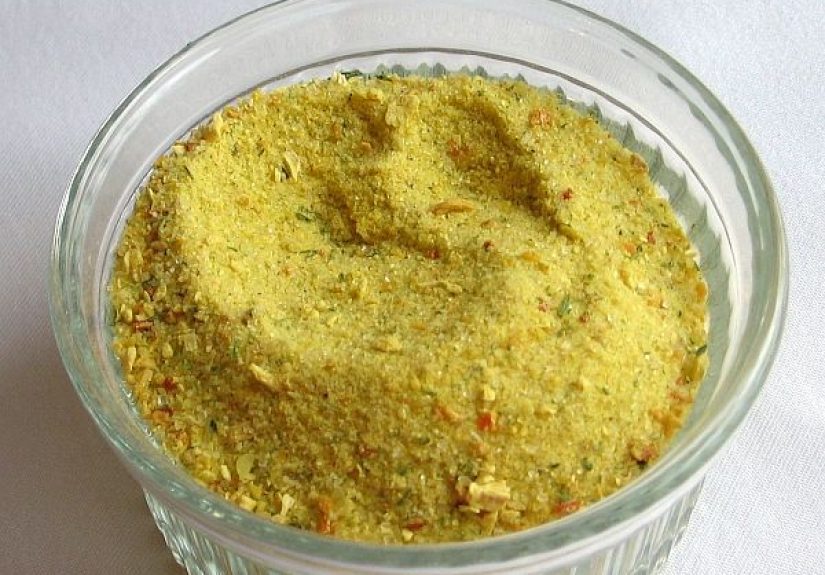
Want it like fine stock powder? Use powdered ingredients and grind everything together.
Prefer a more “speckled” seasoning? Mix by hand and keep parsley flakes visible.
Step 2: Mix
- Add all ingredients to a bowl and whisk thoroughly.
- For a smoother blend, pour into a spice grinder or high-speed blender and pulse until uniform.
- Let the dust settle before opening the lidyour lungs did not sign up for a paprika-turmeric fog machine.
Step 3: Taste + Adjust Like a Real Cook
Dip a clean fingertip into the blend and taste. Adjust with these quick fixes:
- Too salty: Add more mushroom powder, carrot powder, or homemade veggie powder.
- Not savory enough: Add another tablespoon of mushroom powder or tomato powder.
- Too “herby”: Reduce parsley and bump onion/garlic slightly.
- Too earthy: Reduce turmeric and nutmeg just a little.
Step 4: Store
Store in an airtight jar in a cool, dark pantry. For best flavor, use within 3–6 months.
If your kitchen is humid, toss in a small food-safe desiccant packet (the kind used for spices),
or keep the jar in the fridge.
How to Use This Vegetable Seasoning Blend (Without Overdoing It)
This is basically “instant flavor insurance.” Start small and scale up.
A good rule: 1/2 teaspoon per serving for most foods, then adjust.
Everyday Uses
- Soup & broth: Add 1–2 teaspoons per quart of water, plus noodles/veg/protein.
- Rice & grains: Stir 1 teaspoon into cooking water for rice, quinoa, couscous, or lentils.
- Roasted vegetables: Toss veggies with oil + 1–2 teaspoons seasoning before roasting.
- Eggs: A pinch in scrambled eggs makes them taste like you tried harder than you did.
- Potatoes: Sprinkle on fries, wedges, mashed potatoes, or roasted baby potatoes.
- Popcorn: Melted butter + a light dusting = snack upgrade with zero effort.
Specific Examples That Work Ridiculously Well
- Quick ramen rescue: Add 1/2 teaspoon to store-bought broth or plain noodles.
- Sheet-pan chicken + veggies: Season chicken thighs, carrots, and onions with it; roast until golden.
- “Better-than-basic” beans: Stir a pinch into canned beans while warming to add depth.
- Vegan brothy vibe: Add to sautéed mushrooms + greens, then splash with water for a fast “pan broth.”
Variations (Because Everyone’s Pantry and Taste Buds Are Different)
1) Low-Sodium Version
Reduce salt to 2–3 tablespoons. Increase mushroom powder and tomato powder slightly.
You can also add a tablespoon of dried minced onion or dried celery flakes for more volume and flavor.
2) Salt-Free “Sprinkle” (Not a Broth Base)
Skip salt entirely and use this as a finishing seasoning. It won’t mimic stock powder perfectly,
but it will give you the vegetable-herby-umami profile without the sodium load.
3) Onion- and Garlic-Free Version
Replace onion/garlic powders with:
ground fennel seed (1/2 teaspoon) + more parsley + a little extra black pepper.
This helps keep flavor complexity without relying on alliums.
4) “Extra Umami” (Still MSG-Free)
Add 1–2 tablespoons additional mushroom powder.
You can also add a small amount of ground dried seaweed (like kelp) for a subtle savory backbone.
Keep it lightseaweed is like a foghorn: charming from a distance, loud up close.
Food Safety and Allergy Notes
- Celery alert: Celery is a common allergen for some peoplelabel your jar clearly if sharing.
- Keep it dry: Moisture is the enemy. If the blend clumps, it may have absorbed humidity.
- Homemade dehydrated veggies: Dry thoroughly until crisp before grinding to reduce spoilage risk.
Troubleshooting
My seasoning is clumping. Did I ruin it?
Probably not. It usually means humidity got in. Break up clumps and re-grind.
Store in a tighter container and consider refrigeration if your climate is humid.
It tastes “flat,” even though it’s salty.
Salt without depth can happen if the vegetable/umami components are too low.
Add mushroom powder, tomato powder, and a pinch more black pepper.
It tastes bitter.
Too much turmeric or over-toasted/over-dried vegetable powder can read bitter.
Reduce turmeric next batch, and make sure vegetables dry at a gentle temperature.
Kitchen Experiences and Lessons Learned (Reader-Style, Real-Kitchen Edition)
If you’ve ever made a homemade seasoning blend and thought, “This is going to change my life,”
only to discover it tastes like dusty optimismwelcome. Seasoning blends are simple, but the details matter.
Here are the most common experiences home cooks run into when making an MSG-free homemade Vegeta-style mix,
plus what usually fixes the problem.
Experience #1: The first batch is always too salty.
This happens because store-bought seasonings often feel “balanced” thanks to MSG and other enhancers.
When you remove them, salt can jump to the front like a toddler with a microphone.
The fix is not “quit forever.” The fix is volume: add more vegetable powder, more parsley, more mushroom powder,
or even a little extra onion powder. You’re stretching the blend so the salt stops hogging the spotlight.
Experience #2: The blend doesn’t dissolve in soup.
If you keep big flakes (parsley, dried onion pieces), it won’t melt into broth the way a fine powder does.
That’s not wrongit’s just a texture choice. If you want “instant stock,” grind it finer.
If you like seeing green flecks floating around like tiny confidence boosters, keep it rustic.
Either way, start by whisking the seasoning into hot liquid instead of dumping it in a heap.
Experience #3: The jar turns into a brick.
Humidity is the secret villain of homemade spice blends. Powders love to absorb moisture and clump.
In humid kitchens, people often learn (the hard way) that “airtight” means more than “the lid is on.”
A truly tight-sealing jar helps, but so does letting freshly ground seasoning cool completely before storing.
Warm powder + closed jar = trapped steam = clumps. Some cooks keep a small desiccant packet in the spice drawer
(not touching food directly) or store the blend in the fridge to keep it free-flowing.
Experience #4: The seasoning tastes great on veggies… but weird on eggs.
Eggs are flavor snitches. They expose spice blends that lean too earthy or too sweet.
If eggs taste “off,” it’s usually the turmeric and nutmeg combo coming on a bit strong.
Use less turmeric next time (try 1/2 teaspoon) and keep nutmeg at a tiny pinch.
The goal is a background warmth, not “holiday candle aisle.”
Experience #5: “I miss that punch I used to get.”
Totally normal. MSG-free doesn’t mean blandit just means you build savoriness differently.
Mushroom powder is often the biggest “aha” moment because it brings depth without shouting.
Tomato powder can do the same, adding a gentle “brothy” roundness.
If you’re still chasing more savory impact, try blending in a tablespoon of finely ground dried celery leaf
or a pinch of ground kelp (tiny pinchremember the foghorn rule).
The best part? Once you make this blend a couple of times, it becomes your pantry signature.
Some people end up with a brighter, herbier mix for salads and roasted vegetables.
Others build a darker, mushroom-heavy version for soups and beans.
Either way, it’s satisfying to grab a jar and know exactly what’s insideno mystery ingredients,
no added MSG, and no regrets… except maybe the moment you realize you’ve been paying for “seasoning” that you can
basically make in five minutes while your pasta water boils.